

Selecting between polycarbonate and acrylic sheets shapes downstream maintenance cycles, replacement frequency, and safety exposure. For teams sourcing polycarbonate in Montreal, the decision hinges on whether an application prioritises impact tolerance or optical clarity. Polycarbonate absorbs sudden loads and flexes under stress, while acrylic holds transparency and edge finish under prolonged ambient light.
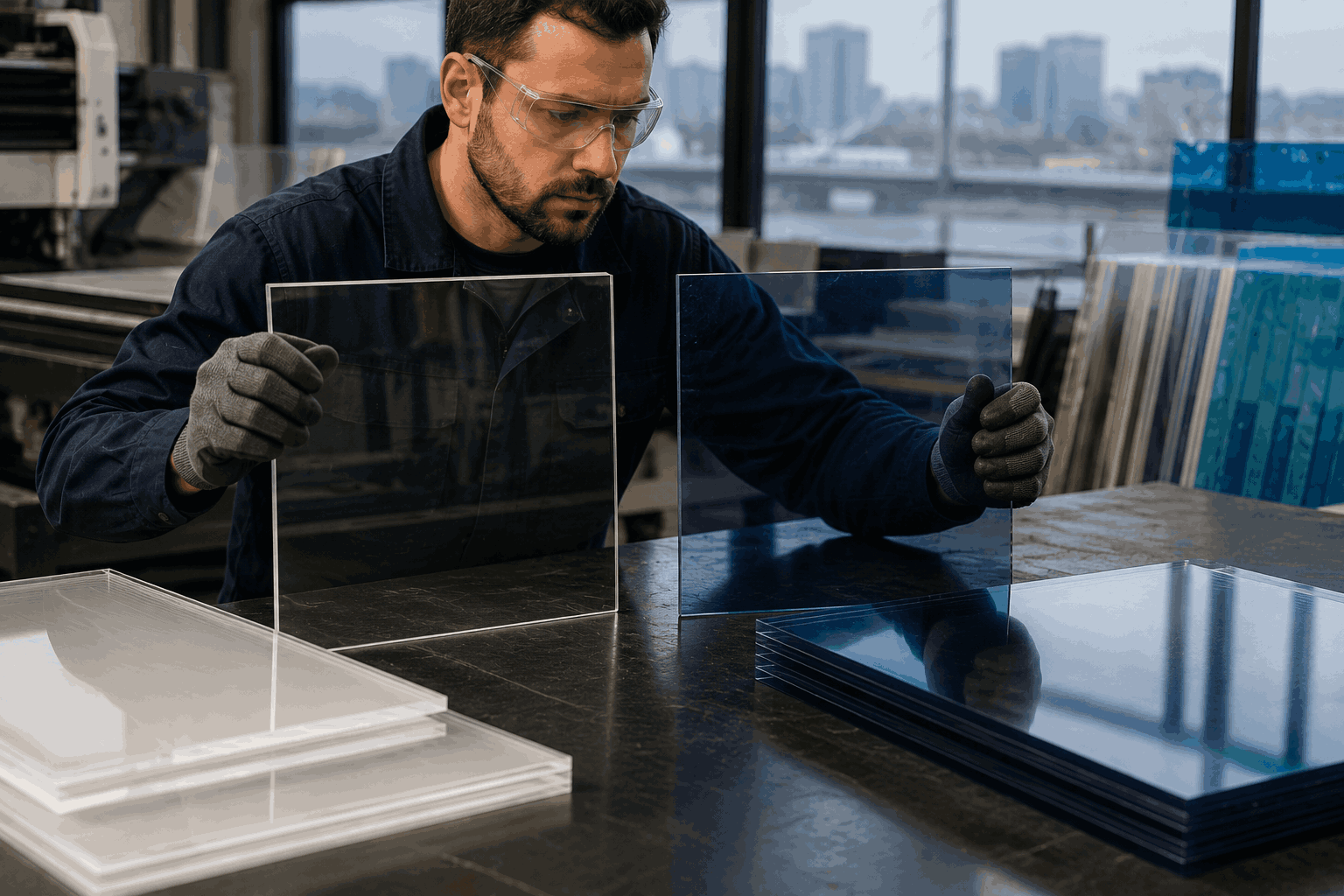
This comparison supports procurement leads, facility engineers, and fabricators weighing structural resilience against visual performance. Johnston Industrial Plastics Limited supplies both material families, so the guidance below focuses on operational fit rather than brand preference. The wrong specification creates predictable failure modes: acrylic cracks under repeated shock, while polycarbonate scratches and hazes when exposed to abrasive cleaning without protective coatings.
Understanding where each material breaks down first prevents budget overruns tied to premature replacement. The sections that follow contrast performance, cost, and compliance considerations so your team can specify with confidence.
Performance Differences Between Polycarbonate and Acrylic
Polycarbonate resists high-energy impact and continues to flex rather than fracture, which suits guarding, machine enclosures, and safety barriers. Acrylic delivers noticeably sharper light transmission and holds that clarity through extended UV exposure without yellowing, provided the surface avoids solvent contact.
The tradeoff most buyers overlook: polycarbonate is tougher but softer, meaning it scratches faster than acrylic during routine cleaning. Acrylic, by contrast, polishes to a glass-like edge yet shatters into sharp fragments under sudden blows. Facilities specifying polycarbonate in Montreal often weight thermal cycling and humidity swings higher, since polycarbonate absorbs those conditions with less risk of stress cracking than acrylic near fastener holes. Buyers ordering polycarbonate tubes in Canada frequently pair sheet stock with protective tubing for shafts, sensor housings, and machine guarding rings where acrylic would fracture under vibration.
For fabricators, acrylic laser cuts cleanly and bonds with capillary solvent cements. Polycarbonate resists solvent bonding and typically requires mechanical fastening or specialised adhesives. Choosing the wrong material for a machining workflow adds rework hours no procurement calendar accommodates gracefully.
Evaluating Cost and Compliance for Polycarbonate Sheets
Polycarbonate carries a higher per-sheet cost, driven by its impact-grade resin and processing complexity. Acrylic sits lower on the raw material curve, which makes it attractive for signage, retail displays, and light-duty glazing where shatter risk stays minimal. Total cost of ownership tells a different story: polycarbonate rarely needs replacement after impact events, while acrylic panels often require full-sheet swap-outs after a single strike.
Compliance posture also differs. Polycarbonate frequently meets impact and flammability ratings expected for machine guarding and protective shielding, whereas acrylic more commonly satisfies optical clarity specifications for architectural applications. Buyers sourcing polycarbonate in Montreal should confirm that sheet grade, thickness, and any surface treatment match the referenced standard, not just the material family. Multi-site operations coordinating polycarbonate sheets in Edmonton alongside Montreal supply gain flexibility on lead times and freight routing when a single distributor manages both regional draws.
A common specification error: assuming any transparent sheet meets guarding codes. Verify the certified data sheet from Johnston Industrial Plastics Limited before committing to installation.
Verdict: Which Is Right for Your Project
Polycarbonate is the defensible choice for high-stress environments: machine guards, protective glazing, industrial covers, and any assembly exposed to impact, thermal shift, or vibration. Acrylic fits where optical quality drives the specification, including display cases, signage, decorative panels, and interior architectural features free from mechanical abuse.
Scenario | Polycarbonate Fits When | Acrylic Fits When |
Impact exposure | Frequent shock or vibration is expected | The environment stays static and protected |
Optical priority | Clarity is secondary to durability | Edge polish and transparency lead the specification |
Fabrication method | Mechanical fastening is acceptable | Solvent cementing streamlines assembly |
Chemical contact | Compatible cleaners are enforced | Aggressive solvents are absent |
Teams sourcing polycarbonate in Montreal for engineered systems, including tube, sheet, or profile stock, can request a specification review from Johnston Industrial Plastics Limited to match grade, thickness, and finish to operating conditions before placing an order.
Comments
Log in or sign up to join the conversation.