

Introduction
The Global Automated Storage & Retrieval System (AS/RS) Market is becoming a critical component of modern warehouse and supply chain transformation. As businesses face rising labor expenses, growing e-commerce volumes, limited warehouse space, and increasing customer expectations for faster fulfillment, automated storage technologies are gaining importance across industries.
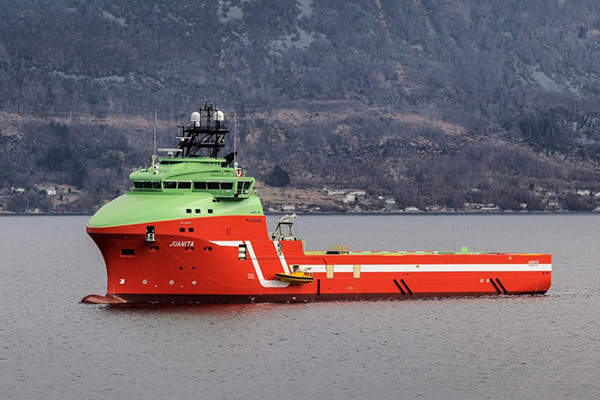
According to TechSci Research report, “Platform Supply Vessel (PSV) Market – Global Industry Size, Share, Trends, Competition Forecast & Opportunities, 2021-2031”, The Global Platform Supply Vessel (PSV) Market will grow from USD 3.95 Billion in 2025 to USD 5.52 Billion by 2031 at a 5.74% CAGR.
AS/RS solutions automate the movement, storage, and retrieval of materials within warehouses, distribution centers, manufacturing facilities, and fulfillment operations. Depending on the application, these systems can handle individual items, pallets, containers, or specialized loads with significantly less manual intervention.
The rapid development of e-commerce is one of the most visible forces behind market expansion. Online retailers must process increasingly diverse orders while maintaining short delivery timelines. Automated storage and retrieval technologies enable businesses to accelerate picking and fulfillment while making better use of available warehouse space.
Beyond retail, AS/RS adoption is expanding across automotive, aviation, pharmaceuticals, food and beverages, electronics, chemicals, and heavy machinery. As Industry 4.0 technologies become increasingly integrated with logistics infrastructure, AS/RS systems are evolving from standalone warehouse equipment into connected and intelligent components of digital supply chains.
Industry Key Highlights
The Global Automated Storage & Retrieval System Market is expected to reach USD 17.67 billion by 2031.
The market is projected to grow from USD 11.08 billion in 2025.
The market is expected to expand at a CAGR of 8.09% during the forecast period.
Retail & E-commerce dominated the market by industry vertical in 2022.
The rapid expansion of online retail is increasing demand for automated fulfillment infrastructure.
Rising warehouse labor costs and workforce shortages are encouraging companies to automate repetitive operations.
Vertical storage capabilities allow businesses to increase capacity without proportionally increasing their warehouse footprint.
Real-time inventory visibility is strengthening the value proposition of AS/RS solutions.
Integration with AI, IoT, machine learning, data analytics, WMS, and ERP platforms is making automated warehouses more intelligent.
Micro-fulfillment centers are emerging as an important application for serving dense urban markets and supporting rapid delivery models.
Major market participants include Daifuku Co., Ltd., Murata Machinery, Ltd., SSI Schaefer AG, TGW Logistics Group GmbH, Kardex Group, Knapp AG, Mecalux S.A., Kion Group AG, Swisslog Holding AG, and System Logistics S.p.A.
Request For Sample Copy of Report For More Detailed Market insight
Main Drivers
Expansion of E-Commerce and Omnichannel Retail
The rapid development of e-commerce is one of the most important catalysts for AS/RS adoption. Online shoppers increasingly expect quick deliveries, accurate orders, convenient returns, and real-time visibility into their purchases.
These expectations place substantial pressure on warehouses. Traditional manual processes can become inefficient when order volumes rise and product assortments expand. AS/RS technology addresses these challenges by automating storage, retrieval, sorting, picking, and material movement.
The growing popularity of omnichannel retail is adding another layer of complexity. Retailers may need to fulfill orders from stores, distribution centers, regional warehouses, and micro-fulfillment facilities. Automated systems can help coordinate inventory across these locations while reducing processing times.
Rising Labor Costs and Workforce Constraints
Warehousing and distribution operations depend heavily on labor for repetitive activities such as picking, transporting, sorting, and stocking. Rising wages and persistent difficulties in finding and retaining warehouse workers are motivating businesses to reconsider traditional operating models.
AS/RS technology allows companies to automate repetitive physical tasks and redirect employees toward activities that require greater judgment and specialized skills. Instead of eliminating the importance of human workers, automation can help businesses use their workforce more strategically.
This factor is particularly relevant in regions where labor availability is limited or warehouse wages represent a significant portion of operating expenses.
Demand for Warehouse Space Optimization
Warehouse real estate has become increasingly expensive in strategically located areas, particularly close to major cities and transportation hubs. Companies therefore need to extract greater capacity from existing facilities.
AS/RS systems can utilize vertical space more efficiently than many conventional storage approaches. By increasing storage density, businesses can potentially accommodate larger inventories without expanding their building footprint.
This capability is particularly attractive for companies operating in land-constrained urban locations. Higher storage density can also reduce the need for additional facilities, contributing to long-term infrastructure cost management.
Improved Inventory Accuracy
Inventory errors can create significant operational and financial problems. Incorrect stock records may result in unavailable products, overstocking, delayed orders, unnecessary carrying costs, and customer dissatisfaction.
Automated storage systems use software and tracking technologies to record inventory movements with greater precision. This provides businesses with improved visibility into product locations, quantities, and movement histories.
For industries such as pharmaceuticals and food processing, automated tracking can also support traceability and compliance requirements.
Industry 4.0 and Smart Warehouse Development
The growing adoption of Industry 4.0 technologies is accelerating the transformation of AS/RS systems. Modern solutions can connect with sensors, warehouse management platforms, enterprise resource planning systems, and data analytics tools.
Artificial intelligence and machine learning can support demand forecasting, equipment monitoring, and operational optimization. IoT connectivity can provide real-time information about system performance and inventory movement.
These capabilities enable businesses to move toward more connected, responsive, and data-driven warehouse operations.
Emerging Trends
AI-Powered Warehouse Automation
Artificial intelligence is increasingly influencing automated warehouse operations. AI can analyze operational data to identify bottlenecks, forecast demand, optimize storage locations, and improve equipment utilization.
Predictive maintenance is another emerging application. By monitoring machine behavior and performance data, intelligent systems can identify potential problems before they cause major downtime.
Micro-Fulfillment Centers
Micro-fulfillment centers are becoming increasingly relevant as retailers attempt to shorten delivery times in urban markets. These compact facilities can be positioned closer to customers and equipped with automated storage technologies.
AS/RS systems allow micro-fulfillment centers to make efficient use of limited floor space while processing a high volume of orders. Their development is closely connected with same-day, next-day, and rapid-delivery business models.
Greater Integration with WMS and ERP
Modern AS/RS solutions are increasingly connected with broader enterprise technology. Integration with warehouse management systems enables companies to coordinate inventory, orders, storage locations, and automated equipment.
ERP integration provides additional visibility by connecting warehouse activities with purchasing, sales, production, and financial operations. This creates a more comprehensive view of the supply chain.
Flexible and Scalable Automation
Businesses increasingly require automation systems that can adapt to changing product mixes and order volumes. Modular AS/RS architectures can provide greater flexibility than highly rigid warehouse infrastructure.
Scalable solutions allow companies to expand automation as demand grows, helping reduce the risk associated with large upfront investments.
Robotics and Automated Material Handling
The convergence of AS/RS with robotics is creating increasingly sophisticated warehouse environments. Autonomous systems can work alongside storage and retrieval equipment to move goods between different stages of fulfillment.
The combination of robotic handling, automated storage, machine vision, and intelligent software can improve throughput while reducing manual movement.
Real-World Use Cases
Retail and E-Commerce Fulfillment
Retailers use AS/RS technology to automate product storage and order fulfillment. Systems can retrieve items according to order requirements and deliver them to picking or packing stations.
This helps retailers process larger numbers of orders while reducing picking errors and improving warehouse productivity.
Automotive Manufacturing
Automotive manufacturers manage thousands of components, spare parts, and assemblies. AS/RS systems can organize components according to production requirements and automatically deliver materials to designated work areas.
This supports just-in-time manufacturing and reduces unnecessary material movement.
Healthcare and Pharmaceuticals
Pharmaceutical companies require precise inventory control and traceability. Automated systems can maintain accurate records of product locations and movements while supporting controlled storage environments.
Automation can also help reduce human handling and improve consistency in highly regulated operations.
Food and Beverage Storage
Food and beverage companies frequently manage large inventories with specific storage and handling requirements. AS/RS systems can support high-throughput operations while helping organizations manage stock rotation and inventory visibility.
Automated retrieval can also improve operational consistency in temperature-controlled and distribution environments.
Electronics and Semiconductor Manufacturing
Electronic components are often small, valuable, and sensitive to environmental conditions. Automated storage systems can provide organized inventory management while reducing unnecessary manual handling.
The ability to track materials accurately is particularly valuable in production environments where component availability directly affects manufacturing schedules.
Aviation and Spare Parts Management
Airlines and aviation companies need rapid access to replacement parts and maintenance materials. AS/RS technology can organize large inventories and enable faster retrieval of required components.
This can help maintenance operations minimize delays and improve asset availability.
Competitive Analysis
Major companies operating in the Global Platform Supply Vessel (PSV) Market are:
Cosco Shipping Lines Co., Ltd
Vard Group
Xiamen Shipbuilding Industry Co., Ltd.
Nam Cheong Limited
VT Halter Marine, Inc
Damen Shipyards Group
Sinopacific Offshore & Engineering Co. Ltd
Eastern Shipbuilding Group
Remontowa Shipbuilding S.A
Harvey Gulf International Marine LLC
Customers can also request for 10% free customization on this report.
segmentation
By Type
The Global Automated Storage & Retrieval System Market is segmented into:
Autostore
Carousel
Mid Load
Mini Load
Unit Load
Vertical Lift Module
These technologies serve different storage and handling requirements. Mini-load systems can support smaller goods and containers, while unit-load systems are suited to larger and heavier inventory. Vertical lift modules provide efficient use of vertical space, making them particularly useful where floor area is limited.
By Function
The market is divided into:
Assembly
Distribution
Kitting
Order Picking
Storage
Others
Storage and order-picking applications are particularly important because they directly influence warehouse throughput, inventory accessibility, and fulfillment performance.
By Industry Vertical
The market includes:
Aviation
Automotive
Chemicals
Retail & E-Commerce
Food & Beverages
Healthcare & Pharmaceuticals
Metals & Heavy Machinery
Semiconductors & Electronics
Others
Retail & E-commerce dominated the global AS/RS market in 2022. The rapid growth of online shopping, increasing product variety, shorter delivery expectations, and expansion of omnichannel fulfillment are major factors behind this leadership.
By Region
The market is segmented into:
North America
Asia-Pacific
Europe
South America
Middle East & Africa
Regional adoption is influenced by e-commerce penetration, industrial automation, warehouse infrastructure, labor economics, manufacturing activity, and investment in smart logistics.
4 FAQ
1. What was the projected size of the Global Automated Storage & Retrieval System Market in 2025?
The Global Automated Storage & Retrieval System Market is expected to reach USD 11.08 billion in 2025.
2. What will be the Global AS/RS Market size by 2031?
The market is projected to reach USD 17.67 billion by 2031.
3. What is the expected CAGR of the Global Automated Storage & Retrieval System Market?
The market is expected to grow at a CAGR of 8.09% during the forecast period.
4. Which industry vertical dominated the Global AS/RS Market in 2022?
Retail & E-commerce dominated the Global Automated Storage & Retrieval System Market by industry vertical in 2022, supported by expanding online retail, rapid fulfillment requirements, and the development of omnichannel logistics networks.
Contact US:
Techsci Research LLC
420 Lexington Avenue, Suite 300,
New York, United States- 10170
Tel: +13322586602
Email: [email protected]
Web: https://www.techsciresearch.com/
Comments
Log in or sign up to join the conversation.