

Dark patches can be one of the more frustrating skin changes associated with polycystic ovary syndrome (PCOS). You may notice darker, thicker-looking skin around the neck, underarms, groin, or other skin folds and wonder whether it's simply pigmentation, irritation, or something related to your hormones.
In some people with PCOS, these changes are associated with acanthosis nigricans, a skin condition characterized by darker, thicker, velvety-looking skin. PCOS can be associated with insulin resistance, and elevated insulin levels are linked with acanthosis nigricans.
But not every dark patch in someone with PCOS is acanthosis nigricans. Hyperpigmentation can have several causes, which is why identifying the appearance and location of the discoloration matters before choosing a skincare treatment.
This guide explains what PCOS-related dark patches can look like, why they happen, how they differ from strawberry skin, and what you can do to support healthier-looking skin.
Important: PCOS-related dark patches can sometimes indicate an underlying metabolic issue. Skincare can improve the appearance of some pigmentation, but it should not replace medical evaluation or treatment of an underlying condition.
Quick Answer:
Why Does PCOS Cause Dark Patches?
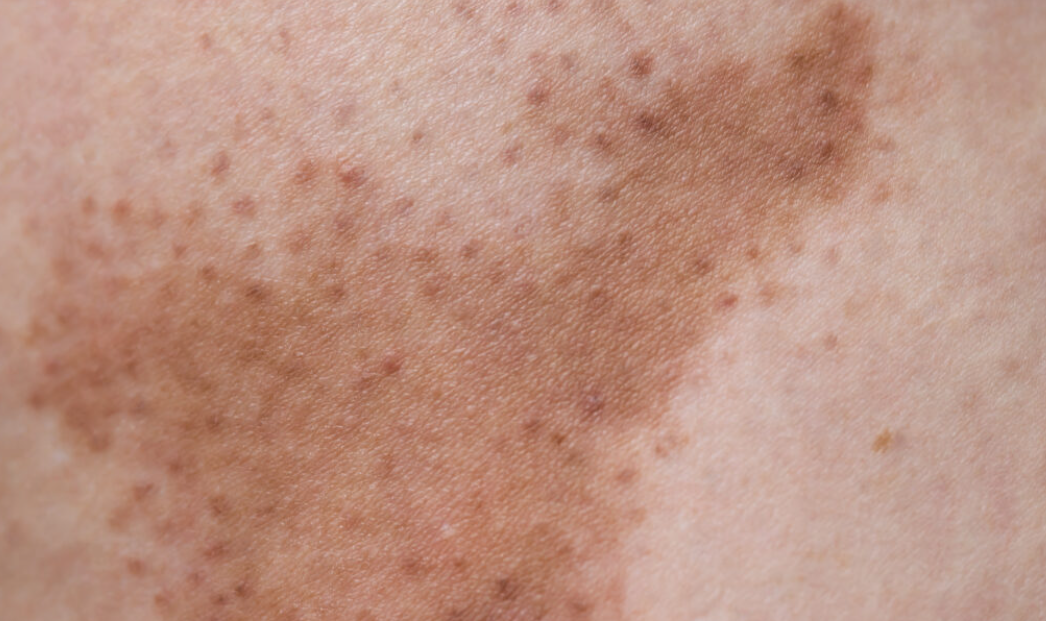
PCOS can be associated with dark, thick, velvety patches called acanthosis nigricans. This is particularly associated with insulin resistance and elevated insulin levels. The patches commonly appear around the neck, armpits, groin, and other skin folds.
Treating the underlying metabolic or hormonal issue can help the skin improve. A dermatologist may also recommend topical or procedural treatments when appropriate.
PCOS can be associated with darkened skin, particularly when insulin resistance is present.
Acanthosis nigricans typically appears as darker, thicker, velvety skin.
Common locations include the neck, underarms, and groin.
Not every dark patch in someone with PCOS is caused by acanthosis nigricans.
Scrubbing dark patches aggressively can irritate the skin and make the appearance worse.
Treating the underlying cause is an important part of managing acanthosis nigricans.
A dermatologist can help determine whether your pigmentation is acanthosis nigricans or another skin condition.
Strawberry skin and PCOS-related pigmentation are different concerns and should not automatically be treated the same way.
What Is Acanthosis Nigricans?
Acanthosis nigricans is a skin condition that causes areas of skin to become:
darker
thicker
velvety
sometimes slightly raised
It most often affects body folds and creases.
Common areas include:
back of the neck
armpits
groin
inner thighs
other areas where skin folds or rubs together
The American Academy of Dermatology notes that acanthosis nigricans can sometimes be a warning sign of an underlying health condition such as prediabetes or another metabolic disorder.
That's why treating these patches isn't simply a matter of finding a stronger "dark spot cream."
Why Is Acanthosis Nigricans Associated With PCOS?
The relationship largely involves insulin resistance.
Insulin is a hormone that helps move glucose from the bloodstream into cells.
When the body's cells don't respond normally to insulin, the pancreas may produce more insulin to compensate.
PCOS is associated with insulin resistance in some people, and elevated insulin levels are linked to acanthosis nigricans. The National Institute of Child Health and Human Development specifically notes the connection between insulin problems in PCOS and the development of thickened, dark, velvety patches.
This doesn't mean that everyone with PCOS will develop dark patches.
It also doesn't mean that every person with dark patches has insulin resistance.
A medical evaluation is needed to determine the cause.
What Do PCOS Dark Patches Look Like?
Acanthosis nigricans usually has a distinctive appearance.
The affected skin may look:
darker than the surrounding skin
thicker
velvety
slightly rough
poorly defined at the edges
It often develops gradually.
The neck is one of the most common locations.
You may notice a darker band or patch around the back or sides of your neck that doesn't wash away.
Similarly, the underarms may appear darker and thicker than they previously did.
Where Do PCOS Dark Patches Usually Appear?
Neck
The back of the neck is one of the most recognizable locations.
Some people initially mistake this pigmentation for:
dirt
tanning
buildup
poor hygiene
But vigorous washing or scrubbing won't remove acanthosis nigricans.
Underarms
Darkened, thickened skin can also develop in the armpits.
Because shaving and deodorants can also cause irritation or pigmentation, the cause isn't always obvious.
Groin
The groin and other skin folds can also be affected.
Friction and moisture can make pigmentation in these areas more noticeable.
Inner Thighs
Darkening between the thighs can have multiple causes, including friction and post-inflammatory pigmentation, so a dermatologist may be needed to distinguish it from acanthosis nigricans.
Is Every Dark Patch Caused by PCOS?
No.
This is an important distinction.
Dark skin can result from many different causes, including:
post-inflammatory hyperpigmentation
friction
shaving irritation
sun exposure
certain medications
eczema or other inflammatory skin conditions
acanthosis nigricans
other pigmentary disorders
Acanthosis nigricans has a characteristic thickened, velvety appearance, but a healthcare professional can make the appropriate diagnosis.
PCOS Dark Patches vs. Strawberry Skin
These conditions are sometimes confused because both involve changes in skin color.
But they are fundamentally different.
Acanthosis Nigricans
Usually appears as:
larger dark patches
thickened skin
velvety texture
skin-fold pigmentation
Strawberry Skin
Usually appears as:
tiny dark dots
visible follicles
rough texture
follicular bumps
Strawberry skin is commonly associated with clogged follicles, shaving, keratin buildup, and conditions such as keratosis pilaris.
So if you're seeing a dark, velvety patch on your neck, that isn't something you should automatically treat as strawberry skin.
What Is Keratosis Pilaris?
Keratosis pilaris, often called "chicken skin," occurs when keratin builds up around hair follicles.
It commonly affects:
upper arms
thighs
buttocks
cheeks
The skin can feel:
rough
dry
bumpy
sandpaper-like
For people dealing with KP or strawberry skin, keratosis pilaris self care usually focuses on gentle exfoliation and consistent moisturization.
Can PCOS Cause Strawberry Skin?
PCOS itself isn't considered a direct cause of strawberry skin.
However, someone with PCOS can have both PCOS-related pigmentation and strawberry skin or KP at the same time.
For example, you could have:
acanthosis nigricans around your neck
KP on your arms
strawberry legs after shaving
These are separate skin concerns and may require different approaches.
How Are PCOS Dark Patches Treated?
The most important principle is simple:
Treat the cause, not just the color.
If the dark patches are acanthosis nigricans associated with an underlying metabolic issue, addressing that underlying issue can help the skin improve.
The American Academy of Dermatology notes that treating the condition causing acanthosis nigricans can sometimes cause the patches to fade.
Depending on the individual situation, a healthcare professional may recommend:
evaluation for underlying metabolic conditions
management of insulin resistance where appropriate
review of medications
prescription topical treatments
dermatological procedures in selected cases
Can Skincare Products Remove PCOS Dark Patches?
Skincare can sometimes improve the appearance of pigmentation, but it shouldn't be considered the primary treatment for suspected acanthosis nigricans.
The AAD specifically recommends speaking with a dermatologist before using bleaching creams, exfoliants, or other products to fade acanthosis nigricans because these products may irritate the skin and often don't adequately address the condition.
This is particularly important if the patches are:
new
rapidly spreading
thickened
velvety
appearing in multiple folds
Why Scrubbing Can Make Dark Patches Worse
One of the most common mistakes is assuming that dark skin is caused by surface dirt.
People may try:
harsh scrubs
loofahs
exfoliating gloves
bleaching products
aggressive rubbing
But acanthosis nigricans isn't dirt that can simply be scrubbed away.
The AAD specifically warns that vigorous scrubbing will not remove acanthosis nigricans.
Repeated irritation can instead compromise the skin barrier and potentially make pigmentation more noticeable.
What About Moisturizing?
Moisturizing is still important for maintaining a healthy skin barrier.
A good strawberry skin lotion can be useful if you're dealing with dryness or rough texture elsewhere on the body.
Likewise, people with KP may benefit from a moisturizer containing ingredients such as:
glycerin
ceramides
urea
lactic acid
But a moisturizer shouldn't be marketed as a cure for PCOS-related acanthosis nigricans.
Where Does Strawberry Skin Self-Care Fit In?
This distinction is important if you're looking for keratosis pilaris self care.
If you have rough bumps or strawberry legs, a skincare routine can focus on:
Gentle cleansing
Controlled exfoliation
Daily moisturization
Better shaving techniques
Sun protection
Consistency
That's a very different approach from managing acanthosis nigricans.
Choosing a Strawberry KP Cream for KP-Prone Skin
If your concern is actually keratosis pilaris rather than PCOS-related dark patches, you may benefit from a targeted strawberry KP cream designed to address rough follicular texture.
Look for formulas that focus on:
gentle exfoliation
keratin buildup
hydration
barrier support
The goal is to improve the texture and appearance of KP rather than simply covering it with a cosmetic product.
Can a Strawberry Legs Cream Help PCOS Dark Patches?
Not necessarily.
A strawberry legs cream is generally formulated for concerns such as:
visible follicles
rough texture
clogged pores
strawberry legs
It should not be assumed to treat acanthosis nigricans.
If the dark area is thick and velvety—particularly around the neck or underarms—it's better to have it evaluated rather than treating it as strawberry skin.
A Targeted Approach for Strawberry Skin and KP
For people who have both PCOS and a separate concern such as strawberry skin or KP, targeted body skincare can still be useful.
TryStrawberry's Advanced Triple-Acid Complex for Keratosis Pilaris is designed specifically around exfoliation and rough, follicular texture.
A multi-acid approach can help support:
smoother skin
reduced buildup
improved rough texture
healthier-looking strawberry skin
This makes it more relevant to strawberry skin treatment and kp skin treatment than to treating the underlying cause of PCOS-related acanthosis nigricans.
The distinction matters: a product designed for strawberry skin should be used for strawberry skin, not presented as a treatment for PCOS or insulin resistance.
A Simple Skin-Care Routine for Strawberry Skin and KP
If your PCOS-related skin concerns are separate from strawberry skin or KP, keep your body skincare routine simple.
Step 1: Cleanse Gently
Avoid harsh soaps and excessive friction.
A gentle cleanser helps remove sweat, sunscreen, and buildup without unnecessarily stripping the skin.
Step 2: Exfoliate Carefully
For KP and strawberry skin, ingredients such as salicylic acid, lactic acid, or other alpha/beta hydroxy acids may help improve rough follicular texture.
Start gradually rather than immediately using multiple strong exfoliants.
Step 3: Moisturize
Use a nourishing strawberry skin lotion or moisturizer appropriate for your skin type.
Hydration helps support the skin barrier and can make rough texture feel smoother.
Step 4: Protect Exposed Skin
Sun exposure can make existing pigmentation more noticeable.
Use broad-spectrum sunscreen on exposed areas and follow the product's application and reapplication instructions.
Step 5: Don't Pick or Scrub
Picking bumps and aggressively scrubbing dark areas can increase irritation and post-inflammatory pigmentation.
What Is the Best Treatment for Keratosis Pilaris?
There isn't one universal best treatment for keratosis pilaris.
The most useful approach depends on the severity of the bumps, skin sensitivity, and the areas affected.
Commonly used skincare approaches include:
moisturizers
lactic acid
salicylic acid
urea
other keratolytic ingredients
Consistency matters because KP tends to be a chronic or recurring skin concern rather than something that disappears permanently after a few applications.
How Long Does Strawberry Skin Treatment Take?
Results vary depending on the underlying cause and the products being used.
With consistent strawberry skin treatment, some people may notice improvements in skin softness and texture within several weeks.
More visible changes can take longer.
The important thing is to avoid the temptation to exfoliate aggressively simply because results aren't immediate.
Skin needs time to adjust.
When Should You See a Doctor?
Dark patches deserve medical attention when they are new, unexplained, or changing.
See a healthcare professional if you notice:
suddenly appearing dark patches
thick or velvety skin
rapidly spreading pigmentation
darkening around the neck or armpits
multiple new areas of pigmentation
significant itching or discomfort
other unexplained health changes
The AAD recommends medical evaluation for suspected acanthosis nigricans because it can sometimes be associated with an underlying condition.
Acanthosis nigricans can have several causes, so don't assume that PCOS is automatically responsible.
Frequently Asked Questions
Can PCOS cause dark patches on the skin?
PCOS can be associated with dark, thickened, velvety patches called acanthosis nigricans, particularly in people who also have insulin resistance.
What do PCOS dark patches look like?
When the patches are caused by acanthosis nigricans, they are typically darker, thicker, and velvety rather than simply flat areas of pigmentation. They commonly occur on the neck, underarms, and groin.
Can PCOS dark patches go away?
They can improve when the underlying cause is identified and treated. Dermatologists can also recommend treatments aimed at improving the appearance of the skin.
Does scrubbing remove PCOS dark patches?
No. If the pigmentation is acanthosis nigricans, vigorous scrubbing won't remove it and may irritate the skin.
Is acanthosis nigricans the same as strawberry skin?
No. Acanthosis nigricans generally produces larger, darker, thicker, velvety patches, while strawberry skin usually refers to small dark follicular dots and rough texture.
Can I use strawberry skin products on PCOS dark patches?
It depends on what is actually causing the pigmentation. Products formulated for strawberry skin or KP shouldn't automatically be used to treat suspected acanthosis nigricans. A dermatologist can help identify the appropriate treatment.
What is good keratosis pilaris self care?
For KP, consistent moisturizing and appropriately formulated exfoliating ingredients can help improve rough, bumpy texture. Avoid aggressive scrubbing and introduce active ingredients gradually.
Can a strawberry skin lotion treat PCOS?
No. A body lotion or strawberry skin treatment cannot treat PCOS itself. PCOS is a medical condition that requires appropriate medical management.
What is the best treatment for keratosis pilaris?
Treatment varies, but commonly used approaches include moisturizers and keratolytic ingredients such as lactic acid, salicylic acid, and urea. A dermatologist can recommend the most appropriate option for persistent or severe KP.
Final Thoughts
PCOS can affect the skin in several ways, and dark patches can be particularly concerning. If you're noticing darker, thicker, velvety skin around your neck, underarms, or groin, don't automatically assume it's simply pigmentation or strawberry skin.
Acanthosis nigricans can be associated with insulin resistance and PCOS, so identifying the underlying cause is more important than simply trying stronger exfoliants.
At the same time, having PCOS doesn't mean every skin concern you experience is caused by PCOS.
You can have PCOS-related acanthosis nigricans while separately dealing with:
keratosis pilaris
strawberry skin
strawberry legs
ingrown hairs
dry skin
Those concerns can require different skincare strategies.
For strawberry skin treatment and KP, consistent exfoliation, moisturization, and gentle skin care can help improve texture. But for suspected acanthosis nigricans, the priority should be understanding and addressing the underlying cause with a healthcare professional.
Healthy skin care starts with correctly identifying the problem.
Comments
Log in or sign up to join the conversation.