


The global Paraxylene (PX) market in 2026 is demonstrating a phase of controlled correction, characterized by moderate quarter-over-quarter price declines across key regions. While upstream aromatics costs remained relatively balanced, downstream demand from Purified Terephthalic Acid (PTA) and Polyethylene Terephthalate (PET) sectors showed measured softness, shaping pricing behavior in North America, APAC, and Europe.
Latest Paraxylene (PX) Price Trend: - https://www.chemanalyst.com/Pricing-data/paraxylene-26
Global Paraxylene Market Overview 2026
Paraxylene is a key aromatic hydrocarbon derived from catalytic reforming and steam cracking processes. It serves as the primary feedstock for PTA, which in turn is used to manufacture PET resins and polyester fibers. As a result, PX pricing is closely linked to:
Crude oil and naphtha price movements
Refinery operating rates
PTA and PET demand dynamics
Polyester fiber production
Packaging and textile industry cycles
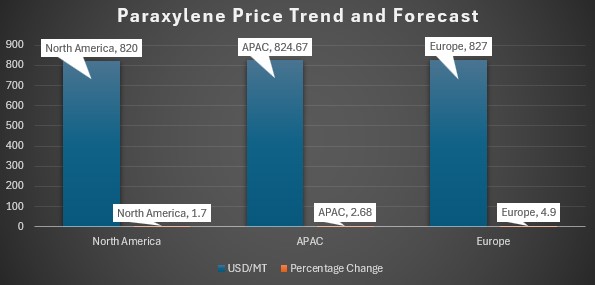
In 2026, the global market is not experiencing sharp volatility but rather a mild corrective trend. Across major regions, the Paraxylene Price Index registered quarter-over-quarter declines ranging between 1.7% and 4.9%, indicating stable but cautious market conditions.
North America Paraxylene Price Trend 2026
United States Market Performance
Quarter-over-quarter Price Index Change: -1.7%
Average Quarterly Price: ~USD 820.00 per metric ton
Market Drivers: Muted demand and balanced supply
In the United States, the Paraxylene Price Index fell by 1.7% compared to the previous quarter. This modest decline reflects a market characterized by steady production rates and relatively subdued downstream buying activity.
Paraxylene (PX) Price Chart 2026: - https://www.chemanalyst.com/Pricing-data/paraxylene-26
Key Factors Influencing the US Market
Moderate PTA & PET Demand
The PET packaging sector maintained stable procurement, particularly from beverage and food packaging segments. However, textile-related polyester demand remained cautious, limiting aggressive PX buying.Balanced Supply Conditions
Refinery and aromatics unit operating rates were steady, resulting in adequate domestic availability. There were no major supply disruptions during the quarter.Stable Feedstock Costs
Naphtha and crude oil prices showed limited volatility, preventing sharp cost-driven fluctuations in PX pricing.
Price Chart Interpretation – USA
The 2026 price chart for the United States shows:
A gradual downward slope rather than abrupt corrections
Narrow price band movements
Stable transactional pricing near the USD 820/MT mark
The data suggests a well-supplied but not oversaturated market. Buyers maintained routine procurement schedules without building excessive inventories.
APAC Paraxylene Price Trend 2026
Japan Market Performance
Quarter-over-quarter Price Index Change: -2.68%
Average Quarterly Price: ~USD 824.67 per metric ton
Market Drivers: Modest demand softness across regional terminals
In Japan, the Paraxylene Price Index recorded a 2.68% decline quarter-over-quarter, slightly steeper than the United States but still reflective of a controlled adjustment.
Key Market Influences in Japan
Regional PTA Operating Rates
PTA plant utilization across Northeast Asia remained stable but not at peak capacity. This led to moderate PX offtake volumes.Export-Linked Sentiment
Japan’s PX pricing is influenced by regional trade flows. Softer buying activity from neighboring Asian markets contributed to mild downward pressure.Inventory Comfort
Terminal inventories remained adequate, reducing urgency in spot procurement.
Price Chart Analysis – Japan
The 2026 chart trend in Japan indicates:
A steady correction across the quarter
Minimal price volatility
Close alignment with regional aromatics trends
Despite the 2.68% decline, the average price of USD 824.67/MT remained broadly stable compared to global levels. The Japanese market continues to reflect disciplined supply management and predictable trading patterns.
Europe Paraxylene Price Trend 2026
Germany Market Performance
Quarter-over-quarter Price Index Change: -4.9%
Average Quarterly Price: ~USD 827.00 per metric ton
Market Drivers: Weaker demand and ample supply availability
Germany recorded the sharpest decline among the three regions, with the Paraxylene Price Index falling by 4.9% quarter-over-quarter. While this appears significant relative to North America and APAC, it remains within manageable correction levels.
Contributing Factors in Germany
Demand Softness
European polyester production faced headwinds from slower industrial activity and cautious textile sector demand.Ample Supply
Import availability and stable domestic production created comfortable supply conditions.Routine Procurement Patterns
Buyers largely focused on maintaining operational continuity rather than building speculative stocks.
Price Chart Interpretation – Germany
The European 2026 price chart reflects:
A steeper downward trajectory compared to US and Japan
Gradual price normalization following previous stability
Price consolidation around USD 827/MT
Despite the sharper index drop, average prices remained competitive and aligned with global benchmarks.
Observations
Europe experienced the most noticeable correction.
North America showed the strongest price resilience.
Average prices across all regions remained tightly clustered between USD 820–827/MT.
No region experienced severe oversupply or demand collapse.
This tight pricing range highlights a globally interconnected PX market with synchronized supply-demand fundamentals.
Downstream Impact: PTA and PET Chain
Paraxylene pricing directly impacts the economics of:
Purified Terephthalic Acid (PTA)
Polyethylene Terephthalate (PET)
Polyester fibers and yarns
Bottled beverage packaging
Textile manufacturing
In 2026:
PTA margins remained stable due to moderate PX corrections.
PET resin producers benefited slightly from softer feedstock costs.
Polyester manufacturers saw improved cost predictability.
The modest PX decline provided breathing space for downstream processors without triggering aggressive price competition.
Supply-Side Dynamics in 2026
Several structural factors contributed to balanced PX pricing this year:
Stable Refinery Throughput
Refinery operations across major producing regions maintained consistent output, preventing abrupt supply shocks.
No Major Capacity Additions
Limited new PX capacity expansions during the quarter helped maintain equilibrium.
Smooth Logistics
Shipping and terminal operations remained stable, ensuring uninterrupted trade flows.
Demand-Side Overview
Global demand trends show:
Steady PET consumption in food and beverage packaging
Moderate textile sector activity
Seasonal adjustments in polyester production
Cautious procurement strategies amid macroeconomic uncertainty
Buyers prioritized working capital efficiency over aggressive forward stocking.
Paraxylene Price Index 2026: What It Indicates
The 2026 Paraxylene Price Index trends suggest:
A normalization phase rather than a downturn
Controlled supply-demand rebalancing
Limited speculative activity
Stable upstream feedstock costs
Unlike previous years marked by volatility, 2026 is demonstrating pricing discipline across regions.
Market Outlook for the Next Quarter
Looking ahead, several factors will influence the next phase of PX pricing:
Potential Upside Risks
Recovery in textile exports
Stronger beverage packaging demand during peak season
Crude oil price appreciation
PTA capacity restarts
Downside Risks
Continued macroeconomic caution
Polyester inventory build-up
Higher aromatics output rates
Overall, the market appears poised for stable-to-rangebound movement rather than sharp corrections.
Strategic Implications for Industry Stakeholders
For Producers
Focus on operational efficiency
Monitor PTA offtake closely
Optimize export strategies
For Traders
Track regional arbitrage opportunities
Monitor freight rate movements
Assess currency fluctuations
For Downstream Buyers
Maintain flexible procurement cycles
Leverage moderate price softness for cost optimization
Avoid overstocking amid stable trends
Conclusion: Stability Defines Paraxylene in 2026
The 2026 Paraxylene market is characterized by measured adjustments rather than dramatic shifts. The United States (-1.7%), Japan (-2.68%), and Germany (-4.9%) all recorded moderate Price Index declines, reflecting balanced supply and cautious demand.
Average prices across regions hovered between USD 820–827 per metric ton, demonstrating global pricing alignment. The price charts show gradual corrections, reinforcing the view of a stable, well-supplied market.
With PTA and PET demand remaining steady and feedstock costs under control, the PX market is currently operating within a sustainable equilibrium. Stakeholders across the polyester value chain can expect continued stability, barring major macroeconomic or crude-driven disruptions.
Contact US:
Email-id: [email protected]
Phone no: +1-(332) 258 - 6602
Address: 420 Lexington Avenue, Suite 300
New York, NY
United States, 10170
Comments
Log in or sign up to join the conversation.