

Introduction
The global packaging industry is undergoing a significant transformation driven by automation, digitalization, and the growing demand for operational efficiency. Among the technologies reshaping the packaging landscape, packaging robots have emerged as one of the most influential innovations, enabling businesses to achieve higher productivity, improved quality standards, and enhanced supply chain efficiency. As industries increasingly adopt smart manufacturing practices and seek flexible production systems, packaging robots are becoming indispensable assets in modern manufacturing environments.
According to TechSci Research report, “Packaging Robots Market Size– Global Industry Share, Trends, Competition Forecast & Opportunities 2021-2031”,The Global Packaging Robots Market will grow from USD 8.98 Billion in 2025 to USD 18.39 Billion by 2031 at a 12.69% CAGR.
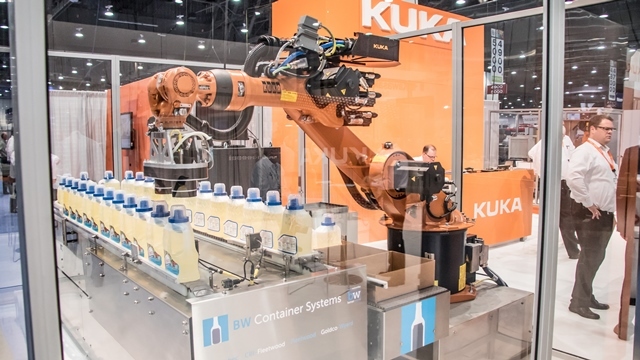
Packaging robots are advanced automated systems specifically designed to perform packaging-related activities such as picking and placing products, palletizing, depalletizing, case packing, labeling, inspection, and quality control. These robotic systems integrate advanced technologies including artificial intelligence, machine vision, machine learning, and sophisticated sensors to execute repetitive and complex packaging tasks with speed, accuracy, and consistency.
The demand for packaging robots is rapidly increasing across numerous industries including food and beverages, pharmaceuticals, electronics, automotive, cosmetics, and personal care. The need to improve productivity while maintaining high standards of product quality and workplace safety is compelling organizations to invest heavily in robotic packaging solutions.
Furthermore, the evolution of Industry 4.0 and smart manufacturing initiatives has accelerated the deployment of intelligent robotic systems capable of real-time communication, predictive maintenance, and data-driven decision-making. Packaging robots have become essential components of digitally connected production environments, enabling manufacturers to achieve higher levels of efficiency and competitiveness.
As global industries continue to embrace automation and sustainability initiatives, the Packaging Robots Market is expected to witness substantial technological advancements and investment opportunities over the coming years.
Request For Sample Copy of Report For More Detailed Market insight: https://www.techsciresearch.com/sample-report.aspx?cid=26805#requestform
Industry Key Highlights
Global Packaging Robots Market projected to reach USD 18.39 Billion by 2031
Market expected to register a CAGR of 12.69% during the forecast period
Growing adoption of automation across manufacturing industries
Increasing deployment of intelligent robotic solutions in packaging operations
Rising demand for sustainable and environmentally responsible packaging practices
Significant investments in Industry 4.0 technologies and smart factories
Expansion of e-commerce driving demand for high-speed packaging systems
Growing integration of artificial intelligence and machine vision technologies
Rising focus on workplace safety and labor optimization
Asia-Pacific emerging as the fastest-growing regional market
Market Overview
Packaging has evolved from being merely a protective process to becoming a critical element of supply chain efficiency, customer satisfaction, and brand differentiation. As businesses strive to optimize production capabilities and respond to rapidly changing consumer demands, automation technologies have become increasingly important.
Packaging robots provide highly efficient solutions capable of performing repetitive tasks with exceptional speed and precision. These robotic systems can operate continuously with minimal downtime, enabling manufacturers to significantly improve production output and reduce operational costs.
Unlike conventional packaging methods that depend heavily on manual labor, robotic packaging systems offer superior consistency, enhanced accuracy, and greater operational flexibility. They can adapt quickly to changing packaging requirements and manage complex processes that would otherwise require substantial human intervention.
The increasing complexity of packaging requirements across industries has further strengthened the business case for packaging robots. Modern packaging systems must accommodate varying product sizes, customized packaging formats, rapid product changes, and stringent quality standards. Packaging robots provide the scalability and adaptability necessary to meet these evolving requirements.
As companies continue to modernize their production environments and embrace digital transformation initiatives, packaging robots are becoming integral components of intelligent manufacturing ecosystems.
Key Market Drivers
Rising Demand for Industrial Automation
One of the most significant drivers of the Packaging Robots Market is the growing demand for industrial automation. Manufacturers worldwide are increasingly adopting automation technologies to improve productivity, enhance operational efficiency, and reduce dependence on manual labor.
Packaging operations are often repetitive, labor-intensive, and highly time-sensitive. Packaging robots enable organizations to automate these activities while maintaining high levels of speed and accuracy.
Automation provides several advantages, including:
Reduced operational costs
Increased production efficiency
Improved product quality
Lower error rates
Enhanced process consistency
Higher throughput capacity
Improved worker safety
As global competition intensifies, manufacturers are increasingly investing in packaging automation solutions to improve operational performance and strengthen market competitiveness.
Rapid Growth of E-Commerce
The extraordinary expansion of e-commerce has fundamentally transformed packaging requirements across industries.
Online retail platforms process enormous volumes of orders daily, creating unprecedented demand for efficient packaging solutions capable of handling high-speed order fulfillment requirements.
Packaging robots play a critical role in e-commerce operations by enabling:
High-speed packaging processes
Efficient sorting systems
Rapid order fulfillment
Customized packaging
Inventory optimization
Reduced packaging errors
The growing popularity of same-day and next-day delivery services is placing additional pressure on businesses to improve packaging efficiency. Robotic packaging systems are helping organizations meet these challenges while maintaining operational excellence.
The continued expansion of global e-commerce activities is expected to remain a major growth catalyst for the Packaging Robots Market.
Increasing Labor Costs and Workforce Challenges
Manufacturers worldwide are facing significant labor challenges, including rising wages, workforce shortages, and increasing difficulties in recruiting skilled workers.
Packaging robots provide an effective solution by automating repetitive tasks that traditionally require substantial human labor.
Benefits include:
Reduced labor dependency
Lower workforce costs
Improved production continuity
Enhanced operational flexibility
Reduced workplace injuries
Higher production consistency
The growing need to maintain productivity amid labor constraints is accelerating investments in robotic packaging systems across various industries.
Rising Focus on Product Quality and Precision
Modern consumers expect products to meet increasingly high quality standards. Even minor packaging defects can negatively impact customer satisfaction and brand reputation.
Packaging robots offer exceptional precision and consistency in performing packaging activities, including:
Picking and placing
Sealing
Labeling
Inspection
Case packing
Palletizing
By minimizing human error and ensuring consistent performance, robotic systems help manufacturers maintain superior product quality and strengthen customer confidence.
Growing Emphasis on Workplace Safety
Packaging environments often involve repetitive motions, heavy lifting, and potentially hazardous operating conditions.
Packaging robots significantly improve workplace safety by performing dangerous or physically demanding tasks that may pose risks to human workers.
Benefits include:
Reduced workplace injuries
Lower accident rates
Improved employee well-being
Better regulatory compliance
Enhanced operational safety
Government regulations promoting occupational safety and manufacturers' commitment to employee welfare are encouraging greater adoption of robotic packaging technologies.
Emerging Trends in the Packaging Robots Market
Integration of Artificial Intelligence and Machine Learning
Artificial intelligence and machine learning technologies are revolutionizing robotic packaging systems.
Modern packaging robots are increasingly capable of:
Self-learning
Real-time decision-making
Predictive maintenance
Dynamic process optimization
Intelligent defect detection
Inventory forecasting
AI-powered robots continuously analyze operational data and improve their performance over time, enabling manufacturers to achieve unprecedented levels of efficiency and reliability.
As AI technologies continue to mature, intelligent packaging robots are expected to become even more sophisticated and autonomous.
Expansion of Collaborative Robots
Collaborative robots, commonly known as cobots, represent one of the fastest-growing segments of the packaging robotics industry.
Unlike traditional industrial robots, cobots are designed to work safely alongside human employees.
Advantages include:
Easy deployment
Lower implementation costs
Flexible operations
Improved productivity
Enhanced human-machine collaboration
Collaborative robots are particularly attractive to small and medium-sized enterprises seeking affordable automation solutions.
Smart Manufacturing and Industry 4.0
Industry 4.0 initiatives are reshaping global manufacturing environments by creating highly interconnected production ecosystems.
Packaging robots are increasingly integrated with:
Industrial Internet of Things (IIoT)
Cloud computing
Big data analytics
Advanced sensors
Real-time monitoring platforms
Digital twins
These technologies enable packaging systems to communicate seamlessly with other manufacturing processes and facilitate data-driven operational decisions.
The growing adoption of smart factories is expected to significantly accelerate demand for intelligent packaging robots.
Customization and Flexible Packaging
Consumer preferences are shifting toward personalized products and customized packaging experiences.
Manufacturers increasingly require packaging systems capable of managing:
Multiple product formats
Small batch production
Seasonal packaging variations
Customized labeling
Rapid product changes
Modern packaging robots offer exceptional flexibility and adaptability, making them ideal solutions for handling complex packaging requirements.
Sustainability and Eco-Friendly Packaging Solutions
Sustainability has become a strategic priority across industries.
Consumers are increasingly demanding environmentally responsible products and packaging solutions, while governments are implementing stricter environmental regulations.
Packaging robots contribute to sustainability initiatives by:
Reducing material waste
Improving energy efficiency
Optimizing resource utilization
Supporting recyclable materials
Enhancing logistics efficiency
Minimizing emissions
Advanced robotic systems are specifically designed to handle sustainable packaging materials, including:
Biodegradable plastics
Recycled paper
Lightweight materials
Compostable packaging solutions
Manufacturers are increasingly investing in robotic technologies that support green manufacturing objectives and contribute to long-term environmental sustainability.
Regional Analysis
Asia-Pacific: Fastest Growing Region
Asia-Pacific is expected to remain the fastest-growing region in the Global Packaging Robots Market.
The region's growth is primarily driven by:
Rapid Industrialization
Manufacturing industries across Asia-Pacific continue to expand significantly.
Rising Automation Investments
Businesses are increasingly adopting advanced technologies to improve competitiveness and productivity.
Expansion of E-Commerce
The tremendous growth of online retail activities is creating substantial demand for efficient packaging solutions.
Government Support
Government initiatives promoting robotics, digital transformation, and industrial modernization are accelerating market development.
Technology Advancements
Increasing investments in artificial intelligence and robotics research are fostering innovation across the region.
Asia-Pacific's robust manufacturing ecosystem and rapidly evolving technological landscape position the region as a major contributor to future market growth.
Competitive Analysis
The Global Packaging Robots Market is highly competitive and characterized by continuous technological innovation, strategic partnerships, and aggressive investment activities.
Major Companies Operating in the Market
Kawasaki Heavy Industries, Ltd.
ABB Limited
Seiko Epson Corporation
Rockwell Automation, Inc.
Universal Robots A/S
Yaskawa Electric Corporation
DENSO Corporation
Mitsubishi Electric Corporation
Omron Corporation
KUKA AG
Customers can also request 10% free customization in this report.
Competitive Strategies
Product Innovation
Companies are investing significantly in research and development activities to introduce advanced robotic systems equipped with artificial intelligence, machine learning, and advanced vision technologies.
Strategic Collaborations
Partnerships and collaborations are helping organizations expand technological capabilities and strengthen market presence.
Geographic Expansion
Market participants are increasingly focusing on expanding operations into emerging markets to capitalize on rising automation demand.
Customization Capabilities
Manufacturers are offering highly customized robotic solutions tailored to industry-specific packaging requirements.
Sustainability Initiatives
Companies are increasingly developing energy-efficient robotic systems capable of supporting environmentally responsible manufacturing practices.
Future Outlook
The future of the Global Packaging Robots Market appears exceptionally promising.
Several factors are expected to drive sustained market growth:
Continued expansion of e-commerce
Rising labor shortages and increasing wages
Growing adoption of Industry 4.0 technologies
Increasing investments in smart factories
Rising demand for sustainable packaging solutions
Expansion of artificial intelligence applications
Growing adoption of collaborative robots
Increasing emphasis on workplace safety
Rising demand for customized packaging
Continuous technological innovation in robotics
Packaging robots will continue to transform manufacturing operations by enabling higher productivity, improved quality, enhanced flexibility, and sustainable production practices.
As organizations increasingly embrace automation and digital transformation strategies, packaging robots are expected to become integral components of next-generation manufacturing ecosystems.
10 Benefits of the Research Report
Provides comprehensive insights into market size and growth prospects.
Offers detailed analysis of market segmentation and industry dynamics.
Identifies emerging technologies and innovation opportunities.
Evaluates major market drivers, challenges, and restraints.
Provides regional market assessment and opportunity analysis.
Delivers extensive competitive landscape evaluation.
Helps businesses formulate effective investment strategies.
Supports informed decision-making through actionable market intelligence.
Identifies future demand patterns and growth opportunities.
Enables stakeholders to develop long-term strategic plans.
Conclusion
The Global Packaging Robots Market is entering a transformative phase characterized by rapid automation, intelligent manufacturing, and sustainability-driven innovation. The increasing need for operational efficiency, high-speed packaging processes, and environmentally responsible manufacturing practices is driving widespread adoption of robotic packaging solutions across industries.
With strong growth prospects, accelerating technological advancements, and expanding applications across diverse sectors, packaging robots are poised to redefine global packaging operations. As industries continue to pursue productivity, flexibility, and sustainability, the Packaging Robots Market is expected to play a pivotal role in shaping the future of intelligent manufacturing and automated packaging systems worldwide.
Contact US:
Techsci Research LLC
420 Lexington Avenue, Suite 300,
New York, United States- 10170
Tel: +13322586602
Email: [email protected]
Comments
Log in or sign up to join the conversation.