

Evidence of the slowing momentum of China's domestic economy since December 2024 continued mounting in September 2026. It did so in the form of the continuing decline in the pace of carbon dioxide accumulation in the Earth's atmosphere. That pace has dropped to levels consistent with where large recessions have bottomed during the 21st century.
Much of that decline is an outgrowth of a debt crisis, in which the Chinese government's previous efforts to stimulate the nation's economy to stave off recessions with its debt-fueled investments has left its domestic economy with the overhang of overproduction. China's internal property market directly reflects that outcome, which has become a deflationary drag on both the housing and banking sectors of its economy as production has stalled. That decline has shown up in the atmosphere in the form of reduced carbon dioxide emissions from the nation's cement production and also its production of steel.
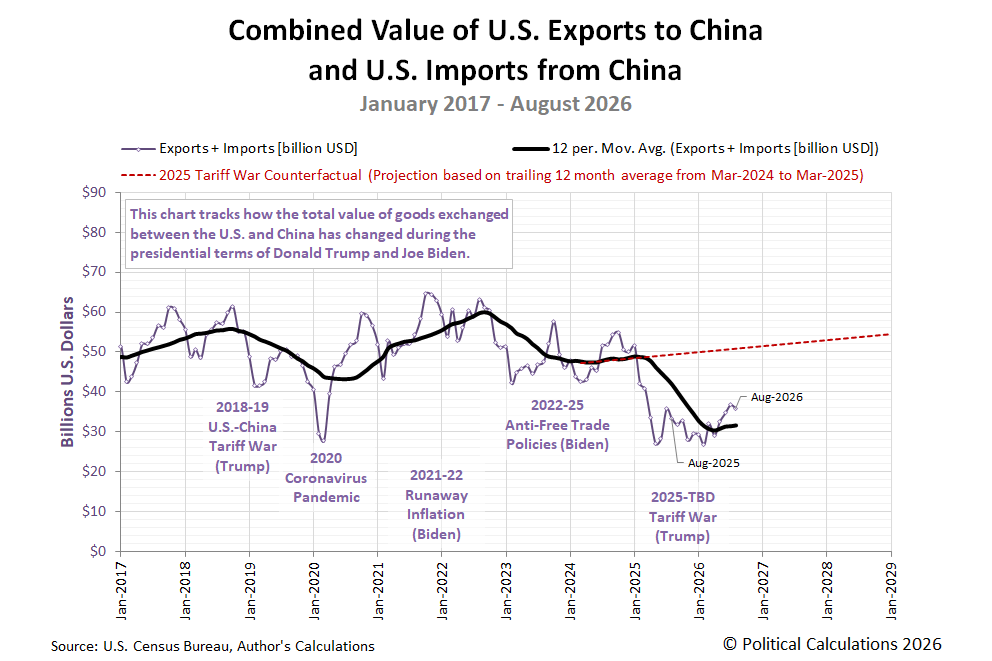
Meanwhile, China's export-oriented industries have also taken a major hit from the global tariff war between the U.S. and China. Chinese exporters have sought to get around the loss of U.S. business by cranking up their exports to other regions like the European Union, but that effort has created an economic backlash which is leading to new curbs on its automotive exports. Falling industrial production to support its export economy from tariffs and other trade restrictions is also contributing to falling CO₂ emissions.
The following chart shows the still continuing downward trend in the rate at which carbon dioxide accumulates in the Earth's air:
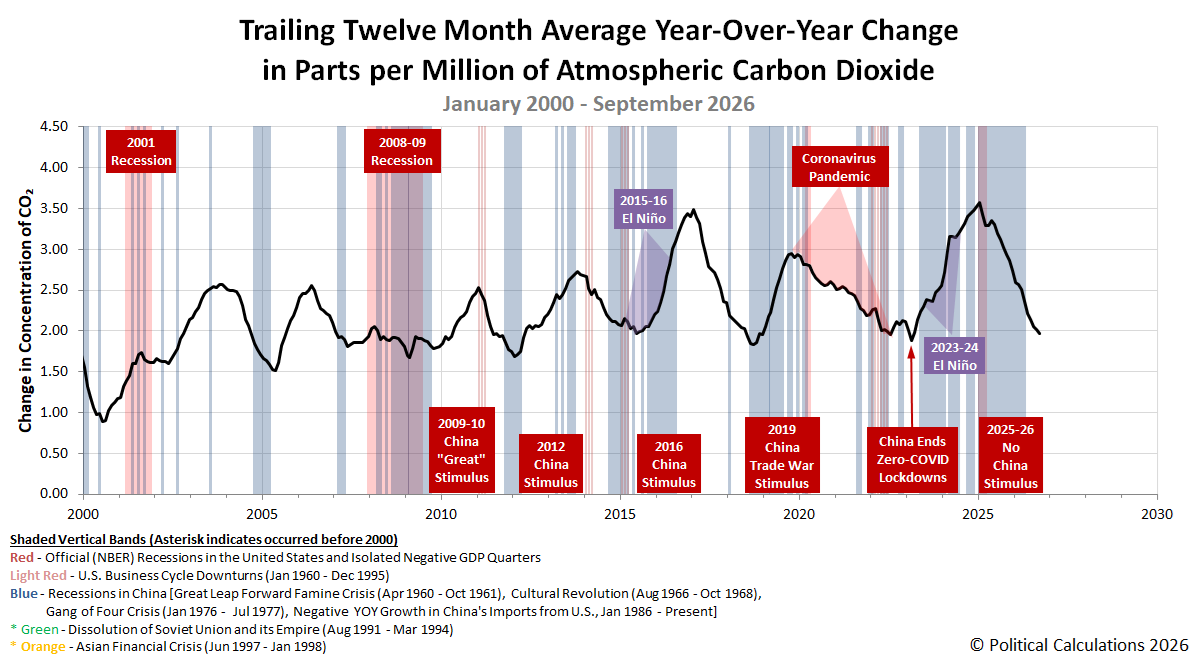
The decline in the pace of carbon dioxide accumulation in the atmosphere has slowed in recent months, which might be attributed to increasing emissions from other parts of the global economy that are growing. Even so, China remains the world's largest producer of carbon dioxide emissions by a very wide margin. Because of that fact, changes in atmospheric CO₂ concentration tells us much more about the relative health of China's economy than that of any other nation.
References
National Oceanographic and Atmospheric Administration. Earth System Research Laboratory. Mauna Loa Observatory CO2 Data. [Online Data]. Updated 5 September 2026.

Comments
Log in or sign up to join the conversation.