

Despite being down ~7% from an all-time-high last week, copper (“Cu“) is +38% in the past year. In Chile, representing a quarter of global supply, El Niño-linked winter storms have been halting or slowing operations. Chile now expects production to be down -2.6% for the full year.
Across S. America, falling ore grades at mines like Escondida, aging infrastructure, and water constraints are increasing unit costs and curtailing growth plans. Old mines (six of the world’s 25 largest, in S. America, average 68 years) are only getting deeper and costlier.
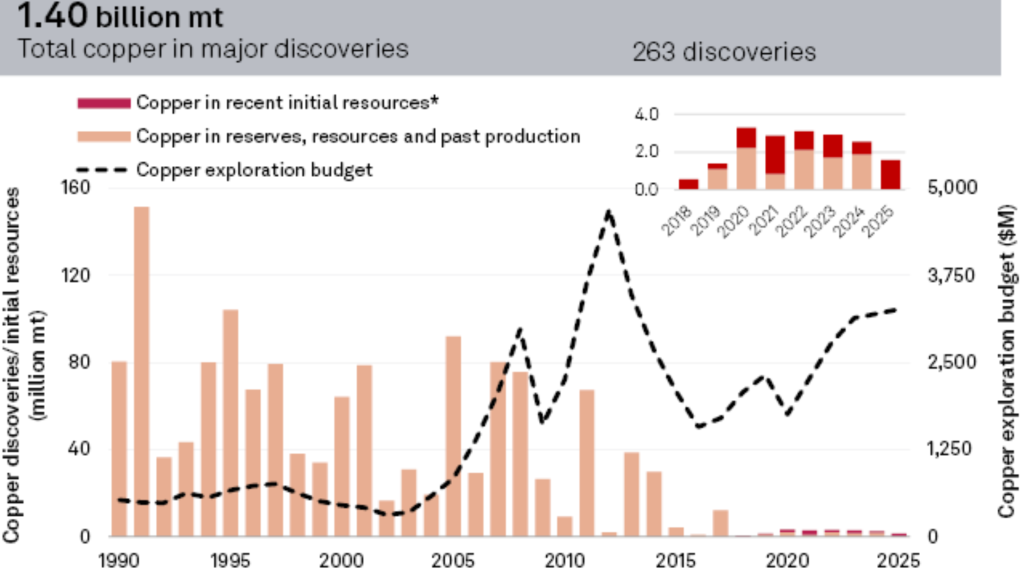
Turning to mined supply, S&P Global updated its Cu discoveries chart through 2025. Tier-1 discoveries have plummeted from ~715 Mt in the 1990s to just ~9 Mt over 2020–2025! This means supply will remain tight well into the 2030s, and probably into the 2040s.
So, very little supply in the pipeline, and giant new mines take well over a decade to commercialize. Cu prices could move meaningfully higher. Not just to US$7/lb., think $8/lb. or $9/lb. later this decade.
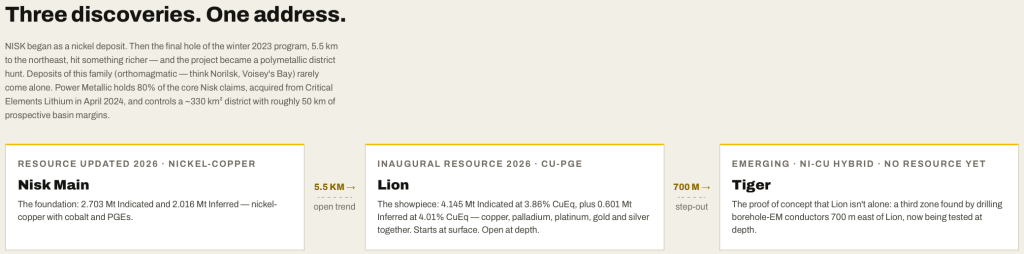
A copper-heavy junior I like a lot put out big news on September 8th. Power Metallic Mines (TSX-v: PNPN) / (OTCBB: PNPNF) is highly leveraged to Cu in its Lion zone, an important, growing subset of its world-class NISK project in Quebec, Canada.
Management, led by CEO Terry Lynch, announced a new resource estimate on its Nisk/Lion project, including a maiden resource estimate (“MRE“) on the Lion zone. Results came in below expectations, causing the share price to dip 22%.
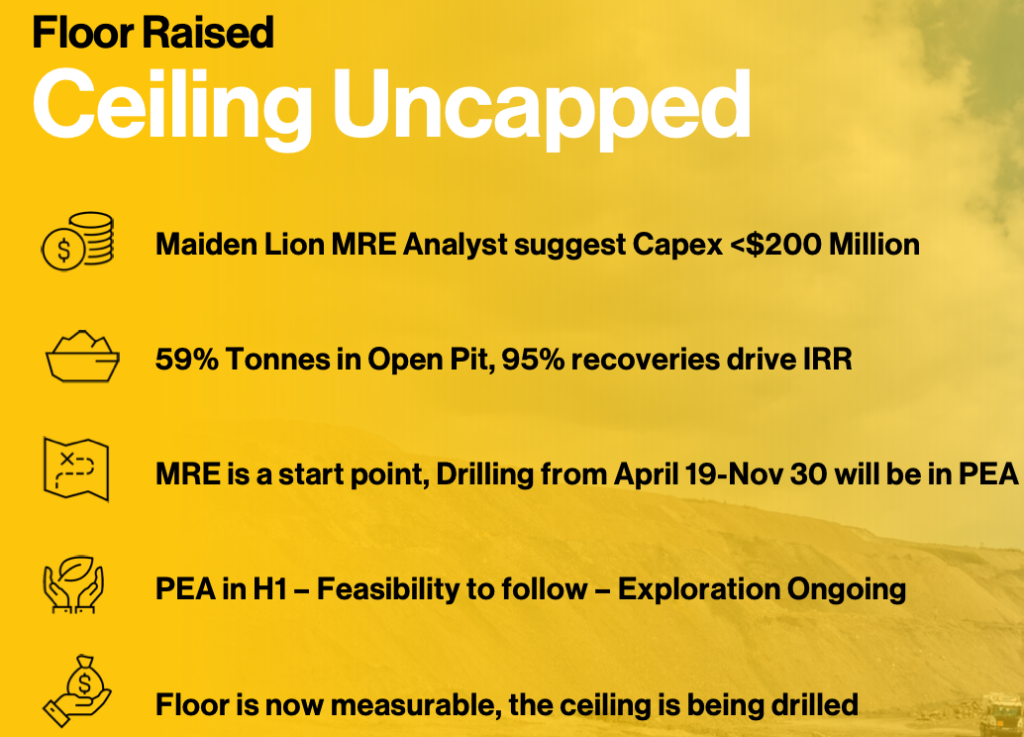
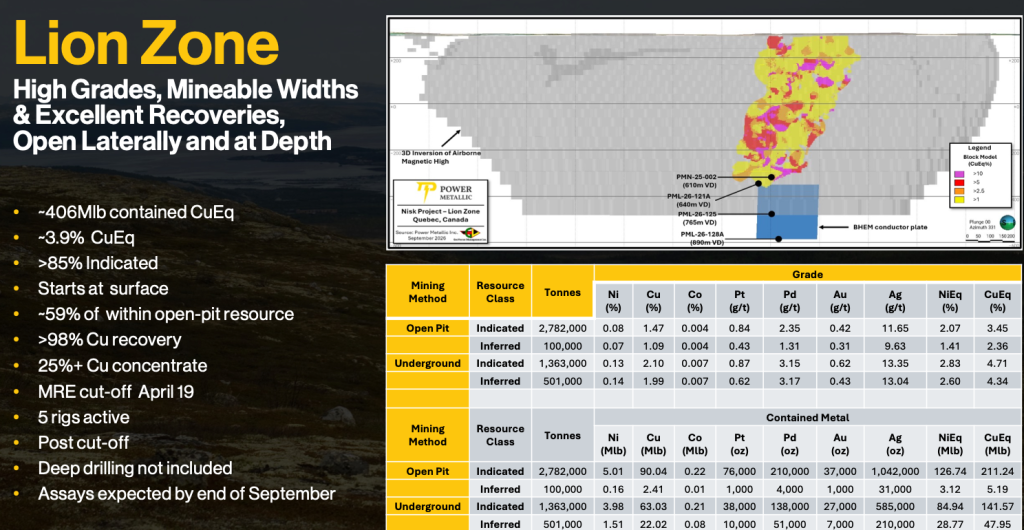
Yet, despite the disappointment, the MRE is a meaningful de-risking event that has set a floor in Lion’s scale. As of April 19th, the Lion-only portion hosts ~406M lbs. of Cu Eq., at ~3.9% Cu Eq. Importantly, 87% of tonnage is in the Indicated category. CEO Lynch commented,
“This inaugural Lion resource confirms what drilling has been telling us: Lion is a high-grade, poly-metallic deposit. We have defined ~4.75 million tonnes grading close to 4% Cu Eq., containing ~406 million pounds Cu Eq., with 87% of the resource already in the Indicated category. Importantly, high-grade mineralization begins at the surface and the deposit remains open at depth.

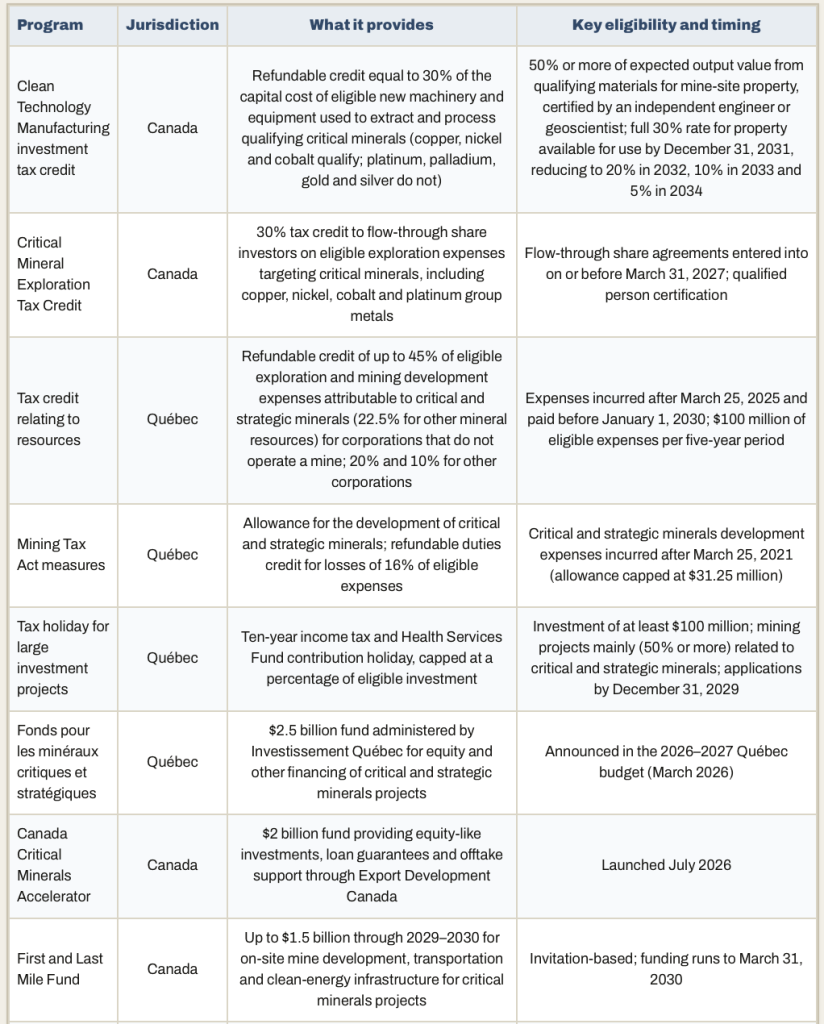
The Federal and Québec governments have put a number of incentive programs in place for critical-minerals projects, and we believe we may qualify for several of them. Combine these potential incentives with the high-grade mineralization and our location next to existing road and major power infrastructure, and we believe Lion has the potential to be developed with a relatively modest initial footprint and capital requirement.
From here, the exploration question is how deep Lion goes and where the nickel went. Lion carries the copper and precious metals that come out of a magmatic sulphide system last; the nickel-rich sulphide that comes out first should be somewhere in the system, and we have not found it yet. The Summer program has been aimed at the down-dip extension of the shoot, with some holes targeting hundreds of meters below the current resource. Assays on Lion Deep are expected by the end of September”
It’s highly unusual for a MRE to be 87% Indicated. This speaks to a strong geological confidence level derived from repeated drilling success. Mineralization starts at surface, ~59% of tonnes are contained in a conceptual open-pit configuration.
This has the hallmarks of a low-cost, high-margin open pit operation that will eventually transition to underground, funded in part by operating cash flow.
The underground portion has nearly 190M Cu Eq. pounds at an impressive 4.61%. At spot prices that’s ~US$645 per tonne of rock. Locked-cycle testing achieved copper recoveries above 98% and concentrates grading 25%+ Cu, alongside strong recoveries for palladium, platinum, gold & silver. These are strong numbers…
The MRE cut-off date was April 19th, so recent, deep, step-out drilling was not included. Initial assays from these very important holes are expected this month.
Management wants eyeballs on the results as the team is hitting massive sulfides. If grades/widths are good down to ~900 m vertical depth, from today’s 610 m, Lion’s resource could grow substantially by next year’s PEA. In the next few months, drilling might extend down to 1,200 m.
Based on an estimated 30-35,000 additional meters to be incorporated, I estimate the Lion-only resource could increase substantially, possibly boosted by results from the Company’s use of muon tomography. If muon delivers superior targets that get drilled, (and hit), that would add mineralized tonnage.
Furthermore, muon-inspired drilling could connect mineralized pods that didn’t make it into the MRE, but were close to being eligible. Having said that, muon’s benefits (if any) might not kick in until next year.
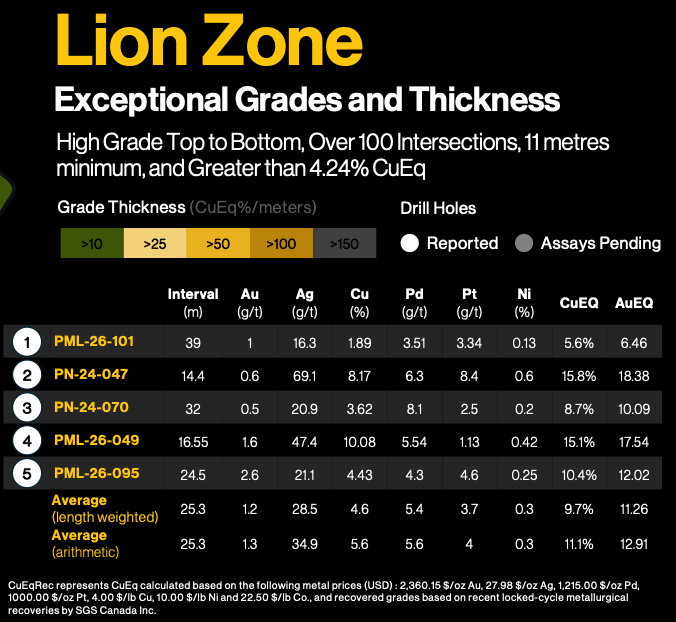
Very high grade, shallow, (87% Indicated) + robust recoveries, means less tailings, less dirt moved, smaller infrastructure needs, (a smaller mill), and lower power/labor costs. NISK/Lion is in Quebec, Canada, not in a far riskier jurisdiction.
Quebec is one other the best places on earth to develop a mine. By contrast, giant S. American projects often face challenges including; local opposition, elevations > 4,000 m, water scarcity, political / regulatory / environmental instability (permitting delays); infrastructure gaps (power, roads), and labor shortages / strikes.
Importantly, the upcoming PEA is merely a snapshot. The resource is growing. and will grow for years to come. Annual throughput, and/or mine life, will be expanded in future studies. In a recent interview CEO Lynch said the Company might skip a PFS and go directly to full Feasibility Study as soon as late 2027.
New discoveries like Tiger, and possible new zones, could turbo-charge valuation. In my view, new discoveries are not a long-shot, they are a reasonable expectation (but no guarantees) given numerous analog situations.
A knock against Power Metallic is that it might need to raise a big chunk of equity capital to fund roughly C$350M in cap-ex. Yet, will it really? It’s not uncommon for high-quality Canadian projects to be 80% debt-funded, especially in a Cu bull market.
That alone would slash the C$350M to C$70M — still a lot… However, there’s a real possibility of securing grants for this critically important Cu-heavy project. The U.S. & Canada are throwing around C$10s of billions. If Power Metallic could land 0.1% of this slush fund, that would be meaningful.
The following table was In the MRE press release…
Other levers to pull include partially pre-funded off-take agreements and/or selling a royalty or stream. Although NISK/Lion is early stage, due to its low cap-ex, excellent jurisdiction, and tremendous financial backing, it might carry less equity dilution risk than peers.
Including a required US$15M raise around November for Power Metallic to list on NASDAQ, the Company is funded into at least 1Q/27.
Bottom line: a lot of de-risking between now and delivery of a PEA. M&A of peers at strong valuations, grants for other critical material projects, and higher metal prices could help drive the narrative. Drill results in the next three weeks could be impactful.
Disclosures/disclaimers: The content of this article is for information only. Readers fully understand and agree that nothing contained herein, written by Peter Epstein of Epstein Research [ER], (together, [ER]) about Power Metallic Mines, including but not limited to, commentary, opinions, views, assumptions, reported facts, calculations, etc. is not to be considered implicit or explicit investment advice. Nothing contained herein is a recommendation or solicitation to buy or sell any security. [ER] is not responsible under any circumstances for investment actions taken by the reader. [ER] has never been, and is not currently, a registered or licensed financial advisor or broker/dealer, investment advisor, stockbroker, trader, money manager, compliance or legal officer, and does not perform market-making activities. [ER] is not directly employed by any company, group, organization, party, or person. The shares of Power Metallic Mines are highly speculative, and not suitable for all investors. Readers understand and agree that investments in small-cap stocks can result in a 100% loss of invested funds. It is assumed and agreed upon by readers that they will consult with their own licensed or registered financial advisors before making investment decisions.
At the time this article was posted, Power Metallic Mines was an advertiser on [ER] and Peter Epstein owned shares in the company, acquired in the open market.
Readers understand and agree that they must conduct due diligence above and beyond reading this article. While the author believes he’s diligent in screening out companies that, for any reason whatsoever, are unattractive investment opportunities, he cannot guarantee that his efforts will (or have been) successful. [ER] is not responsible for any perceived, or actual, errors including, but not limited to, commentary, opinions, views, assumptions, reported facts & financial calculations, or for the completeness of this article or future content. [ER] is not expected or required to subsequently follow or cover events & news, or write about any particular company or topic. [ER] is not an expert in any company, industry sector or investment topic.
Comments
Log in or sign up to join the conversation.