

Oracle (ORCL) just had one of the strangest years in tech. Its Remaining Performance Obligations (= signed contracts not yet booked as revenue) went from roughly $130 billion to over $550 billion in a single year. That's a 4x increase. And the stock is still down significantly from its highs.
Something doesn't add up. Or does it?
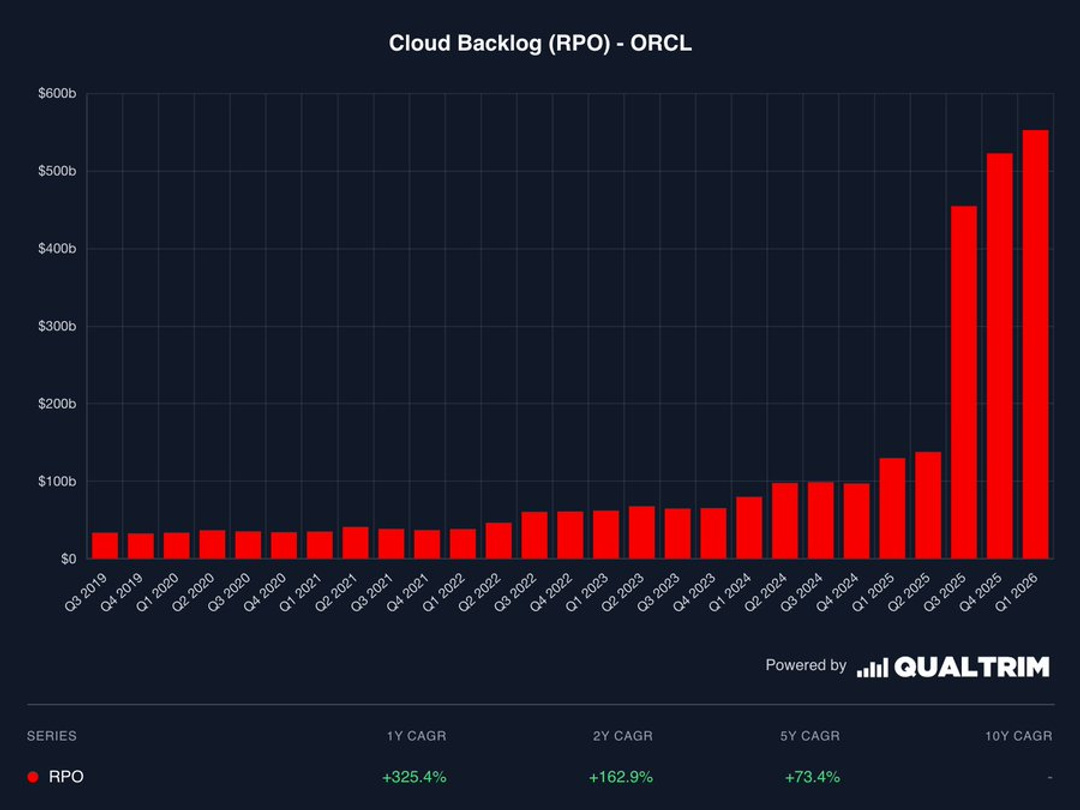
The number everyone's ignoring
RPO isn't a forecast or a sales pipeline. Its contracts customers have already signed. Oracle now has years of highly visible future revenue locked in and most of the recent growth is tied to large-scale AI infrastructure deals.
Why the stock hasn't caught up
Free cash flow is negative, and that scares people. But it's negative for a specific reason: Oracle is spending roughly $70 billion this year building AI data centers to fulfill that exact backlog. That's not reckless spending, it's capacity being built against demand that's already contracted.
The fundamentals, unfiltered:
Revenue at record highs
Net income growing on higher-margin cloud services
Oracle Cloud Infrastructure (OCI) is one of the fastest-growing segments in the entire company
AI contracts with major customers extend revenue visibility years out
The valuation question
Oracle trades around 25–26x forward earnings. Not cheap. But if the backlog converts the way management expects, today's price may look conservative in hindsight rather than expensive.
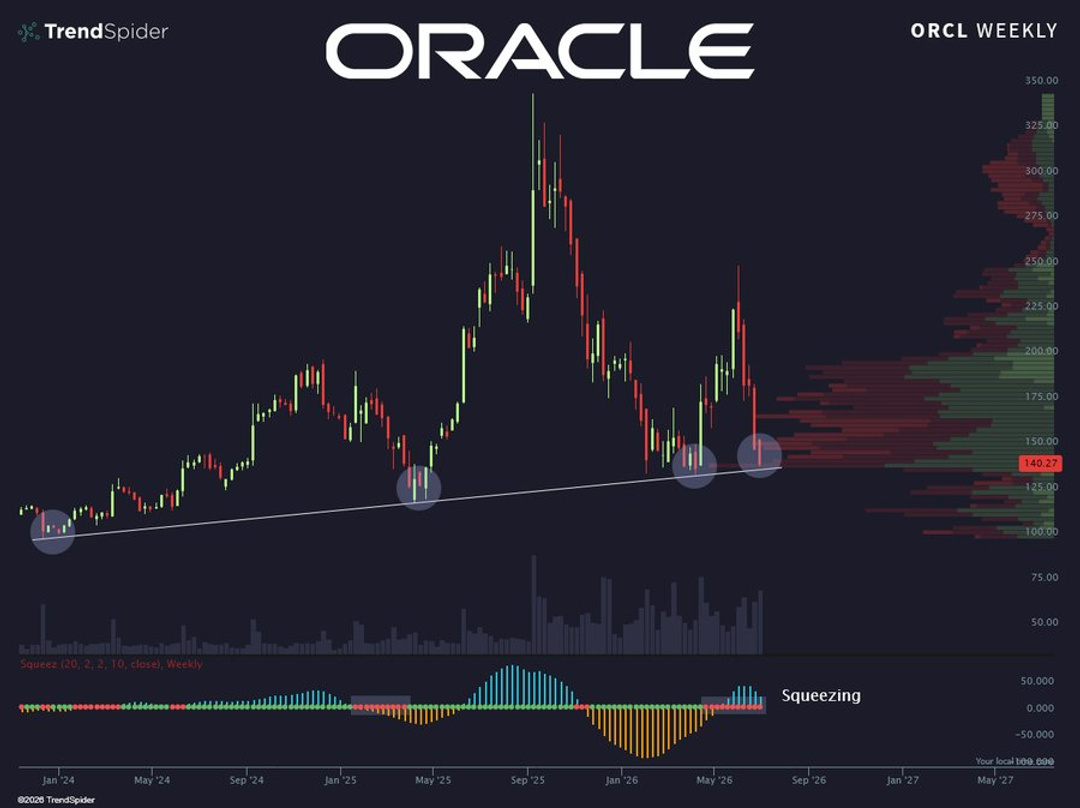
What the chart says
Price is sitting right back on a long-term rising trendline that's held as support multiple times since 2024, right at a heavy Volume Profile Node, a zone with a lot of historical trading activity. Hold this zone, and it's an interesting spot for long-term entries. Lose it, and the door opens for further downside.
The part people miss
Oracle also cut about 21,000 jobs, 13% of its workforce over the past 12 months. Management tied part of this directly to AI-driven automation. Read together with the CapEx numbers, this isn't just cost-cutting. It's capital being reallocated from operating expenses into infrastructure.
Bottom line
If this backlog converts the way management is guiding, today's spending could be looked back on the way Amazon (AMZN)'s early cloud buildout is viewed now: expensive and controversial at the time, foundational in hindsight.
Comments
Log in or sign up to join the conversation.