

Industry Key Highlights
The Global Oil And Gas Actuators Market is expected to grow from USD 9.26 billion in 2025 to USD 12.21 billion by 2031.
The market is forecast to register a 4.72% CAGR between 2025 and 2031.
Midstream applications held the largest market share in 2023, supported by extensive pipeline and transportation infrastructure.
Actuators are widely used for controlling valves, pipelines, pressure-management systems, compressors, terminals, and other critical equipment.
Infrastructure expansion and modernization are creating replacement as well as new-installation opportunities.
Asia-Pacific and the Middle East are witnessing substantial investments in refineries, LNG infrastructure, pipelines, and petrochemical facilities.
Automation, digitalization, remote monitoring, and predictive maintenance are influencing next-generation actuator development.
Safety regulations and industry standards are encouraging operators to invest in dependable, high-performance actuation systems.
Major participants include Emerson Electric Co., Rotork plc, Flowserve Corporation, Pentair Plc, Honeywell International Inc., General Electric Company, AVK Group A/S, and IMI plc.
Request For Sample Copy of Report For More Detailed Market insight
Global Oil and Gas Actuators Market: Industry Outlook, Growth Drivers, Trends, and Opportunities
The global oil and gas industry is undergoing a major transformation as operators seek to improve productivity, strengthen operational safety, modernize infrastructure, and control costs. Within this evolving environment, actuators have become increasingly important because they enable the automated and precise movement of valves and other flow-control equipment used throughout oil and gas facilities. From extraction sites and processing plants to extensive pipeline networks and storage terminals, actuators support the controlled movement of hydrocarbons and help operators maintain stable, efficient, and safe processes.
According to the TechSci Research report, “Oil And Gas Actuators Market – Global Industry Size, Share, Trends, Competition Forecast & Opportunities, 2031F,” the Global Oil And Gas Actuators Market is projected to expand from USD 9.26 billion in 2025 to USD 12.21 billion by 2031, registering a CAGR of 4.72% during the forecast period.
Market expansion is being supported by investments in new oil and gas infrastructure, modernization of aging facilities, increasing automation, stricter safety requirements, and the growing need for reliable flow-control systems. As operators increasingly adopt digitally connected equipment, actuator manufacturers are also moving toward smarter solutions capable of remote monitoring, diagnostics, predictive maintenance, and improved energy efficiency.
The market is therefore evolving beyond conventional mechanical equipment toward intelligent actuation technologies that can contribute to operational optimization and asset reliability across upstream, midstream, and downstream applications.
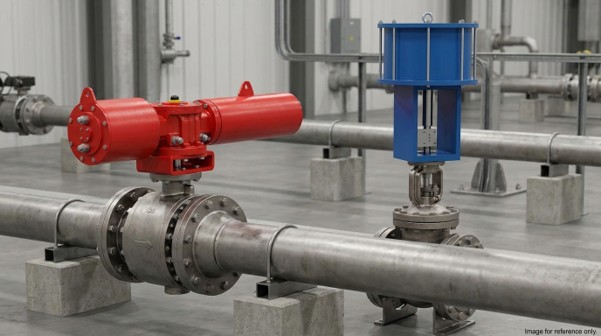
Main Drivers
Expansion and Modernization of Oil and Gas Infrastructure
One of the strongest factors supporting market growth is the continued development of oil and gas infrastructure across different regions. Rising energy requirements and changing supply networks are encouraging investments in production facilities, pipelines, storage systems, refineries, LNG terminals, and petrochemical complexes.
Actuators are essential to these projects because they allow operators to control the opening, closing, and positioning of valves. Accurate valve movement is critical for regulating flow, maintaining pressure, isolating equipment, and responding quickly during abnormal operating conditions.
At the same time, many established oil and gas facilities are approaching or exceeding their original operating lifecycles. Replacing outdated actuation equipment with modern alternatives provides operators with opportunities to improve reliability, reduce maintenance requirements, and increase overall system efficiency.
Growing Focus on Automation
Automation is becoming a central component of modern oil and gas operations. Facilities increasingly rely on automated control systems to minimize manual intervention and improve consistency.
Actuators form an important link between digital control systems and physical equipment. When integrated with automated process-control infrastructure, they can respond to commands quickly and accurately, supporting more efficient control of fluid movement and process conditions.
This trend is particularly important in remote pipeline networks, offshore facilities, terminals, and large processing plants where manual intervention can be expensive, time-consuming, or potentially hazardous.
Increasing Safety Requirements
Oil and gas facilities handle highly flammable and pressurized materials, making dependable flow-control equipment essential. Emergency shutdown valves, isolation valves, and control valves need actuators that can respond reliably when operating conditions change.
Increasing attention toward workplace safety, environmental protection, and operational compliance is encouraging companies to deploy higher-performance actuator systems. Products capable of delivering dependable operation under demanding temperatures, pressures, corrosive environments, and other challenging conditions are gaining importance.
Rising Investment in Emerging Energy Hubs
Regions such as Asia-Pacific and the Middle East are attracting significant investment in oil and gas infrastructure. New refineries, LNG terminals, pipelines, processing facilities, and petrochemical projects require large volumes of flow-control equipment.
These projects create demand for actuators designed according to facility-specific operating requirements. In addition to new installations, infrastructure upgrades provide opportunities for actuator manufacturers to supply replacement and modernization solutions.
Emerging Trends
Smart and Connected Actuators
The shift toward Industry 4.0 is changing the functionality of oil and gas actuators. Modern systems can increasingly incorporate sensors, communication capabilities, diagnostics, and remote-monitoring functions.
Connected actuators can provide operators with information regarding equipment condition and operating performance. This can support earlier identification of abnormal behavior and enable maintenance teams to address potential problems before they result in significant downtime.
Predictive Maintenance
Traditional maintenance strategies often depend on fixed schedules or reactive repairs. Predictive maintenance is changing this approach by using operational data to identify potential equipment deterioration.
When actuators are connected to monitoring platforms, data related to performance and operating conditions can help maintenance teams determine when servicing may be required. This can reduce unnecessary maintenance while helping prevent unexpected failures.
Energy-Efficient Actuation Technologies
Energy efficiency is becoming increasingly important as operators seek to reduce operating expenses and improve environmental performance. Manufacturers are therefore focusing on actuator designs that can deliver required performance while minimizing energy consumption.
Efficiency improvements can become particularly valuable across large facilities containing hundreds or thousands of actuated valves.
Integration With SCADA and Digital Platforms
Integration with Supervisory Control and Data Acquisition (SCADA) systems is becoming more important in pipeline and midstream operations. Digitally connected actuators can contribute operational information to centralized monitoring systems, enabling operators to oversee equipment distributed across extensive geographic areas.
This capability can improve visibility, facilitate faster decision-making, and support more proactive asset management.
Real-World Use Cases
Pipeline Transportation
Pipelines represent one of the most important applications for oil and gas actuators. Extensive networks transport crude oil, natural gas, and refined products across long distances.
Actuators operate isolation valves, control valves, and emergency shutdown systems positioned throughout pipeline networks. Their ability to regulate flow and isolate sections of a pipeline is essential for safe and efficient transportation.
Pumping Stations and Terminals
Pumping stations depend on accurate flow management to maintain the movement of hydrocarbons through pipeline systems. Actuators control valves associated with pumping equipment, helping regulate operating conditions.
Similarly, storage terminals use actuated valves during receiving, transferring, storing, and dispatching hydrocarbons.
Refineries and Processing Facilities
In downstream facilities, actuators are used across numerous processing applications. They can control the movement of crude oil, intermediate products, chemicals, steam, and other fluids.
Reliable actuation contributes to stable process operations and helps operators manage complex production systems.
Offshore and Upstream Operations
Upstream facilities operate in challenging environments where equipment reliability is particularly important. Actuators can support wellhead systems, processing equipment, pipelines, and other flow-control applications.
Offshore facilities can benefit significantly from automation because reducing the requirement for manual intervention can improve operational efficiency and safety.
LNG and Petrochemical Facilities
The growth of LNG infrastructure and petrochemical capacity is creating additional opportunities for advanced actuation technologies. These facilities require accurate control systems capable of operating under demanding conditions, increasing the importance of dependable valve automation.
Competitive Analysis
The Global Oil And Gas Actuators Market features established industrial technology companies competing through product innovation, reliability, automation capabilities, service networks, and application-specific solutions.
Key companies operating in the market include:
Emerson Electric Co.
Rotork plc
Flowserve Corporation
Pentair Plc
Honeywell International Inc.
General Electric Company
AVK Group A/S
IMI plc
Competition is increasingly shifting beyond basic actuator functionality. Manufacturers are focusing on developing products that combine durability with connectivity, diagnostics, energy efficiency, and remote-control capabilities.
Companies with strong engineering expertise and broad aftermarket service capabilities are positioned to benefit from both new infrastructure projects and replacement demand. As digitalization expands, differentiation is also likely to depend on how effectively actuator technologies integrate with industrial automation platforms and asset-management systems.
Segmentation
The Global Oil And Gas Actuators Market can be segmented based on product type, size, body material, application, and region.
By Product Type
The market includes Gates, Valves, and Others. Product requirements vary depending on the equipment being controlled and the operating conditions of the facility. Valve-related actuation remains fundamental because of the extensive use of automated flow-control systems throughout oil and gas infrastructure.
By Size
Based on size, the market is categorized into:
0.25 to 8 inch
8 to 16 inch
Above 16 inch
Different infrastructure applications require different actuator and valve configurations. Large-diameter systems are particularly relevant to major pipeline networks and transportation infrastructure, while smaller configurations are commonly used across processing and facility-level applications.
By Body Material
The market is segmented into Cast, Forged, and Others. Material selection depends on pressure requirements, durability expectations, operating environment, and application-specific performance considerations.
By Application
The market is divided into:
Upstream
Midstream
Downstream
The midstream segment held the largest market share in 2023. Its leading position is closely associated with the scale of pipeline transportation and storage infrastructure.
Midstream networks can extend across thousands of kilometers and operate through varying climatic and geographical conditions. Actuators are required at numerous points to manage isolation, flow control, emergency shutdown, pumping, and terminal operations.
Continued investment in new pipelines, network expansions, infrastructure upgrades, and digital monitoring is expected to sustain actuator demand in this segment. Compliance with stringent safety and performance requirements further supports the adoption of reliable actuation solutions.
By Region
Regional demand is influenced by oil and gas production, infrastructure investment, refinery capacity, pipeline development, LNG projects, and industrialization. Asia-Pacific and the Middle East represent important growth areas because of ongoing investments in energy infrastructure and industrial facilities.
Future Growth Outlook
The outlook for the Global Oil And Gas Actuators Market remains positive as the industry continues to balance rising energy requirements with the need for safer, more efficient, and digitally enabled operations. The projected increase from USD 9.26 billion in 2025 to USD 12.21 billion by 2031 demonstrates sustained demand for actuator technologies.
Future growth is expected to be shaped by infrastructure modernization, automation, smart equipment adoption, predictive maintenance, and investments in large-scale transportation and processing facilities. Manufacturers that can combine mechanical reliability with digital intelligence are likely to find attractive opportunities across both new projects and replacement markets.
Frequently Asked Questions
1. What is the projected size of the Global Oil And Gas Actuators Market by 2031?
The Global Oil And Gas Actuators Market is projected to reach USD 12.21 billion by 2031, increasing from USD 9.26 billion in 2025.
2. What CAGR is expected for the Oil And Gas Actuators Market?
The market is expected to expand at a 4.72% CAGR from 2025 to 2031.
3. Which application segment held the largest market share in 2023?
The midstream segment held the largest market share in 2023, primarily due to the extensive use of actuators across pipelines, pumping stations, terminals, storage facilities, and transportation infrastructure.
4. What are the major trends influencing the Oil And Gas Actuators Market?
Key trends include smart actuator adoption, industrial automation, remote monitoring, predictive maintenance, SCADA integration, energy-efficient technologies, and modernization of aging oil and gas infrastructure.
Contact US:
Techsci Research LLC
420 Lexington Avenue, Suite 300,
New York, United States- 10170
Tel: +13322586602
Email: [email protected]
Comments
Log in or sign up to join the conversation.