

Artificial intelligence has become one of the biggest investment themes in global markets, fueling an unprecedented wave of spending on chips, data centers and computing infrastructure.
But as billions of dollars flow into the sector through increasingly sophisticated financing structures, investors are beginning to ask a new question: is leverage becoming the biggest risk behind the AI boom?
The debate has intensified following the collapse of AI-focused hedge fund Situational Awareness, whose highly leveraged bets unraveled after a sharp selloff in technology stocks.
While many market participants argue the episode was an isolated case of poor risk management, others say it has highlighted how borrowing, derivatives and off-balance-sheet financing are quietly becoming central to the AI investment story.
Nvidia's (NVDA) infrastructure push highlights the scale of AI spending
The discussion comes as Nvidia works with some of Wall Street's largest financial institutions to unlock more than $500 billion of third-party capital for AI infrastructure.
The chipmaker has partnered with firms including Apollo (APO), Blackstone (BX), BlackRock (BLK), Brookfield (BN), KKR (KKR) and Goldman Sachs (GS) to finance the next generation of AI data centers and computing platforms.
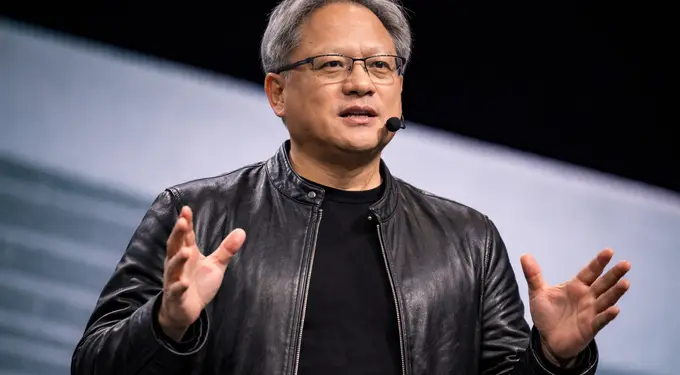
Nvidia CEO Jensen Huang recently described the company's chips as an "investable infrastructure asset," underscoring how AI hardware is increasingly being treated like long-term infrastructure rather than traditional technology equipment.
Financing these projects is becoming increasingly complex.
Rather than relying solely on conventional borrowing, hyperscalers are using joint ventures, leasing structures and asset-backed financing to fund massive capital expenditure programs.
Some of these obligations do not immediately appear on company balance sheets.
Goldman Sachs estimates that hyperscalers now have approximately $1.5 trillion in combined lease commitments covering data centers, research facilities, offices and equipment, up from roughly $200 billion five years ago.
About $1 trillion of those commitments are classified as "uncommenced" leases, meaning they have not yet been recognized in financial statements but will eventually translate into contractual payment obligations.
Goldman analysts warned that this accounting treatment "can understate leverage and future liquidity needs" because these commitments ultimately become recognized liabilities as projects commence.
AI investment cycle reaches historic proportions
The sheer scale of AI investment has prompted comparisons with some of history's largest infrastructure booms.
Lotfi Karoui, multi-asset credit strategist at PIMCO, said the current AI capital expenditure cycle is, after adjusting for inflation, on track to become the largest investment cycle since the railway construction boom of the nineteenth century.
In commentary published on Aug. 11, Karoui noted that consensus forecasts now expect hyperscaler capital spending alone to exceed $1 trillion annually from 2027, adding that there are "no clear signs of moderation."
As borrowing requirements expand, technology companies are increasingly issuing debt beyond traditional US dollar markets.
Karoui said issuers have tapped euro, sterling, yen, Swiss franc and Canadian dollar bond markets to diversify funding sources.
He also observed that euro-denominated bonds issued by companies such as Amazon (AMZN) and Alphabet (GOOGL) have outperformed comparable dollar-denominated debt, potentially indicating growing demand fatigue among investors in US credit markets.
According to Karoui, continued AI-related debt issuance in the United States could eventually push credit spreads wider for heavily exposed issuers.
Situational Awareness becomes Wall Street's cautionary tale
While infrastructure financing has attracted attention, leverage inside equity markets has also come under scrutiny following the collapse of Situational Awareness.
Founded by former OpenAI researcher Leopold Aschenbrenner, the hedge fund rapidly became one of Wall Street's most closely watched AI investors after generating extraordinary returns during its early months.
Aschenbrenner, who previously worked on OpenAI's Superalignment team after graduating from Columbia University at age 19, built the firm's investment strategy around his conviction that artificial intelligence would fundamentally reshape the global economy.
His 2024 essay, Situational Awareness, attracted significant attention across Silicon Valley and helped secure backing from prominent technology investors including former GitHub chief executive Nat Friedman and Stripe founders Patrick and John Collison.
The fund reportedly delivered returns exceeding 400% during the first half of the year, with assets eventually swelling to roughly $24 billion.
Its portfolio included concentrated positions in companies viewed as major AI beneficiaries, including CoreWeave, Broadcom (AVGO), Intel (INTC), Bloom Energy (BE) and SanDisk.
However, the same concentration that amplified gains also magnified losses.
Bloom Energy and SanDisk each fell about 40% between late June and early August, while the Wall Street Journal reported that the fund lost approximately 67% during July.
According to Reuters, mounting losses eventually forced Situational Awareness to sell most of its public equity portfolio.
Ken Griffin's Citadel purchased the leveraged portion of those holdings, with Goldman Sachs, JPMorgan Chase (JPM), Bank of America (BAC) and Citigroup (C) helping facilitate the transaction.
The fund is expected to retain roughly $10 billion of assets, including private investments such as its stake in Anthropic.
Analysts differ on whether leverage is the real threat
The collapse has divided market observers over whether leverage poses a broader systemic risk.
JPMorgan CEO Jamie Dimon recently told CNBC that margin debt is "pretty high," warning that elevated borrowing can amplify market volatility during periods of stress.
Sahil Mahtani, director of the investment institute at Ninety One, argued that leverage is not currently the market's biggest concern.
Instead, he said the greater risk lies in investors' "high and rising earnings" expectations for AI companies.
Mahtani also pointed to historically elevated concentration within major equity indices, particularly in US technology stocks.
While not traditional financial leverage, he argued that concentration can behave similarly by amplifying declines when heavily weighted stocks come under pressure.
He described the Situational Awareness episode as largely a case of poor risk management rather than evidence of broader financial instability, adding that its effects have remained relatively contained.
The Alternative Investment Management Association also defended the industry's use of borrowing.
A spokesperson said leverage is "a core tool" for hedge funds that helps enhance returns and provide liquidity, arguing that available evidence does not support treating hedge fund leverage as an inherent systemic threat.
The association further noted that previous market disruptions linked to leverage—including the collapse of Archegos Capital Management and the United Kingdom's liability-driven investment crisis—involved fundamentally different structures and investors.
Borrowing remains elevated despite recent selloff
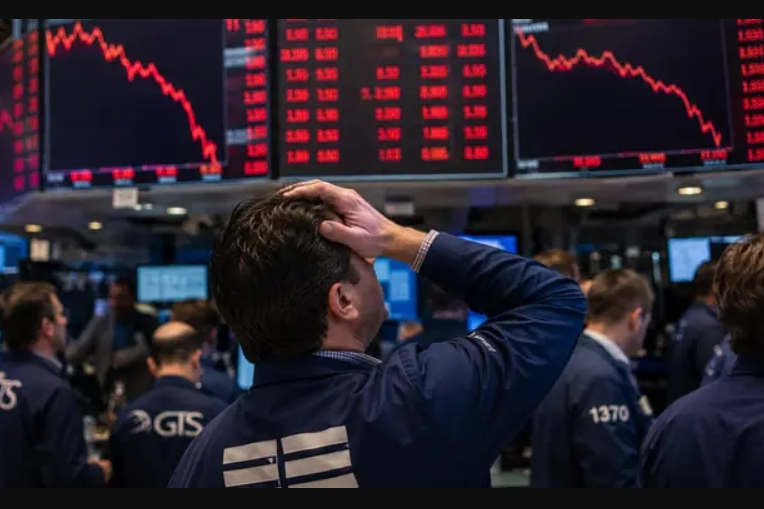
Although the correction in AI stocks forced some investors to reduce leverage, borrowed money remains deeply embedded across markets.
South Korean margin debt had declined only about 10% by the end of July despite a sharp selloff that triggered margin calls for an estimated 3.5% of Korean adults with investment accounts, according to Goldman Sachs.
Meanwhile, Goldman prime brokerage data cited by Bloomberg showed borrowing by equity-focused hedge funds has retreated only to the middle of its recent historical range.
That suggests many institutional investors continue to maintain significant exposure to the AI trade even after recent volatility.

Comments
Log in or sign up to join the conversation.