

Below is an excerpt from a much longer article which you can read in its entirety here.
It is an interpretation told from a certain perspective, but overall does a fairly decent job of laying out the general boundaries for the currency war that has been brewing in the background since 1971 with the collapse of Bretton Woods.
It is more visible to us now because it started manifesting more overtly in the 1990's and since then has slowly been gaining momentum.
If an analyst does not understand this, even if they do not agree with this particular interpretation, then they have a poor grasp of the major trends that are driving so much financial and political activity in the world today.
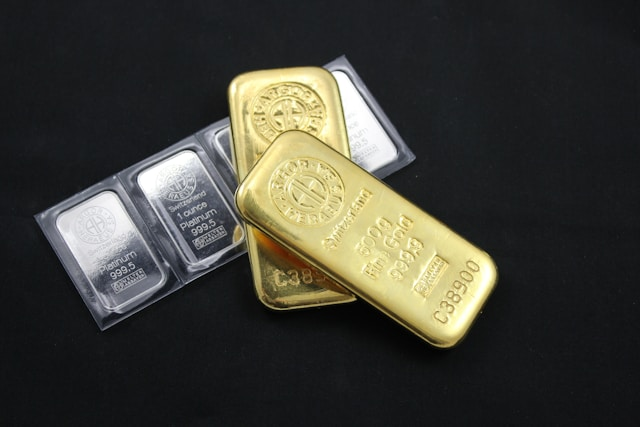
And fortunately or unfortunately, gold and silver are deeply involved as the traditional supra-national world currencies.
To put the entire thing in a nutshell, in 1971 the US arbitrarily ended the Bretton Woods Agreement by closing the 'gold window,' and placed the world on an entirely fiat reserve currency which the US controlled. Since the US is making monetary policy to suit its own domestic agenda, and increasingly so over the past twenty years, the stresses that this creates in the world have become unacceptable to many other countries, some of which are in a position to push back against this.
This tension between the dollar and the rest of the world is either going to end in an acceptable and workable compromise, or will result in a split of the world into regions of power and financial influence, most likely three or four. This will be accompanied by conflict on all the usual levels: diplomatic, economic, and military. We are seeing this today.
Compromise is being thwarted by a neo-conservative, militaristic and nationalistic group in the States, with clients in other countries, that view an American hegemony as the natural and highly desirable outcome of the end of the Cold War. However, this is a patriotic cover story for what is essentially a bid for more money and power for a privileged few who have no patriotism and little decency, who serve only themselves and their patrons. To quote Edward Abbey, their motives are 'old as Babylon and evil as hell.'
Whether you agree with this or not does not matter so much, because it is very obvious to those in countries like the BRICs that this is the situation, and they are acting on this, and the US is reacting in response. But from reading the literature of the neoliberal economists and neoconservative politicians, it seems hard to come to any other conclusion based on facts and specific actions which have been taken by the US, the UK, Canada, Germany and Japan.
I do not think it is too much to say that we are experiencing a type of 'world war.' This seems to be the type of settling of differences and adjustments that follow major economics shifts, as we had seen in the first half of the 20th century.
"The Fed effectively acts as the world’s central bank, but sets monetary policy only in its own interest. Under the pressure and the orders of financial oligopolies, it fixes interest rates and prints money to suit itself, sending economies across the globe into tailspins...
These policies aren’t enacted with the express goal of kicking the global South in the stomach, but this outcome is a necessary and predictable result of the domination of the global financial order by a sole country whose interest is to keep its hegemonic status. Other measures are taken precisely toward this end. This latest round of financial warfare has to be seen in the context of financial imperialism in general. Countries struggling for sovereignty are also being hit by sanctions, speculative currency attacks, commodity price manipulation, biased evaluations from US ratings agencies, massive fines on some banks for what the US has deemed inappropriate practices, and the prohibition of certain banks from participating in the international banking system...
Not only does the dollar enable the US empire, but also protecting the dollar’s status is a major reason for US imperial wars. American financial and military strength is based upon the fact that the dollar is the world’s reserve and international trade currency, creating a global demand for dollars which allows the US to print as many greenbacks as it likes. It then pumps them into the overbloated finance capital system and uses them to fund its criminal wars...
Without this international demand for dollars, the dollar would “correct,” and US hegemony would eventually, inevitably, come to an end. Therefore the US pressures and attacks countries that attempt to free themselves from the dollar’s yoke, not only because they’re guilty of lese majesty, but in order to force the world to maintain the status of the dollar and thus preserve US domination...
Although it has so far been unsuccessful, the idea of rebalancing the world monetary system is extremely threatening to the US, and goes a long way toward explaining recent US wars and warmongering, which may otherwise seem irrational...
The dollar is rallying less because of any supposed US recovery than because of higher global demand for dollars due to investors’ risk aversion, in the wake of the Fed pulling the plug on QE. Parenthetically, the US economy is definitely not recovering...
While a stronger dollar will not hurt the consumption-based US economy, the rising dollar and US monetary tightening are about to give the developing world a severe blow..."
Michèle Brand and Rémy Herrera, Dollar Imperialism 2015
"Plunderers of the world, when nothing remains on the lands to which they have laid waste by wanton thievery, they search out across the seas. The wealth of another region excites their greed; and if it is weak, their lust for power as well.
Nothing from the rising to the setting of the sun is enough for them. Among all others only they are compelled to attack the poor as well as the rich. Robbery, rape, and slaughter they falsely call empire; and where they make a desert, they call it peace."
Tacitus, Agricola

Comments
Log in or sign up to join the conversation.