
Nonprofit organizations often need dependable transportation for fundraising events, volunteer programs, educational trips, community outreach, conferences, and group activities. However, transportation expenses can be challenging when an organization is working with a limited budget.
A Nonprofit charter bus rental can provide an efficient way to transport volunteers, staff, donors, students, and community members together. With proper planning, organizations can find practical ways to manage rental expenses while still providing passengers with a comfortable travel experience.
From asking about discounts to choosing the right bus and comparing quotes, this guide covers important ways nonprofits can save on group transportation.
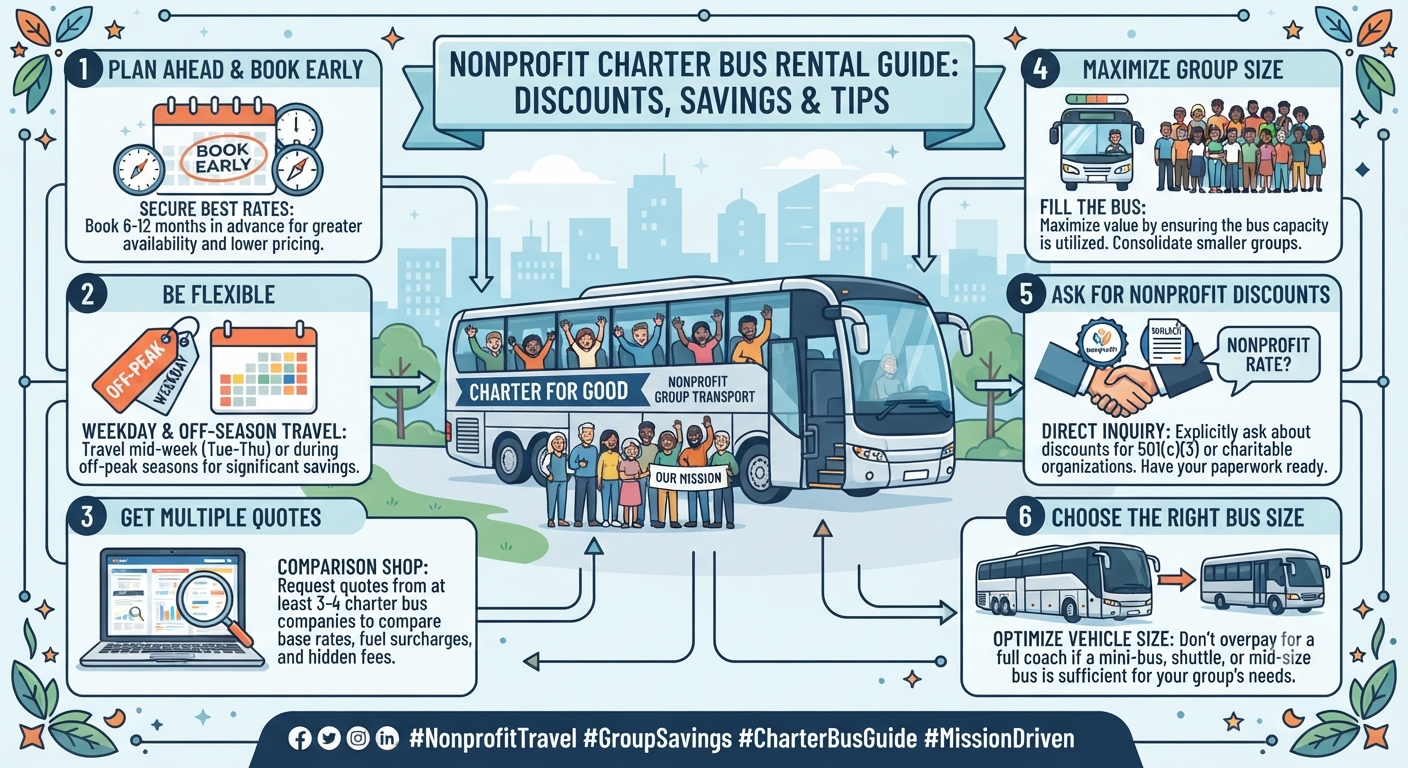
Ask About Nonprofit Charter Bus Discounts
One of the first questions to ask a transportation provider is whether it offers special pricing for nonprofit organizations. Not every company provides a formal nonprofit discount, but some may offer flexible rates depending on the trip and organization.
Explain Your Nonprofit Status
When requesting a nonprofit charter bus discount, explain your organization's purpose and provide documentation confirming nonprofit or tax-exempt status if requested.
You should also provide important trip information, including the number of passengers, travel dates, destinations, pickup locations, and estimated rental duration. Complete information helps the provider understand your needs and prepare an accurate quote.
Book Your Charter Bus Early
Early planning can help nonprofits find more transportation options. Last-minute reservations may limit vehicle availability, especially during busy seasons, holidays, and major events.
Reserve Transportation as Soon as Possible
Once your event date and approximate passenger count are known, begin requesting charter bus rental quotes. Booking early gives you more time to compare providers and consider different vehicles and schedules.
It also gives your organization flexibility if your preferred bus is not available.
Compare Multiple Rental Quotes
Comparing several quotes is one of the most effective ways to manage charter bus rental costs. Different providers may calculate pricing based on mileage, rental hours, vehicle type, location, and itinerary.
Review the Full Cost
Do not automatically choose the lowest advertised rate. Ask what the quote includes and whether additional expenses may apply.
Depending on your trip, potential costs can include parking, tolls, extra driving hours, overnight accommodations for the driver, or itinerary changes. Comparing complete quotes helps you understand the actual transportation expense.
Choose the Right Charter Bus
The type and size of vehicle you select can affect your overall transportation budget. Renting a vehicle with significantly more capacity than your group needs may result in unnecessary expense.
Match the Bus to Your Group Size
Tell the transportation company your expected passenger count. Smaller groups may be suited to a minibus, while larger groups may need a full-size motorcoach.
The ideal vehicle should provide enough seating and comfort while matching the practical needs of your organization.
Consider Off-Peak Travel
Travel demand can affect charter bus availability and pricing. Certain weekends, holidays, summer periods, and dates surrounding major events can be particularly busy.
Be Flexible With Travel Dates
If possible, ask about alternative travel dates and departure times. A weekday trip or less busy travel window may provide additional options.
Even a small adjustment to your schedule may make it easier to find an affordable charter bus rental. Always request a customized quote based on your actual trip.
Plan an Efficient Itinerary
A well-organized itinerary can help control nonprofit transportation expenses. Multiple scattered pickup locations, unnecessary stops, and long detours can increase travel time and mileage.
Simplify Pickup Locations
Whenever practical, choose convenient locations where multiple passengers can meet and board together. This can reduce unnecessary driving and make group coordination easier.
Provide the transportation company with your complete itinerary when requesting a quote so the provider can accurately estimate the required travel time.
Reduce Unnecessary Rental Hours
The amount of time a bus is required can influence the final cost. Keeping your event schedule organized can help prevent unnecessary additional rental hours.
Keep Your Group on Schedule
Make sure passengers know where and when they need to board. Prompt boarding can help keep the trip moving according to schedule.
If your event may run longer than expected, contact the transportation provider as early as possible to discuss possible changes.
Select Useful Amenities
Modern charter buses may offer comfortable reclining seats, climate control, luggage storage, Wi-Fi, power outlets, and onboard restrooms. While these features can improve the travel experience, not every nonprofit trip requires all of them.
Choose Amenities Based on Your Journey
For short local trips, basic comfort features may be sufficient. For long-distance journeys, amenities such as an onboard restroom and additional storage may provide greater value.
Choosing features based on your group's actual needs can help you make better use of your transportation budget.
Ask About Recurring Transportation
Some nonprofits organize multiple events throughout the year. If your organization regularly needs group transportation, discuss your future plans with the provider.
Consider Multiple Reservations
Ask whether recurring trips or multiple reservations may provide any pricing opportunities. Although special rates are not guaranteed, sharing your future transportation requirements can help you plan more efficiently.
Working with a dependable provider can also simplify transportation planning for future events.
Look for Grants and Sponsorships
Nonprofit organizations can explore funding opportunities beyond direct rental discounts. Grants, sponsorships, fundraising campaigns, and community partnerships may help offset transportation expenses for qualifying programs.
Include Transportation in Your Funding Plans
If transportation is essential to your event, consider including it in appropriate grant or sponsorship budgets. Explain how group transportation supports volunteers, participant attendance, community outreach, or access to nonprofit programs.
Funding requirements vary, so carefully review eligibility rules before including transportation expenses in a proposal.
Ask About Cost-Saving Alternatives
After receiving quotes, discuss your budget with the transportation provider. Rather than simply requesting the lowest price, ask whether there are alternative options that could reduce your overall cost.
Consider Different Schedules or Vehicles
A different departure time, vehicle size, pickup arrangement, or travel date may provide a more suitable price. Flexibility can give nonprofits additional ways to manage charter bus rental pricing.
However, cost-saving changes should never come at the expense of adequate seating, comfort, or safe and reliable transportation.
Keep Your Nonprofit Transportation Budget Under Control
Finding affordable transportation requires more than searching for a single discount. A combination of early booking, nonprofit pricing requests, quote comparisons, flexible scheduling, efficient routing, and appropriate vehicle selection can help reduce unnecessary expenses.
When planning your next nonprofit group transportation trip, provide accurate information to transportation providers and ask questions about the complete cost. Understanding the pricing structure before making a reservation can help your organization avoid surprises.
With careful preparation, nonprofits can arrange comfortable and dependable charter bus rentals while keeping transportation expenses manageable. The money saved can remain available for the programs, community initiatives, and services that are central to your organization's mission.
Comments
Log in or sign up to join the conversation.