
When Healthy Skin Is Disrupted by Fungal Infections
Our skin naturally protects the body from environmental irritants and harmful microorganisms. However, when fungi grow excessively on the skin, they can cause infections that lead to itching, redness, irritation, scaling, and discomfort. These infections are especially common in hot and humid weather, after excessive sweating, or in areas of the body where moisture tends to accumulate. While fungal skin infections are usually manageable, delaying treatment can allow them to spread and become more difficult to control.
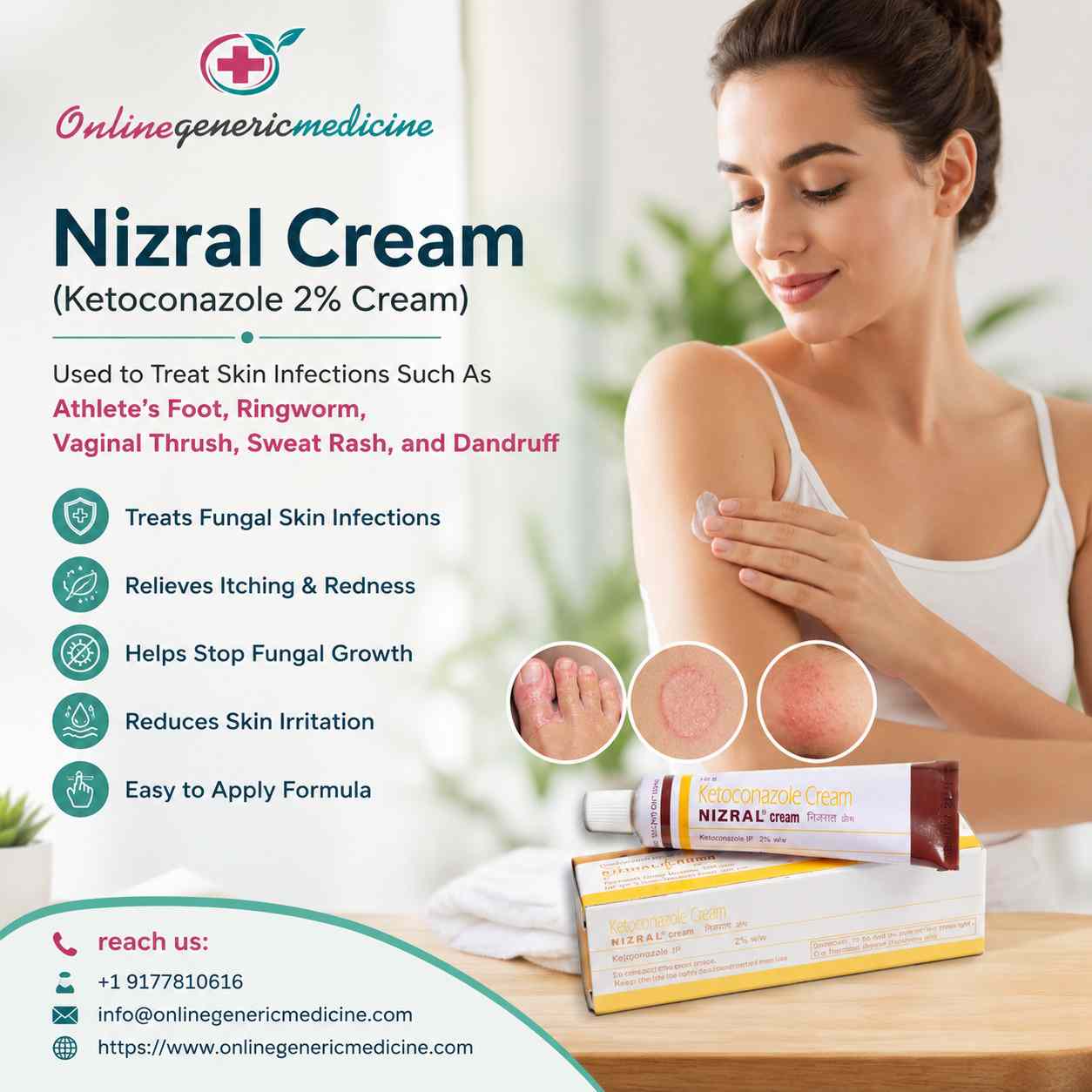
At Onlinegenericmedicine, we believe that better health begins with better awareness. Understanding the causes, symptoms, and treatment options for fungal skin infections helps individuals take timely action and protect their skin. One of the commonly prescribed topical antifungal medications is Nizral Cream (Ketoconazole 2% Cream), which is formulated to treat a range of fungal and yeast-related skin conditions by targeting the source of the infection.
What Is Nizral Cream?
Nizral Cream is a topical antifungal medicine containing Ketoconazole 2%, an ingredient known for its broad-spectrum antifungal activity. It is designed for external application and is used to treat fungal infections affecting the outer layers of the skin.
Rather than simply easing symptoms, the cream works to eliminate the fungi responsible for the infection. This approach helps relieve discomfort while supporting the skin's natural healing process and reducing the likelihood of recurrence when used as directed.
How Does Ketoconazole 2% Cream Work?
Fungal cells rely on a substance called ergosterol to build and maintain their protective cell membrane. Ketoconazole blocks the production of ergosterol, weakening the fungal cells and preventing them from growing or reproducing.
As the fungal population decreases, symptoms such as itching, redness, inflammation, peeling, and burning gradually subside, allowing the affected skin to recover.
Conditions Commonly Managed with Nizral Cream
Healthcare professionals may recommend Nizral Cream for the treatment of several superficial fungal infections, including:
Athlete's Foot (Tinea Pedis)
Ringworm (Tinea Corporis)
Jock Itch (Tinea Cruris)
Sweat Rash associated with fungal overgrowth
External Vaginal Thrush
Dandruff
Seborrheic Dermatitis
Other fungal or yeast infections affecting the skin
Recognizing the Symptoms of a Fungal Skin Infection
Although symptoms vary depending on the affected area, many fungal infections present with similar signs, such as:
Persistent itching or irritation
Red, inflamed, or circular skin patches
Dry, flaky, or peeling skin
Burning or stinging sensations
Cracked skin, particularly between the toes
White or scaly patches
Rashes that gradually spread if left untreated
Seeking appropriate treatment early can help prevent the infection from worsening.
Benefits of Nizral Cream
When used according to medical advice, Nizral Cream can:
Eliminate fungi responsible for superficial skin infections.
Help relieve itching, redness, and irritation.
Reduce flaking and skin scaling.
Support healthy skin repair.
Limit the spread of fungal infection.
Provide targeted treatment directly at the affected area.
Improve comfort during the healing process.
How to Apply Nizral Cream
Clean the affected area with mild soap and water, then dry it thoroughly before applying the cream. Spread a thin layer over the infected skin and a small surrounding area, gently rubbing it in until absorbed.
To achieve the best results, continue treatment for the entire period recommended by your healthcare professional, even if symptoms improve before the infection has completely cleared.
Supporting Recovery Through Good Skin Care
Medication is only one part of successful treatment. Keeping the skin clean and dry creates an environment that is less favorable for fungal growth. Wearing breathable fabrics, avoiding prolonged damp clothing, changing socks regularly, and not sharing towels or footwear can all help reduce the risk of recurring infections.
Possible Side Effects
Like many topical medications, Nizral Cream may occasionally cause mild application-site reactions, including:
Temporary burning
Mild itching
Redness
Dryness
Peeling
Skin irritation
These effects are usually temporary. If severe irritation, swelling, blistering, or signs of an allergic reaction occur, discontinue use and seek medical advice.
Frequently Asked Questions
Is Nizral Cream an antifungal or an antibiotic?
Nizral Cream is an antifungal medication. It is specifically designed to treat fungal and yeast infections and is not effective against bacterial infections.
Can I use Nizral Cream for dandruff?
Yes. Ketoconazole is commonly used to help manage dandruff and seborrheic dermatitis caused by the overgrowth of certain yeasts on the scalp.
How long should I continue treatment?
The treatment duration varies depending on the type of infection. Always follow the instructions provided by your healthcare professional and complete the full course.
Can fungal infections come back?
Yes. Fungal infections may recur if treatment is stopped too early or if the conditions that encourage fungal growth are not addressed. Maintaining good hygiene and completing treatment can help reduce this risk.
Conclusion
Fungal skin infections are common but can often be managed effectively with early treatment and proper skin care. Nizral Cream (Ketoconazole 2% Cream) is a trusted topical antifungal medication that works by eliminating the fungi responsible for infection while helping relieve itching, redness, scaling, and irritation. Whether used for athlete's foot, ringworm, sweat rash, external vaginal thrush, or dandruff, it provides targeted treatment that supports healthier skin and promotes lasting recovery when used as directed by a qualified healthcare professional.
Comments
Log in or sign up to join the conversation.