

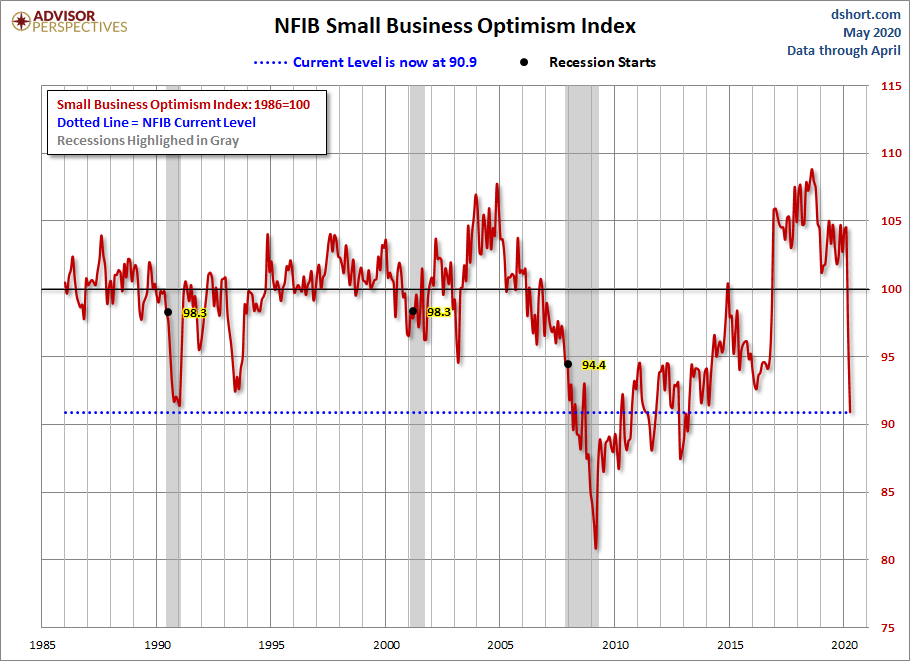
The latest issue of the NFIB Small Business Economic Trends came out this morning. The headline number for April came in at 90.9, down 5.5 from the previous month. The index is at the 9th percentile in this series.
Here is an excerpt from the opening summary of the news release.
Small business optimism took another dive in April, falling 5.5 points to 90.9, with owners expressing certainty the economy will weaken in the near-term, but expecting it to improve over the next six months. The Optimism Index has fallen 13.6 points over the last two months, with nine of 10 Index components declining in April and one improving.
“The impact from this pandemic, including government stay-at-home orders and mandated non-essential business closures has had a devasting impact on the small business economy,” said NFIB Chief Economist William Dunkelberg. “Owners are starting to benefit from the PPP and EIDL small business loan programs as they try to reopen and keep employees on staff. Small business owners need more flexibility, though, in using the PPP loan to support business operations and liability protection so that all these efforts to support small businesses are not ultimately lost in costly litigation.”
The first chart below highlights the 1986 baseline level of 100 and includes some labels to help us visualize that dramatic change in small-business sentiment that accompanied the Great Financial Crisis and now the COVID-19 pandemic. Compare, for example, the relative resilience of the index during the 2000-2003 collapse of the Tech Bubble with the far weaker readings following the Great Recession that ended in June 2009 and today's figures.
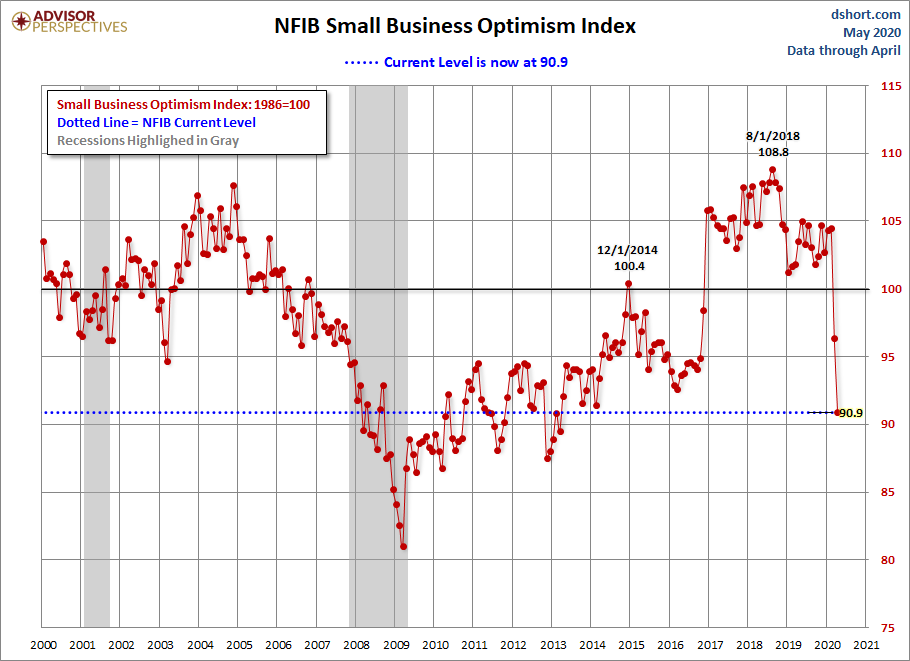
Here is a closer look at the indicator since the turn of the century.
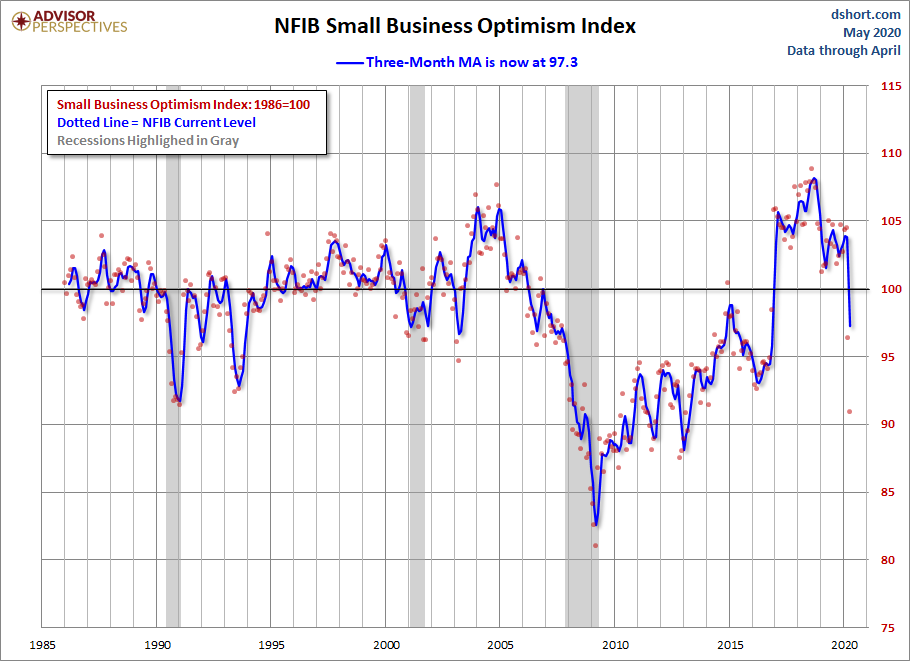
The average monthly change in this indicator is 1.3 points. To smooth out the noise of volatility, here is a 3-month moving average of the Optimism Index along with the monthly values, shown as dots.
Here are some excerpts from the report.
Labor Markets
Job creation plans fell for a second straight month as the government ordered shutdown took hold. A seasonally-adjusted net 1 percent plan to create new jobs, down 8 points.
Inflation
How effective has the Fed's monetary policy been in lifting inflation to its two percent target rate?
The net percent of owners raising average selling prices fell 24 points to a net negative 18 percent, seasonally adjusted.
Credit Markets
Has the Fed's zero interest rate policy and quantitative easing had a positive impact on Small Businesses?
Five percent of owners reported that all their borrowing needs were not satisfied, up 2 points. Twenty-nine percent reported all credit needs met (unchanged) and 56 percent said they were not interested in a loan (up 1 point).
NFIB Commentary
This month's "Commentary" section includes the following observations and opinions:
A record unemployment rate of 14.7 percent was accompanied by a stock market gain of about 1.5 percent, indicating that investors are optimistic about the future of our economy. About 80 percent (16 million) of the unemployed share that optimism, expecting to be rehired as the economy opens back up, being on temporary layoff. The picture is further confused by unemployment benefits that for many exceed previous pay. Small business owners are starting to rehire laidoff employees as states lift business restrictions and small business loans are hitting bank accounts.
Fighting the spread of Covid-19 with isolation policies is exceptionally costly economically as the data show. Consumers must feel “safe” before they come back out with their wallets. The sooner that happens the faster the economy will recover.
Business Optimism and Consumer Confidence
The next chart is an overlay of the Business Optimism Index and the Conference Board Consumer Confidence Index. The consumer measure is the more volatile of the two, so it is plotted on a separate axis to give a better comparison of the two series from the common baseline of 100.
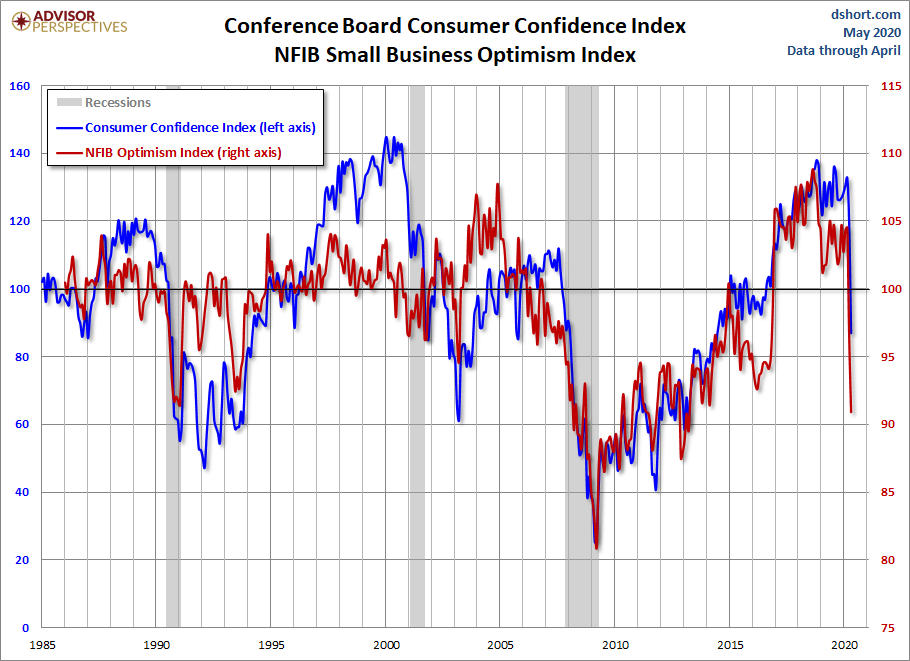
These two measures of mood have been highly correlated since the early days of the Great Recession. The two diverged after their previous interim peaks, but have recently resumed their correlation. A decline in Small Business Sentiment was a long leading indicator for the last two recessions.

Comments
Log in or sign up to join the conversation.