

In line with the telegraphed 'mini cycle', the National Bank of Hungary continued to cut rates in July. The Monetary Council will closely monitor developments in the risk premium, but we do not expect any further damage and anticipate more rate cuts
ING's policy view: We see scope for further cuts in autumn
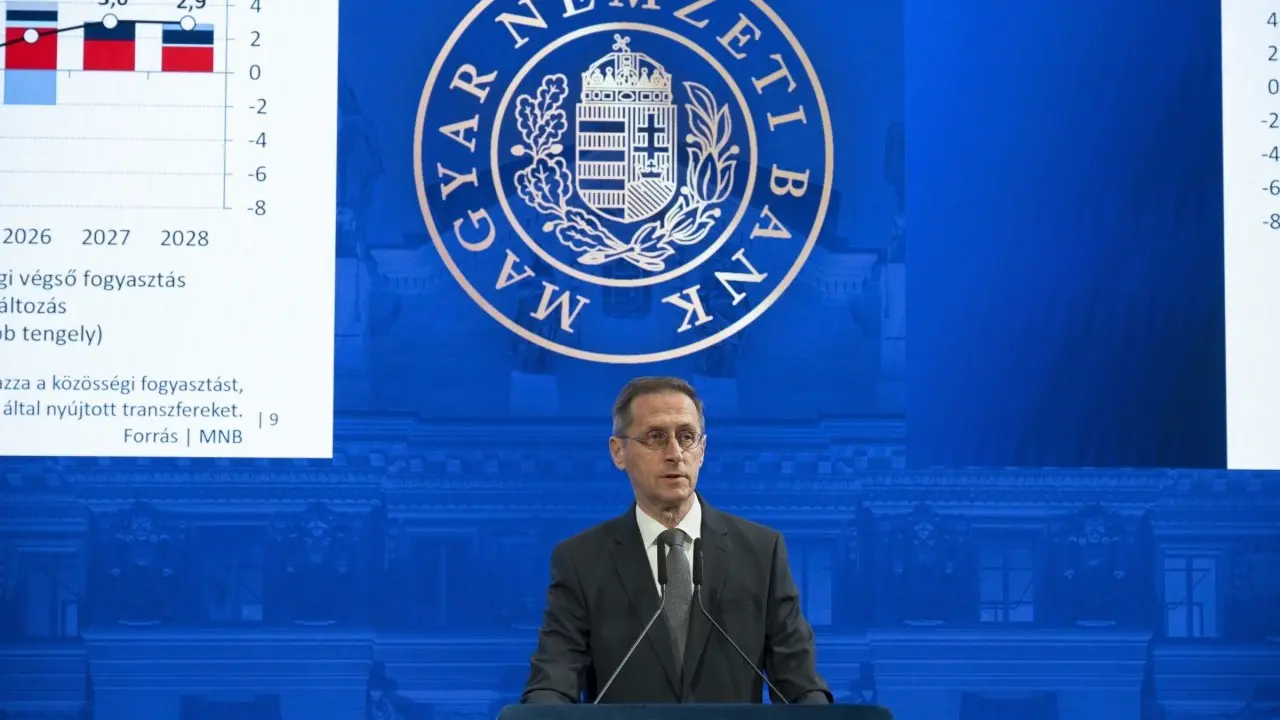
The National Bank of Hungary cut the base rate from 6.00% to 5.75% on 21 July, as had been signalled at the June rate-setting meeting when Governor Varga announced a 'mini rate cut cycle' throughout the summer.
Looking ahead, if position-driven profit-taking proves to be temporary, as we anticipate, and local politics deliver on previous commitments regarding the euro adoption plan, EU funding developments and long-term fiscal adjustments, the risk premium for Hungarian assets could fall again. In this case, we forecast a 'midi' rate cut cycle involving three or four further rate cuts following July's move.
The biggest issue now is that the recent flare-up in the Middle East has increased the risk of miscalculation. At a local level, everything is going according to plan, with €16.4bn in EU funds being made available to Hungary. While it is still difficult to be certain, we are forecasting a base rate of between 4.75% and 5.00% by the end of this year and a terminal rate of 4.00% by the end of 2028.
ING’s market views
The NBH’s confirmation of its earlier forward guidance, despite elevated volatility and pressure on HUF assets amid the global risk-off sentiment, should reassure markets that the local story is unchanged. The reaction after the press conference suggests investors have accepted the dovish signal, with rate cuts returning to market pricing. We expect this to continue, supported by an unchanged fundamental backdrop after the April elections and repeated downside inflation surprises. With markets having outpriced around 40bp of easing and the implied terminal rate back near 4.75–5.00%, we expect pricing to shift toward a more dovish view after today’s meeting, closer to our medium-term forecast of 4.00%, while curve steepening continues.
This remains highly dependent on the global backdrop, where visibility is limited. However, any global relief should deliver the strongest gains in the HUF market, in our view, as Hungarian rates led the EM sell-off and the central bank has just confirmed that the domestic policy story is unchanged.
The FX implications are more mixed. Further NBH rate cuts would weaken expected carry, while a stronger US dollar and risk-off conditions remain unfavourable for EM currencies. Still, EUR/HUF has almost returned to post-election levels, which should limit further upside. If the global backdrop stabilises, we expect EUR/HUF to move back below 360.
Our three takeaways from the presser
Overall, the macro outlook is broadly in line with the June Inflation Report. Inflation was lower than expected, while energy prices increased slightly and the country-specific risk premium remains favourable despite the recent correction. Therefore, recent market movements are not enough to raise a red flag. We agree with Varga's suggestion that an optimistic view may be realistic this time.
The Monetary Council’s decision was unanimous this time, and everything is in place for an August rate cut unless geopolitical factors intervene. The September Inflation Report will be decisive in determining the interest rate path for the autumn. Varga expressed his confidence that the interest rate outlook could improve significantly from an investor's perspective, particularly in the near future. We believe that this commentary concerns the yield environment and can be interpreted as a mildly dovish statement, perhaps even unintended.
The importance of FX market stability in lowering and anchoring inflation expectations was emphasised again, as these expectations have been showing improvement lately. We believe that the central bank's primary objective is to maintain the recent range of 350–365 for the EUR/HUF exchange rate.


Comments
Log in or sign up to join the conversation.