

Introduction
Krishna is remembered across India in countless forms — as the mischievous child stealing butter, the flute-playing cowherd, the divine charioteer of the Bhagavad Gita, and the beloved deity of Vrindavan. But among these many representations, Narthana Krishna captures something particularly enchanting: the divine expressed through dance.
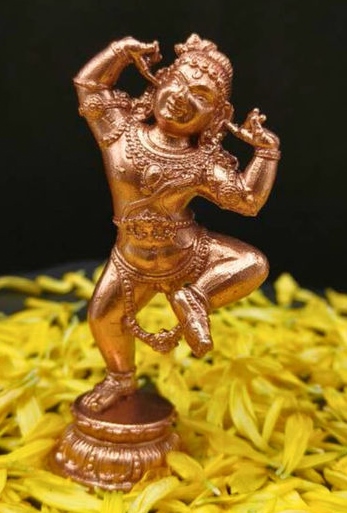
The dancing form of Krishna is not simply an image of a child in motion. It reflects the playful, joyful and spontaneous nature that has always been central to Krishna's stories. With one foot raised, the body curved gracefully and the expression filled with youthful charm, Narthana Krishna appears to transform movement itself into an expression of devotion. This is the spirit behind the Narthana Krishna idol crafted at Gold Plating Art Studio, where traditional Indian sculptural forms continue to inspire contemporary devotional art.
Who Is Narthana Krishna?
Narthana Krishna, meaning Dancing Krishna, portrays Lord Krishna in a dynamic dancing posture. Unlike more formal representations in which Krishna stands calmly with his flute, this form captures him in an energetic and playful moment.
Krishna's childhood and youth are filled with stories of music, dance and celebration. His presence in Vrindavan is traditionally associated with the joyful world of the Gopalas and Gopis, where music and movement form an important part of devotional expression. Narthana Krishna brings that lively personality into sculptural form.
The raised foot, curved posture and expressive gestures give the idol a sense of movement even though it is created from solid metal. The result is a figure that feels animated rather than static — a quality that has made dancing Krishna an enduring subject in Indian religious sculpture.
The Divine Playfulness of Krishna
Few Hindu deities are associated with divine playfulness as strongly as Krishna.
His childhood stories describe a deity who did not remain distant from ordinary life. He played with his friends, stole butter, teased the Gopis and filled Vrindavan with music and laughter. These stories are traditionally understood not merely as tales of childhood mischief, but as expressions of Krishna's joyful and approachable nature.
Narthana Krishna captures this aspect particularly well. His dance is not presented as a display of power or warfare. Instead, it expresses freedom, happiness and divine play.
This makes the dancing form different in character from many other Hindu dancing deities. Where some sacred dances symbolize cosmic destruction or profound spiritual transformation, Krishna's dance can evoke the simple beauty of divine joy.
The Rhythm Behind the Dance
Dance has always held an important place in Indian religious and artistic traditions. In sacred sculpture, a dancing figure is carefully constructed so that balance, movement and expression work together.
Narthana Krishna demonstrates this artistic principle beautifully. The sculptor must create the impression that Krishna is moving while maintaining the physical balance of the figure. The position of the feet, the curve of the torso, the movement of the arms and the arrangement of the ornaments all contribute to this illusion of motion.
This is one reason traditional bronze sculpture is so remarkable. A metal idol can appear almost weightless when the sculptor successfully captures the rhythm of a moving body.
In Narthana Krishna, craftsmanship therefore becomes part of the devotional experience. The artist is not simply creating a statue; the artist is attempting to preserve a moment of divine movement.
Narthana Krishna and South Indian Bronze Tradition
South India has a particularly distinguished tradition of metal sculpture, with generations of sthapathis developing sophisticated methods for creating Hindu deities in bronze and other traditional metals.
The Chola period is especially celebrated for its bronze sculpture, which demonstrated an extraordinary understanding of human anatomy, movement and spiritual expression. Dancing forms of Hindu deities became an important part of this sculptural heritage, and Krishna was represented in several graceful and playful poses.
The tradition continues to influence contemporary craftsmen. A Narthana Krishna idol today carries echoes of this older artistic language — the emphasis on proportion, expressive posture, ornaments and the ability to suggest movement within a stationary figure.
For this reason, a handcrafted bronze or brass Krishna idol can represent both devotion and a connection to India's long artistic heritage.
The Symbolism of Krishna's Dancing Form
The dance of Narthana Krishna can be understood on several levels.
At the simplest level, it represents happiness and youthful energy. At a deeper level, it reflects the idea that devotion does not always have to be expressed through solemnity. Joy itself can become a form of worship.
The balanced posture also offers a meaningful visual metaphor. Krishna appears to be moving freely while remaining perfectly composed. It suggests that life may constantly change around us, yet inner balance can remain steady.
His youthful form adds another dimension. Krishna's stories repeatedly remind devotees that wisdom and divinity can appear through simplicity, playfulness and love. Narthana Krishna therefore presents spirituality in an approachable and joyful form.
How Narthana Krishna Differs from Other Krishna Forms
Krishna is represented in many distinct forms, each highlighting a different part of his personality.
Bala Krishna emphasizes the innocence and charm of the divine child. Venugopala Krishna is commonly shown playing the flute and evokes the musical and pastoral world of Vrindavan. Krishna as Parthasarathy represents his role as Arjuna's charioteer and spiritual guide.
Narthana Krishna stands apart by focusing on movement and divine play.
Rather than presenting Krishna primarily as a teacher, warrior, king or flute player, this form allows devotees to encounter the youthful Krishna through dance. It is this sense of movement and happiness that gives Narthana Krishna its distinctive character among traditional Krishna idols.
Spiritual Significance of Narthana Krishna
Joy as devotion — Krishna's dance reflects the idea that happiness and celebration can themselves become expressions of devotion.
Balance in movement — His graceful posture suggests maintaining inner steadiness even while life remains constantly in motion.
Youthful divine energy — The dancing form captures Krishna's playful personality and reminds devotees of the importance of innocence, enthusiasm and spontaneity.
The beauty of Indian craftsmanship — The detailed sculptural form demonstrates how traditional artisans transform devotional ideas into physical representations.
A connection to tradition — Handcrafted Krishna idols continue an artistic heritage that has developed across generations of Indian sculptural practice.
Narthana Krishna: The Divine Dance of Joy
Narthana Krishna represents Lord Krishna in a graceful dancing posture, capturing the playful energy and youthful charm associated with his childhood in Vrindavan. His raised foot, curved body and expressive gestures create a sense of movement, as though the deity is dancing to an unseen melody.
The dancing form of Krishna reflects the joyful side of devotion. Unlike representations that show him as a teacher, warrior or flute player, Narthana Krishna highlights his carefree nature and connection with music, celebration and divine play. His dance reminds devotees that spirituality can be experienced through happiness, love and inner freedom.
Conclusion
Narthana Krishna tells a different kind of divine story — one in which spirituality is expressed through movement, happiness and play.His dancing posture captures the youthful personality of Krishna while reminding us that devotion can be joyful as well as contemplative. The balance of the figure, the elegance of its movement and the traditions behind its craftsmanship make Narthana Krishna an enduring form of Indian sacred art.
Comments
Log in or sign up to join the conversation.