

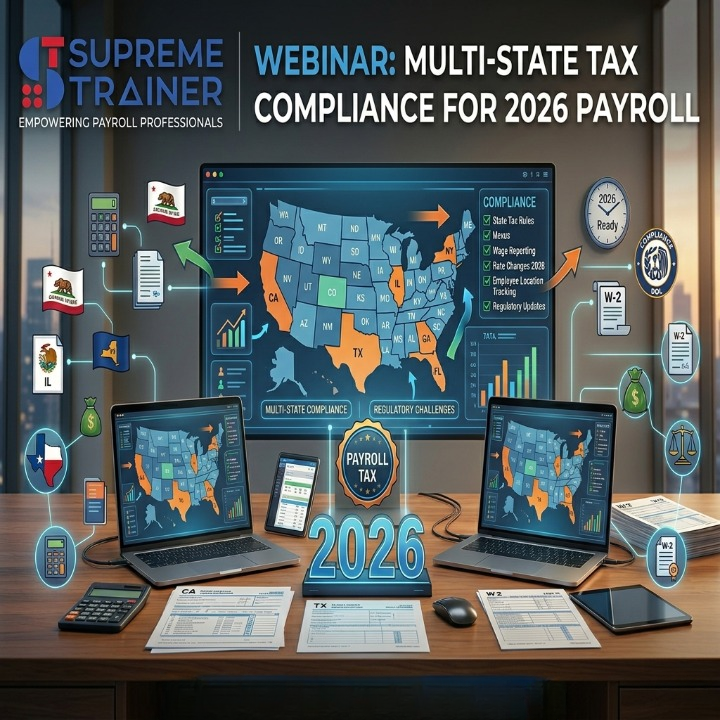
Managing payroll used to be fairly predictable. Employees worked from one office, in one state, under one set of tax rules. Fast forward to 2026, and that simplicity is gone. Today’s workforce is mobile, flexible, and often spread across multiple states. As a result, Multi-State Tax Compliance has become a critical priority for businesses of all sizes.
If you’re in payroll or HR, you’ve probably already felt the shift. What used to be a straightforward process now requires careful tracking, constant updates, and a deeper understanding of tax regulations. The good news? With the right approach, you can stay ahead of the complexity and keep your payroll running smoothly.
The New Reality of Payroll in 2026
Remote work is no longer a trend—it’s the norm. Employees are choosing where they live based on lifestyle, not office location. Some split time between states, while others relocate without changing jobs. For employers, this creates a ripple effect in payroll compliance.
Each state has its own rules for income tax, withholding, and reporting. This means a single payroll cycle might involve multiple tax jurisdictions. If not handled correctly, it can lead to errors that affect both the company and its employees.
Why Multi-State Tax Compliance Matters
At its core, Multi-State Tax Compliance ensures that taxes are withheld and reported accurately based on where employees live and work. But it’s about more than just numbers—it’s about avoiding risk.
Incorrect tax handling can result in:
Penalties and fines from state authorities
Compliance audits that take time and resources
Employees facing issues with their personal tax filings
Damage to your organization’s credibility
In short, getting it wrong is costly—financially and reputationally.
Understanding the Basics Without the Jargon
Let’s simplify a few key ideas that often cause confusion:
Where the Work Happens Matters
States generally want to tax income earned within their borders. So if an employee works in a different state—even remotely—that state may require tax withholding.
Where the Employee Lives Also Matters
Many states tax residents on all their income, regardless of where it’s earned. This can create overlap, where two states have a claim on the same income.
Double Taxation Isn’t Always the Outcome
Thankfully, there are systems in place—like tax credits or agreements between states—that help prevent employees from being taxed twice. But these rules vary, so they need to be handled carefully.
The Role of Payroll Teams Has Evolved
Payroll is no longer just about processing salaries. It’s about managing compliance across multiple jurisdictions. That means payroll professionals need to think more strategically than ever before.
You’re not just entering data—you’re interpreting rules, verifying locations, and ensuring every paycheck reflects the correct tax treatment.
Common Mistakes to Watch Out For
Even experienced teams can run into trouble with multi-state payroll. Some common pitfalls include:
Assuming an employee’s tax situation hasn’t changed
Failing to update payroll systems after a relocation
Overlooking temporary work arrangements in other states
Misunderstanding which state gets priority for tax withholding
Ignoring local or city-level taxes
These mistakes are easy to make—but also avoidable with the right systems in place.
Practical Tips for Staying Compliant
You don’t need to overhaul everything overnight. Small, consistent steps can make a big difference:
1. Track Employee Locations in Real Time
Don’t rely on outdated records. Make sure you know where your employees are actually working—not just where they were hired.
2. Communicate with Employees
Encourage employees to report changes in their work location. A simple internal policy can prevent major compliance issues later.
3. Use Automation Wisely
Modern payroll platforms can handle multi-state calculations more accurately than manual processes. Automation reduces errors and saves time.
4. Review Compliance Regularly
Set up periodic checks to ensure your payroll processes align with current state laws. This helps catch issues early.
5. Seek Expert Guidance When Needed
Multi-state tax rules can get complicated quickly. When in doubt, consulting a tax expert can save you from costly mistakes.
Looking Ahead: What to Expect
As we move further into 2026, the complexity of Multi-State Tax Compliance isn’t likely to decrease. In fact, it may grow as states update their laws to reflect changing work patterns.
Employers should expect:
More scrutiny around remote work arrangements
Increased enforcement of tax compliance rules
Continued evolution of state-specific regulations
Being proactive now will make it easier to adapt to future changes.
Final Thoughts
Multi-State Tax Compliance might feel overwhelming at times, but it’s really about staying organized, informed, and prepared. The workplace has changed—and payroll has had to evolve with it.
By focusing on accurate data, clear communication, and the right tools, businesses can handle multi-state payroll with confidence. It’s not just about avoiding penalties—it’s about building a system that supports flexibility while staying compliant.
In a world where employees can work from almost anywhere, mastering multi-state tax compliance isn’t just a necessity—it’s a competitive advantage.
FAQs
1. Do employees have to pay taxes in two states?
Sometimes yes, but not always. If both the work state and home state tax income, employees may file in both—but tax credits or reciprocity agreements often prevent double taxation.
2. What happens if an employee moves to another state mid-year?
Payroll must be updated immediately. Taxes may need to be split between the old and new state based on when the move happened.
3. Are employers responsible for tracking employee work locations?
Yes. Employers are responsible for knowing where employees work and ensuring the correct state taxes are withheld and reported.
4. Can small businesses handle multi-state tax compliance easily?
It can be challenging, but using payroll software and staying informed about state rules can make the process much more manageable.
Comments
Log in or sign up to join the conversation.