

Marble has been associated with sculpture and architecture for thousands of years, but its role in contemporary design is far from traditional.
Today, artists, architects, landscape designers, luxury developers, hospitality brands, and private collectors are using marble to create sculptures that range from minimalist geometric forms to highly detailed figurative works. The natural variation, translucency, texture, and permanence of stone give each finished piece a character that is difficult to reproduce with synthetic materials.
A modern marble sculpture can therefore serve as much more than a decorative object. It can become a focal point within a luxury interior, a statement piece in a landscaped garden, a landmark within a commercial development, or an architectural feature designed specifically around a building.
However, creating successful marble sculpture requires more than artistic skill. Stone selection, structural planning, carving, finishing, transportation, and installation all need to be considered from the beginning.
What Makes Marble Unique for Sculpture?
Marble is a natural stone with its own mineral composition, veining, translucency, and color variations.
No two blocks are necessarily identical. Even when the same quarry and marble variety are selected, the pattern and movement of the stone can differ from one block to another.
This natural individuality is one of marble's greatest attractions.
A polished white marble sculpture may appear luminous as light interacts with the stone's surface and internal crystals. Darker varieties can create a dramatic architectural presence, while strongly veined marble can become part of the artwork itself.
For designers and buyers interested in contemporary and custom applications, the marble sculpture collection showcases how natural stone can be developed into classical, architectural, garden, and contemporary forms.
Modern Marble Sculpture for Contemporary Architecture
Contemporary architecture often favors clean lines, simple geometry, open spaces, and carefully selected materials.
Marble can complement this aesthetic particularly well.
Instead of reproducing classical figures, designers can commission abstract forms, geometric compositions, flowing shapes, or minimalist floor sculptures.
The contrast between natural stone and modern architecture can create a particularly strong visual effect.
For example, a polished marble sculpture can be positioned within a minimalist lobby where the natural veining becomes a subtle focal point. Alternatively, a large geometric piece can be placed in an open plaza to provide a strong sculptural counterpoint to glass, concrete, and steel.
The key is to consider the sculpture as part of the overall architectural composition rather than treating it as an isolated decorative object.
Contemporary Marble Sculpture: Where Art Meets Architecture
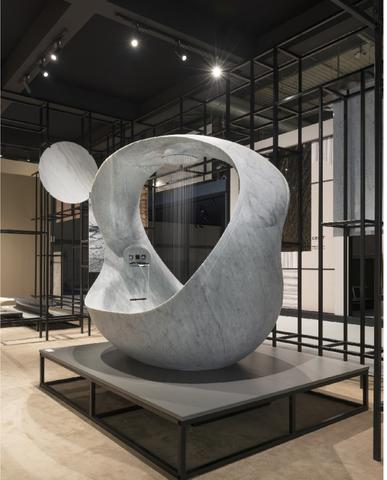
A contemporary marble sculpture does not necessarily have to look futuristic.
Contemporary sculpture is more about the approach to form, proportion, material, space, and visual interpretation than about following a specific appearance.
A traditional subject can be interpreted using contemporary proportions or simplified forms. Likewise, an abstract sculpture can use highly traditional hand-carving techniques.
This creates interesting possibilities for architects and designers.
A contemporary marble piece can incorporate:
Minimalist geometric forms
Abstract curves
Interlocking shapes
Negative space
Organic forms
Architectural proportions
Contrasting surface textures
Polished and honed finishes
Natural stone veining as part of the composition
Combining different surface treatments can also change how light interacts with the sculpture. A polished section may reflect light while a honed or textured section absorbs it, creating visual contrast without introducing another material.
How Marble Is Selected for a Sculpture
Choosing the right block is one of the most important stages of marble sculpture production.
Unlike manufactured materials, natural marble cannot be treated as completely uniform.
Before carving begins, the manufacturer needs to consider:
Marble variety
Color
Veining
Density
Existing fissures
Block dimensions
Intended sculpture size
Final surface treatment
Installation environment
For a highly minimalist sculpture, the natural veins may become an important part of the design.
For a realistic figurative sculpture, however, the manufacturer may prefer a more consistent block so the natural pattern does not interfere with the intended form.
This is why selecting the actual stone block can be an important part of a custom project.
PG Sculpture's current marble process includes quarry-direct sourcing and provides clients with photographs and videos of raw blocks so the specific material can be selected before production.
Custom Marble Sculpture for Unique Projects
Off-the-shelf sculptures can be useful for buyers looking for a standard decorative piece, but architectural and landscape projects often require something different.
A custom marble sculpture can be developed around the dimensions, concept, location, and visual identity of a specific project.
The design may originate from:
An artist's sketch
Architectural drawings
CAD files
A 3D model
Concept artwork
A photograph
A historical reference
A completely original idea
The manufacturer can then translate the concept into a stone-carving plan.
Customization may involve the sculpture's height, width, proportions, surface finish, stone variety, base design, installation method, and structural requirements.
For large commissions, customization should also account for transportation and installation. A sculpture that looks perfect in a digital rendering may need to be divided into sections or modified slightly to make production and delivery practical.
From Digital Model to Hand-Carved Marble
Modern marble manufacturing increasingly combines technology with traditional craftsmanship.
Digital modeling can help establish accurate dimensions and proportions before carving begins. CNC machinery can then remove large amounts of stone efficiently during the initial shaping stage.
However, technology does not necessarily replace the sculptor.
After the preliminary shaping is complete, skilled stone carvers can refine the surface, restore artistic details, and develop the final character of the sculpture by hand.
PG Sculpture describes this as a hybrid process combining CNC pre-shaping with artisanal hand-carving, allowing complex forms to achieve dimensional accuracy while retaining the character of hand-finished stonework.
This combination can be particularly useful for contemporary projects where precise geometry and handcrafted finishing need to work together.
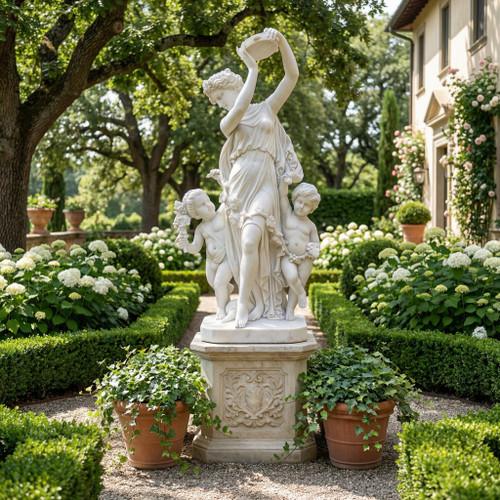
Marble Garden Statues: Bringing Sculpture Into Landscapes
Marble has a natural relationship with gardens and landscape architecture.
The material's organic variation can complement plants, water, stone pathways, trees, and architectural landscaping.
Marble garden statues can be used in:
Private estates
Luxury hotel gardens
Resort landscapes
Botanical gardens
Courtyards
Public parks
Corporate campuses
Villa developments
Monumental landscape projects
The appropriate size depends on the surrounding environment.
A small statue can create an intimate focal point along a garden path. A monumental sculpture may instead be positioned at the end of a long axis or within an open lawn where it can be viewed from a considerable distance.
Integrating Marble With Landscaping
Placement is just as important as the sculpture itself.
A sculpture may be positioned near a water feature to create a reflective composition. It can also be framed by vegetation or placed against a simple architectural background.
The goal should be to create a relationship between the sculpture and its surroundings.
For garden projects, the choice of finish is also important. A highly polished surface can create a formal and luxurious appearance, while a honed or textured surface may integrate more naturally into a contemporary landscape.
Modern Marble Sculpture for Luxury Interiors
Marble is equally effective indoors.
Hotels, corporate headquarters, luxury residences, museums, galleries, shopping centers, and premium retail spaces can use marble sculpture to create a strong first impression.
An interior sculpture may be positioned in:
Hotel lobbies
Reception areas
Grand staircases
Atriums
Private residences
Gallery spaces
Corporate headquarters
Luxury retail environments
Because indoor viewers are often much closer to the sculpture, surface quality becomes particularly important.
Small imperfections that may not be visible on a large outdoor monument can become noticeable when visitors can walk directly around the piece.
This makes final polishing, edge treatment, surface consistency, and detail refinement particularly important for interior applications.
Choosing the Right Marble Finish
The finish can significantly influence how a sculpture interacts with light.
Polished Finish
A polished surface provides a smooth, reflective appearance and can emphasize the natural translucency and veining of certain marble varieties.
It is commonly suited to luxury interiors and contemporary decorative sculptures.
Honed Finish
Honed marble has a softer, matte appearance.
It can work particularly well in modern interiors where excessive reflection is undesirable or where the designer wants the sculpture to have a more understated character.
Textured Finish
Bush-hammered, carved, or other textured surfaces can create contrast within the same sculpture.
A contemporary piece may intentionally combine polished and textured areas to emphasize specific forms.
Natural Surface
Some designs benefit from preserving more of the stone's natural character.
This can create an organic appearance that works especially well in landscape environments.
Structural Considerations for Large Marble Sculptures
Marble is extremely strong under compression, but it is still a brittle natural stone.
This distinction becomes important when designing large or unusually shaped sculptures.
Thin projections, extended forms, narrow connections, and heavily undercut sections may require additional engineering consideration.
For monumental installations, internal reinforcement and anchoring systems may be incorporated into the design.
PG Sculpture states that its large-scale and outdoor marble sculptures can incorporate hidden 316L stainless-steel reinforcement and engineered anchoring systems to address structural stability.
This is particularly relevant for sculptures installed in exposed outdoor environments.
The engineering should account for the sculpture's center of gravity, dimensions, installation method, wind conditions, and foundation requirements.
Protecting Marble in Outdoor Environments
Outdoor marble is exposed to conditions that indoor sculpture does not experience.
Rain, pollutants, moisture, temperature changes, and freeze-thaw cycles can affect natural stone over time.
The appropriate marble variety and finishing approach therefore need to be selected according to the climate and installation environment.
A suitable penetrating sealant can help reduce moisture and pollutant absorption while preserving the natural appearance of the stone.
However, protection should not be treated as an afterthought. The stone itself, structural design, drainage, foundation, installation, and maintenance plan all contribute to long-term performance.
How to Choose a Marble Sculpture Manufacturer
Choosing the right manufacturer is particularly important for custom and monumental marble work.
A supplier should be evaluated on both artistic and technical capabilities.
Review Completed Projects
Look for examples that demonstrate experience with the scale and style you require.
A manufacturer specializing in small decorative pieces may not have the same capabilities required for a monumental public sculpture.
Reviewing completed sculpture projects can help buyers understand the range of materials, forms, scales, and environments handled by a manufacturer.
Ask About Stone Sourcing
Find out where the marble comes from and whether you can review the actual block before carving.
This is especially important when the stone's color and veining are integral to the design.
Understand the Manufacturing Process
Ask whether the manufacturer uses traditional hand carving, CNC technology, or a combination of both.
The appropriate approach will depend on the sculpture's geometry and desired finish.
Discuss Structural Engineering
For large outdoor sculptures, ask how the sculpture will be reinforced and anchored.
The manufacturer should be able to explain the structural approach and provide the necessary installation information.
Examine Finishing Quality
Look closely at completed projects.
Pay attention to transitions between polished and textured surfaces, sharpness of details, consistency of finish, and the treatment of difficult areas.
Marble Sculpture vs. Other Materials
Marble is only one of several materials available for sculpture.
Bronze can provide a very different visual character and is particularly effective for figurative monuments and traditional outdoor sculpture.
Fiberglass can be advantageous when a project requires a lighter large-scale structure.
Stainless steel can be suitable for contemporary outdoor environments where a metallic appearance and weather resistance are important.
Resin can be useful for highly detailed smaller sculptures and collectible pieces.
Marble is particularly compelling when the project requires:
Natural stone character
Unique geological veining
Monumental permanence
Classical or contemporary aesthetics
A premium architectural appearance
Hand-carved detailing
Strong integration with landscape or architecture
The best material should always be selected according to the sculpture's design, environment, structural requirements, budget, and intended lifespan.
Planning a Custom Marble Sculpture Project
Before commissioning a sculpture, buyers should prepare a clear project brief.
Important information includes:
Dimensions:
Define the approximate height, width, and depth.
Location:
Specify whether the sculpture will be installed indoors, in a garden, in a public space, or in another environment.
Design:
Provide sketches, CAD drawings, reference images, or 3D models where available.
Stone:
Discuss preferred marble varieties, color, veining, and surface character.
Finish:
Specify whether the desired result is polished, honed, textured, or natural.
Installation:
Establish foundation, anchoring, lifting, and assembly requirements.
Transportation:
Determine whether the sculpture can be shipped as one piece or should be manufactured in sections.
Maintenance:
Discuss cleaning, sealing, inspection, and long-term care requirements.
Clear planning allows the manufacturer to identify potential technical challenges before carving begins.
What Should Buyers Ask Before Ordering?
Before approving a custom marble project, ask the manufacturer:
Can I select the actual marble block?
This can be important when the natural color and veining are central to the design.
Can you work from a sketch or 3D model?
A manufacturer with design and modeling capabilities can help develop an initial concept into a production-ready sculpture.
How will the sculpture be reinforced?
This is particularly important for large outdoor installations and sculptures with delicate or extended elements.
What finish will be applied?
The finish should be selected according to the artistic concept and installation environment.
How will the sculpture be transported?
Large marble pieces require careful crating, handling, lifting, and shipping planning.
What installation information will be provided?
Foundation dimensions, anchoring details, lifting points, and assembly instructions may all be required for a successful installation.
Final Thoughts
Marble remains one of the most distinctive materials available for sculpture because it combines natural beauty, geological individuality, and a long artistic tradition with the possibilities of modern manufacturing.
A modern marble sculpture can complement contemporary architecture just as effectively as a classical marble statue can enhance a traditional estate. Likewise, a contemporary marble sculpture can use natural stone veining, geometric forms, negative space, and contrasting finishes to create a distinctly modern work.
For landscaped environments, marble garden statues can provide elegant focal points that connect sculpture with architecture and nature. For more specialized commissions, a custom marble sculpture can be developed around the dimensions, artistic concept, stone selection, structural requirements, and environment of a particular project.
The success of a marble sculpture ultimately depends on more than the stone itself. Careful material selection, digital planning, CNC preparation, skilled hand carving, structural engineering, finishing, packaging, and installation all contribute to the final result.
For buyers planning a custom or monumental marble sculpture, researching a manufacturer's previous work and discussing the project requirements before production begins can help ensure that the final piece is both artistically distinctive and technically appropriate for its intended setting.
If you are planning a custom marble sculpture for a garden, architectural development, luxury interior, or public space, the next step is to discuss the design, dimensions, stone requirements, and installation conditions with an experienced manufacturer.
Comments
Log in or sign up to join the conversation.