
Microsoft Fabric vs. Power BI: Understanding Their Roles
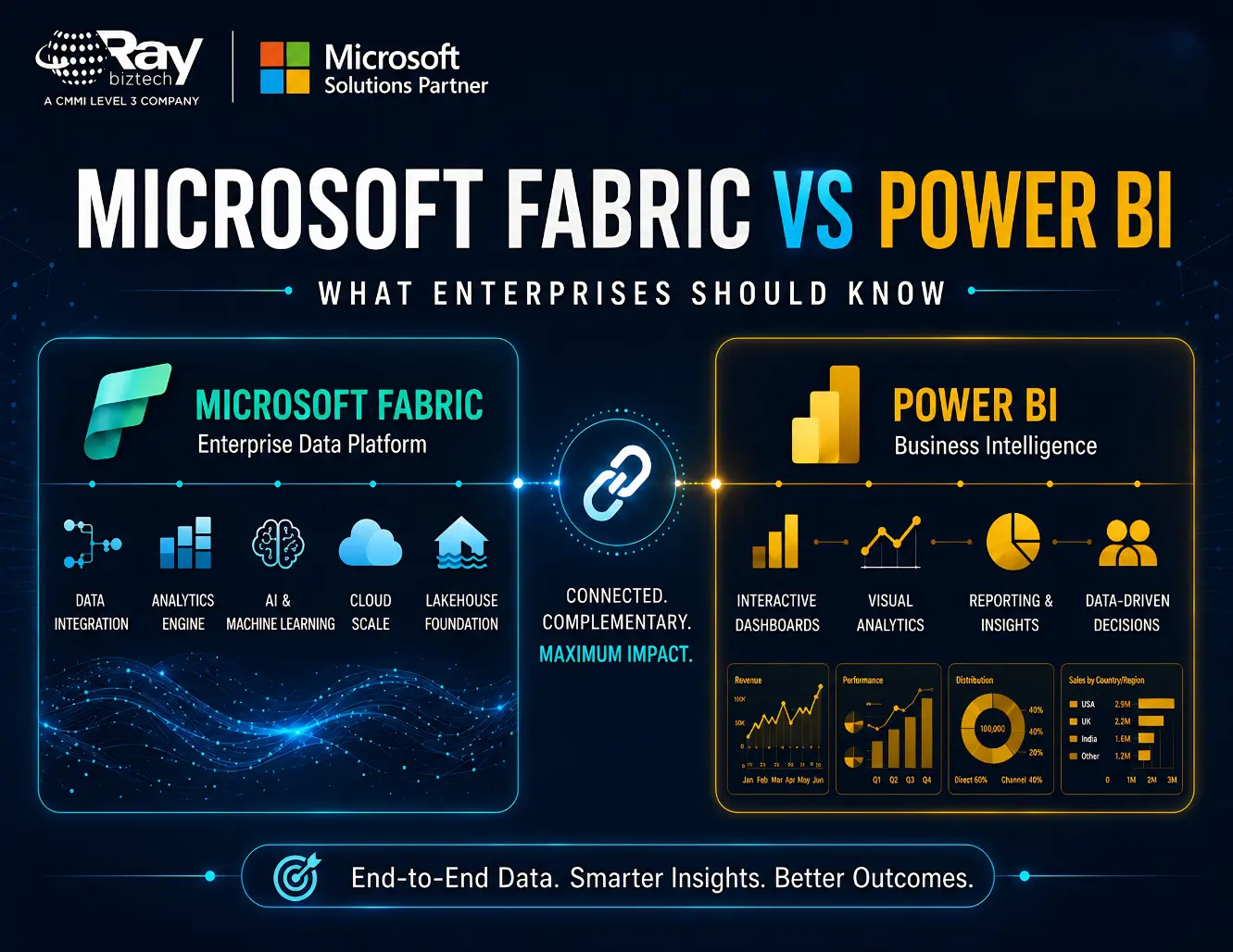
Modern enterprises need more than dashboards. They need trusted data, real-time insights and an AI-ready analytics foundation. Microsoft Power BI provides powerful reporting and visualization, while Microsoft Fabric extends analytics capabilities by bringing data integration, engineering, lakehouse, data warehouse, real-time analytics and Power BI into one platform.
The focus is not on choosing between Microsoft Fabric and Power BI. Instead, organizations can use both to support different parts of the analytics lifecycle.
Power BI for Business Insights
Microsoft Power BI helps businesses turn complex data into interactive reports and dashboards. Teams can monitor KPIs, identify trends and gain visibility into business performance.
However, enterprise data often comes from ERP, CRM, financial systems, cloud applications and legacy databases. Managing these sources separately can lead to data silos and inconsistent reporting.
Microsoft Fabric as the Data Foundation
Microsoft Fabric supports the broader data lifecycle, from integration and transformation to storage, analytics and AI.
Its capabilities help organizations connect data from multiple sources and build a modern data environment that supports enterprise analytics, real-time insights and AI-driven use cases.
How Fabric and Power BI Work Together
Power BI focuses on presenting insights, while Fabric provides the data foundation behind those insights. Fabric can connect and prepare enterprise data, while Power BI delivers that trusted data through dashboards and reports.
Together, they can help reduce manual processes, improve data consistency and provide better visibility across business operations.
Supporting Real-Time Analytics and AI
Traditional BI often focuses on historical reporting. Modern organizations increasingly need real-time information about customers, finance, operations and supply chains.
Microsoft Fabric supports real-time analytics while helping organizations improve data accessibility and governance. This provides a stronger foundation for advanced analytics, machine learning and AI initiatives.
Modernizing Enterprise Data
Traditional data warehouses can be costly to maintain and difficult to scale. Fabric brings data warehouse and lakehouse capabilities together, helping organizations manage different types of data within a connected analytics environment.
The Role of an Implementation Partner
Successful analytics modernization requires the right strategy, architecture and implementation approach. Ray Business Technologies helps organizations with Microsoft Fabric and Power BI services, including data analytics consulting, modern data platform consulting, Power BI implementation and dashboard development.
Final Thoughts
Microsoft Fabric and Power BI have different but complementary roles. Power BI delivers business-facing reports and dashboards, while Fabric provides the data foundation for scalable analytics, real-time insights and AI readiness.
For organizations already using Power BI, Fabric can be considered when growing data complexity, governance, real-time analytics or advanced AI requirements create a need for broader analytics capabilities.
Comments
Log in or sign up to join the conversation.