
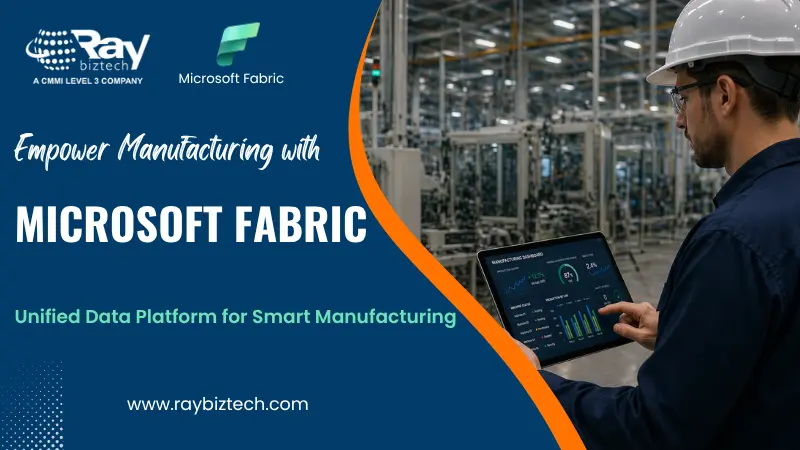
Manufacturing is undergoing a significant transformation as organizations embrace Industry 4.0 technologies to build smarter, more connected factories. Today, data is no longer collected simply for reporting—it has become the driving force behind intelligent decision-making, automation, and predictive operations. By combining artificial intelligence (AI), the Internet of Things (IoT), cloud computing, and real-time analytics, manufacturers are creating production environments that continuously learn, adapt, and improve.
One technology accelerating this transformation is Microsoft Fabric. By providing a unified data and analytics platform, Microsoft Fabric enables manufacturers to connect operational systems, analyze machine performance in real time, and implement predictive maintenance strategies that reduce downtime and improve productivity.
Industry 4.0 Is Redefining Manufacturing Operations
Industry 4.0 goes far beyond automating factory processes. It focuses on building intelligent manufacturing ecosystems where machines, sensors, enterprise applications, and employees work together through connected data.
Modern manufacturing facilities generate enormous volumes of information from production equipment, quality systems, maintenance records, and business applications. However, collecting data alone does not create value. The real advantage comes from transforming that information into actionable insights that improve operational performance.
With connected technologies, manufacturers gain complete visibility into production processes, enabling faster decisions, improved product quality, and greater operational efficiency across every stage of manufacturing.
Why Predictive Maintenance Has Become Essential
Traditional maintenance strategies generally follow one of two approaches: scheduled maintenance performed at fixed intervals or reactive maintenance after equipment failure. Both methods often lead to unnecessary maintenance costs, unexpected production downtime, and lost revenue.
Predictive maintenance offers a more intelligent alternative. By analyzing historical equipment performance alongside real-time sensor data, organizations can identify early warning signs before failures occur.
Instead of servicing equipment based on fixed schedules, maintenance teams intervene only when machine conditions indicate that action is required. This approach minimizes unexpected breakdowns, extends equipment life, reduces maintenance expenses, and improves production reliability.
How Microsoft Fabric Powers Predictive Maintenance
Microsoft Fabric provides a unified platform that connects engineering systems, operational technology, business applications, and advanced analytics within a single environment.
Its integrated capabilities help manufacturers modernize maintenance operations through:
Real-time ingestion of machine and IoT sensor data from production environments
OneLake, which creates a centralized and governed data foundation across manufacturing systems
AI and machine learning models that predict equipment failures and optimize maintenance schedules
Interactive Power BI dashboards that provide plant managers with live operational insights
Automated alerts and workflows that trigger maintenance activities before failures impact production
By combining these capabilities, Microsoft Fabric enables manufacturers to shift from reactive maintenance toward proactive, data-driven operations.
Real-World Manufacturing Transformation
A large North American manufacturing organization operating multiple production facilities modernized its analytics environment by implementing Microsoft Fabric with the support of Ray Business Technologies.
Before modernization, the company relied on disconnected Manufacturing Execution Systems (MES), Enterprise Asset Management (EAM), and Computerized Maintenance Management Systems (CMMS). These isolated platforms created inconsistent reporting, limited operational visibility, and delayed maintenance decisions.
By consolidating manufacturing data into OneLake, the organization established a unified analytics platform with standardized performance metrics across all facilities. Real-time dashboards provided plant managers with immediate operational visibility, while AI-powered analytics reduced dependence on manual reporting.
The results included:
Reporting completed 95% faster
20% reduction in unplanned equipment downtime
Improved visibility across all manufacturing facilities
Faster operational decision-making through real-time analytics
Significant reduction in manual reporting activities
This transformation enabled the organization to move from fragmented reporting toward predictive, data-driven manufacturing.
Business Benefits of Microsoft Fabric for Manufacturers
Manufacturers adopting Microsoft Fabric can achieve several measurable business advantages, including:
Reduced equipment downtime through early failure detection
Lower maintenance costs with optimized service scheduling
Improved asset utilization and production efficiency
Faster decision-making using real-time operational dashboards
A unified data platform connecting IT and operational technology environments
Greater scalability to support future digital transformation initiatives
These benefits help organizations increase productivity while improving operational resilience in increasingly competitive manufacturing environments.
Building the Future of Smart Manufacturing
The future of manufacturing lies in autonomous, data-driven operations where systems continuously monitor performance, anticipate issues, and optimize production with minimal human intervention. Microsoft Fabric provides the connected data foundation needed to support this evolution by combining enterprise data, AI, and advanced analytics within a single platform.
With the right implementation strategy and experienced technology partner, manufacturers can accelerate their Industry 4.0 initiatives, reduce operational risks, and build intelligent factories prepared for future growth. Organizations that invest in connected analytics today will be better positioned to improve efficiency, maximize equipment performance, and remain competitive in the next generation of manufacturing.
Comments
Log in or sign up to join the conversation.