

By The Numbers
$41.46 billion — Micron (MU)'s record fiscal Q3 2026 revenue. A year ago the same quarter brought in $9.30 billion.
$25.11 — Non-GAAP EPS, crushing the $20.20 estimate. That's a 24% beat on the bottom line alone.
84.9% — Gross margin in Q3. Management guided Q4 margins to 86%. For a hardware company, that's extraordinary.
$49–51 billion — Q4 revenue guidance. Wall Street expected $43.2 billion. The midpoint is $50 billion.
100% — Micron's HBM capacity sold out through 2027. Demand extends into 2028. Every contract already signed.
The Nasdaq fell 4% last week. The Philadelphia Semiconductor Index lost 7.9%. Nvidia (NVDA) dropped 8.6%. ON Semiconductor (ON) crashed 23.66% in a single session. The sell-off started in South Korea, spread to the U.S., and by Tuesday the narrative was simple: AI memory spending is slowing. Then Micron reported Wednesday night, and every one of those stories turned out to be wrong.
The Numbers That Stopped the Bears Cold
Micron's fiscal Q3 revenue of $41.46 billion came in against a consensus estimate of $35.7 billion. That's not a beat. That's a different category of result. Revenue was up from $23.86 billion the prior quarter and $9.30 billion a year ago. EPS of $25.11 beat the $20.20 estimate by 24%. Gross margins hit 84.9%. Operating cash flow reached $25.39 billion, more than double the prior quarter.
The Q4 guide was even more surprising. Micron projected Q4 revenue of $49 to $51 billion against a Wall Street estimate of $43.2 billion. That's a $6 to $8 billion beat on the guidance alone. Gross margins guided to 86%. The company signed 16 strategic customer agreements covering data center, consumer, and automotive markets with roughly $22 billion in deposits. You don't get $22 billion in deposits from customers who are slowing their AI spending.
Why HBM Changes Everything
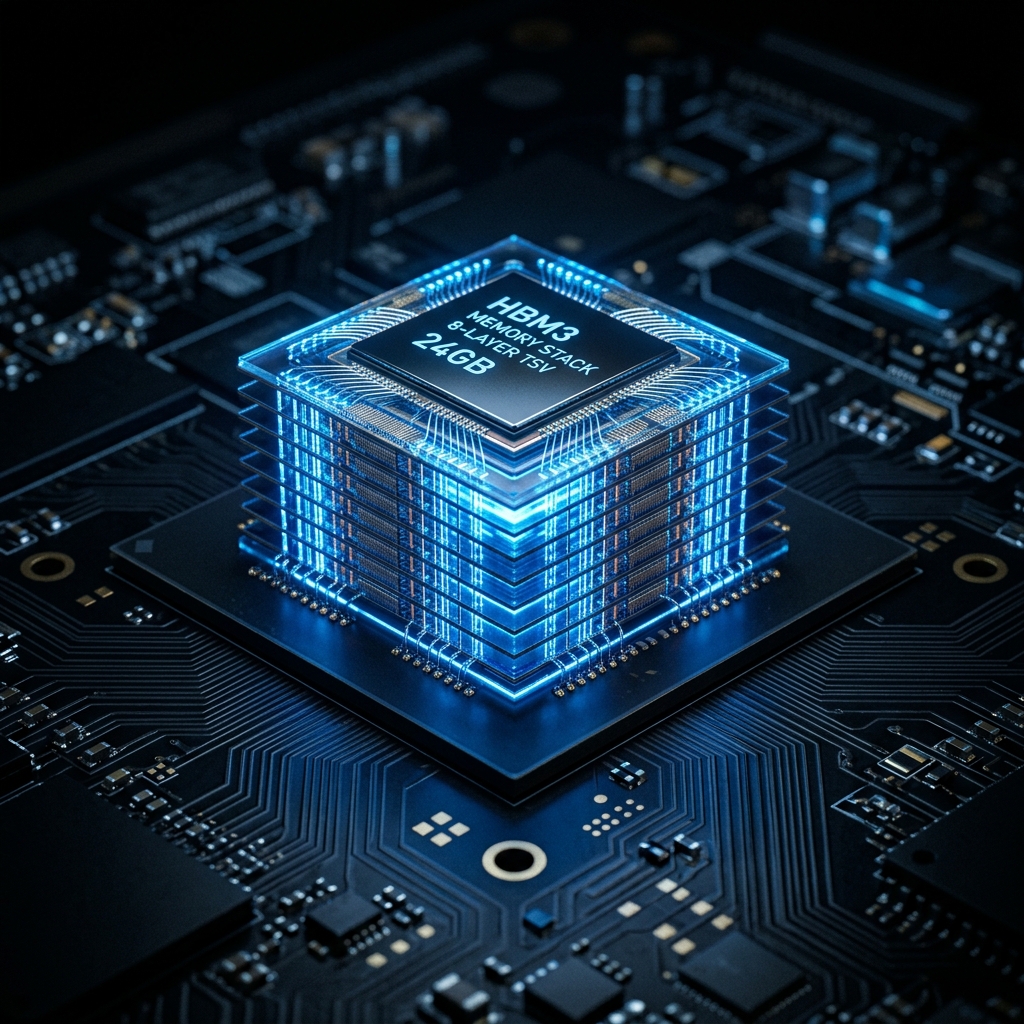
It's kinda like asking who makes the picks and shovels in a gold rush. Every AI model running on Nvidia's GPUs needs high-bandwidth memory. HBM is that memory. Micron, Samsung (SSNLF), and SK Hynix (HXSCL) are the only companies on earth making it at scale. Micron's entire 2026 HBM supply is already sold out under fixed-price contracts. HBM3E and HBM4 are booked through 2027, with demand extending into 2028.
Hold on. Let me stop here. When AI memory skeptics point to slowing chip stocks, they're usually looking at GPU demand curves. They're looking at the wrong thing. The actual constraint in AI infrastructure right now isn't compute. It's memory bandwidth. Micron sits at that bottleneck, and its customers have locked up supply years in advance because they have no other option.
"When 100% of your HBM capacity is sold out through 2027 and you're guiding Q4 to $51 billion, you don't have AI memory demand. You ARE the AI memory demand."
What to Watch This Week
You don't have to trust me. Trust the math. A company guiding $50 billion in revenue with 86% gross margins and $22 billion in locked deposits does not have a demand problem. The stock sold off before earnings on fear. The fear was wrong. Now the question is whether the broader semiconductor sector follows MU higher this week or whether investors keep selling the sector and missing the stock that just proved the thesis.
Watch MU's HBM4 qualification progress this week. The company already has HBM4 in high-volume shipments for one lead customer. As additional customers qualify, that pulls forward revenue that isn't priced into current estimates. The S&P 500 sits 3.4% below its all-time high. Micron's numbers suggest the AI infrastructure build isn't pausing. Markets that don't price that in correctly won't stay mispriced for long.
P.S. Micron's CEO called these results "the strategic value of memory in the AI era." Six words that explain why every AI GPU order doubles the demand for HBM. Later has a price tag. The bears who sold this stock on AI-spend fear this week found out what it costs.



Comments
Log in or sign up to join the conversation.