

The May Final Michigan Consumer Sentiment came in at 72.3, up slightly from the April Final. Investing.com had forecast 74.0.
Surveys of Consumers chief economist, Richard Curtin, makes the following comments:
Consumer sentiment has remained largely unchanged during the past two months, with the final May estimate just a half index point above the April reading. The CARES relief checks and higher unemployment payments have helped to stem economic hardship, but those programs have not acted to stimulate discretionary spending due to uncertainty about the future course of the pandemic. It should not be surprising that a growing number of consumers expected the economy to improve from its recent standstill, or that the majority still thought conditions in the economy would remain unfavorable in the year ahead. This has been a common occurrence in past cycles (see the chart). Expectations for economic growth have always dominated at the ends of recessions, and favorable assessments about the current state of the economy are more frequent near the ends of expansions. The gap between economic growth and the current performance of the economy is likely to grow significantly when the disastrous 2nd quarter GDP is announced. More widespread price discounting as well as low interest rates have helped to improve buying plans, but those plans still remain well below the levels recorded three months ago. Adding to consumers' concerns about a significant expected drop in income growth, year-ahead inflation expectations rose sharply, putting extra pressure on consumers' abilities to maintain their living standards. [More...]
See the chart below for a long-term perspective on this widely watched indicator. Recessions and real GDP are included to help us evaluate the correlation between the Michigan Consumer Sentiment Index and the broader economy.
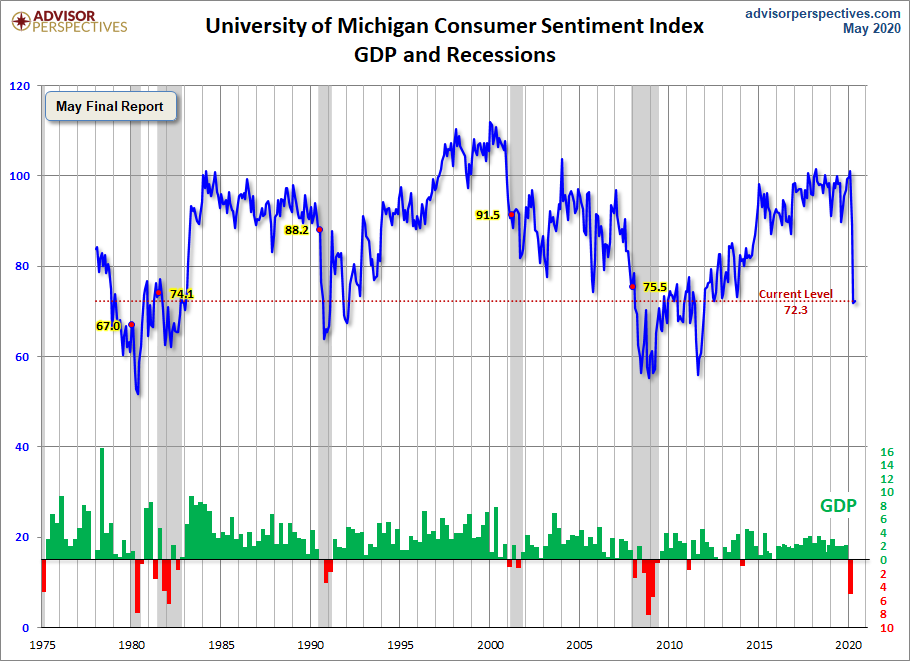
To put the report into the larger historical context since its beginning in 1978, consumer sentiment is 16.2 percent below the average reading (arithmetic mean) and 15.3 percent below the geometric mean. The current index level is at the 17th percentile of the 509 monthly data points in this series.
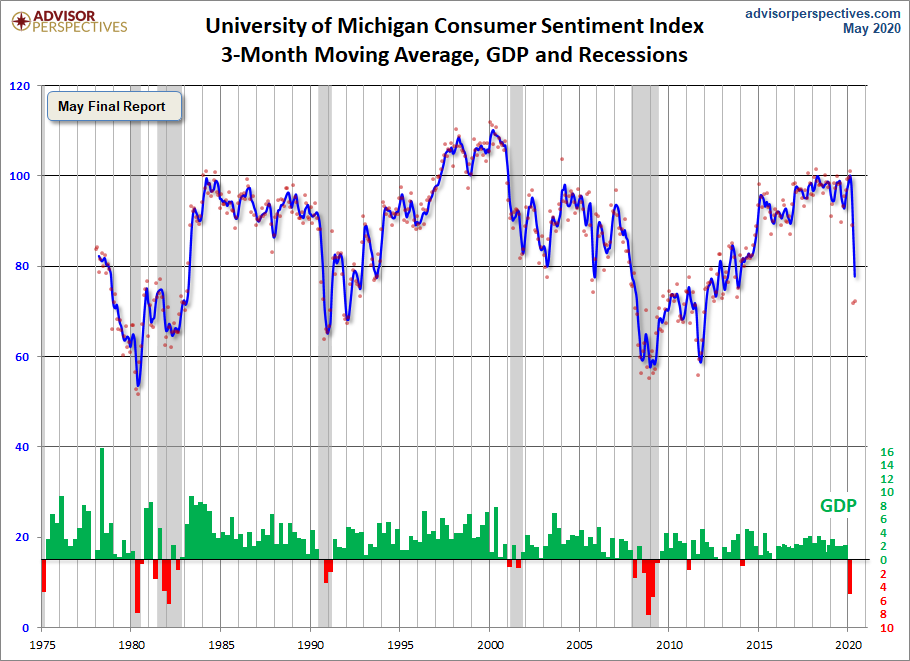
Note that this indicator is somewhat volatile, with a 3.0 point absolute average monthly change. The latest data point saw a 0.5 point decrease from the previous month. For a visual sense of the volatility, here is a chart with the monthly data and a three-month moving average.
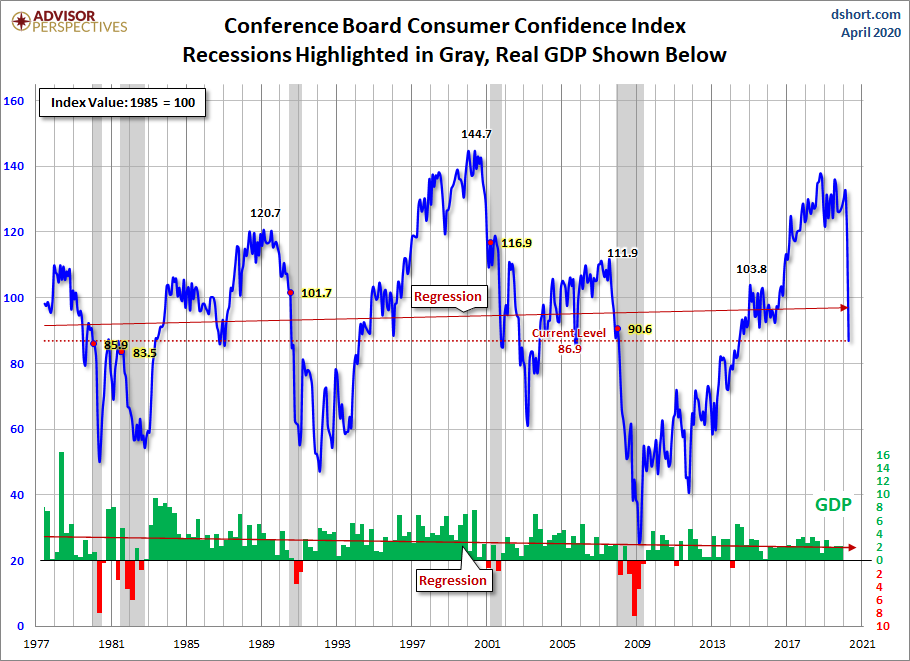
For the sake of comparison, here is a chart of the Conference Board's Consumer Confidence Index (monthly update here). The Conference Board Index is the more volatile of the two, but the broad pattern and general trends have been remarkably similar to the Michigan Index.
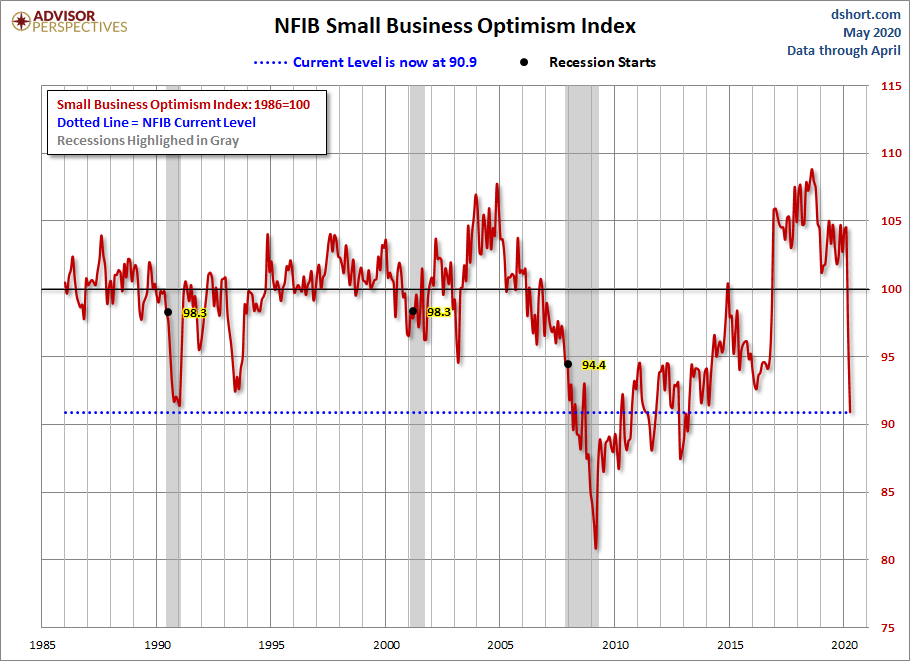
And finally, the prevailing mood of the Michigan survey is also similar to the mood of small business owners, as captured by the NFIB Business Optimism Index (monthly update here).
The general trend in the Michigan Sentiment Index after the Financial Crisis lows was one of slow improvement.
The next update to this report will be published on June 12.

Comments
Log in or sign up to join the conversation.