

The April Preliminary Report came in at 65.7, up 6.3 (10.6%) from the March Final. Investing.com had forecast 59.0. Since its beginning in 1978, consumer sentiment is 23.5 percent below the average reading (arithmetic mean) and 22.6 percent below the geometric mean.
Surveys of Consumers chief economist, Richard Curtin, makes the following comments:
Consumer Sentiment jumped by a surprising 10.6% in early April, although it remained below January's reading and lower than in any prior month in the past decade. Nearly the entire gain was in the Expectations Index, which posted a monthly gain of 18.0%, including a leap of 29.4% in the year-ahead outlook for the economy and a 17.2% jump in personal financial expectations. A strong labor market bolstered wage expectations among consumers under age 45 to 5.3%-the largest expected gain in more than three decades, since April 1990. Consumers still anticipate that the national unemployment rate will inch downward, acting to improve consumers' outlook for the national economy. Perhaps the most surprising change was that consumers anticipated a year-ahead increase in gas prices of just 0.4 cents in April, completely reversing March's surge to 49.6 cents. Retail gas prices have fallen since the March peak, and that fact was immediately recognized by consumers. The shift in gas price expectations may be partly due to Biden's announced release of strategic oil reserves and the relaxing of some seasonal EPA rules. Nonetheless, the April survey offers only tentative evidence of small gains in sentiment, which is still too close to recession lows to be reassuring. There are still significant sources of economic uncertainty that could easily reverse the April gains, including the impact on the domestic economy from Putin's war, and the potential impact of new covid variants. [More...]
See the chart below for a long-term perspective on this widely watched indicator. Recessions and real GDP are included to help us evaluate the correlation between the Michigan Consumer Sentiment Index and the broader economy.
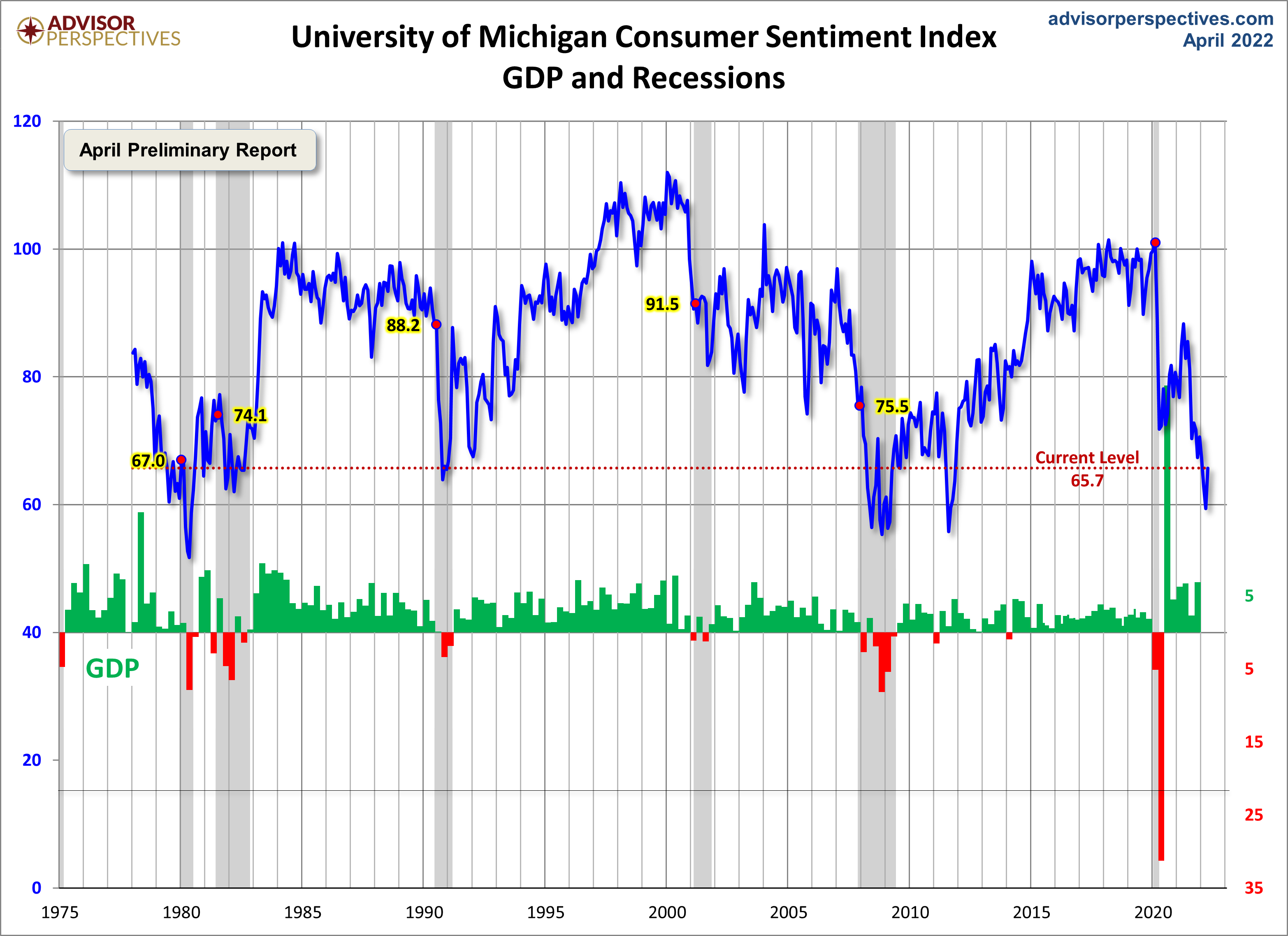
To put today's report into the larger historical context since its beginning in 1978, consumer sentiment is 23.5 percent below the average reading (arithmetic mean) and 22.6 percent below the geometric mean. The current index level is at the 7th percentile of the 532 monthly data points in this series.
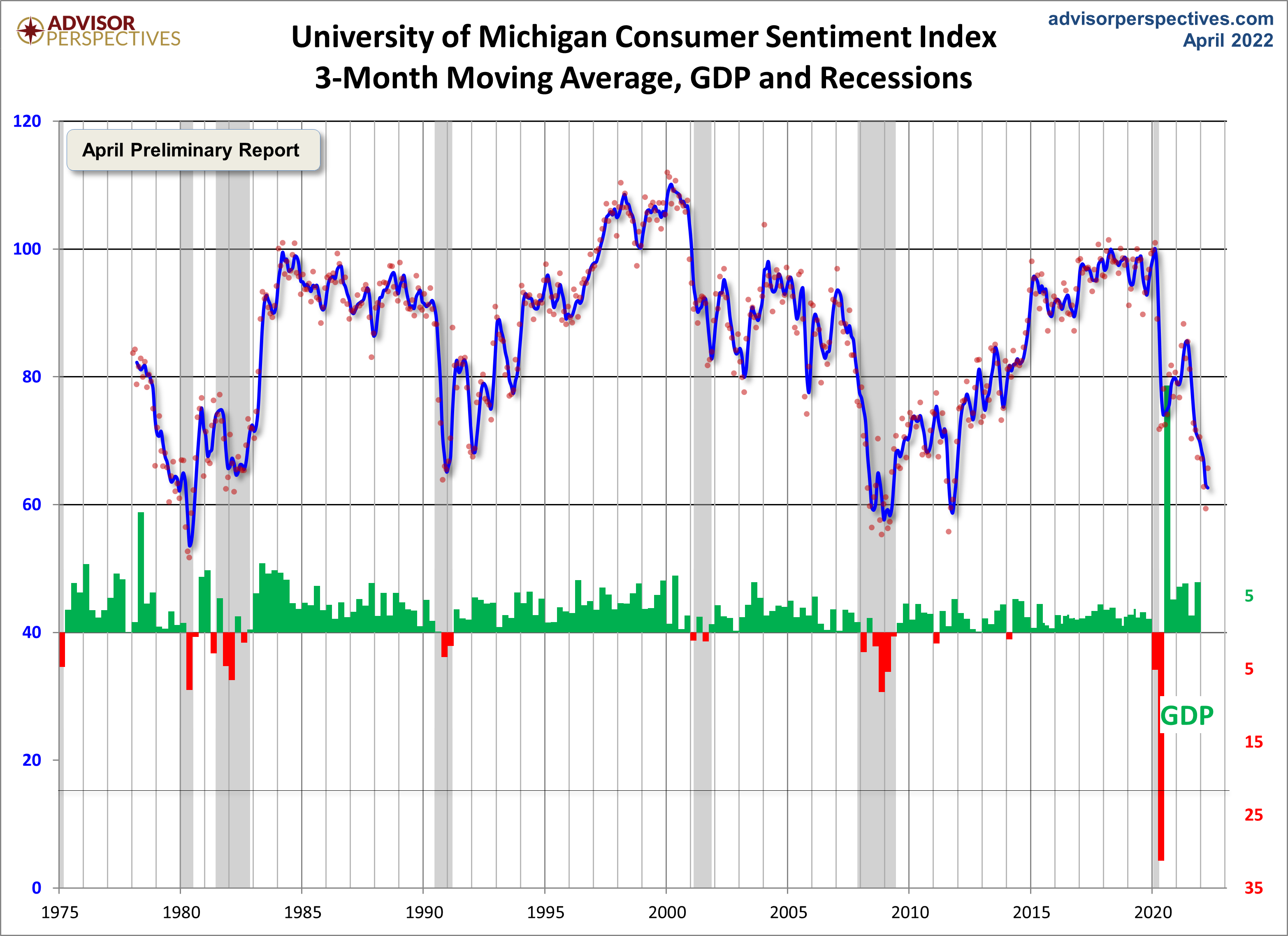
Note that this indicator is somewhat volatile, with a 3.0 point absolute average monthly change. The latest data point saw a 6.3 point increase from the previous month. For a visual sense of the volatility, here is a chart with the monthly data and a three-month moving average.
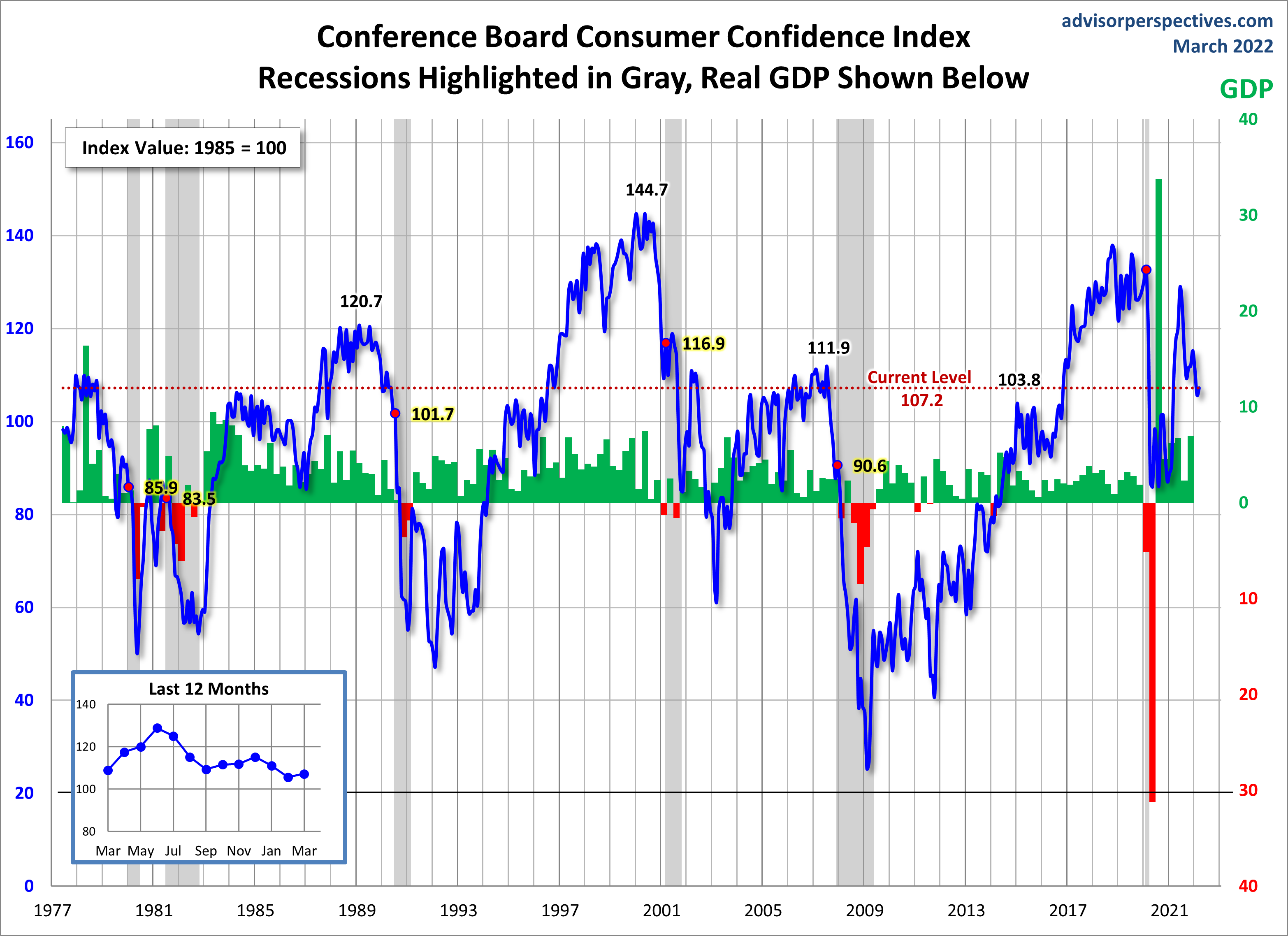
For the sake of comparison, here is a chart of the Conference Board's Consumer Confidence Index (monthly update here). The Conference Board Index is the more volatile of the two, but the broad pattern and general trends have been remarkably similar to the Michigan Index.
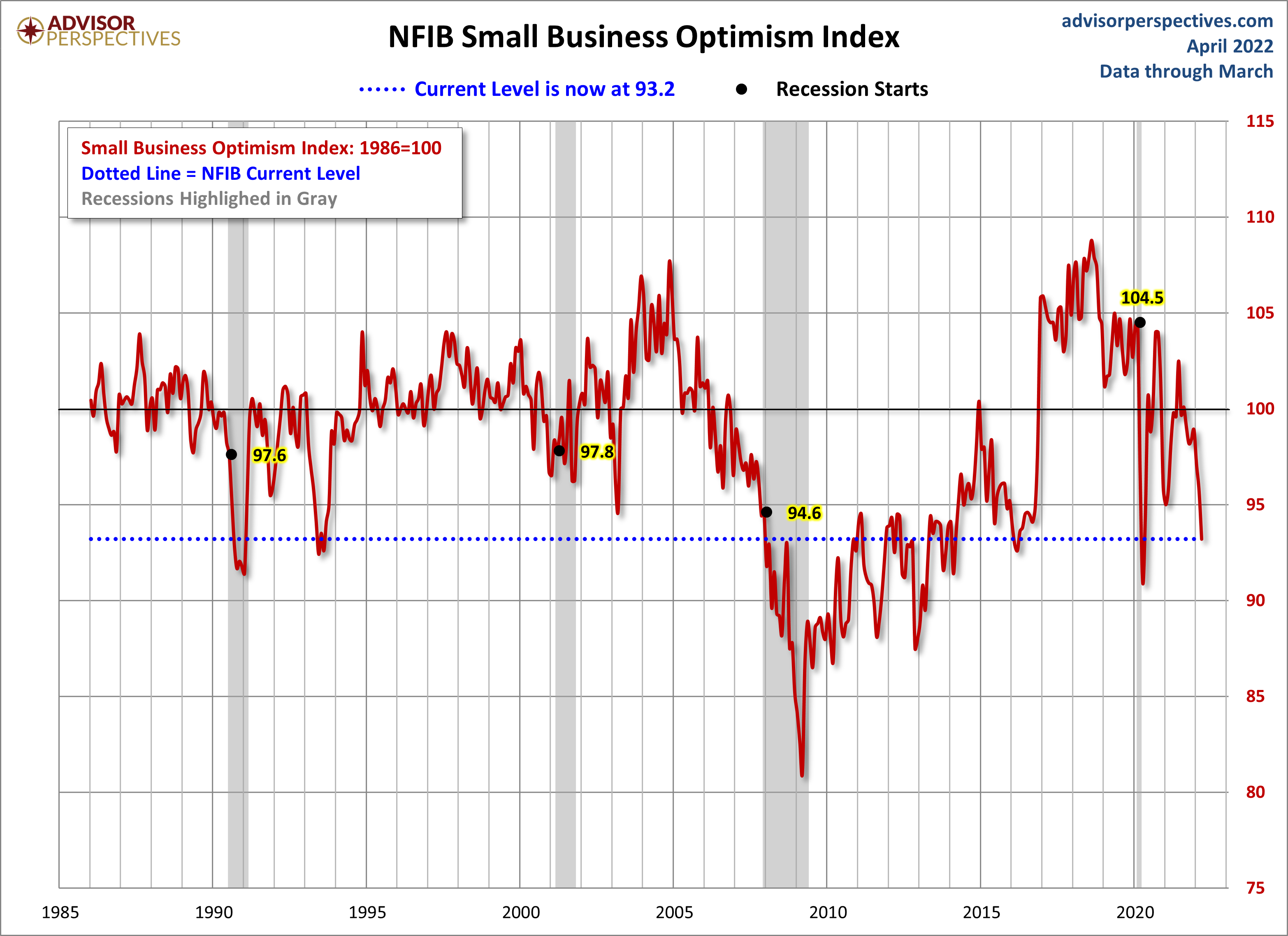
And finally, the prevailing mood of the Michigan survey is also similar to the mood of small business owners, as captured by the NFIB Business Optimism Index (monthly update here).

Comments
Log in or sign up to join the conversation.