

The July Final came in at 81.2, down 4.3 (5.0%) from the June Final. Investing.com had forecast 80.8. Since its beginning in 1978, consumer sentiment is 5.7 percent below the average reading (arithmetic mean) and 4.7 percent below the geometric mean.
Surveys of Consumers chief economist, Richard Curtin, makes the following comments:
Consumer sentiment edged upward at the end of July, although it still posted a monthly decline of 5.0%. The largest monthly declines remained concentrated in the outlook for the national economy and complaints about high prices for homes, vehicles, and household durables. While most consumers still expect inflation to be transitory, there is growing evidence that an inflation storm is likely to develop on the not too distant horizon. The improved finances of consumers have greatly reduced consumers' resistance to price increases. While firms have reacted to their own supply and labor shortages with a greater readiness to increase prices as well as wages. Consumers and firms currently justify their actions as temporary adjustments due to the pandemic. However justified, such changes act to generate an upward spiral in prices and wages. Moreover, the fiscal and monetary policies already in place, and the likely increases and continued accommodation now contemplated, will only increase the willingness of consumers and firms to act in ways that accelerate the upward spiral in prices and wages. This reaction by consumers is unique, and quite different from the inflationary psychology of the 1970s. In that earlier era, the booms were driven by the willingness of consumers to advance their purchases in an attempt to avoid future price hikes, now the coming boom will be due to income and job gains that make price increases easier to manage, with the gains generated by federal transfers and physical and human infrastructure programs. The beneficial reduction in income inequality will shift more money to those who have higher propensities to spend, and thus energize demand. The booms will end in the same way as usual: rising prices will eventually outdistance wage gains, lowering living standards, and cause an economy-wide retrenchment in spending. [More...]
See the chart below for a long-term perspective on this widely watched indicator. Recessions and real GDP are included to help us evaluate the correlation between the Michigan Consumer Sentiment Index and the broader economy.
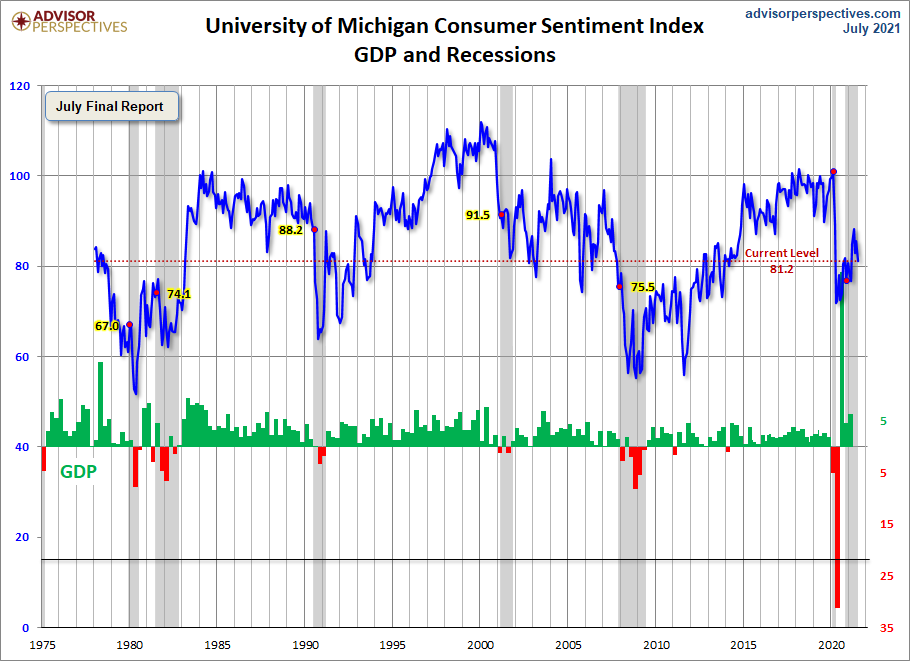
To put today's report into the larger historical context since its beginning in 1978, consumer sentiment is 5.7 percent below the average reading (arithmetic mean) and 4.7 percent above the geometric mean. The current index level is at the
32nd percentile of the 522 monthly data points in this series.
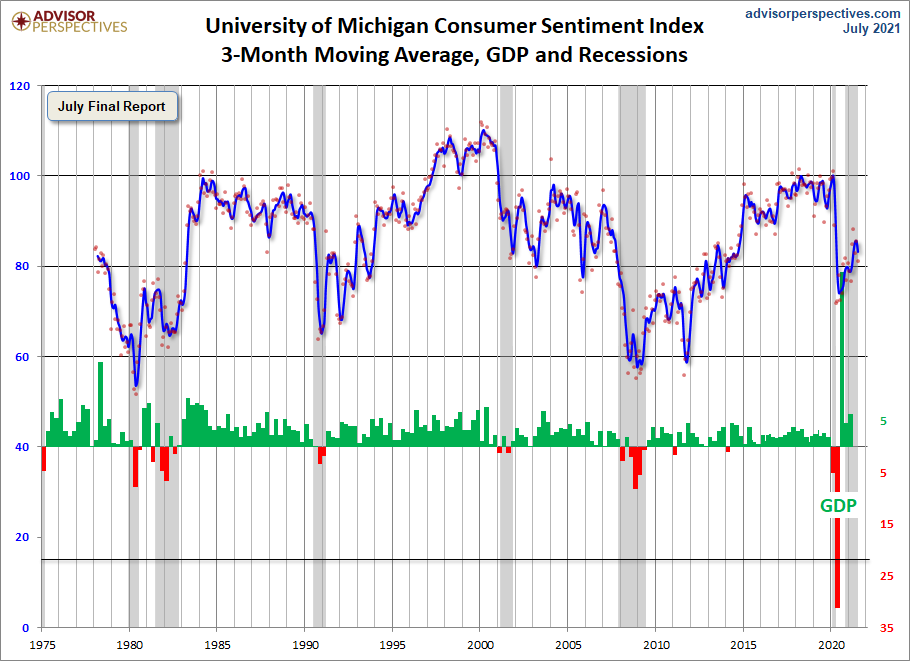
Note that this indicator is somewhat volatile, with a 3.0 point absolute average monthly change. The latest data point saw a 4.3 point decrease from the previous month. For a visual sense of the volatility, here is a chart with the monthly data and a three-month moving average.
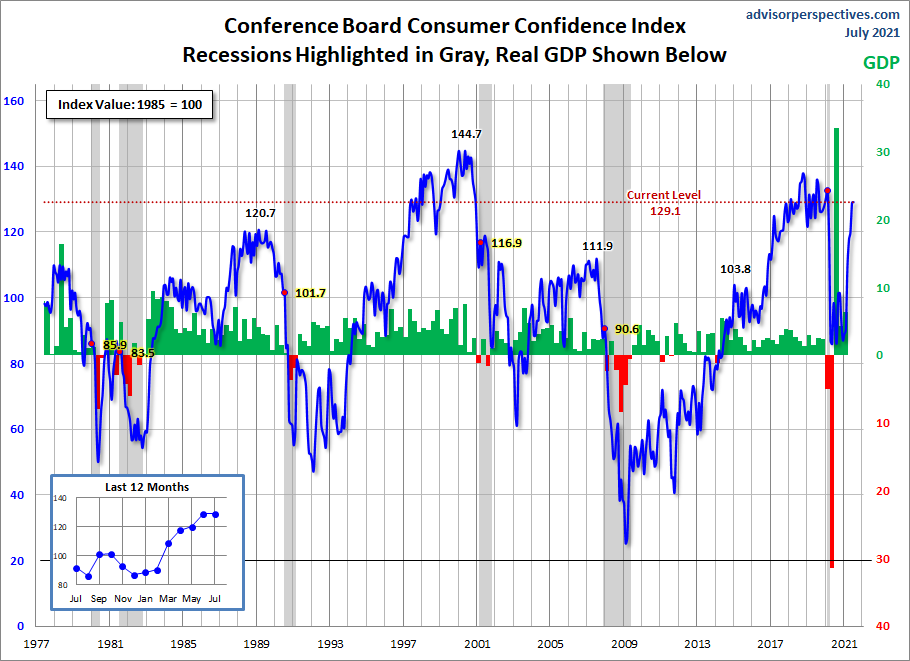
For the sake of comparison, here is a chart of the Conference Board's Consumer Confidence Index (monthly update here). The Conference Board Index is the more volatile of the two, but the broad pattern and general trends have been remarkably similar to the Michigan Index.
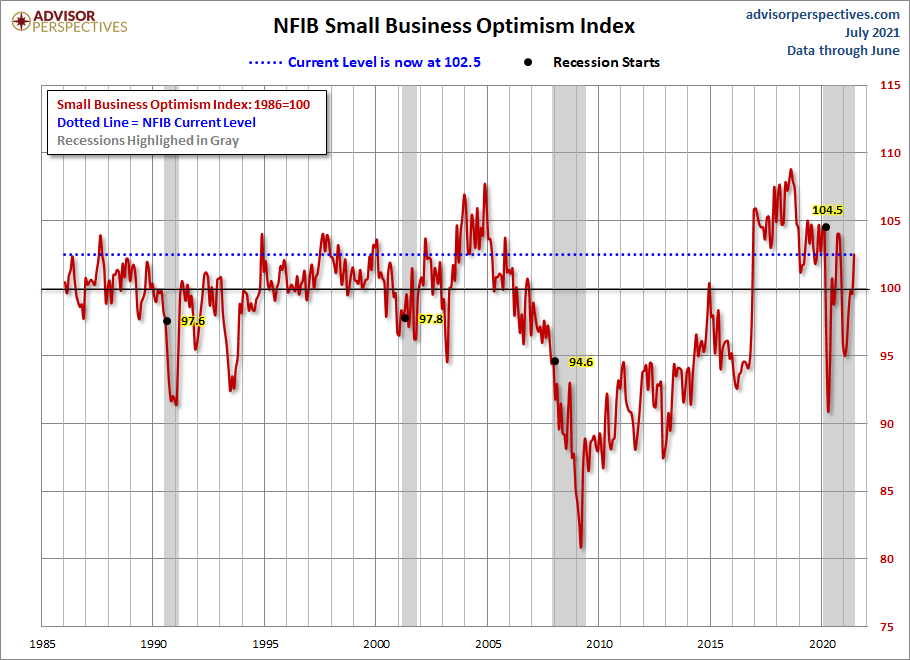
And finally, the prevailing mood of the Michigan survey is also similar to the mood of small business owners, as captured by the NFIB Business Optimism Index (monthly update here).

Comments
Log in or sign up to join the conversation.