

The February Final Report came in at 62.8, down 4.4 (6.5%) from the January Final. Investing.com had forecast 62.8. Since its beginning in 1978, consumer sentiment is 26.9 percent below the average reading (arithmetic mean) and 26.1 percent below the geometric mean.
Surveys of Consumers chief economist, Richard Curtin, makes the following comments:
Although Consumer Sentiment posted a slight increase in the last half of February, it still remained at its lowest level in the past decade, and the loss was still entirely due to a 12.9% decline among households with incomes of $100,000 or more. The February descent resulted from inflationary declines in personal finances, a near universal awareness of rising interest rates, falling confidence in the government's economic policies, and the most negative long term prospects for the economy in the past decade (see the chart). Virtually all interviews were conducted prior to the Russian invasion so its impact is yet to be felt by consumers. The most likely linkage to the domestic economy is through rising energy prices, with the size and length of the potential increases subject to substantial uncertainty. This will complicate the Fed's policy actions, tilting their objectives to focus more on inflation at the cost of slower growth and higher unemployment. The financial harm and growing angst among consumers about rising inflation have pushed nearly nine-in-ten consumers to anticipate interest rate hikes. The Fed's clinging to the transient hypothesis meant missed opportunities to nip inflation at its earliest stages; aggressive actions are now needed to avoid the potential establishment of an inflationary psychology that acts to form a self-fulfilling prophecy. The imposition of sanctions against Russia is likely to generate counter measures that could harm the domestic economy, requiring the Fed to give special consideration to any associated economic slowdown and rising unemployment. Presumably, economic sanctions would be lifted only if Ukraine's sovereignty is maintained, but not if Russia prevails. Consumers may double-down on precautionary behaviors if the greater cyber risks associated with the conflict are now borne by domestic households. [More...]
See the chart below for a long-term perspective on this widely watched indicator. Recessions and real GDP are included to help us evaluate the correlation between the Michigan Consumer Sentiment Index and the broader economy.
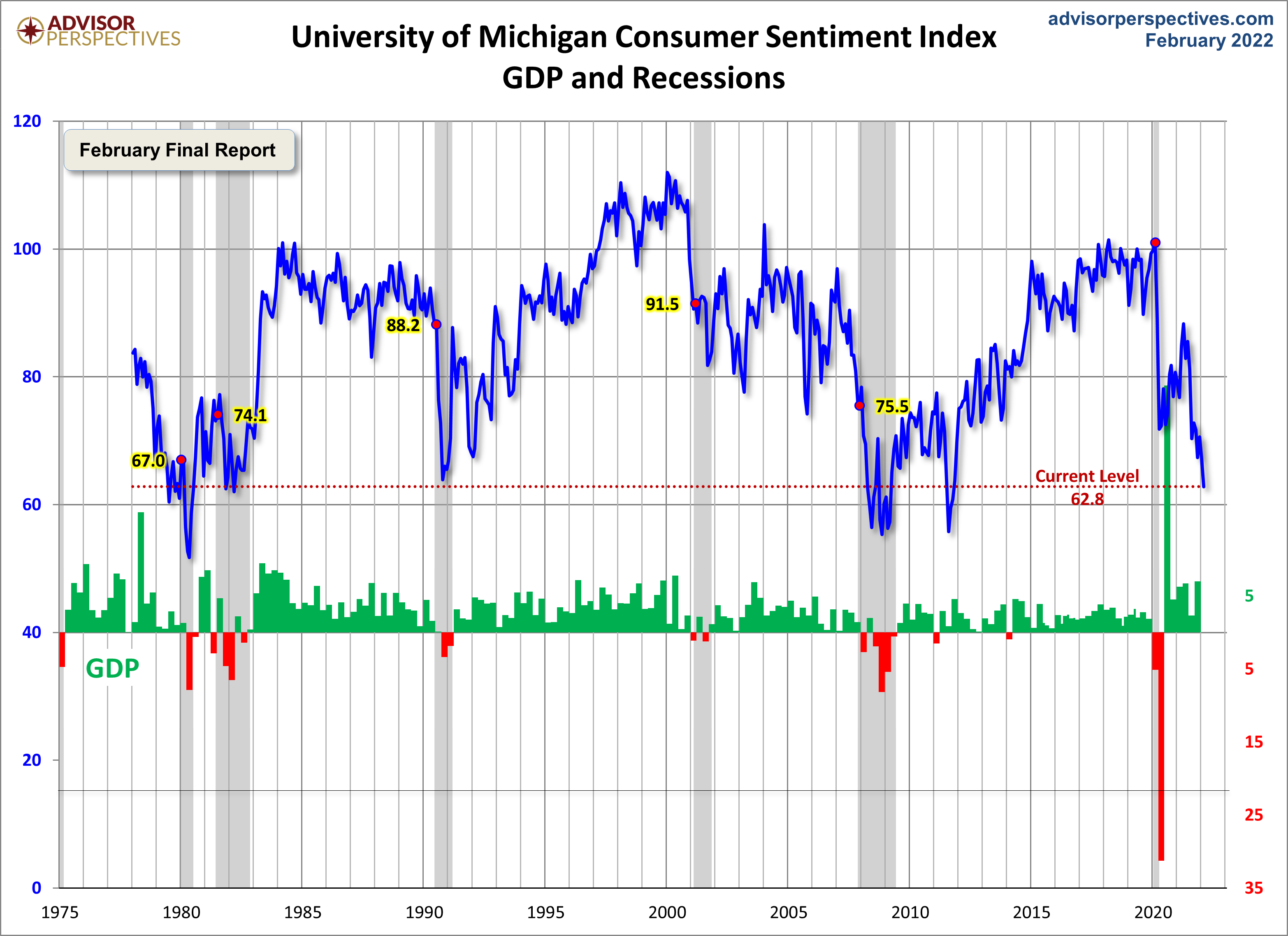
To put today's report into the larger historical context since its beginning in 1978, consumer sentiment is 26.9 percent below the average reading (arithmetic mean) and 26.1 percent below the geometric mean. The current index level is at the 4th percentile of the 530 monthly data points in this series.
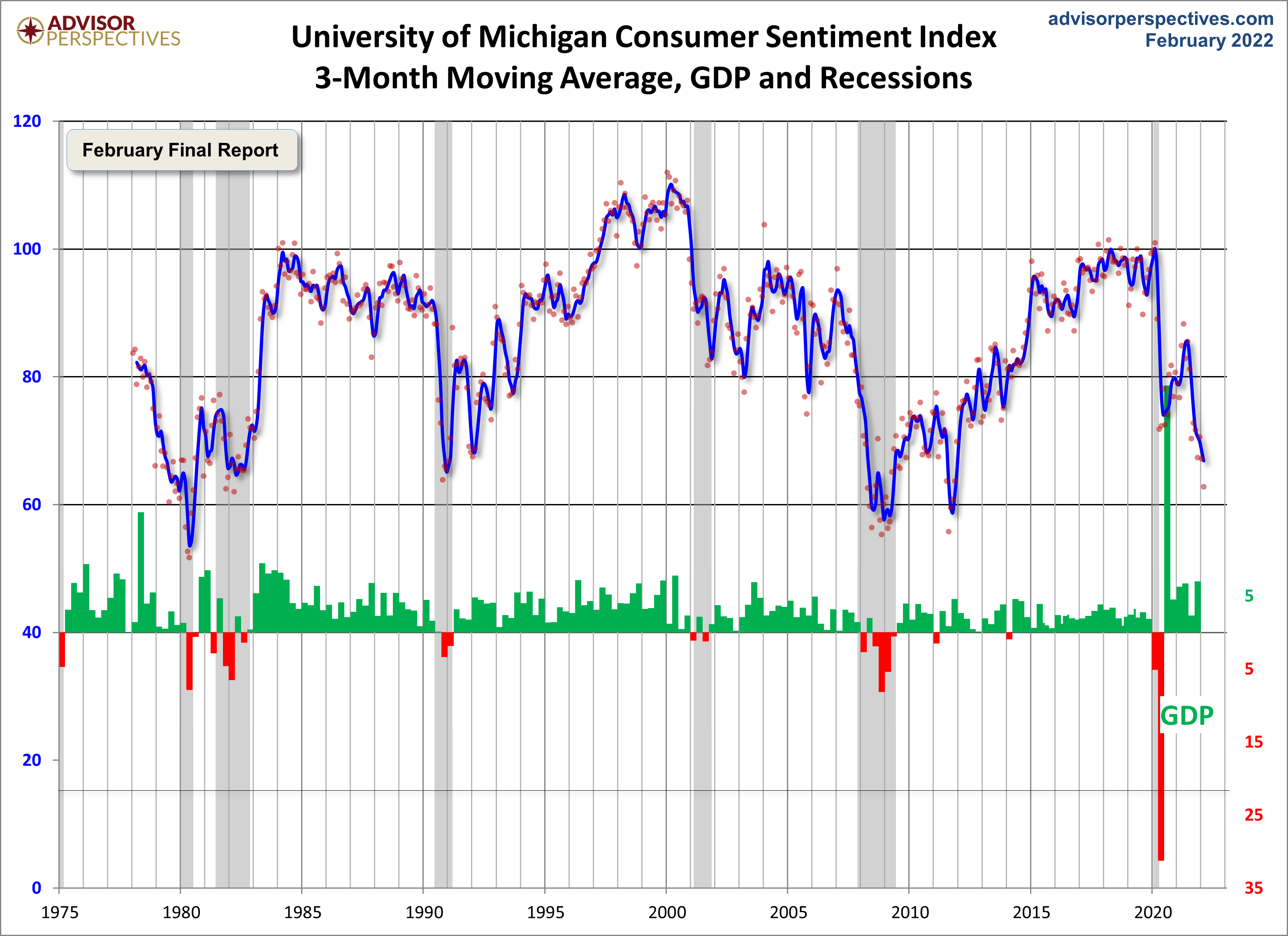
Note that this indicator is somewhat volatile, with a 3.0 point absolute average monthly change. The latest data point saw a 4.4 point decrease from the previous month. For a visual sense of the volatility, here is a chart with the monthly data and a three-month moving average.
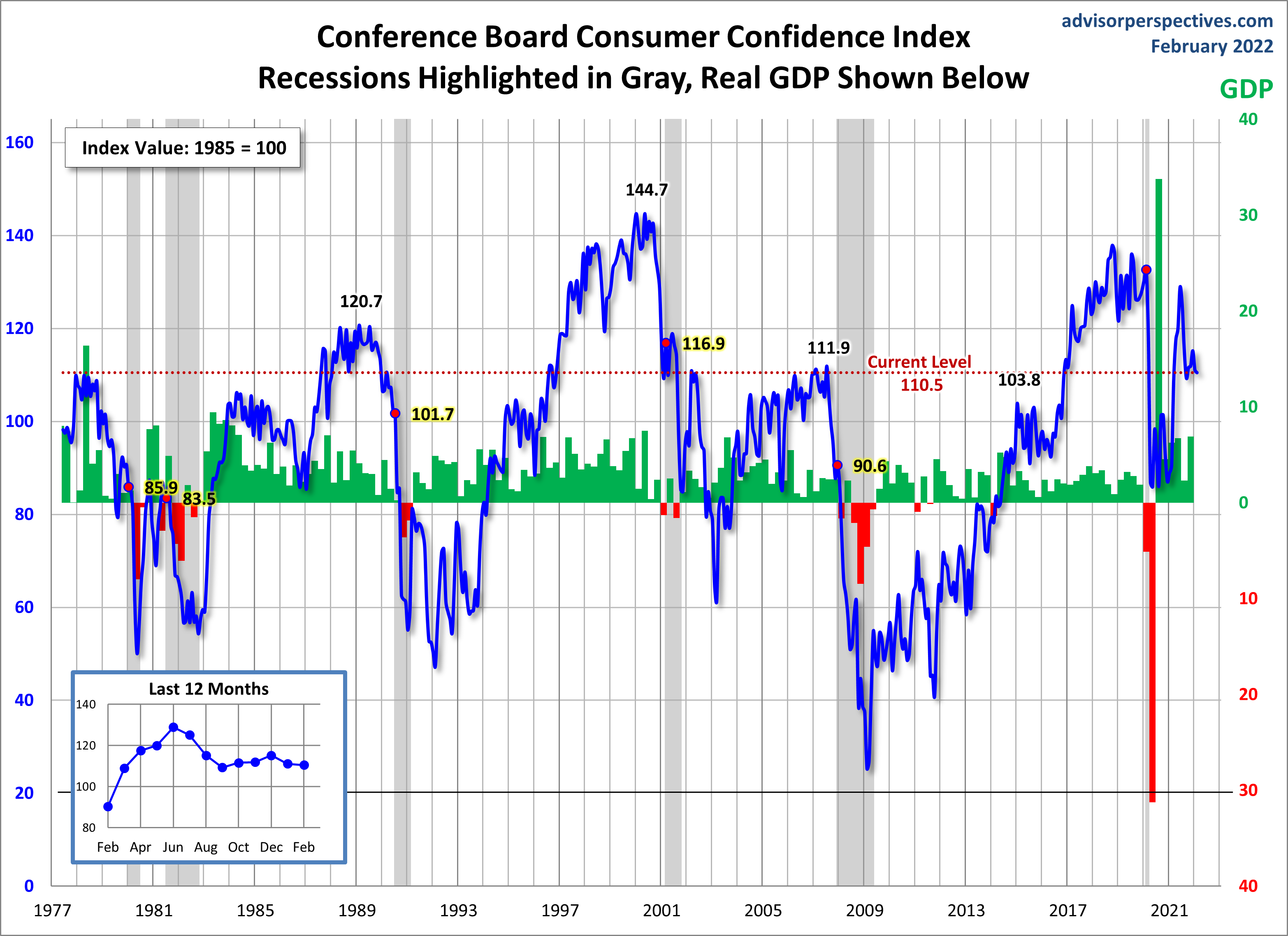
For the sake of comparison, here is a chart of the Conference Board's Consumer Confidence Index (monthly update here). The Conference Board Index is the more volatile of the two, but the broad pattern and general trends have been remarkably similar to the Michigan Index.
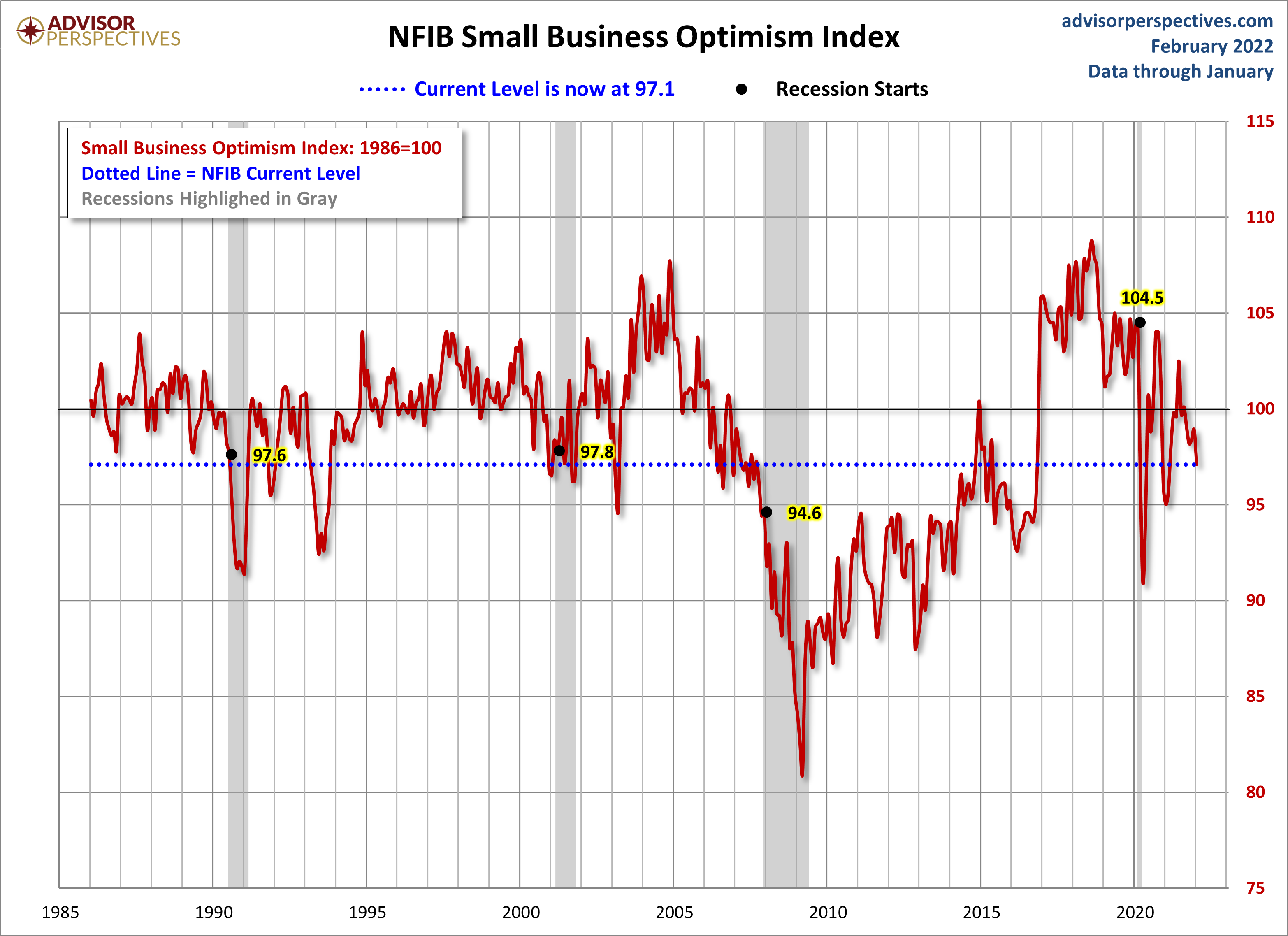
And finally, the prevailing mood of the Michigan survey is also similar to the mood of small business owners, as captured by the NFIB Business Optimism Index (monthly update here).

Comments
Log in or sign up to join the conversation.