

The University of Michigan Preliminary Consumer Sentiment for December came in at 91.8, a slight increase from the 91.3 November Final reading. Investing.com had forecast an even 92.0.
Surveys of Consumers chief economist, Richard Curtin makes the following comments:
While the preliminary December reading was largely unchanged from last month, consumers evaluated current economic conditions more favorably and expected future prospects less favorably. In a repeat of last month's findings, all of the early December gain was recorded among households with incomes in the bottom two-thirds (+2.7%), while the Sentiment Index among consumers with incomes in the top third declined (-4.4%). Importantly, the survey recorded persistent strength in personal finances and buying plans, while the largest loss was in how consumers judged prospects for the national economy during the year ahead. Overall, the Sentiment Index has averaged 92.9 during 2015, the highest since 2004, with only 10 higher yearly averages in the past half century. The data continue to indicate that real consumer expenditures will grow by 2.8% in 2016 over 2015. [More...]
See the chart below for a long-term perspective on this widely watched indicator. Recessions and real GDP are included to help us evaluate the correlation between the Michigan Consumer Sentiment Index and the broader economy.

To put today's report into the larger historical context since its beginning in 1978, consumer sentiment is 7.6 percent above the average reading (arithmetic mean) and 8.9 percent above the geometric mean. The current index level is at the 64th percentile of the 456 monthly data points in this series.
The Michigan average since its inception is 85.3. During non-recessionary years the average is 87.5. The average during the five recessions is 69.3. So the latest sentiment number puts us 22.5 points above the average recession mindset and 4.3 points above the non-recession average.
Note that this indicator is somewhat volatile, with a 3.1 point absolute average monthly change. The latest data point was a 0.5 point change from the previous month. For a visual sense of the volatility, here is a chart with the monthly data and a three-month moving average.

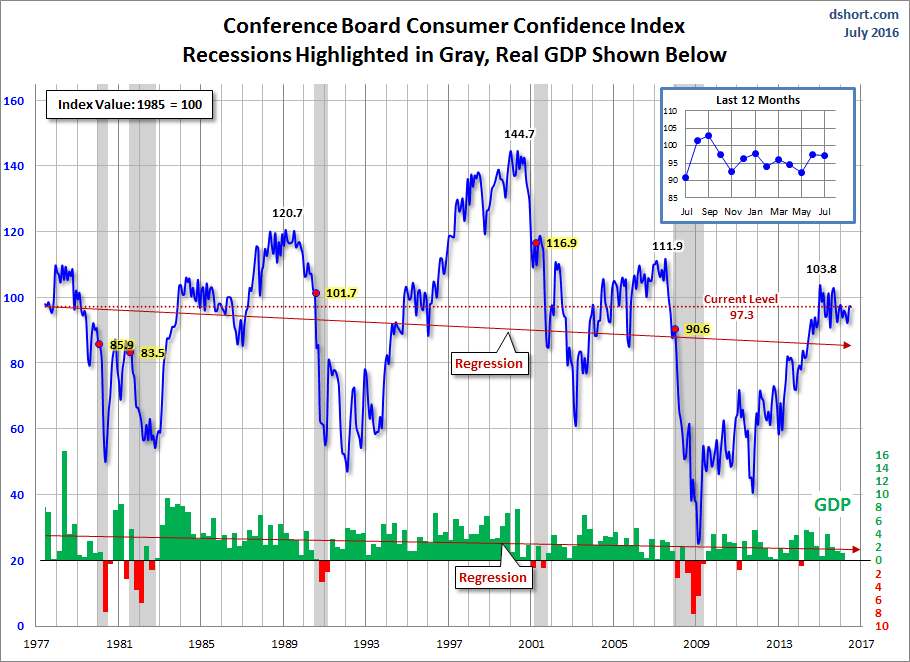
For the sake of comparison, here is a chart of the Conference Board's Consumer Confidence Index (monthly update here). The Conference Board Index is the more volatile of the two, but the broad pattern and general trends have been remarkably similar to the Michigan Index.
And finally, the prevailing mood of the Michigan survey is also similar to the mood of small business owners, as captured by the NFIB Business Optimism Index (monthly update here).

The general trend in the Michigan Sentiment Index since the Financial Crisis lows has been one of slow improvement. But the survey findings since December have been relatively range bound with January 2015 remaining the interim peak.
Comments
Log in or sign up to join the conversation.