

Medical 3D Printing Services in India for Orthopedic Applications
Orthopedic surgery often involves complex anatomical structures, intricate fracture patterns, and precise alignment requirements. As surgical procedures become more advanced, reliance on traditional two-dimensional imaging alone is no longer sufficient. This shift has led to the rapid adoption of medical 3D printing services in India for orthopedic applications
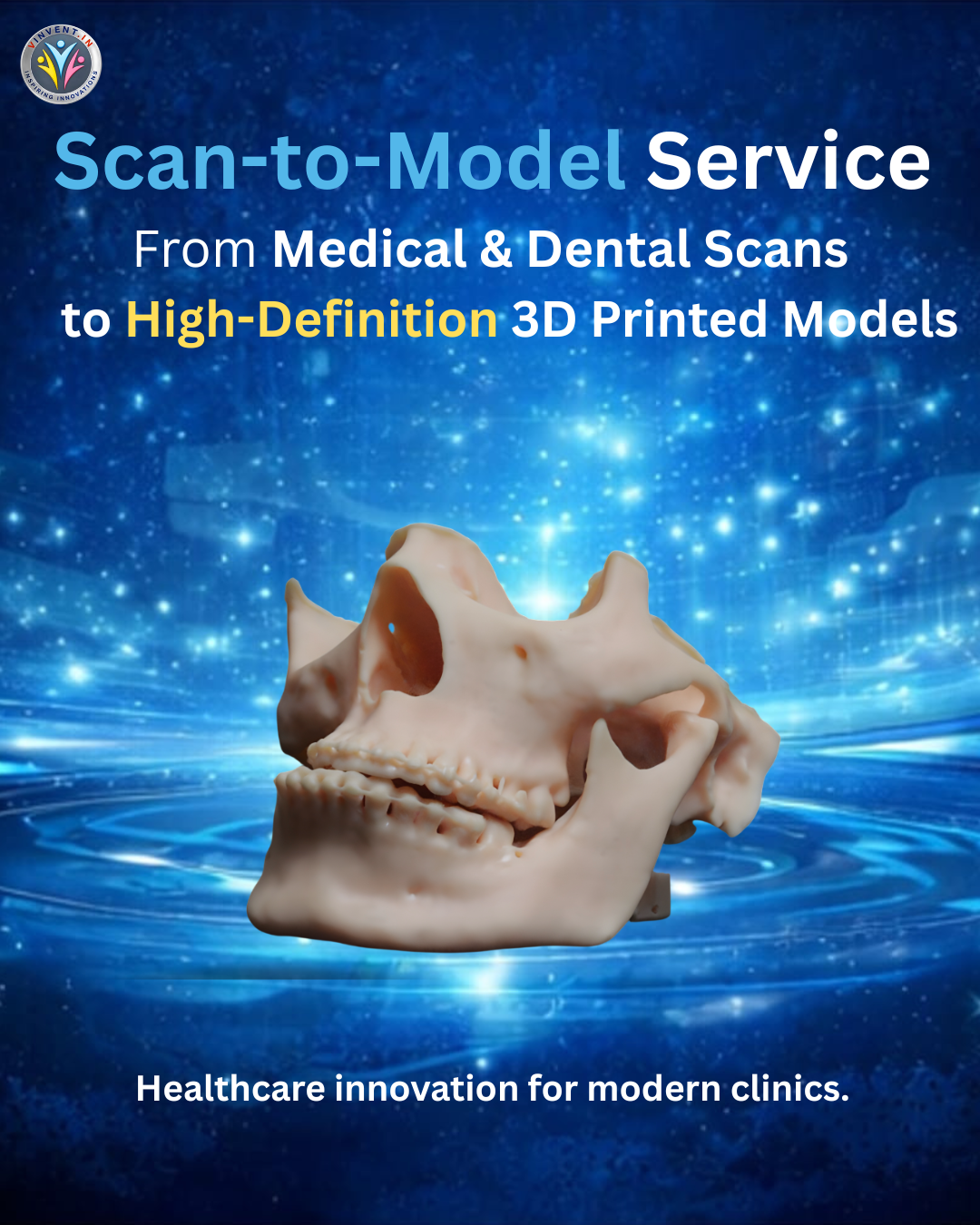
, enabling surgeons to enhance planning accuracy and improve procedural confidence.
Medical 3D printing allows CT and MRI data to be transformed into accurate, patient-specific anatomical replicas. These models provide tangible insight into bone structure, fracture displacement, deformities, and joint alignment. For orthopedic surgeons, this physical interaction with anatomy supports clearer visualization and more structured surgical preparation.
The Growing Complexity of Orthopedic Surgery
Orthopedic procedures often demand exact precision. Whether managing complex trauma, joint replacements, deformity correction, or reconstructive interventions, even minor alignment errors can influence long-term outcomes.
Several challenges define modern orthopedic practice:
Irregular fracture geometries
Multi-fragment injuries
Anatomical variations
Limited tolerance for misalignment
Increased use of implants and fixation systems
These factors create a need for enhanced preoperative preparation. Medical 3D printing addresses this requirement by bridging the gap between imaging and surgical execution.
What Are Medical 3D Printing Services in Orthopedics?
Medical 3D printing services convert patient imaging data into physical anatomical models using additive manufacturing technologies. In orthopedic applications, these models replicate:
Bone surfaces and contours
Fracture fragments
Joint structures
Deformities
Implant positioning zones
Unlike generic anatomical models, these replicas reflect patient-specific conditions, providing greater clinical relevance during surgical planning.
In addition to anatomical models, 3D printing also supports the development of customized surgical guides and evaluation platforms for 3D-printed medical devices.
Applications in Orthopedic Practice
Preoperative Surgical Planning
Orthopedic surgeons can evaluate complex fracture patterns in three dimensions before entering the operating room. By examining a physical replica, they gain clearer insight into fragment orientation and joint involvement.
This supports more accurate planning of:
Reduction techniques
Fixation strategies
Implant sizing
Surgical approach angles
Trauma and Complex Fracture Management
Trauma centers across India increasingly use 3D-printed models to assess multi-fragment injuries. Physical replicas allow surgeons to rehearse reduction and fixation steps, reducing intraoperative uncertainty.
This preparation enhances confidence, particularly in cases involving pelvic fractures or intricate joint injuries.
Customized Surgical Guides
Medical 3D printing also enables the creation of patient-specific surgical guides that assist with drilling alignment and implant placement. These guides improve accuracy and reduce reliance on estimation during procedures.
When integrated responsibly, surgical guides strengthen precision in orthopedic interventions.
Orthopedic Training and Education
Medical colleges and teaching hospitals are incorporating 3D-printed anatomical models into their orthopedic training programs. These models serve as surgical training models, allowing residents to practice fixation techniques without patient involvement.
Simulation-based rehearsal improves muscle memory, spatial awareness, and confidence. Combined with structured medical simulation environments, orthopedic trainees gain safe and repeatable learning experiences.
Role in Reconstructive and Adjacent Specialties
Orthopedic applications sometimes intersect with reconstructive procedures, particularly in trauma cases involving facial or cranial bones. In such scenarios, collaboration with maxillofacial prosthetics teams becomes essential.
3D-printed anatomical replicas assist in evaluating structural symmetry and planning reconstructive interventions, supporting multidisciplinary decision-making.
Benefits for Hospitals and Surgeons
The integration of medical 3D printing into orthopedic workflows offers several advantages. Surgeons benefit from improved anatomical understanding and structured preoperative planning. Hospitals strengthen training standards and enhance preparedness for complex cases.
By reducing uncertainty before surgery, institutions can support smoother procedural execution. Although outcomes depend on multiple clinical factors, preparation remains a foundational element of surgical excellence.
Accuracy and Responsible Implementation
The value of medical 3D printing depends heavily on accuracy. High-quality services require precise imaging segmentation, validated scaling, and collaboration with experienced clinicians.
3D-printed models are intended as planning and training tools rather than substitutes for clinical expertise. Clear definition of intended use ensures ethical and responsible integration into orthopedic practice.
Leadership and Expertise Behind Structured Solutions
At Vinvent, medical 3D printing services for orthopedic applications are developed with strong clinical oversight. Under the leadership of Dr. Abhishek Nagaraj, Founder and CEO, the approach integrates practical surgical insight with advanced additive manufacturing expertise.
Dr. Nagaraj’s background as a Consultant Prosthodontist and Implantologist, combined with specialized training in additive manufacturing and medical device systems, supports a structured and clinician-centered development process. This ensures that anatomical models and surgical guides align with real-world orthopedic needs.
The Future of Orthopedic Preparation in India
As orthopedic procedures continue to evolve, structured preoperative planning will become increasingly important. The adoption of patient-specific anatomical replicas reflects a broader movement toward precision-driven healthcare.
Medical 3D printing services in India are enabling hospitals to enhance surgical readiness, support advanced training, and integrate customized tools responsibly. With continued technological advancement and clinician collaboration, these services are poised to play an expanding role in orthopedic care.
Conclusion
Medical 3D printing services in India for orthopedic applications are transforming how surgeons prepare for complex procedures. By converting imaging data into accurate physical models and customized tools, these services enhance anatomical understanding and procedural planning.
For hospitals and surgeons seeking structured, precision-focused preparation methods, collaboration with experienced partners is essential. V-invent continues to support orthopedic departments with anatomically accurate, clinician-aligned solutions designed for modern surgical environments.
If your institution is exploring advanced orthopedic planning tools or patient-specific anatomical models, consider connecting with V-Invent invent to discuss tailored, precision-driven solutions.
Comments
Log in or sign up to join the conversation.