
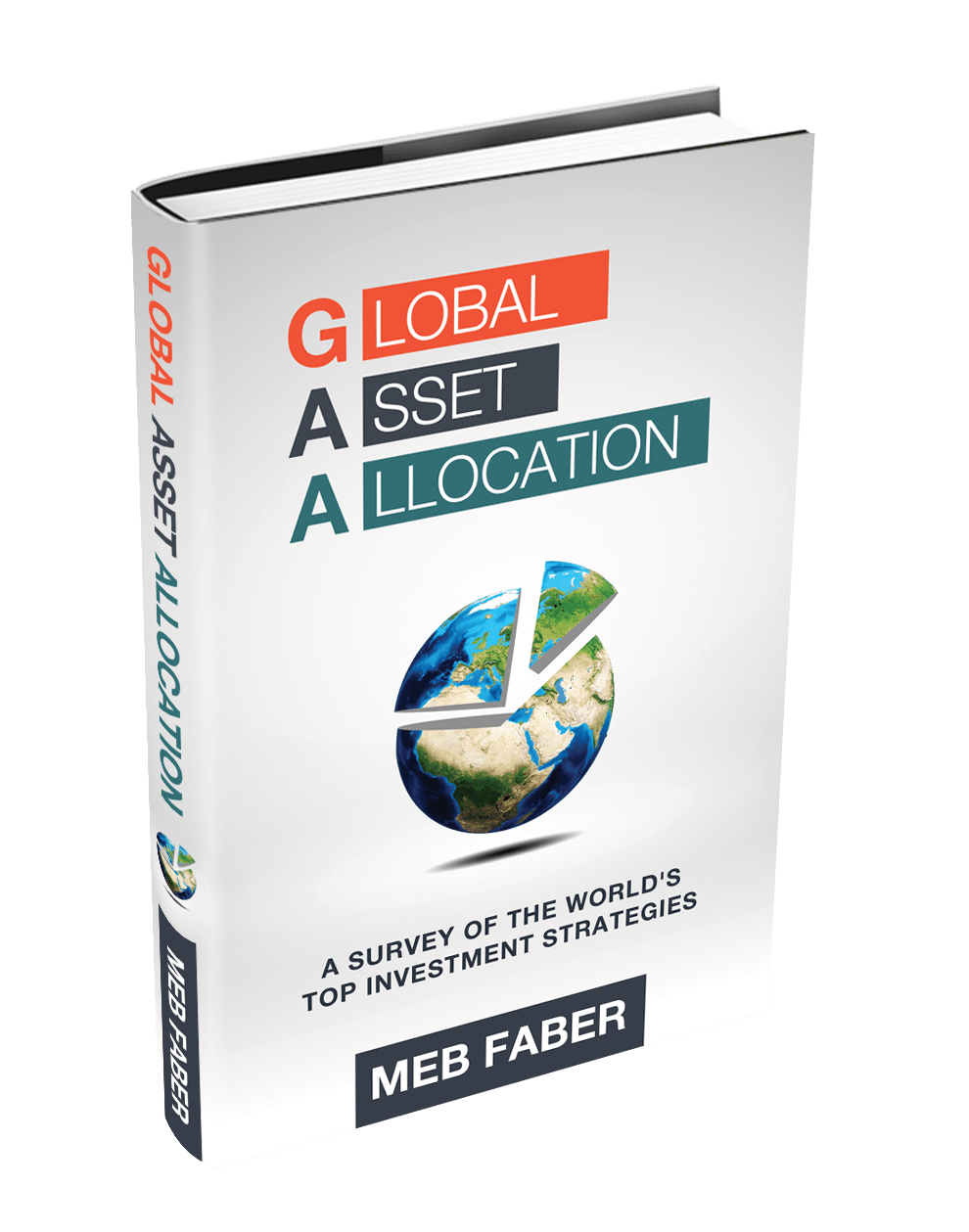
If you’re trying to put together your own portfolio, it can be confusing trying to figure out whose advice to follow. There are countless books from successful investors (and at least as many from the other kind) that offer to tell you the best mix of assets to avoid big losses and earn what you need for retirement. In his latest book, Global Asset Allocation, Meb Faber takes a different approach, comparing well known portfolios between 1972 and 2013 to see how each of them would have fared and which of them an investor should follow. His conclusion is that, as long as you stay within some reasonable bounds, it doesn’t really matter.
“Even with the difference in allocations, the spread between the worst performing allocation, the Permanent Portfolio at 4.12%, and the best, the El-Erian Portfolio at 5.67%, was only 1.84%. That is astonishing,” Faber writes.
Building a diversified portfolio
Global Asset Allocation starts off by explaining why you should diversify your portfolio in the first place, which is one of those things that everyone knows they should do but not everyone can explain why. Looking at the returns from a variety of asset classes, Faber shows that each of them suffers from extreme drawdowns and you can never know which one is going to take a hit during your lifetime. So as much as a person might like to pour everything into equities because they have the highest upside or government bonds because their supposed to be safe, either one can leave you way behind if that’s the asset class that underperforms.

The 60/40 portfolio is the classic answer to this problem, and it serves as a useful benchmark even though it’s not exactly what Faber suggests in the end. Buffett’s recommended portfolio has a much larger equity tilt (90% S&P 500 index fund, 10% short-term government bonds), so it tracks equities pretty closely.


The difference between these two and the other portfolios that Faber analyzes (El-Erian, Rob Arnott, the Ivy Portfolio, and more) is that they also have an allocation to real assets.
Faber concludes that portfolio construction is a lot like making cookies: you need to have all of the ingredients, but the exact amounts don’t matter so much. As long as everything is present in reasonable quantities you’re gonna be happy with the result.
Faber also covers basic operational issues
Faber also addresses operational issues that often get short shrift in investing books, probably because they’re not as intellectually stimulating as asset allocation or stock picking. But the reality is that fees and taxes can kill your returns, and regular rebalancing is an important practice that improves annualized returns practically for free and ensures that your portfolio continues to follow the strategy you set out at the beginning.
Global Asset Allocation is a good book for individual investors who want to know the building blocks of a solid portfolio and who need to know the good habits that will help them avoid unforced errors. It’s also a great read for investors who spend too much time worrying about details that they don’t really have control over and reinforces the importance of long-term investing.



Comments
Log in or sign up to join the conversation.