
Meanderings About A Zombie Economy

A zombie econonomy is what dominated the questioning around Chair Yellen's first-phase of 2-day testimony; including whether implementing a NIRP is questionable based on legalities.

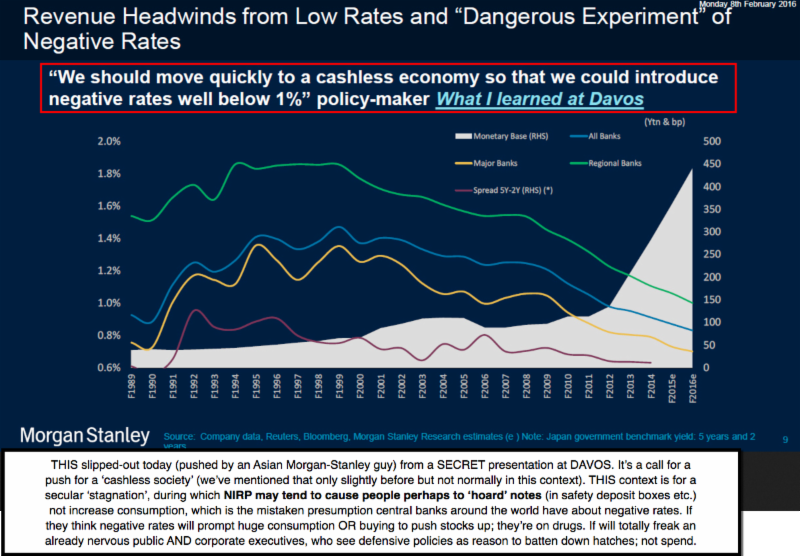
Meanderings about a zombie economy... that's what dominated the questioning around Chair Yellen's first-phase of 2-day testimony; including whether implementing a NIRP (Negative Interest Rate Policy) is questionable based on legalities. That's not what they should focus on; rather the implications we discussed last night, and only lightly alluded-to by the Committee (Yellen or the Congressmen) or for the most part 'skirted'. That's because they NIRP would be a deleterious tactic. 


Chair Yellen tried to walk a careful line (particularly the pre-release remarks), as sparked the early rally we suspected before a post-testimony part 1 decline also alluded to both with respect to the intraday pattern and the idea of fading the first move. As the 2nd video delves into much of what happened, as well as the backdrop we have outlined consistently (technically and fundamentally); I'm not going to dwell on extensive text tonight, since you know our overall view as well as the need to focus on the videos more so than the text presented here. 

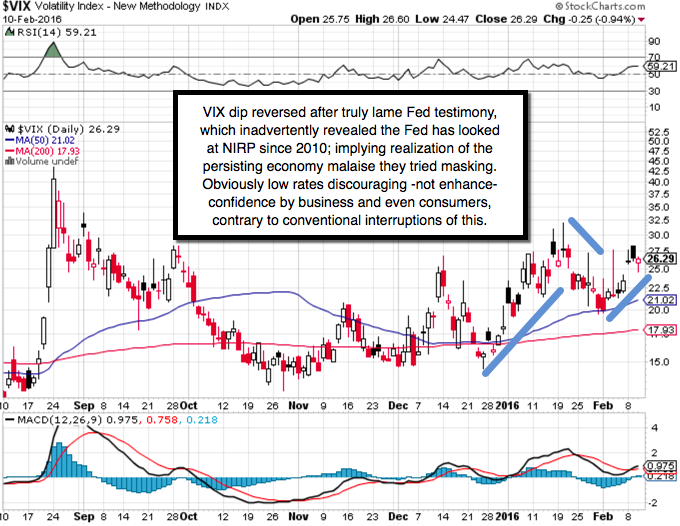
I am going to note a few key points: 1) a short-term indecision pattern to allow the S&P to lift off daily oversold was logical, and one never wants to short as a trader, in-front of a Fed Chairman's testimony (heck with political correctness; a Chair can be a Chairman or Chairwoman; who cares who you describe it); 2) a way of describing policy DOES matter, and she did a horrible job by essentially inadvertently acknowledging they've talked about NIRP since 2010 (really that means all -and I really mean all- the domestic and international analysts that of course relied either on central bank (or Goldman?) optimistic presumptions that flew in the face of the Fed's own data for many months or longer, are either just besides themselves (not knowing what to do or how to handle portfolios) now; or they are compelled to admit they relied on antiquated long-term strategies as were obliterated (or are still in that process) by the prolonged contraction; or 3) the impact of QE and low rates that allowed the 'dangerous' disconnect from all economic reality for the majority of the population as we've said for over a year and which indirectly contributes to the rise of 'populism' (on the left or the right) both here in the U.S., and in Europe too. 


Typical me: I start with a few points; then keep going. Hah! Stop typing Gene. 
If they do this (NIRP) we will get not just a 'recession', but they won't have lots of weapons to use to maintain the 'controlled' Depression as I've termed overall has been under the facade of the previously-extended upside in financial asset sectors; not the all-important Average Household Income or Growth levels. It's becoming political, but was never meant that way from my perspective. Now it's manifest itself in both leading candidates (of the moment anyway) which proves my point, ironically enough: that regular people are pretty fed-up with things. 


The risk is that this might 'feed upon itself', and now become a self-fulfilling sort of prophecy. To wit: add a crashing stock market (and softer housing prices) as well as an imploding auto industry; and will the Fed and pundits simply sit and ponder why 'free' loans aren't stimulating purchases? Or will they wake-up and smell the coffee and realize that people finally get it that government is trying to push them into spending; push equity prices back-up by charging for saving; as well as do nothing that actually encourages CapEx or corporate hiring? 


In sum: rather than a polarized society that they claim exists (you have that in Congress not in the public) you now have a society that is tired of divisiveness or realizes that the policies have been counterproductive for everyone (including the so-called 1% elites, which is becoming a shopworn term at this point), with a market drop that is absolutely hurting the investor class (essentially that didn't heed warning signs we've shared for so long). 

Not crowing; I'm concerned that things globally are far along in the course of deterioration; not much officials can really do shorter-term; and on-top of it the global geopolitical picture threatens to get out-of-hand even further this Spring and Summer. (North Korea just executed its Army Chief; the Russian Air Force is now essentially carpet-bombing Western Syria, while Turkey threatens not only to join Saudi Arabia in an intervention; but openly hurls ire at the USA for helping the Kurds, one of the few proper forces actually fighting ISIS etc.)

Even legendary credit gurus (I'll prefer not to name them though most of you know at least three that this would apply to) are now saying we're heading toward, or 'might' be 'in' a recession. No kidding. We track it since last July (said so ever since); if right that makes us the optimists, because based on duration it would end far sooner than the historical measure from some suggesting it's just upon us. Of course with the challenges out there, if they throw NIRP in too; it will be deeper than the average duration.


Bottom-line: there is no bottom-line. At least with respect to downside targets. Puns aside; we'll listen to the messages of the market as time evolves, and try to assess when it makes sense to consider accumulation. This has been a very successful time for us from a trading standpoint, as well as for investors able to avoid temptation and stay out (or lighten up) for over a year now on rallies. But at the same time we have empathy for the others, rather than being tempted to cast aspersions; it's sort of like wishing things weren't as bleak as we feared for the Nation, or much of the world. 

We'll keep our chin up of course; and suggest the same for everyone. Maybe it should be thought of this way: if this is the mood from having nailed this market; I can't even imagine the sentiments from those who are remain bullish or buried in un-salvageable heavy long positions; those who keep catching falling knives; or even worse; longs that have margin or leveraged positions during even far worse than the market (I've warned against margin and the compounded risks for some time too). 


In any event, maybe I just sense this as a spot where there was a spot for the stock market to rebound 'within the context of a bear market downtrend', and it tried, but then the Fed Chair shot it down with everything but a full confession. Yellen's efforts to reflect a calm personna, with a bit of candor, screamed lots of sobriety to a market, and helped it accelerate a reversal from the early spike; a turn from up-to-down suggested in our first video of the morning. Now, before it is said 'oh good'; I would have preferred that the market put on more of a show as far as rebounds even if I had been wrong about that turn. 

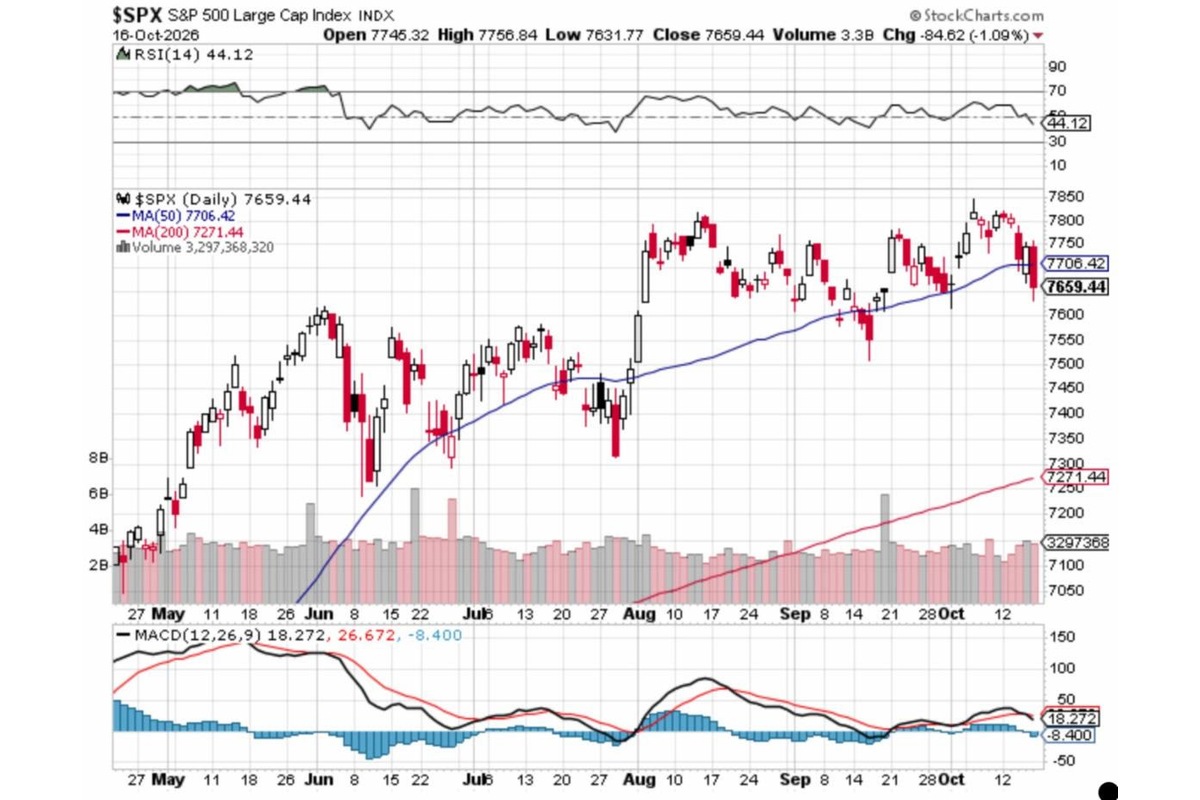
Why? Because it would have eased the oversold technical condition a bit more. Of course 'crashes' only occur from oversold; and this era is a 'process' kind of evolution. That's why the VIX is still sub-30 and why the S&P isn't deep into the 1700's yet. Stay tuned; there's more to come. 

Conclusion: holding short March E-mini / S&P from the 2065 level.           

Tuesday (final) MarketCast

3:30 pm (intraday + Fed) MarketCast
 

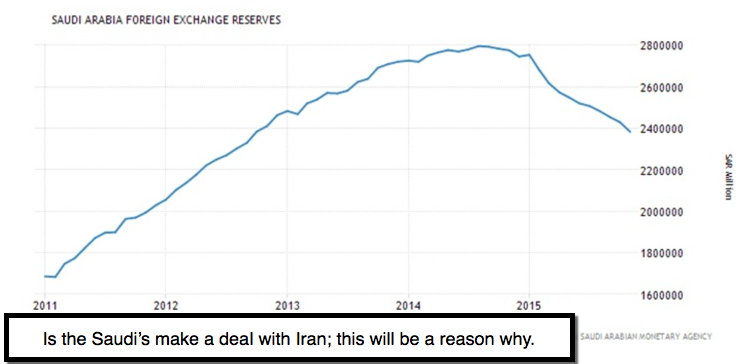
Daily action - my 'brief' remarks sort of covered it. So do the videos. Market of course faltered and reversed today, multiple times, traversing hundreds of Dow points in both directions. This reflects a lack of liquidity and very treacherous or thin market conditions. Oil prices trying to rally and then reverse didn't help. A story about Iran and Saudi Arabia agreeing to talk about stabilizing Oil prices at one point helped; though hard to believe at the moment; though financials say they both would benefit, so you never know (we're all in-favor of higher Oil). 


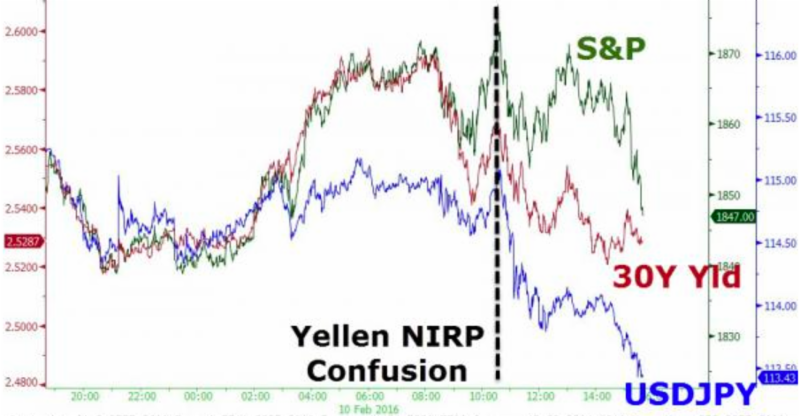
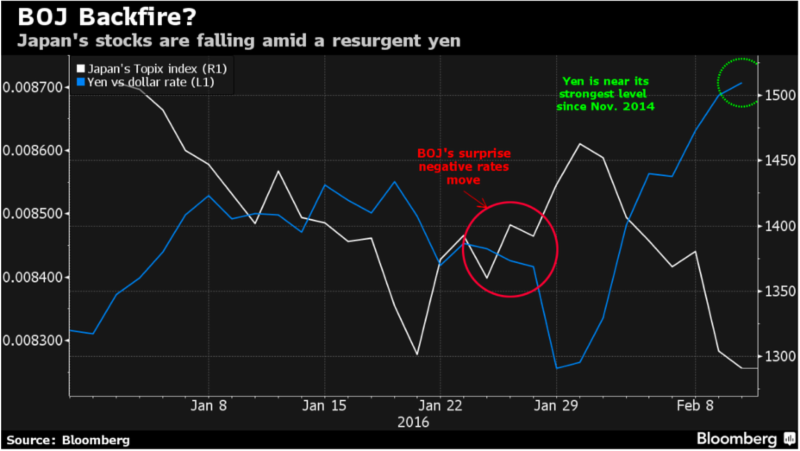
This evening Tokyo is down yet-again; and while I think the focus today finally bringing NIRP out into the open is welcomed (analytically); perhaps the legality discussion was 'cover' for the real aspect, which is the 'stupidity' of using NIRP, which can be gleaned from what happened in Japan (think no ability to float the bond issues necessary to run a society that's build on debt and not surplus and you cut to the chase). So I think they'll not do it; but meanwhile here they scare people; and that can scare markets, even without implementing such a policy.

And sure; realization that both present candidates are Wall Street nightmare fodder, is and will have more impact on the market; which wants to resurrect the old game (I have said for over a year that they would be unhappy when the 'punch-bowl' was taken-away and return to the well even after 'last call'. Yup.)


As to the 'no more cash crowd'; well that (sparked by NIRP fears) could be the over-reach that finally wakes some people up; and prevents it from occurring. It is not about left or right; it's about common sense and a halt to the insanity. And there's no way a cashless society works without a slave labor world. Otherwise, people move to barter or an underground economy in which even state & local government participate in. This would likely backfire on politicians or globalists, or central bankers, who advocate it. If their control grid starts fraying (already is to a degree), it can unravel further (in some countries like China maybe totally), and there you have an actual revolution risk; not a political one like here. 


I still fear the timidity we've shown on the global stage has had an unintended series of outcomes (to say they're intended would be to accuse leadership not of naivete, but of something more sinister); which have yet to gel to main event status. Symbolism might matter. Not one media outlet I've heard of makes the point of where tomorrow's (some say last-ditch) key meeting of the U.S., UK, France, Russia, Iran, Saudi and Syria (and others) to try to save the Middle East from conflagration takes place: MUNICH.  


We could again challenge the January lows as soon as after Yellen's Phase 2 testimony; as she has 'a chance' to right-the-ship by negating the 'impressions' her comments on NIRP and recovery gave the market on Wednesday. Can we hope that her staff has enlightened her of the necessity to tone that down a lot?

Prior highlights follow:  


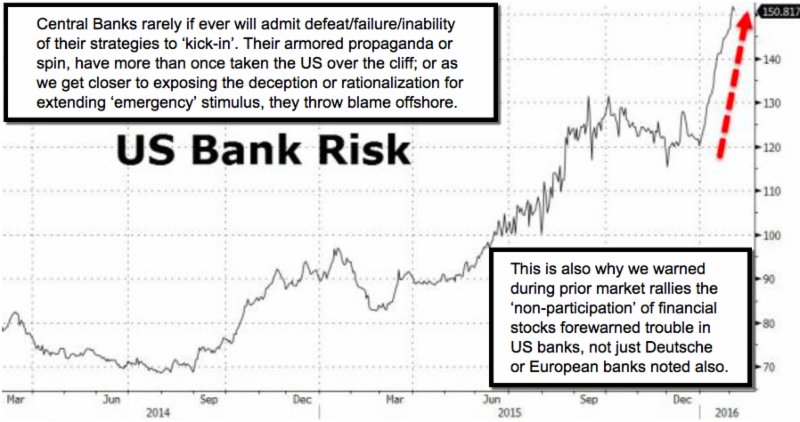
Banks are wrapped-up in an enigma - unrelated to the lack of transparency about Chair Yellen's testimony coming right up; but perhaps fearful of exactly a fear we expressed, in hopes, America's world-leading 'central bank' would not stoop to in desperation: of course that means 'negative interest rates'. 


That's why we pleaded, when we heard (and shared) rumors over a week ago that US banks would be asked to initiate stress tests to see 'how they'd do' in a 'negative yield environment'. We saw that as a 'trial balloon', and in today's last hour they trotted-that out again. The timing was perhaps intended to coincide with a few minutes left in Tuesday's NYSE action to see how the statement was received; perhaps preparing the markets for a dovish testimony from Yellen. If they expected a favorable response they didn't get it; the S&P quickly reversed, albeit not dramatically. Central bankers want citizens (they call us consumers of course) to spend spend spend, and not save. They think that will revive a fairly lame economy; while they fail to realize 'the people' want fiscal responsibility. 

Perhaps that's why the candidates leading voters in both parties seem vaguely distant to the establishment; as basically the people (liberal or conservative or just normal middle class Americans) are essentially saying they've had enough.

And in this case I suspect it's not a nod to denying opportunity, but the opposite as well as demanding a tight purse and diminished debt by Government. Yes it may seem that doesn't go along with some broader programs; but the point is it is just a reflection of moods out there. We focus on markets but aren't oblivious to societal agitation, which while not like Hong Kong (and yes I mentioned that last night hours before hearing about actual clashes in the streets; coincidence) we have had a period of time of leadership polarizing not uniting people; of that I think both parties are indirectly saying, enough. Let's move forward and grow. 


But doing so will not be accomplished by moving to negative interest rates, and what I feared (because Japan, China and ECB are doing it); more of the same bad medicine to cure a problem that they perhaps naively continue feeding. So the upcoming Fed testimony takes on more than the usual prospects of being a defense of Fed policy (which they should at this point); but risks a 'caving-in' or sort of mea cuppa about the Fed's recent moves. They were late, backfired just as I thought they would; but we expected the Fed to do it. They really needed a move away from the money-printing philosophy; today's 'hint' suggests they do not yet 'get it', and I hope that during the testimony we learn that's not the case.

If it's very dovish the market will try to grab onto it, but then sell into it. If it isn't the case, the market may try to cull-out key words like 'data-dependency' to try to get some market upside going. So it's tough (impossible) to read her mind at this point. It is possible to proclaim that any solid rally will get sold into.   


Yes the outcome may take this market to lower levels; even if by a circuitous or up-down-reversal route. If they 'go Japanese'; the exact concern we expressed last week (yes we've been correctly bearish on distribution and trends, and see a stupid move by the Fed as just further enhance our downside gains. But, as a citizen wanting to see America distinguish itself above grovelling monetarists, I wanted to see something supporting the idea that Stan Fischer and Yellen were going to 'rise above' the frey of pulling-out all the stops to push people into both spending and risk-taking modes. This is the 'let's pour more gasoline on a fire'approach; and it's uninformed, borders on panic desperation, and it won't work. And yes it remains unconscionable to push risk-averse citizens into taking risk; an absolutely abysmal situation prevailing for fixed-income retirees for years.


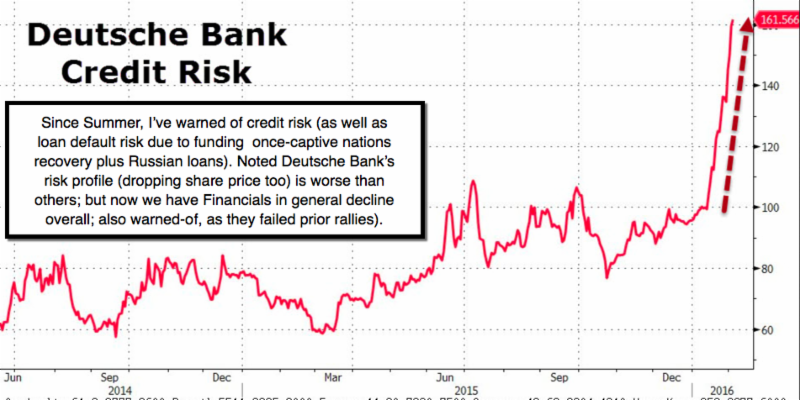
We already had Japan's reaction; and it was briefly up then tanked. We already heard Deutsche Bank a week ago pleading with the ECB 'not' to keep cutting; as the message to ECB from DB was: you're killing us. So what do we get? Out of DB not much response (up early then down in Europe overall) to their sort of sad necessary statement of 'rock solid stability' (such statements usually bring a degree of concern from depositors who otherwise don't even think about it). 

I of course do believe DB will be around; they are the State bank basically. We have talked about their noble if risky loan portfolio for quite a long time. General perceptions hold that US banks have been reserve provisions than European in an overall sense; and that's why the others like Barclays and Credit Suisse are under pressure, as investors examine all the major banks. I haven't heard lots of discussion about the different nature of the lending practices that we noted. It also 'may' be that the US Fed wants to show our strength relative to Europe via the 'stress tests' on negative rates. If that's all; fine; but there are Fed officials in candid conversations who chatter about actually doing it. That is foolish, as I'd commented earlier in the day about the retired Minneapolis Fed President, who actually advocated negative rates this morning, hours before the 'trial balloon'.  


Bottom-line: I quoted a former Fed President calling for negative rate policies; and called that folly (in a sense hoping the leaders were beyond that). No such luck I'm afraid; as they are foolish enough to take us more Japanese. 

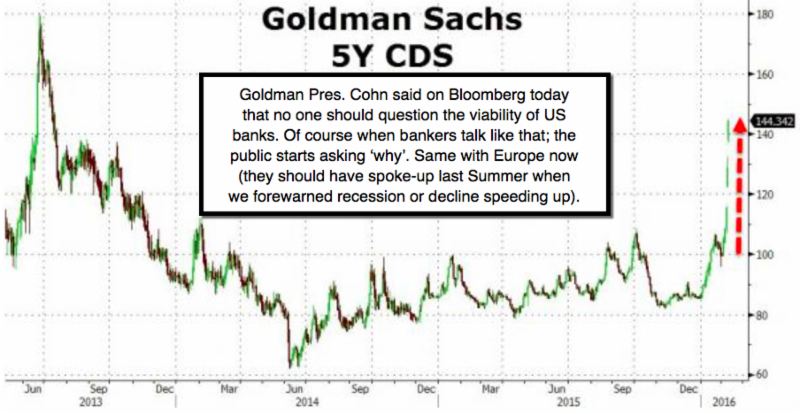
I know that a 'stress test' doesn't mean they'll go to negative rates; but it's really sad that they are even doing that. After all, the perception is that US banks are in better shape than European banks; so if this is an attempt to move the topic away from the loan-loss exposure to the Energy industry; I suspect it will fail to deviate attention to 'rates', but rather increase the concern of something wrong.

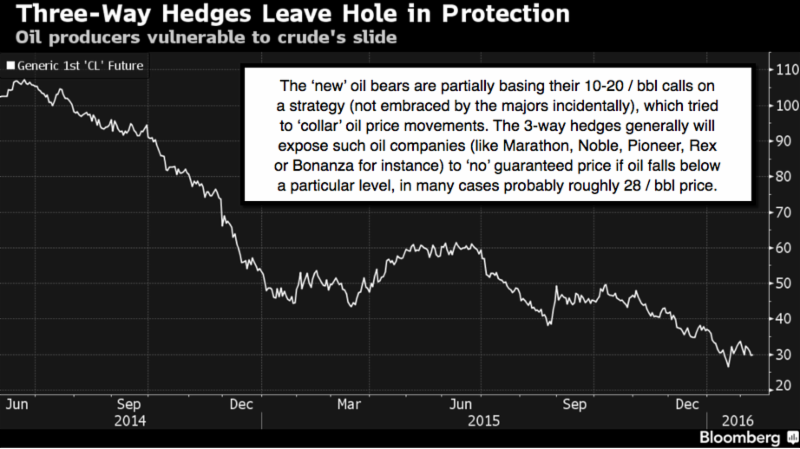
In-sum: market technical factors are unchanged; the proximity to breakdown remains of course; with oil stocks hinting at some temporary basing, since the market largely ignored the Anadarko Petroleum dividend cut; suggesting such cuts largely are priced-in. Hope so; but need to see more. And you have new and large across-the-board inventory builds reported late Tuesday.

On negative rates, one member put it fairly succinctly (although I believe goes to the overall debt structure the money-printing has created), but says it clearly: 'It's all artificial central bank steroid injections and it will either kill the patient if continued or once discontinued the patient implodes back to its natural size. It won't be pretty either way.'    


(Prior daily) action -  was far more engaging that a cursory look at markets suggests. Initially the S&P ignored the negative pre-opening futures decline, and moved straight up. We actually gave a scalping intraday sale and that worked well. A couple of them, along with expecting some sort of intraday squaring or rebound with angst and indecision ahead of the Yellen two-day testimony on the Hill. 

Got all that; interspersed by reactions to Anadarko and then the 'trial balloon' (a second one since we had that over a week ago, and I think the financial media ignored it, so they shot that out again). The market finished slightly defensive; as many hope they can get a rally out of whatever the Fed Chair has to say.


I hope they get that rally, though have doubts. Why, since we're still short. Very simply so we get another rally for scalpers to short, since our over month-long 'live' short-sale guideline from E-mini / March S&P 2065 continues at 50% of the original total position (with huge interim gains taken of 130 and 200 handles as you know); and as some members enjoy taking a few intraday handles here and there if the prospects look decent (as they did on Tuesday morning's thrust that made no sense; as usually 'the boys' let sellers take 'em down before they bounce 'em). 


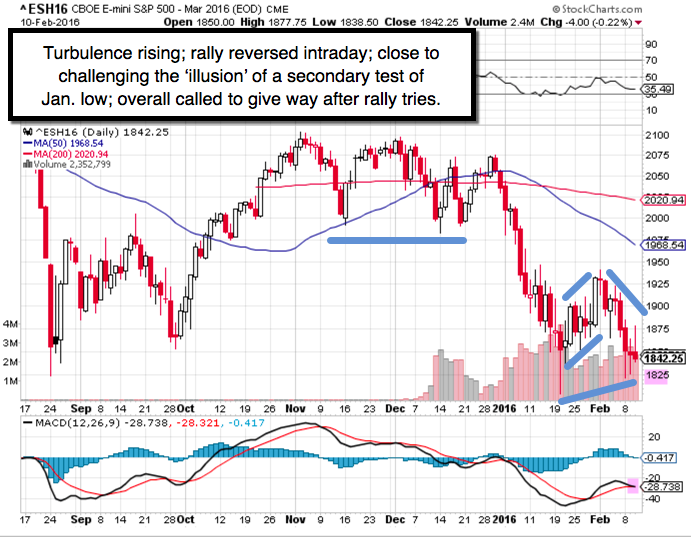
In this case I think a proximity to challenging the January 20 lows around 1812 basis Cash S&P, is what provoked trading desks to try the early rebound rather than let the follow-through from futures erode price first. I viewed that as a sign of weakness ('Hail Mary' style toss-up) and we shorted it for those inclined; did well too. Overall it was a ridiculous market that actually makes the lows of both today and yesterday 'more' crucial with respect to appearing to be a 'secondary test' of the January lows for the S&P. In my view that will fail; whether we get a bounce or not. On a scalping basis I'm open to the long side briefly; against the backdrop of our downtrend when viewed in context. 


Again this evening the futures are down about 750; so whether that holds or will mean anything is hard to tell. I can say that if we break the January lows, S&P will washout (triggering algo sells) and then rebound, before heading lower, in a very ideal way. If they love Yellen (for the wrong reasons), such a rebound will be dangerous. So either way the outcome should be bearish; but it there's sure no requirement that any resolution 'must' occur instantaneously just now. They know the proximity to the lows, and will do what they can do defend it. But they will do so for the wrong reasons if they think 'negative rates' or promises of Fed intervention or QE is the solution. It's not and actually counterproductive now.   


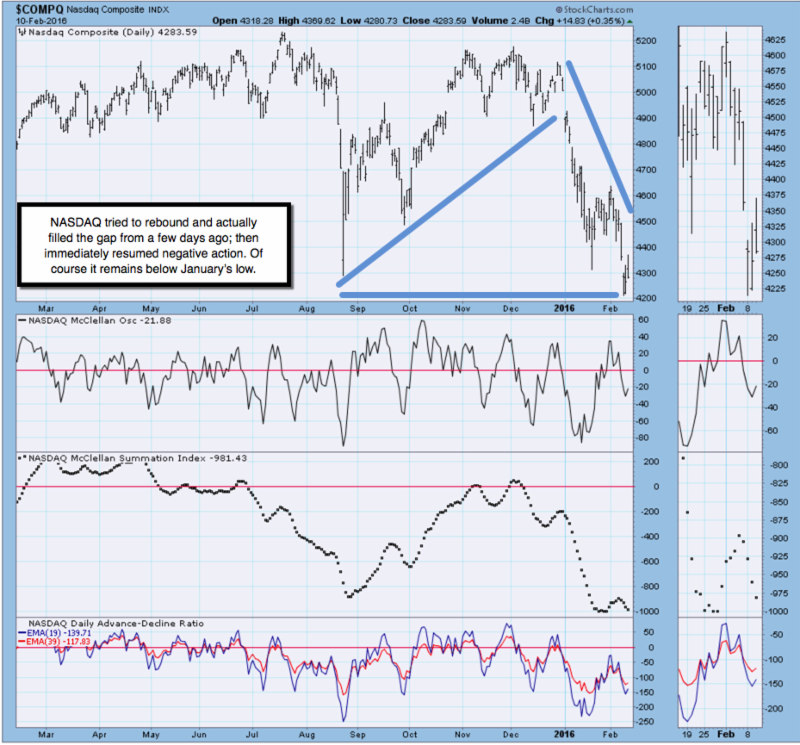
A 'desperate secondary test' - just above the January 20 lows preceding our expected 'reflex rebound', and ensuing decline from February's start, is really the core message to convey about Monday's market turnaround try. It's dicey; has little prospects for success, and is discussed (and projected from technical perspectives) to be part of the pattern 'process' outlined for weeks. 


The reason I begin with this is unusual: despite the obvious nature of trying to hold above the preceding low (and thus seeking to avert a penetration into what I call 'no-man's land' that lies below), the pundits are either rationalizing a turn as bargain-hunting (little of that); or short-covering (lots of that); or based on oil being strong (sort of, but lots more challenges, dividend cuts and defaults loom both here and abroad); or somehow a rebound in Financials (that was solely a function of late-day post-European market close statements by Deutsche Bank, the institution at the heart of Europe's banking fears, saying they have sufficient liquidity to meet a Coupon payment in April). 


This matters, because 'some' would act 'as if' the market simply turned around (it tried but was goosed-along by DB), because investors saw bargains. That's nonsense, though there's no argument the lower things go the lower the risks. I should also say that while others are suggesting we 'may' enter a recession in the future, I contend we are in one roughly since indicated in July of 2015. That makes me 'more' optimistic about getting this 'Bear Market' over with earlier if you think about it, than many suggest. Here I'm referring to 'lead times' during which a market sees distribution (all last year) and then the lag for a recognition formally of a recession (closer to the end historically). Because at that point the stock market starts anticipating the recovery that follows. 


What's different? Well hopefully it's not different 'this time'. But we have limited Fed stimulus capacity (unless it's at the expense of the American people being more heavily taxed); we have China in a funk (we can only hope they figure out something to stabilize their bleak growth and jobs picture; or societal discord is a real risk there... and perhaps Hong Kong would actually regain independence if push came to shove.... it could all get interesting); and Japan sort of spinning.
So if it's 'different', it would be because the unwinding is potentially enormous; at the same time the ability of central banks to do much is limited; and the very coordination of 'globalism' puts everyone pretty much in the same soup; leaving few capable of rescuing the many. That's where you get deflation risk beyond of course the kind of disinflation/deflation we've had more recently. 


What you don't get is rising demand for commodities or very much for oil unless oddly enough the Dollar breaks much harder, and Canada stabilizes (Canada is a banking risk few are focusing on, but perhaps should take a look at with some concern). I know businessmen in Canada are quite concerned about the status of their commodity-based (mostly oil, timber and mining) economy. Less so for Ontario and Quebec; very much so for Alberta, Manitoba, and even Vancouver which has benefited so much (high property prices) from Asian capital inflows. 


Technically - it will not surprise me at all if the US market breaks (yes I don't expect Monday's late rally to hold even if Europe opens firmer with reduced risk of a 'bank run'; a story that made the rounds earlier today in Germany mostly); with allowance at midweek for a snap-back related to Chair Yellen's testimony

Again the 'secondary test' aspect relates to the lows of January and August. Of course if these come out (and they should, whether right away or subsequently if they manage to hang together for a couple days or into Yellen); 'algo' signals at that point trigger more selling. Before that so do margin calls and so on. It's likely to be erratic; and nobody would be surprised at more relief rallies; as the crowd that won't talk about it, knows the risks in 'no-man's-land'. 


Again, while I'm excited about eventual bargains; you don't have the kind of big percentage cuts (foretold here in the absurd pricing in FANG and other stocks), even with rebounds in Oils or some dividend-paying industrial's (careful about a dividend payer as often that may not be a safe dividend), without a series of up and down swings at worst, or a selling climax (crash like) at best. (I say 'best' of course as a washout usually leads to a big rally; not the ragged kind of action.)

In sum: what we've had has been 'orderly' and 'systematic'; just the 'process' I frequently refer to the evolution as. That's why the VIX is still sub-30; and it's a reason why 'they' (meaning fee-based money managers) haven't panicked. It's worth mentioning that sometimes they can't. And about that I recall one of my comments last Summer, about 'risks of ETF's'. Yes investors are diversified in a group; but it tends to cause balancing or almost equivalent moves up or down, for the components in a given ETF. So when you see a 'bank basket' move or wonder why a bank that has few problems moves lower with the group; that it's a part of an ETF may be the reason. Not making a big point here; just noting a few 'modern portfolio' aspects that can prolong the misery or even the depth of decline, by virtue of these 'constructs' they created to attract investor money. 


If they 'really' (so far it's going as we warned) unwind this; by no means does it hold the S&P 1700's, much less the 1800's (just below here), over time. It's not essential that it all drops on a dime, but it still should in time. Few agreed with us all through last year; few dispute the issue now; few are sufficiently sidelined (much less short and profiting from the drop or at least hedging other losses in a portion of their retirement or other long-side portfolios they're barely involved with); and all that means this may have lots more slack in it as we've suggested many times. So again, doesn't matter if the ultimate low is 1750; 1450 or 950 (? did I say 950; no I just gave a number; I said nothing as far as where it stops). 


It matters that we've assessed the distribution of last year; the hard break just in-front of this year (as a process of the preceding desperate 'hail Mary' failure), and we look forward to trading our way to a hopefully sustainable low 'one day'. This is not that day. Rally or not; for now still short at March S&P 2065.              


Giving the S&P 'goose' in the late day to trim losses by about half (or more) is not just a function of German calming (it's a shame when things deteriorate to a point where Germany's largest bank just being able to make a Coupon brings a sigh of relief). It did trigger short-covering in-general in US markets (Europe all closed up a couple hours earlier of course) and I doubt most traders knew why. 


Also important: the turnaround today came from essentially the January 20 low in the March S&P, 'if' you consider that the 'discount to cash' is less now than it was almost 3 weeks ago. In the Cash it's more like a secondary test; and really is where they need it to hold. To wit: a double-bottom hold-out is more risky; so they can't really wait for that. They had the godsend of the German bank saying it could pay it's April coupon; so that likely simply helped. (Regardless of further European bank weakness there are many stressed EU banks. Canadian banks should also be watched, as I mentioned. 

To add more complexity: on Wednesday at the House or Thursday the Senate, you have Fed Chair Yellen testifying, and presumably will throw a carrot to the markets by saying they are open-minded, made no decisions on March, and of course data-dependent, so will see how things look. That really means little but in this turbulence they'll take what they can get. 

In-sum: the market and fundamental internals have not changed. It's terrifying to many institutional guys and gals to see the downside without much stopping it. The opportunity to try for a bounce off the former low was a given; really this pattern is something we've talked-of as part of the entire pattern 'process'. But the mediocre economic background and continuing prospects of lowering future expectations, would counter the secondary-test (or prayers for Yellin to help.. if you forgive the pun) and perhaps cut-short this effort. 


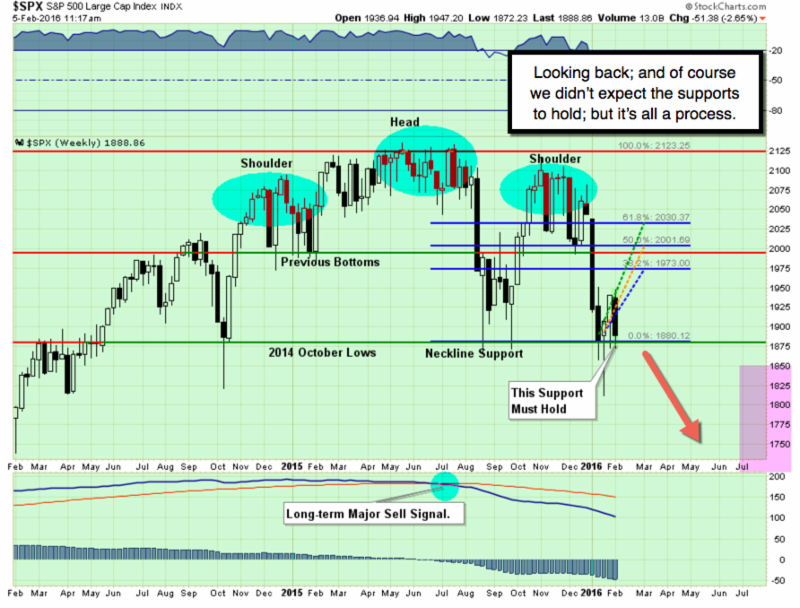
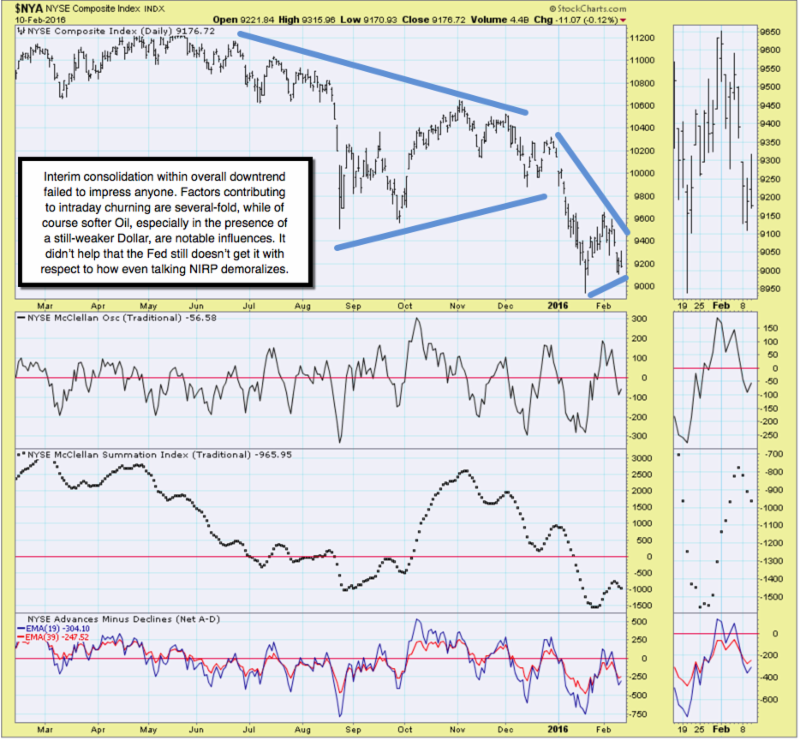
The 'technical' progression to an S&P 'neckline' on a longer-term chart is more or less where we are; and the expected 'tussle', once we got back to the area of the January lows; which roughly are near the October of 2014 lows. Below it looms the 'no-man's-land' I've talked about for months (under the vacuum that existed between the November / December lows and August / January lows). I expect to see the S&P well into 'no-man's-land' as part of the ongoing process.


Finally, the relative lack of 'volatility of Volatility' does not mean VIX is broken. It simply alludes to the 'structure of ownership', and management, that I've talked about on frequent occasions. That's why unless algo-selling occurs; not much in terms of heroics goes on. One guy at Citi talks of a death spiral; now one of the most bullish at Deutsche Bank (nothing to do with the Coupon statement) is reversing and suggesting a 40% odds of recession. We think the recession has dated to about last July; and yes, we're probably more optimistic than some as we think it's all well along (after all last year was entirely distributional rallies; no serious investor buying at any time). Barring a secular collapse of course....

So the 'most bearish' ideas you hear of 1800 down to 1400 of the S&P are now viewed as panic, and I smile. Because, those are bullish alternatives, with S&P going back 'just' to the high areas more or less of 2000 and 2007. One was a speculative blow-off and the latter was funny-money (easy credit) based. If we actually went to a multiple relative to the Index in comparable growth rates from history; we'd go lower. Stay tuned; as clearly, having anticipated this market as well as fallacious growth estimates all last year from corporations and some of the major governments, you won't get me more bearish into the hole. 


After all we used the whole past year to distribute, long before projecting 'brick wall of resistance' for the final days of 2015 as long could sell for 2016 tax year gains. But by no means am I yet putting that dry powder to work, at least clearly pending either more downside, more short-term desperation efforts to hold the preceding month's lows; or a bit of both (alternating for a few days).         


The perils of global monetarism - underlie our year-long bearishness related to 'distribution', which by the way occurred not only by insiders here, or money mangers in Europe; but we suspect 'sovereign' holders, responding defensively to the 'global competitive devaluation' race-to-the-bottom we forecast all along.


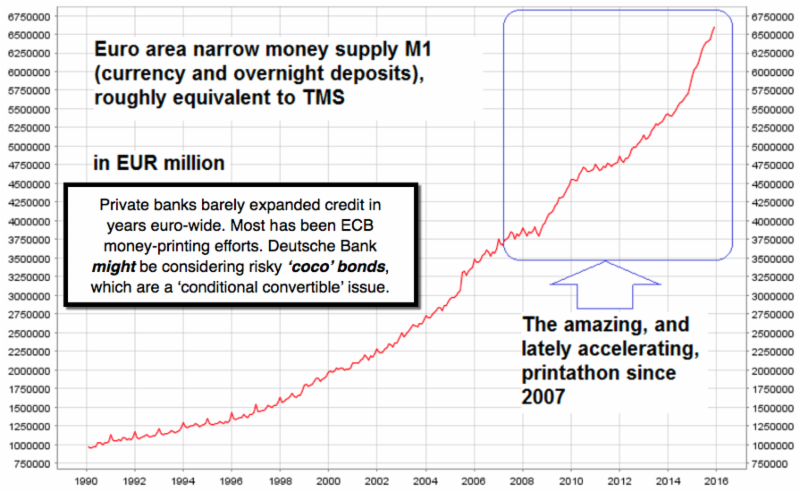
The significance of that, is that the money managers who defend long stances, such as even today, where some major firms argue values are attractive, might be missing my point that this 'is' a globally significant, even potentially systemic,'unwind', which is why I've been so critical of exporting the concept of stimulus, especially Quantitative Easing, which when it was proven counterproductive, in my view generally would (and certainly has) reveal the policy's relatively minor, if not entirely impotent, stimulation of private sector and solid global recovery. 

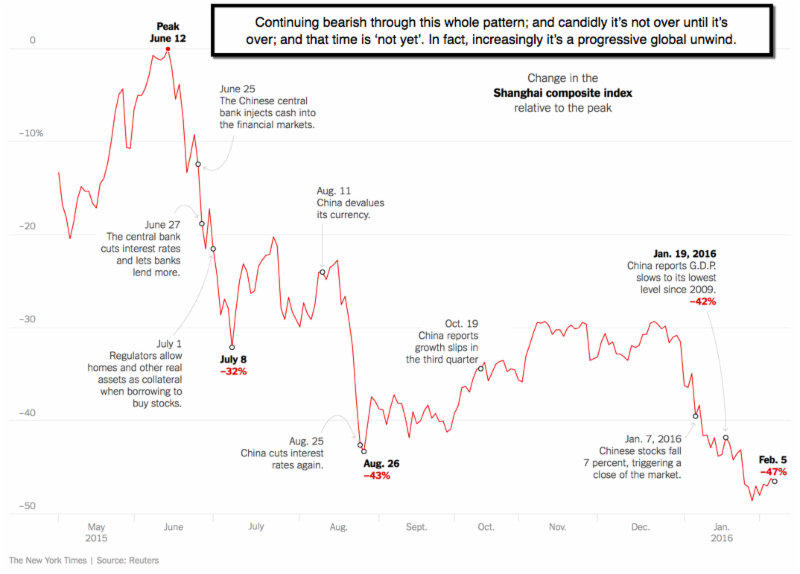
In fact I believed it exacerbated the problem; especially in 'submerging markets' (formerly known as 'emerging markets') as forewarned for several years; going all the way back to our calls for not just Tokyo, but for Shanghai to break hard (I think it's about 3 years since I called for a 'China Crash', with the bulls there of course wrecking the 'China Shoppe', as funds gravitated to the West for a bit).


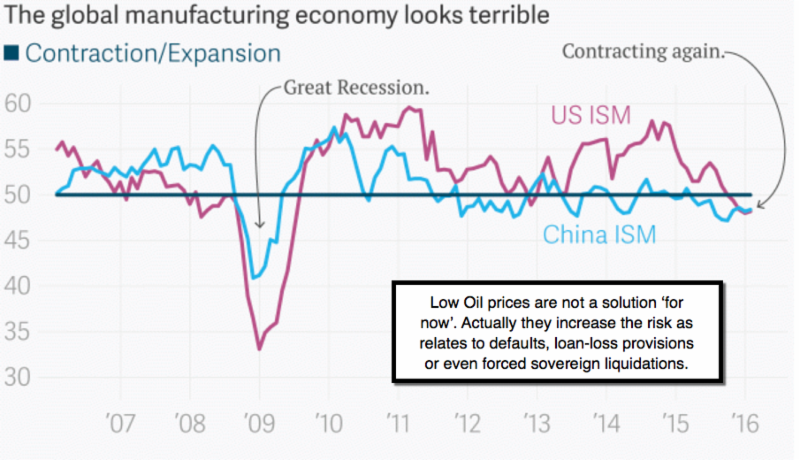
This has been a progressive decline as outlined for many months; as of course the market's top (measured by S&P) was internally a year ago for many stocks; Spring for the Index, and secondary peak in July. That coincided with our view history will track a 'recession' back to July '15; part of why stocks discounted the coming contraction from probably the weakest recovery ever relative to the money thrown at it, and concurrently a most-excessive one, with respect to the 'disconnect' we identified between 'real economic fact', and the fiction the hand-holders on Wall Street proclaimed. 


(Macro) action - intraday we faded (last Friday's) rallies for scalpers; outlining the ebb & flow as best able; generally the market conformed. There's lots of unwinding as well as lots of whining; while pundits try to excuse or comprehend 'why' names they love are getting killed (again; 'bigger fool game; never buy high expecting another investor to pay more; if they get more good for them). 


Individual stocks broadly have failed rebounds from 'trend breakdowns'. It was hard to break some; the market narrowed down; it will be hard to stop; until it's obvious or this evolves into a generalized panic. Remember: today a majority of funds are 'fee-based' managed; hence the process is vastly more elongated vs. the case back in the 1970's. That was a normal public market. That it's starting to resemble that is great; for those not married to one-way stock orientations.  


Pundits 'hunting' for 'Signs of a Bear' - are almost in a frenzy debating how many days a bearish trend lasts over, and whether it's absent or in-anticipation of, a 'recession' starting. Of course history is quite replete with examples and a slew of variations; so the exercise in mapping-out expectations seems futile. 


That's so, in particular, as none of the alternatives generally offered, presume a recession 'already' underway in the United States. Yes you have to have two or more consecutive negative Quarters; but in our view you can track that from the economic higher in July, which coincided with an S&P rebound peak we called for, and suggested since, because earnings estimates and GDP forecasts were beyond realistic ones, that you'd probably look back and track it to July. 

If so, what does that mean for the market. It merely confirms that a distribution of nearly-historic range should have taken place through the late Winter, Spring and no later than early-mid July of 2015; and for some (like insiders using their buyback plans to boost shares to enhance executive compensation; proven by the insider sales that SEC filings reported many made during the 'enthusiasm') it was a form of harvesting funds while they could.


Since the market top was last year's Spring, and not late December, November or any other rebound 'save the day Hail Mary' rebound (such as they're trying a reflexive rebound from the interim low identified over two weeks ago); it means there's some good news: just by counting days for the average longevity on the downside, it could mean that the Bear Market ends in the 3rd or 4th Quarter of this year (much depends on how quickly the pattern evolves). 


By ignoring unintended consequences - spinning around global monetary or interest rate policy moves (especially the trend toward negative rates we took to task quite extensively last night); the optimists rationalizations have instead rapidly moved to weaken the Street's credibility to 'stay the course' with longs.  


Two things have happened: one, the federal reserve has newly added a twist to this year's stress test. They're asking lenders how they would handle prolonged periods of rates below zero. That they did so infers coordination with the ECB and perhaps the Bank of Japan, which introduced negative deposit rates as part of its attempt to spur the economy yesterday. Fed watchers cautioned that stress test are not an intended scenario, but you know better; especially after a market 'initially' celebrated the move by Tokyo


Conclusion: all rallies should be 'false & abortive', and clearly contained within context of the overall primary bear market trend which dates from July but most recently accelerated starting in late December 2015. Panic is possible; and if it gets to that an assault on the lows of two weeks ago sooner rather than later is not out-of-question. Global financial news backdrops may not be supportive or even much of a pause in this case. Stay tuned. 


Those proponents of financial-engineering as a fiscal or monetary solution are very clever; some may believe in it; as Bernanke once outlined in fact. It's the Keynesian expansion methodology that, if not allow to regress or contract, gets us to a precipice from which there is little or no recovery, or no capability to have Federal spending flexibility. 

It's why the Chairman of the Joint Chiefs had called "Debt" our greatest National Security issue. So I see whythe Street likes or wants negative rates; they're fully long basically. I'm just saying it's counterproductive to our National interest; no matter the short-term impact on the market (to wit: 'going Japanese' .. that's the meaning of that term in market circles). 
 

These are real issues, which are generally not explored by politicians in depth, or by media. But the American people have a sense that this isn't all balanced. Many in peripheral Europe, Russia, Asia-minor, and maybe all of Latin America, surely get that too, as they realize central bankers impeded free market price discovery, by not just overstaying stimulus of 2008; but pushing the Fed to join the ECB, BoJ & PBOC, in undermining sanity via a 'rush to the bottom'.     

Disclosure:

None.

Comments