

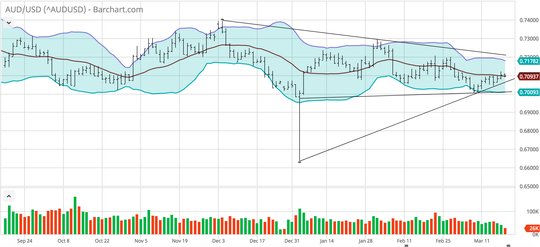
The wait for the FOMC meeting is on and markets overnight continued to stretch for yield and risk with WTI oil over $59, USD lower, equities mostly bid. The delays in US/China deals or in a Brexit resolution are to be ignored – as the wait is too long for traders to consider or investors to fear. Nevertheless, some are excited about the UK constitutional crisis as the Speaker Bercow blocks the PM from putting up for vote her failed Brexit deal again for the third time without significant changes. The excitement for the day is in the data and the policy responses expected to follow. The UK manages to ignore 44-year lows in unemployment as the rest of the world focuses on its politics. Australian housing markets are worse than in the 2008 crisis. This begs the question of RBA responses ahead unless the jobs report tomorrow surprises stronger. The inversion of the yield curves in Australian and Canada are notable stories and perhaps foreshadow a larger slowdown or more central bank responses. The relationship of both to China and to commodities and to the risk of higher US rates stands out. There is clearly a bearish tone to both currencies and yet the focus was elsewhere overnight, even though Australia had significant stories from the RBA minutes to the weaker housing prices. There is something to be said for waiting, and yet as a trader, the opportunity is in the quiet times when no one particularly cares or worries. This maybe that time for the A$ and C$ as they trundle along with a market on autopilot. The A$.7010 support looks more important than ever before and worth watching for a larger reversal in risk-moods should the FOMC fail to deliver like the ECB. The ECB has its own set of issues as the ZEW bounce in sentiment hides the future expectations weakness and the reality that wages aren’t yet supporting the inflation goals to offset the gloom from trade hits and construction weakness. The AUD maybe the best base to wait this all out.
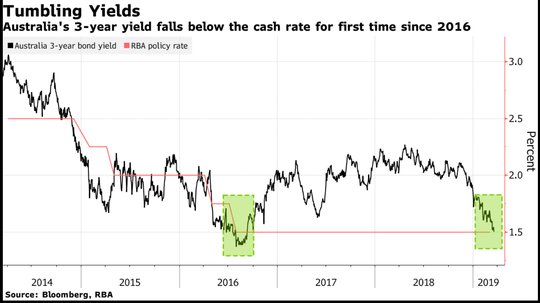
Question for the Day: Will the market overprice a patient Fed? Seems likely. As we wait for the new economic projections and the dot-plot, buying equities and high-yield bonds pays the bills. Central bankers are on edge for the FOMC as well. The USD is seeping lower into this risk with EUR and JPY both gaining overnight. There are many that wonder if the ECB and BOJ can win the race to the bottom. The RBA and BOC have some work to do to manage their own markets as well. Kinks in curves can become full-fledged inversions and recessions may follow. This is the worry and the focus for many in the weeks and months ahead. The chart from Bloomberg on 3Y Australian bonds begs questions for whether the RBA is behind the curve.
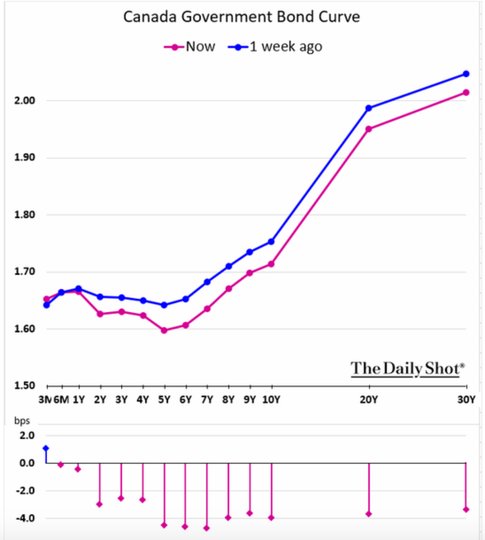
The BOC seems already in credibility trouble as politics add to the doubts about the Canadian economy. Many are calling for a much weaker C$ to follow. Either the BOC needs to act or the market will do it for them.
What Happened?
- Australia RBA meeting minutes: Sees “significant uncertainties” on the economic outlook. They argued scenarios are more balanced than last year and there is no strong case for near-term rate moves. While they expect the job market to continue to improve with unemployment going to 4.75% in their forecast, they also see “marked slowdown” in housing investment and tighter credit constraints adding to the issue.
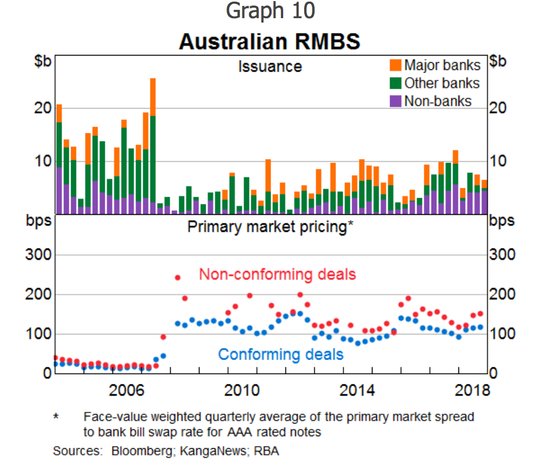
- RBA Kent: Notes rise in non-traditional lending. “The noticeable rise in the share of new mortgages extended by non-banks over recent years reflects, in part, earlier regulatory actions limiting the growth of banks' investor and interest-only mortgages. Banks' tighter lending standards in light of the Royal Commission have also had an effect on their lending activity over the past year.” Kent spent much of the speech on alternatives to LIBOR and pointed to the cash-rate as an alternative risk-free rate for the A$.
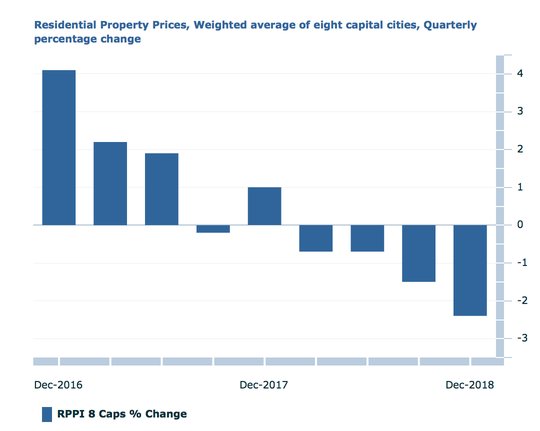
- Australia 4Q house prices drop 2.4% q/q, -5.1% y/y after -1.5% q/q, -1.9% y/y – worse than -2% q/q, -0.4% y/y expected – worse than 2008 crisis drop. Chief Economist for the ABS, Bruce Hockman said: "Australia’s two largest cities continue to lead the fall in property prices. These falls follow a period of solid growth, where prices in Sydney rose 68 per cent and Melbourne rose 54 per cent, over the five years to December quarter 2017." The total value of Australia's 10.3 million residential dwellings fell by $133.1 billion to $6.7 trillion. The mean price of dwellings in Australia is now $651,100.
- New Zealand 1Q Westpac Consumer Confidence drops to 103.8 from 109.1 – back to 6-year lows. Consumer concerns centered around the economy and personal finances. Present conditions fell 3.9 to 107.6 while the future outlook fell 6.2 to 101.3.
- Italy January trade surplus narrows to E0.322bn from E3.658bn in December, up from -0.092bn deficit in Jan 2018 – but smaller than E2.062bn expected. This was the smallest surplus since Feb 2018. Exports rose 2.5% while imports fell 4.1% m/m. Exports rose to non-EU nations by 5.9% but were flat in the EU. Imports fell by 5% for the EU and -2.7% m/m for non-EU.
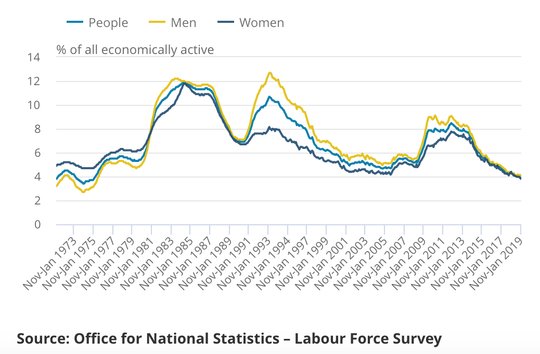
UK unemployment
- UK February claimant count 27,000 after 14,200 – more than the 2,700 expected. The ILO Nov-Jan unemployment rate dips to 3.9% from 4% - better than the 4% expected – fresh 44-year lows. The average earnings Nov-Jan ex-bonus were steady at 3.4% as expected, while with bonus wages were also 3.4% - higher than the 3.2% expected.
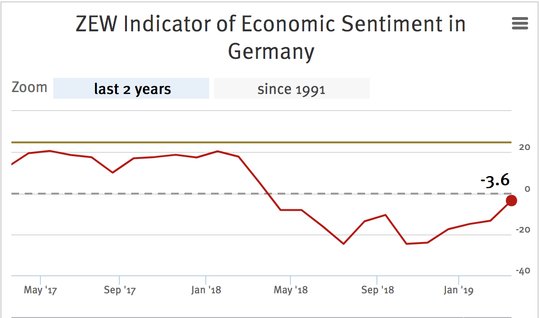
- German March ZEW economic sentiment jumps to -3.6 from -13.4 – better than the -11 expected. However, the current conditions fell to 11.1 from 15 – weaker than 11.2 expected. “The significant increase in the ZEW Indicator of Economic Sentiment shows that major economic risks are considered to be less dramatic than before. The possible delay in the Brexit process, as well as the renewed hope for a deal on the UK’s withdrawal from the EU, seem to have given rise to more optimism among financial market experts. Progress made in the negotiations between China and the US to end the trade war between the two nations may also have contributed. Nevertheless, the ZEW Indicator of Economic Sentiment for Germany points to relatively weak growth in the first half of 2019,” noted ZEW President Achim Wambach.
- Eurozone January construction output fell -1.4% m/m, -0.7% y/y after revised 2.1% gain (prev 0.7% y/y) – less than the +2.1% expected. Civil engineering fell by 2.9% m/m, while building construction fell 1.1% m/m.
- Eurozone 4Q labor cost index up 2.3% y/y after 2.5% y/y – less than the 2.7% y/y expected. The wages growth rose 2.3% after revised 2.3% y/y (prel was 2.4%) – also weaker than the 2.5% y/y expected.
Market Recap:
Equities: The US S&P 500 futures are up 0.3% after a 0.37% gain yesterday. The Stoxx Europe 600 rose 0.5% with steady gains from the open with focus on banks still. The MSCI Asia Pacific fell 0.1%.
- Japan Nikkei off 0.08% to 21,566.85
- Korea Kospi off 0.09% to 2,177.62
- Hong Kong Hang Seng up 0.19% to 29,466.28
- China Shanghai Composite off 0.18% to 3,090.98
- Australia ASX off 0.11% to 6,276.60
- India NSE50 up 0.48% to 11,517.25
- UK FTSE so far up 0.3% to 7,322
- German DAX so far up 0.6% to 11,730
- French CAC40 so far up 0.3% to 5,429
- Italian FTSE so far up 0.6% to 21,356
Fixed Income: Holding pattern for US and EU while Asia rallies. Markets react to UK politics not jobs while German ZEW keeps flows mixed in periphery. German Bund 10-year yields flat at 0.08%, French OATs flat at 0.45%, UK Gilts off 2bps to 1.19% while Italy up 4bps to 2.46%, Greece off 1bps to 3.73%, Spain off 1bps to 1.16%, Portugal off 1bps to 1.26%.
- US Bonds hold bid into data and FOMC – 2Y flat at 2.45%, 5Y flat at 2.41%, 10Y flat at 2.60%, 30Y flat at 3.01%.
- Japan JGBs see more curve flattening – 2Y flat at -0.16%, 5Y flat at -0.17%, 10Y off 1bps to -0.04%, 30Y off 2bps to 0.56%.
- Australian bonds see a further rally on RBA minutes, housing prices – 3Y off 5bps to 1.50%, 10Y off 5bps to 1.93%.
- China bonds curve steepen waiting for FOMC and PBOC. 2Y off 3bps to 2.77%, 5Y flat at 3.04%, 10Y flat at 3.16%. PBOC added CNY50bn via 7-day reverse repos at 2.55% today – easing tax payment pressures.
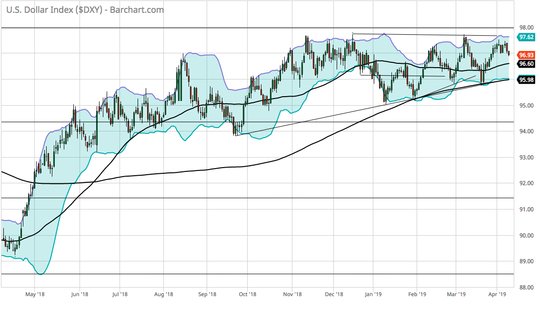
Foreign Exchange: The US dollar index off 0.2% to 96.33 with focus on 95.95 next. The emerging markets are mixed – ASIA: INR off 0.5% to 68.973, KRW up 0.2% to 1129.50; EMEA: ZAR up 0.5% to 14.37, RUB up 0.1% to 64.303.
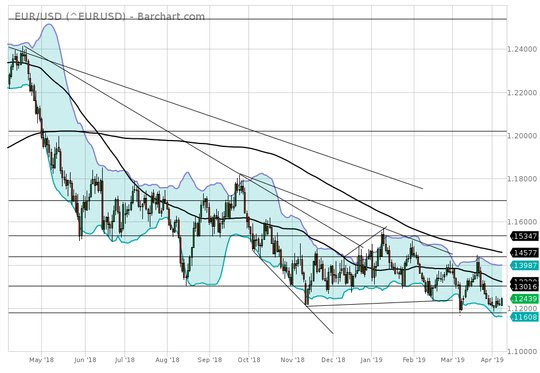
- EUR: 1.1355 up 0.2%. Range 1.1333-1.357 with grinding bid focus still on 1.1380 and 1.1420.
- JPY: 111.20 off 0.20%. Range 111.16-111.45 with EUR/JPY 126.25 flat. Focus is on risk mood and 110-112 still.
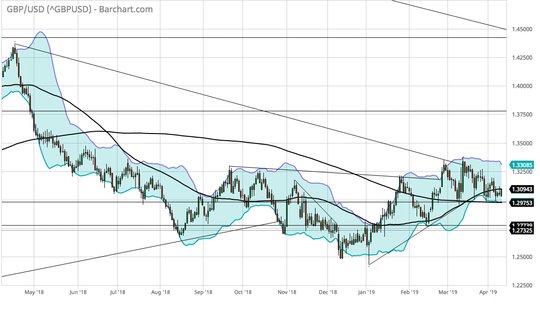
- GBP: 1.3290 up 0.3%. Range 1.3285-1.3345 with EUR/GBP .8545 off 0.1%. Focus still on Brexit and 1.3550 risk.
- AUD: .7095 flat. Range .7089-.7111 with NZD .6860 up 0.15%. RBA and housing fears with focus on commodities, risk mood countering. A$ .7010-.7250 matter.
- CAD: 1.3310 off 0.15%. Range 1.3310-1.3345 with oil and risk mood driving into data.
- CHF: .9995 off 0.15%. Range .9994-1.0015 with EUR/CHF 1.1350 flat.Fous is on EUR more than CHF with SNB still driver this week – 1.00 pivot for .9880
- CNY: 6.7120 flat. Range 6.7080-6.7200. PBOC fixed 6.7062 from 6.7088. Stuck in a holding pattern.
Commodities: Oil up, Gold up, Copper up 0.8% to $2.9525
- Oil: $59.77 up 0.65%. Range $59.23-$59.81 with Brent up 0.85% to $68.11 – break of $68 and $59 driving technical momentum but focus is on API next and global demand/risk. $58-$60 WTI key.
- Gold: $1308.50 up 0.55%. Range $1302.10-$1308.80 with focus on weaker USD and support at $1300. Silver up 0.6% to $15.41. Platinum up 0.9% to $841.70 and Palladium up 1.1% to $1556.40.
Economic Calendar:
- 0900 am US Jan factory orders (m/m) 0.1%p 0.3%e /ex trans -0.6%p +0.3%e
- 0130 pm BOE Sharp speech
- 0430 pm US weekly API crude oil inventories -2.58mb p +1mb e
Comments
Log in or sign up to join the conversation.