

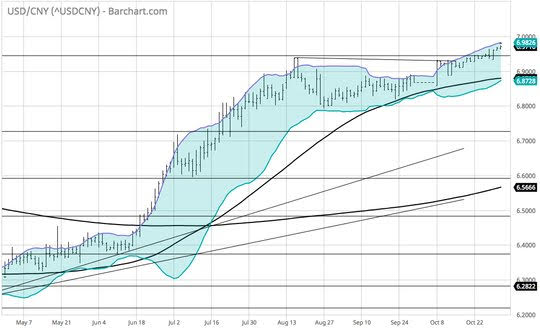
Perhaps the greatest invention isn’t the wheel but the clock. The ability to section off the day into hours, minutes, seconds has driven technology and productivity, led to the joy of accurate navigation and the fear of being late to a party. Watching the hands of the clock doesn’t teach you how the tinkering of the watchmaker produces time. There is a magic in the machine, just as there appears to be one in markets today. So the focus on market prices more than economics or policy doesn’t teach investors how to make money, but it may comfort them after a miserable month. Today’s bounce back in equities doesn’t make up for the worst result since 2012 with $5trillion in market cap gone. What seems more problematic is the hope that time fixes this mess as November and December seasonal patterns support risk while the calendar is more scary with the fear about rates in the US going up dependent on the data with Jobs and ISM next up, then the US mid-terms and more deficit spending fears, then the Xi/Trump G20 meeting. Time brings more volatility of events. As for the focus on the day, the USD break out yesterday holds, US bonds are lower, stocks are higher and the world breathes easier despite weaker China PMI, lower Japan IP, weaker Japan consumer confidence, higher Eurozone core HICP, and weaker German retail sales. Global growth isn’t likely to bounce back like the clock making many wonder if today is just tinkering with the trends intact. The break of 7.00 in CNY seems inevitable now and the lack of fear around that doesn’t quite match the squeeze up in rates in China overnight and the clear defensive talk about the economy. More than time, momentum will be respected regardless of the date.
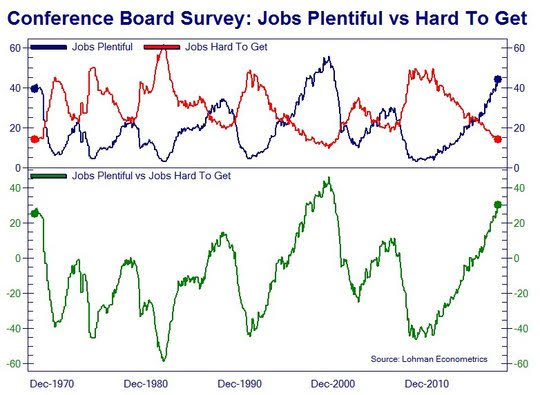
Question for the Day: Will the US jobs report matter? The data ahead – ADP, then Chicago PMI, then US ISM, then US jobs all seem to be big events for investors usually. But this is Halloween and it’s the end of a long and miserable month. So the US jobs report Friday isn’t on the radar in the usual way. Fear of an FOMC policy mistake rests more on inflation and the PCE core this week was modest enough to give room to the 2019 hopes for a one and done Fed hiking game. The reality is that the Phillips Curve isn’t dead and jobs do matter. Inflation in the US maybe the constant fear still with the data yesterday worth scanning for a clue about ADP then Jobs Friday. Unemployment is well below normal levels where wages don’t go up. This will eventually drive up prices – just when gets us back to clock watching.
What Happened?
- Japan September Industrial Production -1.1% m/m, -2.9% y/y after +0.2% m/m – weaker than -0.3% m/m expected. This puts 3Q productions -1.6% q/q after +1.3% in 2Q. METI forecasts October output at +6% m/m, November -0.8% m/m, but after adjusting for upward bias, the forecast is for 0.9% m/m in October. In a statement, the METI maintained its outlook from last month, saying that "while production is picking up moderately, there are signs of weaknesses in some areas." In September, transport equipment, business machinery and iron/steel led the weakness in production while chemicals, fabricated metals and oil/coal products supported growth.
- BOJ leaves policy unchanged with -0.1%, Y80trn QE, 0% 10Y target– as expected– with 7-2 vote. The BOJ vowed to maintain its current easy policy "for an extended period of time," taking into account uncertainties regarding economic activity and prices, including the effects of the consumption tax hike planned for October 2019. The BOJ maintained "forward guidance" for policy rates, showing that the BOJ vows to keep the current easy policy for an extended period of time. On forward guidance, board member Yutaka Harada, a former government economist, dissented, arguing that it would be better to adopt guidelines that would "further clarify its relationship" with the inflation target. Goushi Kataoka, a former private-sector economist, also opposed. He repeated his opinion that it would be better to promise additional easing in the event of a downward revision to the board's longer-term inflation outlook.
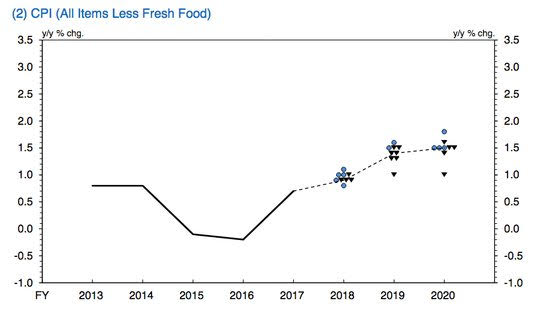
- BOJ 4Q outlook– lowers inflation forecasts, sees bigger downside risks. The Japan central bank revised down its medium-term inflation projection for the current fiscal year to 0.9% from the 1.1% in July forecasts. The 2019 outlook cut to 1.4% from 1.5% and the 2020 lowered to 1.5% from 1.6%. The BOJ board noted greater downside risk to the economy, saying, "risks are skewed the downside, particularly regarding developments in overseas economies." The BOJ had previously seen risks to the economy as largely balanced.
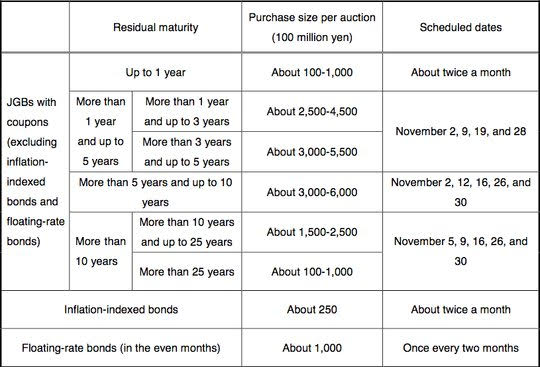
- BOJ November JGB buying plans cut frequency, increases range for 1-5 year operations. The BOJ cuts its 1-5Y buying plans for the month ahead from 5 to 4 for the short-end but also increased the size estimates for buying. The decision is aimed at further improving the functioning in the JGB market. The BOJ said it "may increase the frequency as needed" and "will conduct purchases in a flexible manner, taking account of market conditions."
- BOJ Kuroda press conference – Still have tools if risks threaten economy.“It’s true there are downside risks to the outlook and most of them are driven by external factors. If such risks turn out to have a big impact on Japan’s economy, prices and markets, we will, of course, take monetary policy action… We have various means available, such as cutting interest rates, expanding monetary base and ramping up asset purchases.”
- Japan October Consumer Confidence slows to 43 from 43.4 – weaker than 43.5 expected. 3 of the 4 categories fell while willingness to buy held unchanged at 42.4. Biggest drop was in employment -0.9 to 46.8 while income growth fell to 0.6 from 41.3 and overall livelihood fell 0.1% to 41.4. Price expectations rose – those seeing it higher rose 1.2% to 82.9% seeing it higher, while those seeing it lower fell 0.2% to 3.2%.
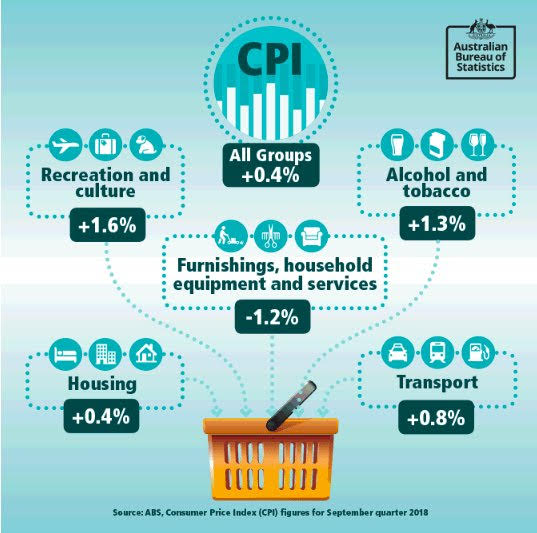
- Australia 3Q CPI up 0.4% q/q, 1.9% y/y after 0.4% q/q, 2.1% y/y – as expected. The RBA trimmed mean rate up 0.3% q/q, 1.8% y/y after 0.5% q/q, 1.9% y/y – slightly less than the 1.9% y/y expected. The biggest contribution for prices came from holiday travel and accommodation, alcohol, property rates and transport due to oil while services, child care and household equipment fell.
- Australia September private sector credit rose 0.4% m/m, 5.3% y/y after 0.5% m/m – as expected. Housing slowed to 0.3% from 0.4% m/m, business slowed to 0.6% from 0.8% m/m and personal improved to 0% from -0.2% m/m.
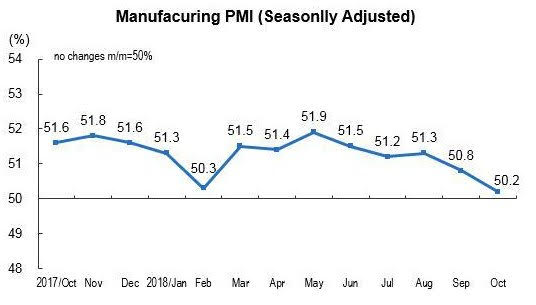
- China October CLFP manufacturing PMI 50.2 from 50.8 – weaker than 50.7 expected. Production fell to 52 from 53 while new orders fell to 50.8 from 52 with export orders contracting further to 46.9 from 48. Employment fell to 48.1 from 48.3 and input prices fell to 58 from 59.8. Interestingly, business expectations held at 56.4 unchanged. The Services PMI fell to 53.9 from 54.9 – also weaker than the 54.9 expected. Growth in railways and flights for the Golden week holiday supported along with telecommunication and software while real estate, financials contracted. The composite PMI fell 1 point to 53.1
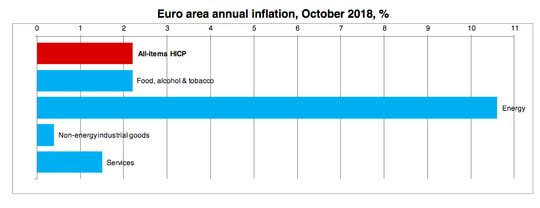
- Eurozone October flash HICP 2.2% y/y after 2.1% - as expected. The core HICP rose to 1.1% after 0.9% - more than 1.0% y/y expected. Energy rose to 10.6% from 9.5% y/y, Food/alcohol moderated to 2.2% from 2.6% y/y while services rose to 1.5% from 1.3% y/y. Industrial goods rose 0.4% from 0.3% y/y.
- Eurozone September unemployment rate steady at 8.1%- as expected. This was the best since November 2008, down from 8.9% in Sep 2017. There are 13.153 million unemployed up 2,000 from August and down 1.793 million y/y.
- German September retail sales +0.1% m/m after revised -0.3% m/m –weaker than 0.5% m/m expected. August revised lower from -0.1% m/m. The 3Q sales -1% q/q after +1.5% q/q with 3M average now -0.4% from -0.1% m/m in August.
- Spanish 3Q GDP 0.6% q/q, 2.5% y/y after 0.6% q/q, 2.5% y/y – as expected. Household consumption rose to 0.6% from 0.1% in 2Q but capital formation slows to 1% from 3.5%. Agriculture dragged -2.3% after +0.3%, while industry also hurt -0.5% from +0.7% but construction 1.4% from 1.8% and services 0.9% from 0.5%.
Market Recap:
Equities: The S&P500 futures are up 0.5% after rising 1.57% yesterday. The Stoxx Europe 600 is up 1.6% with all sectors higher led by miners and energy. The MSCI Asia Pacific rose 1.6% - biggest jump in 8 months.
- Japan Nikkei up 2.16% to 21,920.46
- Korea Kospi up 0.74% to 2,029.69
- Hong Kong Hang Seng up 1.60% to 24,979.69
- China Shanghai Composite up 1.35% to 2,602.78
- Australia ASX up 0.43% to 5,913.30
- India NSE50 up 1.85% to 10,386.60
- UK FTSE so far up 1.6% to 7,147
- German DAX so far up 1.4% to 11,448
- French CAC40 so far up 2.3% to 5,094
- Italian FTSE so far up 0.6% to 19,111
Fixed Income: Focus was on month-end and equities first, then data second with EU bonds sold early, but calmed with weaker German retail sales, spooked again by higher core HICP. Asia was about BOJ more than weaker China PMI. Core bonds are lower – UK Gilt 10-year bond yields up 2.5bps to 1.42%, German Bunds up 1bps to 0.377% and French OATs up 0.7bps to 0.745% while periphery rallies with Italy off 5.5bps to 3.415%, Spain off 1.5bps to 1.55%, Portugal off 1 to 1.865% and Greece off 2bps to 4.185%.
- Greece sold E1.1375bn of 26-week May 3 2019 bills at 0.85% with 1.31 cover.
- US Bonds see curve steepening watching equities– 2Y up 1.2bps to 2.863%, 5Y up 1.4bps to 2.97%, 10Y up 1.7bps to 3.14% and 30Y up 2bps to 3.384%.
- Japan JGBs held steady with BOJ, focus on 10Y sale tomorrow, equities– 2Y off 0.1bps to -0.133%, 5Y up 0.2ps to -0.091%, 10Y up 0.6bps to 0.116%, 30Y up 0.9bps to 0.89%.
- Australian bonds sold in global risk-on despite weaker CPI– 3Y up 1.bps to 1.99%, 10Y up 4.5bps to 2.622%.
- China PBOC skips open market operations, net drains CNY150bn on the day. 7-day rates rose 18bps to 2.71%, while O/N rose 72ps to 2.393%. Bonds mixed with curve flattening- with 2Y up 3.6bps to 3.04%, 5Y up 0.5bps to 3.31% and 10Y off 1bps to 3.50%
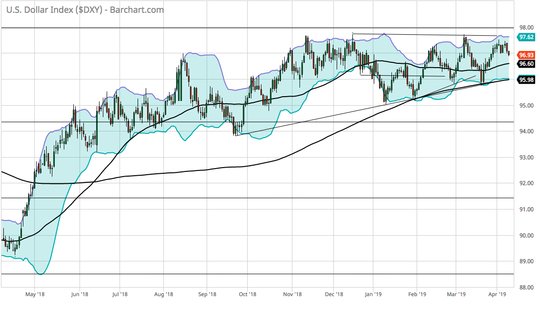
Foreign Exchange: The US dollar index is flat at 97.02 with 96.87-97.06 range – holding the breakout to new yearly highs. USD is bid in EM as well – EMEA: ZAR off 0.85% to 14.72, TRY off 0.3% to 5.4925, RUB off 0.5% to 65.81; ASIA: TWD up 0.1% to 30.952, KRW off 0.05% to 1140, INR off 0.4% to 73.98.
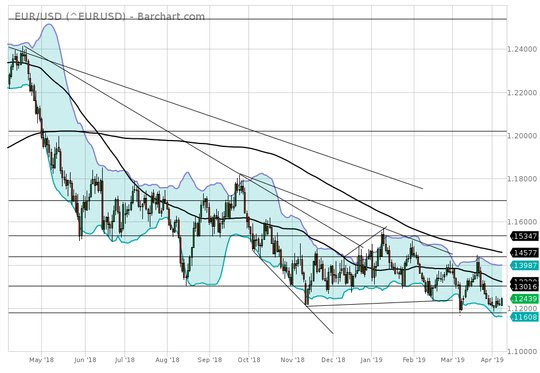
- EUR: 1.1340 off 0.05%.Range 1.1331-1.1360 with 1.1280 next target – rates/month-end key.
- JPY: 113.15 flat. Range 113.02-113.33 with 112.80-114 next keys with equities driving – EUR/JPY flat at 128.30 with 130 next.
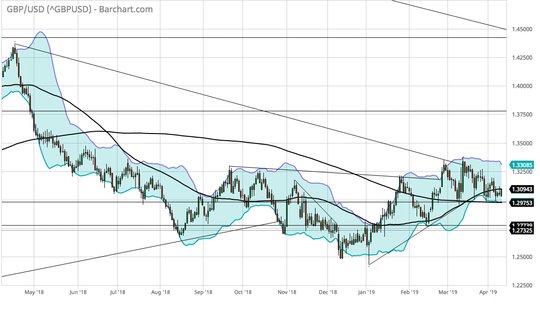
- GBP: 1.2750 up 0.35%.Range 1.2699-1.2753 with EUR/GBP .8890 off 0.4% - focus is on EUR more than GBP but UK spending, rates, driving
- AUD: .7095 off 0.15%.Range .7072-.7107 with metals not enough as China PMI and AU CPI hurt with .7050-.7120 keys. NZD .6540 off 0.15%.
- CAD: 1.3135 up 0.2%.Range 1.3106-1.3140 with BOC Poloz slow hike talk and US rates driving watching 1.32 risks again
- CHF: 1.0060 up 0.1%.Range 1.0034-1.0062 with EUR/CHF 1.1405 flat. Italy and equities less scary with 1.0080 break out for 1.0150 next.
- CNY: 6.9646 fixed 0.1%weaker from 6.9574 yesterday, trades 6.9740 into London from 6.9613 yesterday close. Now off 0.1% to 6.9725 with 6.9783 highs.
Commodities: Oil up, Gold down, Copper up 0.6% to $2.7760.
- Oil: $66.40 up 0.35%.Range $66.27-$67.00 with focus on $65.35 200-day as base for $70 retests if risk returns. Brent $76.30 up 0.5% with focus on $75 base and 55-day at $78.73 as resistance.
- Gold: $1217.70 off 0.45%.Range $1216.50-$1224. Gold watching USD and rates with $1220 pivot breaking for $1214 and $1205 55-day support. Silver off 0.85% to $14.35 with focus on $14.243 Oct 10 lows still with $14.45 trend line resistance. Platinum off 0.1% to $835.50 and Palladium off 0.4% to $1073.
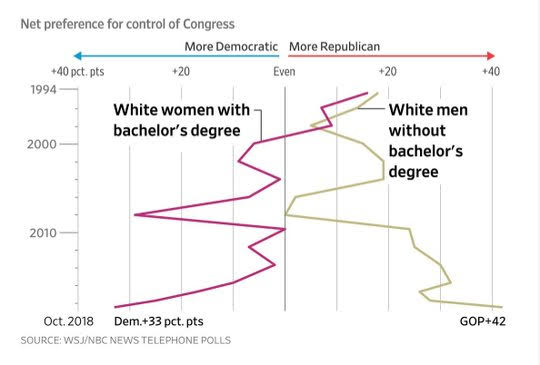
Conclusions: Is it just about politics in 2018? The US mid-terms are hard to quantify as a market driver other than in their confidence game for consumers (read as voters.) The divide in the US and the ongoing hate speech/violence scare many and make it hard to see how deficits will be so easily funded by foreigners without a risk premium. This puts the world back into watching rate and wondering at what level yields matter. The latest WSJ/NBC Poll highlights the election divide and its looking like a tough weekend for couples.
Economic Calendar:
- 0815 am US Oct ADP employment change 230k p 190k e
- 0830 am US 3Q employment cost index 0.6%p 0.7%e
- 0830 am Canada Sep Industrial PPI (y/y) 5.8%p 5.4%e / raw materials (m/m) -4.6%p -1.5%e
- 0945 am Chicago Oct Manufacturing PMI 60.4p 60.5e
- 1030 am US weekly EIA crude inventories 6.35mb p
- 0500 pm Brazil COPOM rate decision – no change from 6.5% expected.
Comments
Log in or sign up to join the conversation.