

While some would want to believe in a long summer of lethargy, last week proved the end of such thinking. Inactivity was replaced by hope, greed replaced fear in emerging markets and lack of bigger news allowed for the last big week of summer to end positively after a long painful four weeks of weakness driven by pessimism and doubt.
The rise of oil prices, the reversal of the stronger USD, rebounds in foreign shares, ongoing gains in US equities with new record highs and the drop of US bond yields were all notable last week and beg explanation. We have returned to a Spring time renewal just at the pick of the Summer harvest. The mix of Trump impeachment risks rising and the flexible approach from FOMC Chair Powell on rate policy into the futures drove price action.
Trump and US politics shifted with Manafort and Cohen driving the focus to the US midterm elections and control of Congress and that in turn added to the USD woes. On the central banking front, minutes from the FOMC were clear. No one doubts the Fed hikes in September and likely again in December, the complications after that are significant.
The USD retreated on Powell after his Jackson Hole comments, where he sees the Fed navigate between twin risks — moving too quickly and needlessly shortening the economic expansion, and conversely lifting rates too slowly and risking a “destabilizing overheating.”
"I see the current path of gradually raising interest rates as the approach to taking seriously both of these risks,” Mr Powell said. “While inflation has recently moved up near 2%, we have seen no clear sign of an acceleration above 2%, and there does not seem to be an elevated risk of overheating.” Powell deliberately said he was avoiding all foreign and political questions, admitting that these were risk factors that “could demand a different policy response, but today I will step back from them.”The market odds for just one rate hike in 2019 are now just 60% which contrasts sharply with the FOMC seeing three hikes.

Nevertheless, for many, the risk of a policy mistake from the Fed remains in play as they watch the shape of the US yield curve and await a recession.

Understanding the Powell Fed reaction function to the economic data and financial conditions is still a work in progress but last week took heart that a complicated outlook means a Fed more likely to wait as the EM noise, stronger US deflationary pass-through and weaker economic data globally linked to trade fears and weather battle against US fiscal stimulus, deregulation and robust corporate profits.
Many want to believe in fairy tales still – not-too-hot, not-too-cold – where returns from passive beat active, where risk-parity rebounds, where bull market trends return robustly and where growth beats value. Thus it leaves the noise and volatility of 2H2018 to the same old hash tags of worries from 1H2018 – China growth, US trade policy, US politics, US rates, EU politics, EM funding and US relations with Iran, Turkey, Russia and North Korea. The chart of the Salient Risk Parity Index and the Soc Gen CTA index reflects the rebound last week and the pain of 2018 still very much in play. This compares badly to the 7.5% gains in the S&P500 and 15.1% in the NASDAQ year-to-date.

What Happened over the Weekend?
The death of Senator John McCain dominated US headlines. He will be remembered as the Republican leader that relished in joint efforts across party lines. But the most worrying news came Friday. The Trump administration seems to have decided to put China trade deals ahead of North Korea denuclearization.
Trump cancels Pompeo visit to North Korea – cites lack of progress on denuclearization, prioritizes China trade issues
Trump also noted that China is helping less with enforcement of sanctions, putting priority on tariffs over efforts on talks with North Korea. Trump noted: “Additionally, because of our much tougher Trading stance with China, I do not believe they are helping with the process of denuclearization as they once were (despite the UN Sanctions which are in place),” he tweeted, adding that Mr. Pompeo would visit North Korea “in the near future, most likely after our Trading relationship with China is resolved”.
Question for the Week Ahead: What did we learn and not learn from Jackson Hole?
The late August Symposium from the Kansas City Fed is always a sign of changing weather for markets. The myriad of economic papers presented usually has one or two shockers – with the focus on the role of e-commerce as a inflation volatlity driver being this year’s winner. Most market players call this the Amazon effect with the love affair of disruptive technology winning capital investments. The paper from Harvard’s Cavallo warns that one-off shocks from FX, oil and trade wars are going to be far more sensitive because of the shift to online retailing.
“These changes make retail prices more sensitive to aggregate, nationwide shocks, increasing the pass-through of both gas prices and nominal exchange rate fluctuations,” said Alberto Cavallo, an associate professor at Harvard Business School, in a report. “For monetary policy and those interested in inflation dynamics, the implication is that retail prices are becoming less insulated from these common nationwide shocks.”
Online retail flattens out the ability for traditional stores to price discriminate across locations due to price transparency. “This evidence suggests that as traditional retailers compete more with online retailers, their geographical price dispersion will continue to fall.”
As a result, big one-off changes in major prices such as that of oil and the currency are propagating broadly and rapidly through the industry.

The ability for retail to pass-through price shocks to consumers directly means more trouble for markets as they balance the reaction function of the consumer and the corporates to such things as USD and Oil volatility. Add oil to your risk barometer for September and keep the USD around as well. The rise of the USD in 2018 remains the biggest concern for many bulls into 3Q earnings reports. For others, the biggest issue is US trade policy. Both are likely to show up as factors in prices faster and so the consumer focus maybe that much more important into FOMC thinking for 2019.

Market Recap:
Trump and Powell were the focus for the last week with the US President starting the week putting pressure on Powell to keep rates low and complaining about China and Europe manipulating their currencies.US/China talks took place Wednesday-Friday with little progress. Trump suffered his biggest setback in the courts with his former campaign managers found guilty and his former lawyer pleading guilty to paying hush money to two women that had affairs with Trump ahead of the 2016 election.
Wednesday brought the FOMC meeting minutes which seemed appropriately hawkish while Friday brought the Powell speech at Jackson Hole which defending the gradual rate hike approach given inflation and unemployment levels. For Europe, the focus was on the flash PMI reports that showed Germany slowing its expansion further along with Europe. Corporate optimism hits a 23-month low. Italian BTPs remained a key focus for Europe with the budget at odds with the EU. Moody’s extended its review deadline given modest relief. Mid-October is when the Italian budget is set for government approval. The UK continued to focus on Brexit with the government releasing its “no-deal” contingency plans.
Japan saw a weaker JPY and stronger Nikkei with economic data mixed with weather related noise – the Reuters Tankan showed a manufacturing bounce confirmed by the flash PMI but Services fell sharply. Australia got its 6th PM in a decade as Turnbull ousted by Morrison. The RBA speeches and data suggested no policy shifts with China economic doubts driving against ongoing domestic demand.
In EM, Brazil was a new focus as Turkey was on holiday. The BRL slides into the October election as jailed former President Lula gains in polls with 39% support –throwing the election to his Worker’s Party running mate Haddad, while the Far-right Bolsanaro is at 19%, leaving little room for a market-friendly candidate – TV ads begin September 1 for the campaign – adding to the risk-off mood for Brazil. South Africa was also a focus with the US President tweeting about land reform measures and leading to a push back from the new South African President.

Equities:
The MSCI all-country World Index rose 1.27% to 519.60 on the week.The MSCI EM index rose 2.42% to 1150.19 on the week. The big eight bourses all gained with Asia leading and UK and US lagging. This was the lowest volume week for trading so far this year with summer vacations leaving portfolios in a holding position. For the US, technology and energy sectors led the week. The US S&P 500 reached a new record high and set the record for the longest running bull market (defined as time since there was a 20% decline). Also, notable in the US was the surge in small cap shares with the Russell 2000 outperforming up 1.9% on the week and 12.4% on the year.
- The S&P500 rose 0.86% to 2,874.69 on the week. The DJIA rose 0.47% to 25,790.35 and the NASDAQ rose 1.66% to 7,945.98 on the week.The Cboe VIX fell 5.14% to 11.99% with Wednesday 12.86% highs followed by Thursday 11.66% lows.
- The Stoxx Europe 600 rose 0.66% to 383.56 on the week. This ended 3 weeks of losses. Spain’s IBEX 35 led the week up 1.83% to 9,589.50. German DAX rose 1.51% to 12,394.52 for the week while the French CAC40 rose 1.64% to 5432.50. The UK FTSE lagged up just 0.25% to 7,577.49.
- The MSCI Asia Pacific Index rose 0.94% to 163.60 on the week. The worst performer for Asia was Australia with the ASX 200 off 1.45% to 6,247.33 as politics dominated. The Japan Nikkei rose 1.49% to 22,601.77 – the first gain in the month - while the broader TOPIX rose just 0.69% to 1709.20 on the week. The Hong Kong Hang Seng rose 1.68% to 27,671.87 for the week with the China Shanghai Composite up 2.27% to 2729.43.The Korea Kospi rose 2.05% to 2293.21 and the India Nifty50 rose 1.51% to 11,557.10.
Fixed Income:
The risk-relief rally in equities pushed most core bond markets lower last week.Focus was on ECB, RBA and FOMC minutes – all of which left intact the market views that the RBA is on hold through 2019, ECB will shift QE policy soon and the FOMC will hike again in September and ongoing until 2.75%-3.0% target zone.
The FOMC Powell speech and Jackson Hole gathering proved far less exciting that many hoped and so Fed Independence, FOMC reaction functions to EM pain, pushback on global trade disruptions and doubts about the US yield curve remain in play for September. US curve flattening trade extended with rising doubts about growth and sustainability of US outperformance. The US and EU supply in the week ahead will be balanced against the month-end duration extensions.
- US Bonds see bull curve flattening watching Trump and Powell comments with supply key next week – 2Y up 1.5bps to 2.62%, 3Y up 0.6bps to 2.673%, 5Y off 3bps to 2.712%, 10Y off 5bps to 2.81%, 30Y off 6bsp to 2.96%.
- Canadian 10-year bond yields fell 1bps to 2.255% on the week – with data mixed, focus was on NAFTA, C$ and BOC hiking risks.
- Japan JGB yields were flat at 0 089% on the week – with 0.075%-0.10% the consolidation range as BOJ left buying unchanged.
- Australian 10-year bond yields fell 0.5bps to 2.535% on the week – noise about politics drove volatility but overall stuck with RBA on hold thinking and mixed data.
- UK Gilt yields rose 4bps to 1.275% on the week – tracking EU core and reflecting more doubts about Brexit costs and BOE hike risks.
- German Bund yields rose 4bps to 0.34% on the week – with Italy still a factor but risk-on elsewhere driving and 0.25% base holding for 0.45% retest – auctions next key.
- French OAT yields rose 2.5bps to 0.68% on the week – better data but August holidays dominating.
- Italy BTP yields rose 3bps to 3.14% on the week – ongoing budget doubts hamper any relief with ECB policy next key
- Spain Bono yields fell 6bps to 1.385% on the week – better outlook for new government, wider spreads to Italy in play.
- Portugal 10-year bond yields fell 2.5bps to 1.81% on the week – holding pattern with focus on supply and Italy still.
- Greek 10-year bond yields fell 16bps to 4.125% on the week – all clear siren on ESM program ending puts focus back on growth and politics next with 3.90% still bottom to watch.
Foreign Exchange:
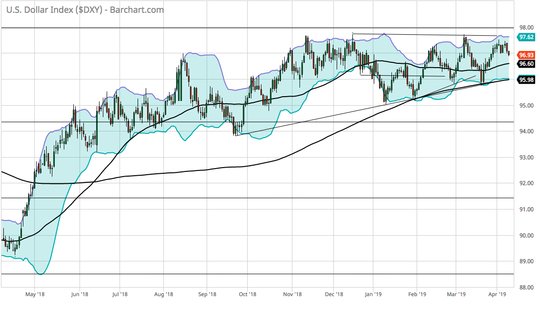
US dollar index fell 1% to 95.16 with Aug 15 96.98 highs intact after Trump comments and weaker data drove markets with 94.95 and 95.65 minor levels against a bigger 93-97 range. In EM FX, USD mostly lower – LATAM: MXN up 0.1% to 18.91 with NAFTA hopes key, BRL off 4% to 4.105 – all about election risks: ASIA: CNY up 1% to 6.8105, KRW up 0.5% to 1118.90 with focus on 1115 next, INR up 0.35% to 69.91 with 70.20 key; EMEA: RUB 67.03 up 0.15% - lagging oil bounce, ZAR up 3.5% to 14.146 despite Trump pushback, TRY up 2% to 6.005 with focus on 5.70-6.40 consolidation. In Crypto Currencies - broader divergence: BTC rose 4.3% to $6662 on the week but futures up just 2% with focus on $5800-$7000 range consolidation, ETH fell 8.9% to $273.
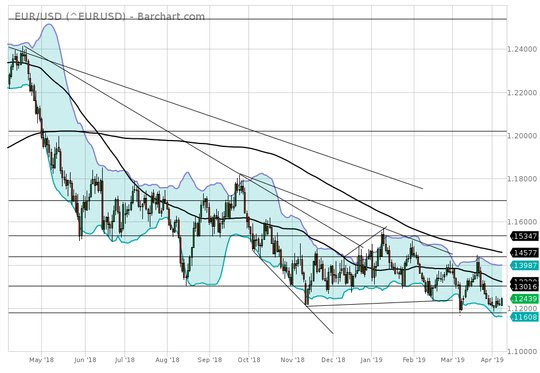
- EUR: 1.1620 up 1.60% on the week. The USD weakness led on Trump talking it down, aided by less fears about EM (Turkey and China notably) and washing against larger technical stops at 1.1550 with 1.1680-1.1720 next resistance.
- JPY: 111.25 up 0.65% on the week and EUR/JPY 129.30 up 2.2% - with BOJ policy steady, Abe leadership holding, bouncing equities led to 110 holding and 112 tests likely next week with 130 cross key.
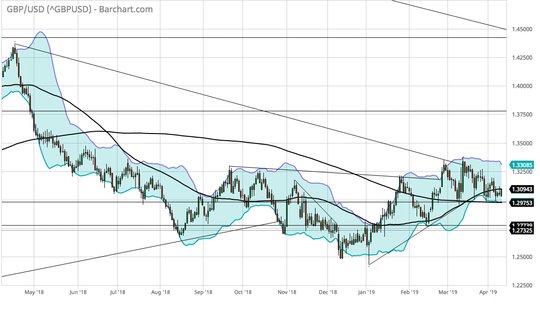
- GBP: 1.2845 up 0.75% on the week and EUR/GBP off 0.8% - focus is on Brexit and UK politics still with BOE seen on hold and with policy risk – 1.26-1.31 broad range consolidation.
- CHF: .9835 off 1.25% on the week and EUR/CHF 1.1425 up 0.30% as EUR outperforms but Italy nags – 1.1450 key on cross and .98 base for USD in play for .9650 test.
- AUD: .7330 up 0.2% on the week despite the PM ousting story and equity pain trade, while NZD .6670 up 0.5% on the week – better with milk prices supporting and RBNZ sounding balanced.
- CAD: 1.3025 off 0.25% on the week with NAFTA hopes rising, along with oil and data helping – focus next is on BOC and GDP with 1.2980 for 1.28 tests against 1.3120-1.32 resistance.
Commodities:
The S&P/GSCI total return index rose 2.73% to 2,721.51 on the week. The leaders for the week were Cocoa and Palladium with Oil the headline winner. Weakness in grains and lumber notable despite the weaker USD with US/China trade focus still key.
- Oil: $68.72 up 5.38% on the week (October futures) and Brent $75.82 up 5.55% on the week (Oct futures). Iran cutting back supply and US inventories driving market along with weaker USD with bounce from $63 key on the month and risk for $70 WTI back in play.
- Gold: $1205.35 up 2.4% on the week. Focus is on the $1160 base holding and USD weakness driving with $1201.60 pivotal break for $1220 retests. Silver up 1.1% to $14.82 with $15.25 next key, Palladium up 5.79% to $928.60, Platinum up 1.56% to $789.40.
- Corn: $348.40 off 4.32% on the week (Sep) – despite weaker USD, China/US trade talk hopes and better weather/harvest views dragging. Wheat off 8.1% to $514.60 (Oct), Soybearns off 4.48% to $8.42 (Sep) and $855.25 (Nov).
- Copper: $2.7380 up 3.08% on the week with Sep Futures up 2.7% to $2.70 on the week. Focus is on short squeeze and equity relationship more than US housing or China growth with technical watching $2.70 as pivot with $2.90 resistance. The Iron Ore off 1% $66.17 (Sep futures) and with Oct $65.90 similar.
Calendar for the Week Ahead:
The week ahead is typical month-end focus made more complicated by end of summer vacations and UK holiday to start Monday. Focus in the US will be on the bond sales, the Trump tweets and political drama, while the economic data focus is on home prices and sales, GDP revisions and the PCE report along with final consumer sentiment from University of Michigan and a smattering of regional Fed manufacturing reports. Europe is where the most data comes from with German IFO, German flash CPI, EU flash CPI and jobs, French GDP revisions and bond market sales.The Asia focus is on Japan CPI, Australian Capex and China NBS PMI for August. Bank of Korea rate hike risk also notable.
Monday, August 27:UK Summer Bank Holiday, German IFO
- 0400 am German Aug IFO Business Climate 101.7p 102e / current 105.3p 105.5e / Expectations 98.2p 98.5e
- 0830 am US July Chicago Fed National Activity 0.43p 0.13e
- 1030 am US Aug Dallas Fed Manufacturing Index 32.3p 36.9e
- 0100 pm US sells 2Y notes
Tuesday, August 28: US home prices, Spain and US bond sales
- 0245 am French Aug Consumer Confidence 97p 98e
- 0400 am Italy Aug Consumer Confidence 116.3p 115.9e
- 0400 am Italy Aug Business Confidence 106.9p 106.2e
- 0400 am Eurozone ECB Jul M3 (y/y) 4.4%p 4.3%e / private loans 2.9%p 2.9%e
- 0440 am Spain sells 10Y bonds
- 0600 am UK BOE inflation hearings
- 0830 am US July wholesale inventories 0.1%p -0.2%e
- 0830 am US July Goods Trade Deficit $68.3bn p $70.8bn e
- 0900 am US June S&P/Case Shiller home prices (m/m) 0.7%p 0.6%e (y/y) 6.5%p 6.5%e
- 1000 am US Aug Richmond Fed Manufacturing Index 20p 18e
- 0100 pm US sells 5Y notes
- 0400 pm US weekly API oil inventories -5.17mb p +0.6mb e
Wednesday, August 29: US and French GDP revisions, US pending home sales.
- 0100 am Japan Aug Consumer Confidence 43.5p 43.7e
- 0200 am German Sep GfK Consumer Confidence 10.6p 10.6e
- 0245 am French July Consumer Spending (m/m) 0.1%p 0.8%e
- 0245 am French 2Q GDP revised (q/q) 0.2%p 0.2%e
- 0500 am German 5Y BOBL sale
- 0830 am US 2Q GDP revised 4.1%p 4%e / core Personal Cons Expenditures 2%p 2%e
- 0830 am Canada 2Q Current Account Deficit C$19.5bn p C$18.0bn e
- 1000 am US July pending home sales (m/m) 0.9%P 0.4%e (y/y) -2.5%p -6%e
- 1030 am US weekly EIA oil inventories -5.83mb p -1.4mb e
- 0100 pm US sells 7Y notes
Thursday, August 30: Japan retail sales, Australia Capex, German jobs, German flash CPI, US PCE, Canada GDP
- 0750 pm Japan July retail sales (m/m) 1.5%p -0.3%e (y/y) 1.8%p +1.2%e /
- 0930 pm Australia 2Q Capex (q/q) 0.4%p 0.6%e
- 0200 am German Jul import prices (m/m) 0.5%p 0.1%e (y/y) 4.8%p 5.3%e
- 0300 am Spain Aug preliminary CPI (m/m) -0.7%p 0.3%e (y/y) 2.2%p 2.3%e /HICP 2.3%p 2.4%e
- 0300 am Swiss Aug KoF Leading Indicator 101.1p 101.5e
- 0400 am German Aug unemployment change -6k p -8k e / rates 5.2%p 5.2%e
- 0430 am UK July Mortgage Approvals 65.6k p 65k e / Cons Credit G1.567bn p G1.5bn e
- 0500 am Eurozone Aug Economic Sentiment 112.1p 112e / Business Climate 1.29p 1.25e
- 0545 am Italy sells 5-10Y bonds
- 0800 am German Aug preliminary CPI (m/m) 0.3%p 0.1%e (y/y) 2%p 2%e / HICP 2.1%p 2.0%e
- 0830 am US July personal spending 0.4%p 0.4%e / personal income 0.4%p 0.3%e / core PCE prices (y/y) 1.9%p 2.0%e
- 0830 am US weekly jobless claims 210k p 213k e
- 0830 am Canada 2Q GDP (q/q) 1.3%p 3%e /June (m/m) 0.5%p 0.1%e
Friday, August 31: Japan jobs, IP, Tokyo CPI, China official PMI, German retail sales, flash EU HICP, US Chicago PMI and Michigan Cons. Sentiment.
- 0730 pm Japan Aug Tokyo CPI (y/y) 0.9%p 0.8%e / core 0.8%p 0.7%e
- 0750 pm Japan Jul unemployment rate 2.4%p 2.4%e / jobs/applicants 1.62p 1.62e
- 0750 pm Japan Jul industrial production (m/m) -1.8%p 0.2%e (y/y) -0.9%p -0.6%e
- 0900 pm China Aug NBS Manufacturing PMI 51.2p 51e / Services 54p 54.8e
- 0900 pm Bank of Korea rate decision – 25bps hike to 1.75% partially priced
- 0930 pm Australia Jul private sector credit (m/m) 0.3%p 0.4%e
- 0200 am German Jul retail sales (m/m) 1.2%p 1.0%e
- 0245 am French July PPI (m/m) 0.1%p
- 0245 am French Aug flash HICP (m/m) -0.1%p 0.3%e (y/y) 2.6%p 2.5%e
- 0300 am Spanish Jul retail sales (m/m) 0.1%p 1.5%e
- 0500 am Italy Aug flash HICP (m/m) -1.4%p -0.1%e (y/y) 1.9%p 1.6%e
- 0500 am Eurozone July unemployment rate 8.3%p 8.2%e
- 0500 am Eurozone Aug flash HICP (y/y) 2.1%p 2.1%e / core 1.1%p 1.1%e
- 0800 am India 2Q GDP 7.7%p 7.6%e
- 0830 am Canada July PPI (m/m) 0.5%p 0.0%e (y/y) 5.1%p 5.3%e
- 0945 am US Aug Chicago PMI 65.5p 63e
- 1000 am US Aug final Michigan Consumer Sentiment 97.9p 95.9e
Conclusions: Does the data matter?
The Powell Fed is back to data dependency and so too will markets. The end of forward guidance and the pullback from economic models driving policy means discretion wins and with it a return to market risk and volatility. While some may wish that we remain in a “Goldilocks” story where policy prescriptions from the FOMC and others keep animal spirits bullish the bears are going to live with the data and wait. How markets react to bad news will now be even more critical for trading into the Autumn.

The data last week from durable goods to home sales was troubling in their negative surprises. Whether this extends into September with the ISM and US jobs will be critical in how markets trade risk.The USD remains the bellwether for that story and becomes the way to bridge both economic and political doubts in the weeks ahead. The USD will also be a tool for measuring the reaction function of other central bankers with the ECB plans to taper QE and others in play.

Comments
Log in or sign up to join the conversation.