

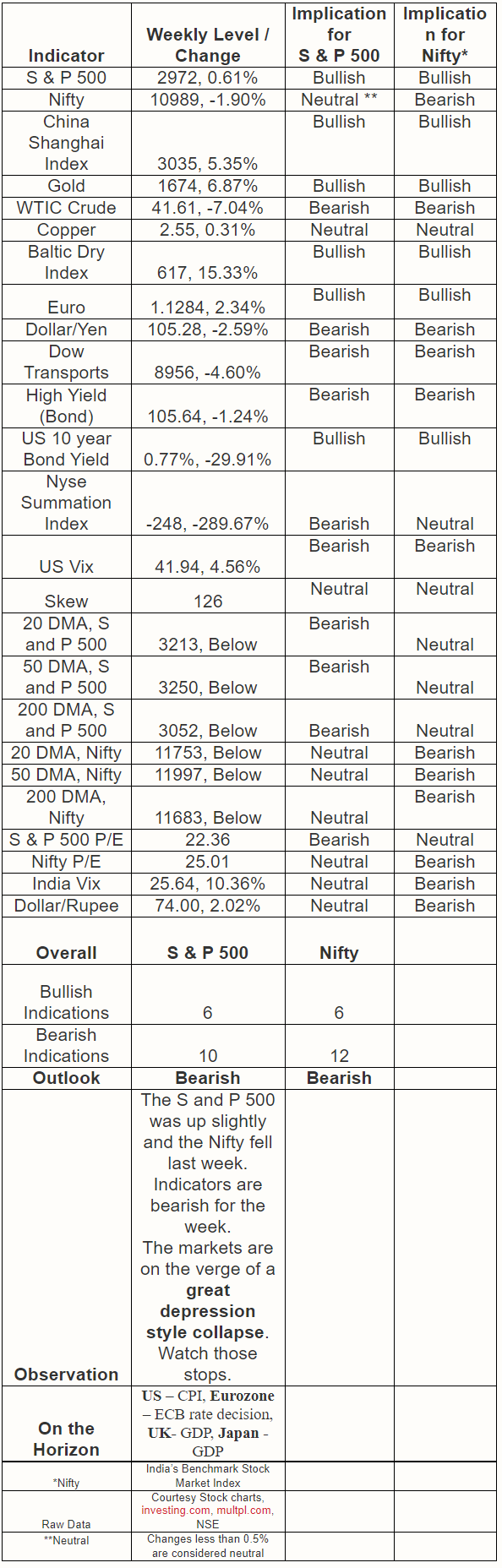
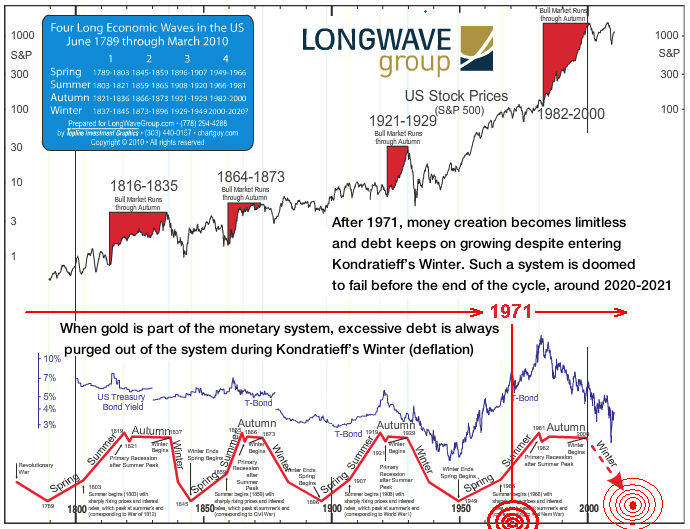
The S&P was up slightly and the Nifty fell last week. Indicators are bearish for the coming week. A panic bottom in the S&P near about 2600 is likely soon. Long term, the epic meltdown that just began is set to continue resulting in a 5 year plus bear market. QE forever from the FED is about to trigger the deflationary collapse of the century and we have made a major top in global equity markets. The market is looking like the short of a lifetime with non-conformations from the transports, other global indices, and commodities. Insane valuations continue. The breakdown in Crude and the Euro is likely a precursor to a massive drop in the S&P 500. The recent global virus epidemic (black swan) is likely to dent global GDP and usher in a recession much faster than most think. The trend is about to change from bullish to bearish and the markets are about to get smashed by a rebounding dollar. Looking for significant underperformance in the Nifty going forward on rapidly deteriorating macros. A 5-year deflationary wave is about to start in key asset classes like the Euro, stocks, and commodities amidst a number of bearish divergences and overstretched valuations. We are on the verge of a multi-year great depression. The markets are still trading well over 3 standard deviations above their long term averages from which corrections usually result. Tail risk has been very high off late as the yield curve inverts into a recession. The critical levels to watch for the week are 2985 (up) and 2960 (down) on the S&P 500 and 11050 (up) and 10900 (down) on the Nifty. A significant breach of the above levels could trigger the next big move in the above markets. You can check out last week’s report for a comparison. Love your thoughts and feedback.


Comments
Log in or sign up to join the conversation.