

The 'End-Game' of Trade Wars historically, may not be illustrative of how the current challenge with China ends; but gives hints of eventual outcomes that patch things up; 'even if' the dependency on one trading partner never's quite what it was before the breakup (perhaps like an ex-wife or ex-husband one becomes cordial with; but full -if naive- trust of the past doesn't return).

This was the case with the U.S. and Japan a few decades ago; more recent trade fights between Japan and China were similar; and in both case parties didn't exactly 'kiss and make up'; but they all resumed reasonable dealings.

Of course everyone knows what happened when the U.S. boycotted selling militarily-applicable materials (and Oil) to Japan in the late 1930's, after the Japanese had already invaded China, which was totally unacceptable to us (and resulted in volunteers like the 'Flying Tigers' going over to fight). And of course the Nationalists were still running China; so trade was normal while the Chinese Red Army was mostly scampering sort of in guerrilla warfare.

I will revert to the 'War of 1812', which was intended to 'decouple' the USA, then still dependent on competitive trade mostly from England, from 'trade dependency'. Certainly the French were all in favor of the U.S. decoupling. And in the current Chinese stand-off; we all assume Taiwan (proclaiming an independence of China) and especially South Korea and Vietnam (plus of course Malaysia and Indonesia in some industries) are cheering us on. After the dust settled, gradually Great Britain resumed its major trading role.

Another contrast (still in-flux) may be Brexit. If Britain disengages from what became a bureaucratic (but not always belligerent) EU, that will suffice in the short-run; and ultimately I would expect Britain and the EU to return to a smooth 'trade and travel' relationship; though never allowing Brussels to ride roughshod over what is perceived as sovereign concerns of the U.K. For the moment there is no clear vision of how this particular stand-off will end.

Concurrently, while (of course) we're told that Presidents Trump & Xi will be 'most likely' meeting at G20 (how can they not really); there is no scheduled return to negotiations on the plate for now; and many increasingly suspect it is part of a 'grander plan' of decoupling from dependency on China for such a myriad of products. More notably (and minimized when people kept saying we don't sell them anything, which isn't true) many omitted that 'part' of U.S. policy objectives may be to stop not just IP theft and technology transfer, but the inclusion of U.S.-made semiconductors, without which lots of their 'stuff' won't work, and that's not just Huawei smartphones.

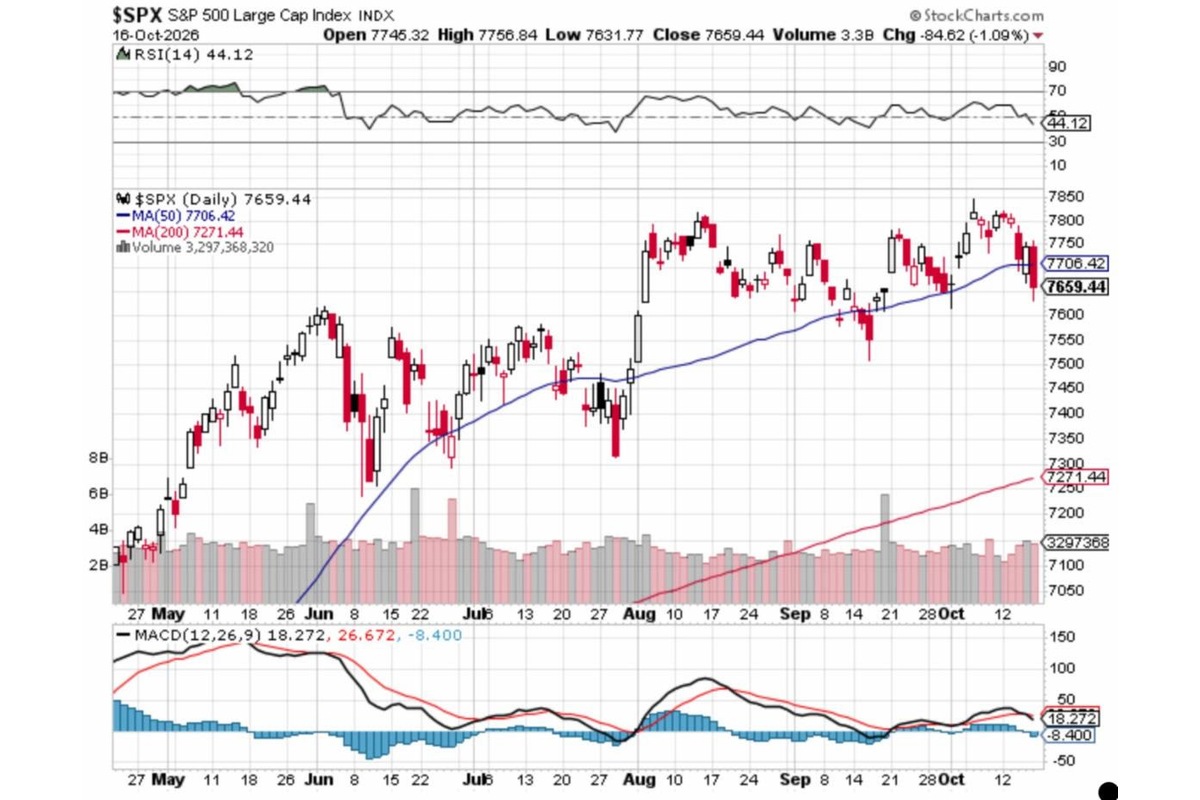
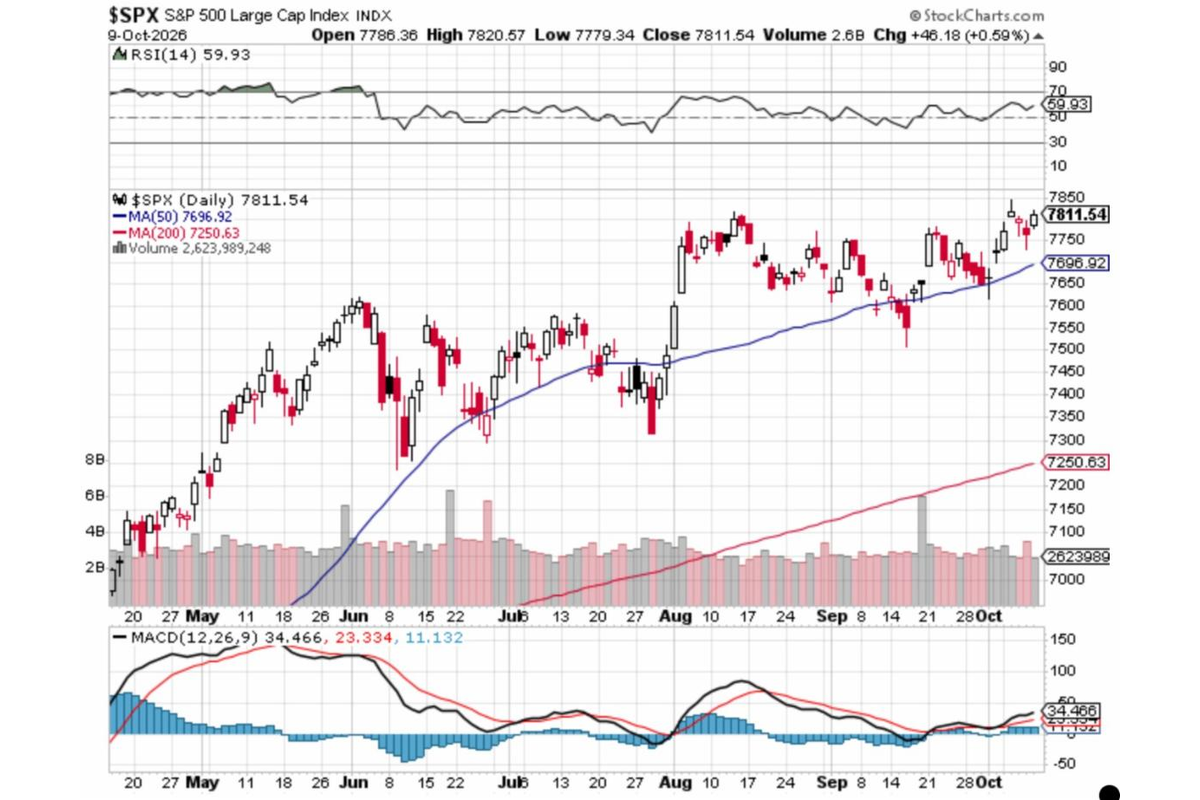
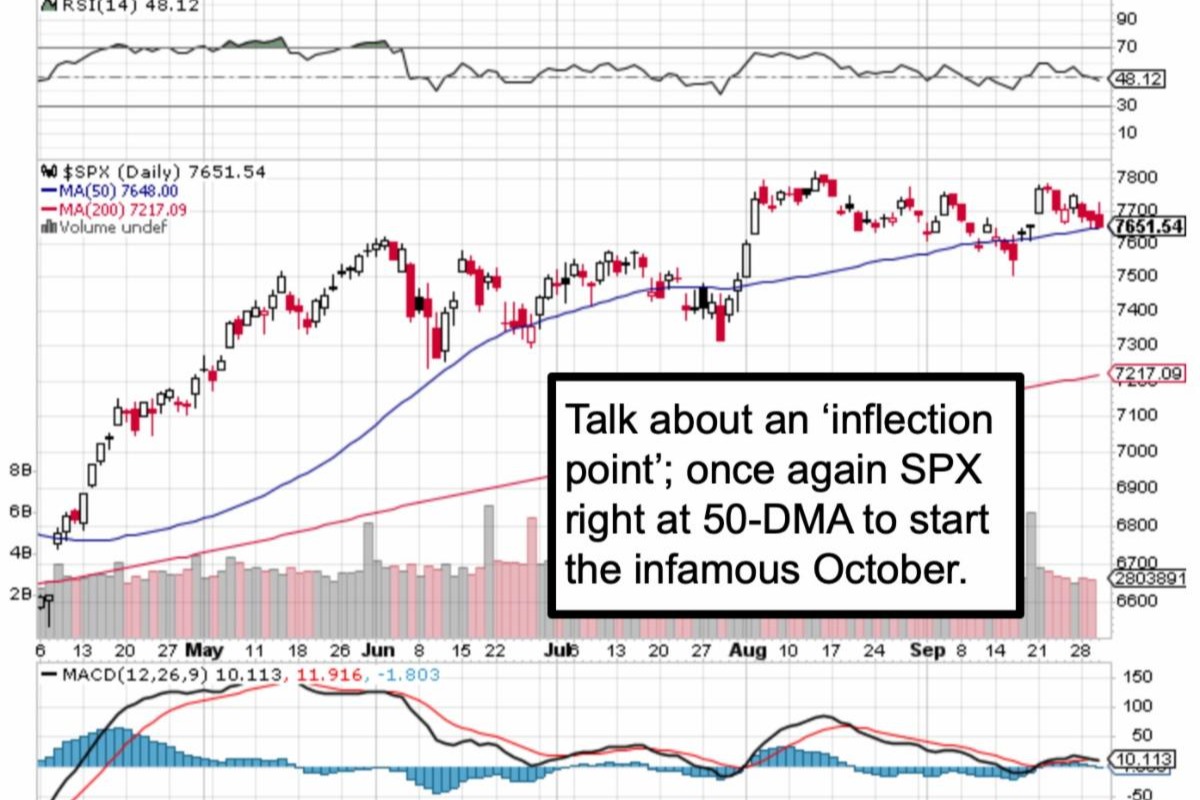
In-sum: markets have managed to be fairly neutral amidst great hyperbole; which leaves most 'indices' unresolved with respect to pattern progression; simply viewing the S&P and Nasdaq from a rangebound ongoing view.
Beneath that surface, buybacks or assorted (often confusing) analyst calls for individual stocks (often seeming contradictory such as the Tesla calls for higher prices but then saying nearly zero if they can't turn a profit), have to a degree 'decoupled' the market of individual stocks and sectors from Indices.

(Perhaps restrictions on Iran relate to pressure on China to buy more U.S. crude, not just LNG. We'll see if that comes-up during G20 meets.)
I'd like to briefly mention .. there is a theory that President Trump purposely is focusing most of our attention on 'trade wars' and 'Iran tensions', in order to cover-up the domestic political repercussions he may still face. Be that as it may; even if that is or were the case (I doubt it as some of this dates to the platforms); this overall decoupling trend was necessary (in a way that could have been more diplomatically delicate perhaps).

Ultimately it is a move toward reduced globalism and a more bipolar world. That was in the cards anyway over time; with the U.S. already late-to-the-game as far as protecting our interests. Hence the 'if not now, when' sober realization (I called, lamentably as nothing much was done to defend jobs or U.S. industry) for domestic responses to this for decades, not just years.
There is not enough cushion for companies (retail included) to absorb heavy tariffs because of the lack of sufficient time to really diversify away from the Chinese supply-chain dependency. If the Administration 'believes' that it will not impact consumer costs (rightly or wrongly); that emboldens them to shy away from tariff relief 'even if' we make a trade deal; because they (Trump in particular) see it, as I've suggested before, as a way to bolster our Treasury in an era when the macro debt picture is truly threatening longer-term.

Bottom-line: the market should be more jittery; not just because Qualcomm lost their ruling (more pending as far as cheaper licensing fees by everyone in the smartphone biz); not just because of nervousness about Apple; and of course not because of the protracted mess in Washington.
In the former case lots of the heart of Apple revenue matters not to this but to China's policies (and may not be known for weeks or months). While, with regard to the political case, Trump's 'new' demand to cease all investigation of him from working on infrastructure, flies in the face of his own desire to renew building and rebuilding much of America's infrastructure. It seems the President reacted emotionally to Nancy Pelosi earlier saying 'cover-up'.
These should be separate issues (as they were until today), as the goal was in-part to offset lost exports by growing revenues domestically (think heavy equipment too; not just aluminum and steel). So while I really shied a long time from the noise in Congress; the President today is clearly trying to tie together what is a political issue, with infrastructure-related future growth.
Is that entirely a personal political defensive move of his? Most will view it as just that; which is not to say the investigations aren't too probing in some ways. Markets do care about what events impact National growth revenue; Trump relieved of wrongdoings or not; tax returns or not; reopening Hillary or not; Mueller testifying or not. It's not entirely so; but you see my point; all that is angina-inducing for some folks and politically a constant state-of-flux, but for markets, generally at the periphery. Now coming closer to the center it matters not whether Pelosi is right that Trump took a pass' or not; it does matter that this further delays very important domestic industrial progress.
Incidentally; you know my thinking about this being more than 'trade' with China; and in that regard, I suspect Steve Bannon's comments today about the Chinese IPO's and Huawei affirms (or reinforces) my view about what this is all about; and the competitive 'decoupling' we've been addressing.
As to the FOMC Minutes; they suggest more slack in the economy than the data suggests (I've hinted at that for months); while they talk of 'deflationary pressures' (hardly; a fight with China will ramp inflation a bit). Stabilization in Housing worries easing is incorrect (at least I disagree); believing there's an ongoing (and in some cities just developing) shakeout on the higher-end. It's also rarely noted, but the well known relocation of coastal building 'inland' is a boom that ultimately follows; but that's for the future.
Meanwhile the Fed's saying 'no rate moves coming' for some time even as the economy gains. I of course realize the Fed wants inflation not because of 'aggregate demand' but because repaying Debt long-term is hindered if we don't grow (they want to repay debt with less valuable Dollars basically). Core inflation has been stable; headline inflation (healthcare?) has risen. So if we have transitory factors, they're harder to isolate with all the unknowns; and of course the Fed wants a slightly stable or higher Funds rate, because that attracts foreign funds to the USA as well. Deflation historically is harder to emerge from; which is the history of most economic contractions.
Comments
Log in or sign up to join the conversation.