

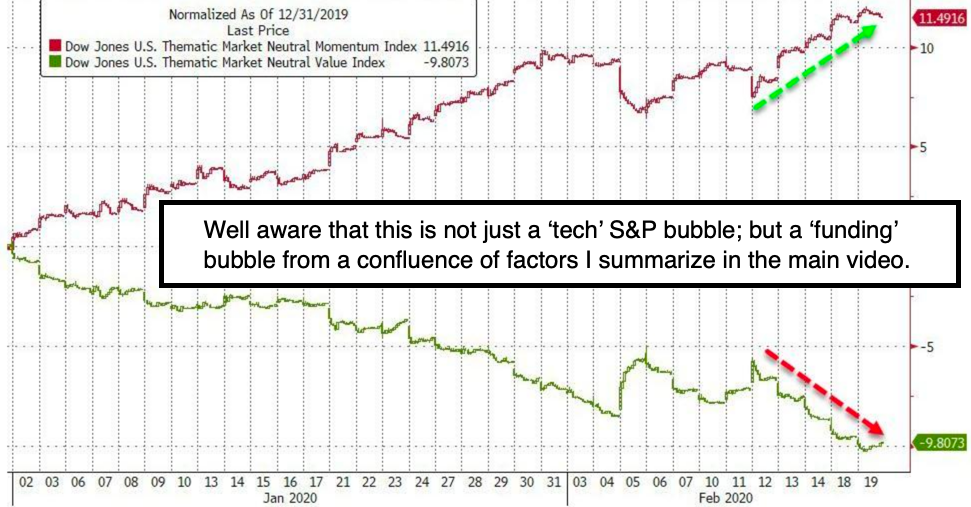
Persistent 'top-heavy' dominance - of the S&P continues churning-out higher highs, irrespective of growth downgrades anticipated, all which is in-line with our belief of how this 'passive investing' juggernaut tends to smooth differentiations (like Apple's essential revenue warning stating the obvious we've all known for weeks), while levitating the 'what works' stocks to levels with no real correlation to business prospects. And at the same time some other stocks, with actual growth, languish relatively.
Globally, the world is not that far above the 'global recession' threshold, a notable situation (Germany and Japan are in trouble too). This is aside from China and the supply-chain issues that will inhibit some growth in the U.S., and that's regardless of Wall Street 'perceptions' about growth for now (part is because they're trying to actually justify high S&P prices rather than just confront how fund flows and seasonal factors combined to push it up).
The virtual lock-down of the Chinese economy has another aspect aside from the coronavirus, something I've spoken of for a long time, which is irrational housing exuberance in China, and the potential threat that a real estate crash can bring in times of great stress, semi-isolation social requirements (voluntary or imposed), and what during the 'Trade War' was the beginning of supply-chain shifts that are actually insufficient to offset virus-related production issues.
China 'overbuilt' worse than the U.S. did before the 'Epic Debacle' I had called for back in 2007, and credit-worthiness in China is evaporating at a rapid pace. The free-flowing (upscale, too) buying is tempered, and it's not entirely clear whether this becomes a maturing experience (like post-Depression sort of mentality) after the entire ordeal becomes a bad historical memory. In a sense a 'Depression Mentality' fostered years of frugality (actually good for slow growth but not speedy recovery) in U.S. consumer spending in the wake of The Great Depression of the 1930's, retail commerce was not satiated until the postwar boom that ultimately followed (with pent-up demand).
So the real question will become whether everyone has taken a lesson from all this. Will China take time to recover, is there ingrained resentment by the people of China (as to how the initial stages of the outbreak were handled by officials), and will we get a flat-out property-price collapse? The Hong Kong travel advisory issued just today by the CDC doesn't help either; and Hong Kong property prices are among the world's highest.
As to ideas that Beijing will just move the masses into the 'ghost buildings that dot major cities', well, the human spirit needs a purpose, and feeding and housing millions already is a challenge. Post-epidemic recovery will strain the Chinese system, increase debt, and possibly encourage political upheaval. As well as dealing with all that, while China itself tries to continues to grow, it will have to face clearly-increased diversification of supply-chain sourcing, which includes U.S. companies and others. I'm referring primarily to those Apple's of the world that relied extensively on parts or assembly more or less exclusively from China. Not having a 'fallback' supply source in the future would seem irresponsible from managers schooled in logistics.
As for Wednesday evening's 'Debate', I will make this evident observation about the politicians' health conditions.
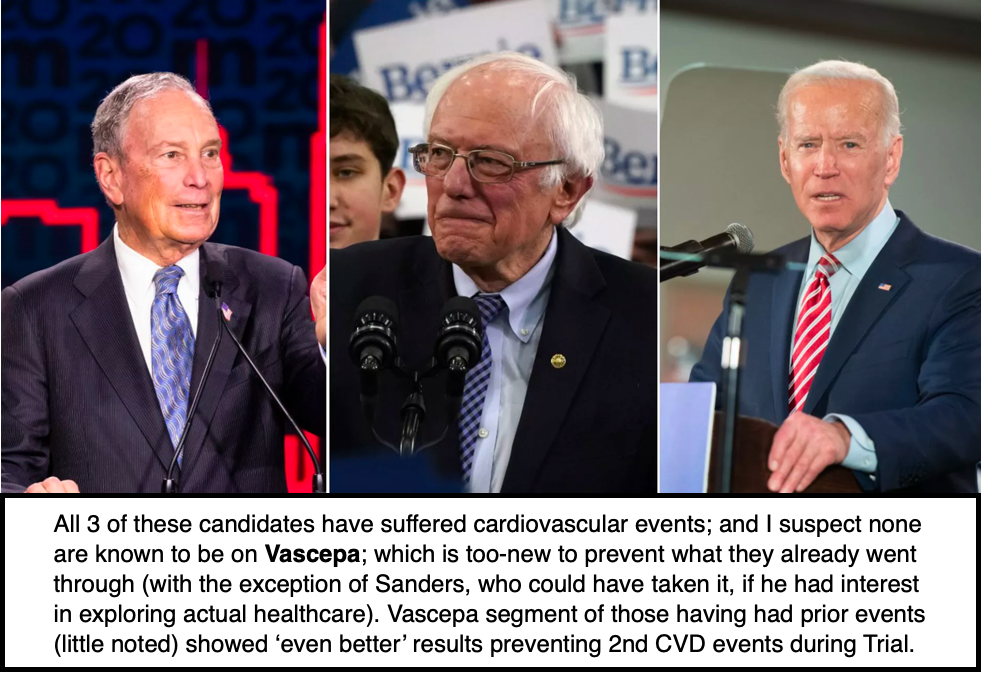
President Trump reportedly has a CT-determined coronary calcium score >130, Bernie Sanders had a heart attack, refuses to release his medical records, and vaguely acknowledges he takes a Stain, clearly Joe Biden unfortunately suffers from well-known cerebrovascular damage (he has a history of stroke), and Mike Bloomberg years ago had 2 coronary stents installed in his arteries, and perhaps more events. However all this public information, and the reports of the Sanders & Bloomberg trading barbs of who had a heart attack and who didn't (perhaps they don't recognize the clogging of arteries starves the heart of fuel.. blood supply... and hence is what are most heart attacks). At the 'heart of this' early debate today, we see reflected a sole common denominator: atherosclerosis.
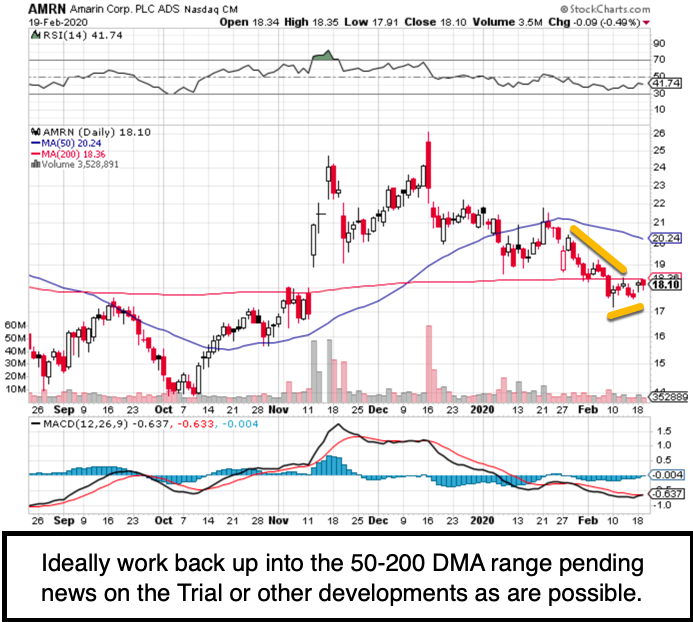
To date, despite Amarin (AMRN) stock being ragged (probably because some of the funds sold as a hedge ahead of key prior FDA wider-label approval determination), which then granted Vascepa the consequential therapy to counter cardiovascular event morbidity and mortality. (And now shares do swing just shy of a technical breakout above 19, probably because of fear the Federal Court ruling is still pending in March, plus better hints of how sales are going in-order to prove to others Vascepa's not just fish oil.)
For the average layman, the candidates uniform commonality in dealing with some sort of cardiovascular concerns, may not comport with what we call preexisting confirmation bias, which means they need more than a statin (Sanders vaguely 'thinks' he takes a statin or something to quote his words when asked). As previously noted, scientific illiteracy feeds the minds of rationalizing (or arrogant) politicians as it does others. Perhaps that's why Vascepa is so woefully or even frightfully misunderstood.
Perhaps Wall Street is equally dim. Apart from mindlessly programmed algorithms and our 'fund flow' hypothesis (proven I believe with regard to retirement funding as well as foreign fund inflows), there's no reasonable explanation for institutional buying of already overpriced FANG type stock positions, with neglect of actual value-plays, which could include even a bit of hedge selling of AMRN both before the FDA decision (formal filings reflect some lightening last year ahead of the decision on wider-label); as well as 'maybe' delayed recommitting ahead of the Reno Court decision.
With 'price' undervalued regardless of whether there's a buyout or not, as simply measured against probable 'ramping' of sales (direct-to-consumer media marketing lies ahead beyond the basic 'be kind to your heart' add), we encourage Amarin to emphasize the vision and potential rather than a bland perfunctory review of the prior quarter, where they simply noted an expected higher revenue trend, but suggested negative cash flow while it all unfolds. That may be the case (obviously), but emphasis on a positive aspect might be welcomed to show more interest in shareholder value.
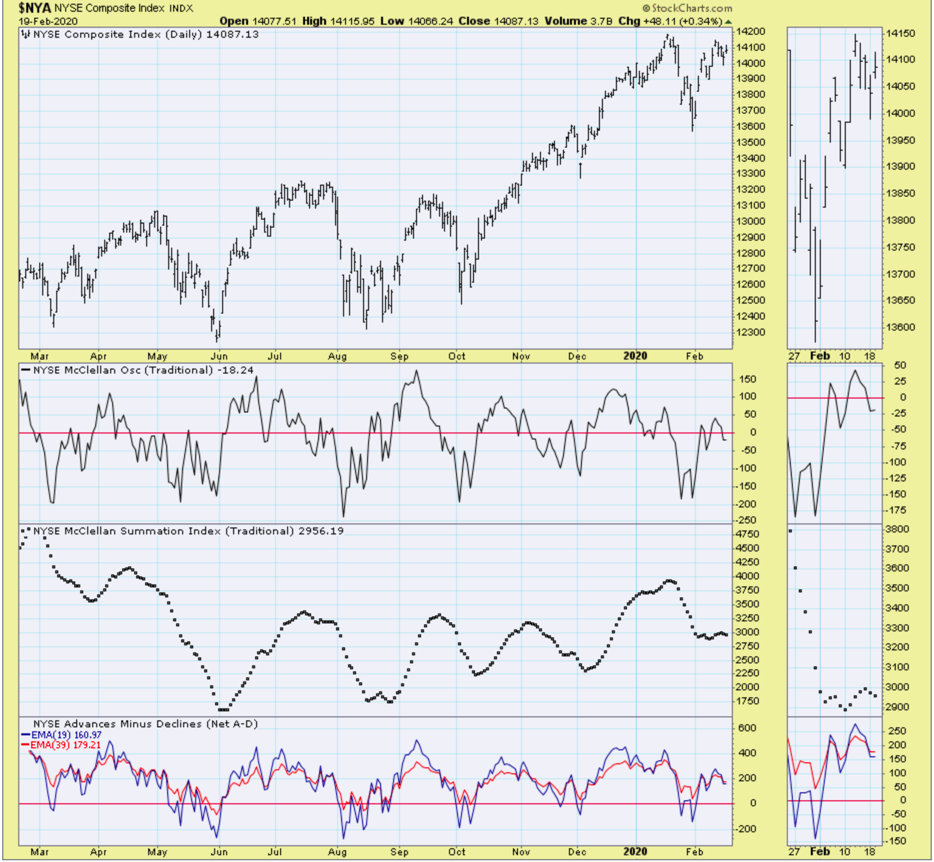
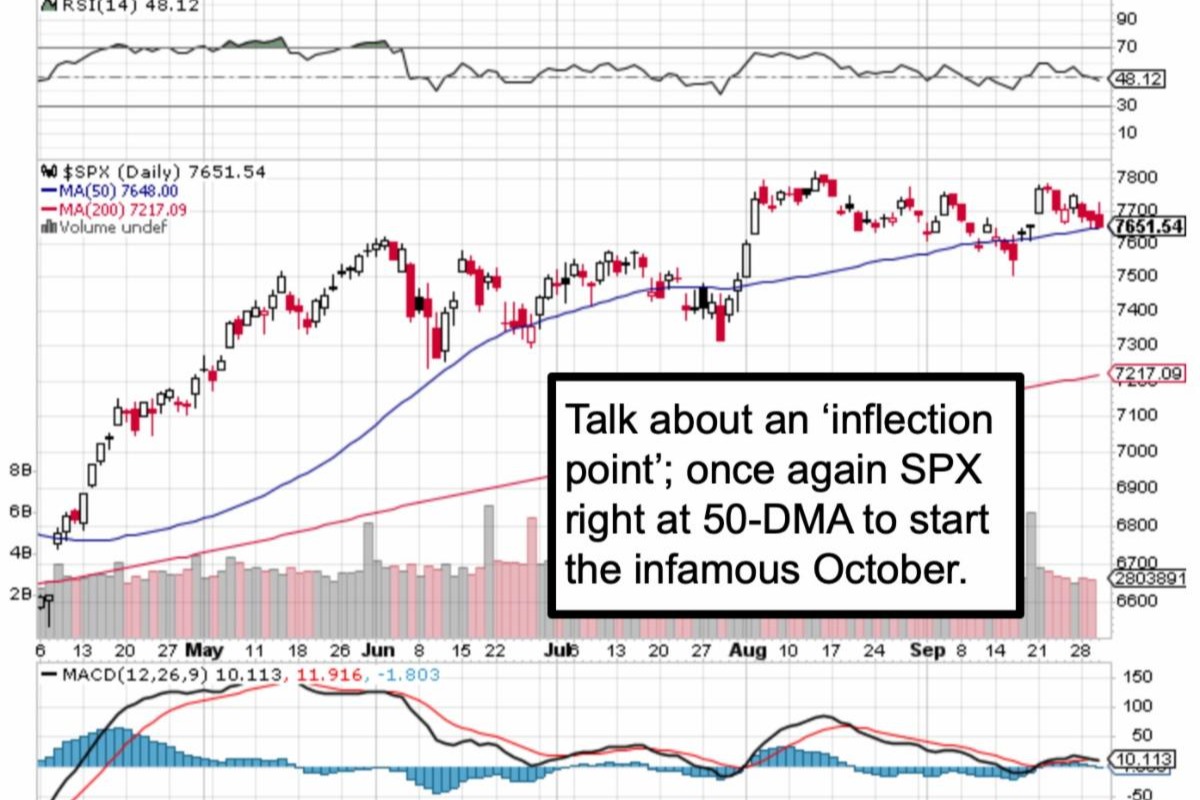
In-sum: the market forged ahead, although there are signs of fatigue that creep-in periodically, including late action today. However, the S&P (SPY) pause was accompanied by new quarantine cases (not infected but suspected) in Westchester County, New York, and the first time new 'travel warning to Hong Kong' issued by CDC.
Discounted cash-flow and so on as reasons for decline are logical, but it's arguably not that different than in recent weeks. What propelled this S&P and tech leadership has been the liquidity-driven impetus plus the foreign fund flow, as we've outlined. May be boring but correct, as far as fuel for a move that we believe extended, and if not for the virus (actually assisting the passive investing and fund flows into perceived 'safer harbor' of NYC) you'd have a market that's more vulnerable. So far the call for traction to be limited but persistent has been correct, and perhaps kept traders from a temptation to short this market, which generally has not worked. That's of course not always going to be the case, but so far persists.
As for China, we should emphasize the possibilities 'if' there's not a swift conclusion to the epidemic, or if it spreads. I realize they can 'say' things are improving, and we can all cross-fingers that it's not wishful thinking. I am concerned about the aftermath, as discussed earlier. A possibility of insolvent Chinese companies, many with American involvement, filing for bankruptcy, and then managing the default aftermath, is a formidable task for top leadership, because that nation allows off-books balance sheets, or more, that provides a mask that normal accounting wouldn't allow.
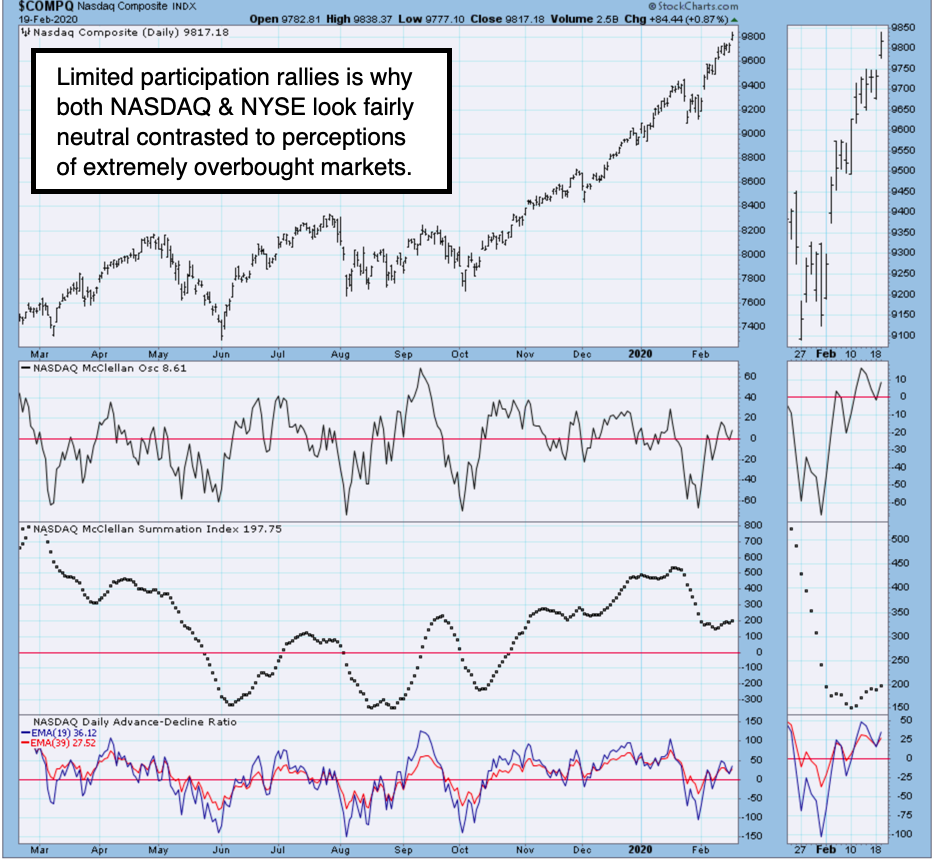
Bottom-line: this passive-investing thrust may not end well, but if China gets a handle on things, the reversal in our markets doesn't have to end on a dime, even if it does in time.
It's not really, but near a mania, as the frenetic aspect is limited to selected stocks, some of which are among ours, especially notable is AMD which is way more than a triple now. Little tiny LightPath (LPTH) is benefiting not only from the epidemic (huge demand for infrared lenses); but also there's is a well regarded product, and the indirect USMC order reflects that.
What is evident (such as that order requiring lenses made in the USA) is the supply-chain shift. Trade War or (now) Trade Peace, there's lessons in all of this. Not just the mercurial regime in Beijing, but diversification of supply-chain needs regardless if it all comes back Stateside or not. That is likely not to change even if the virus ended tomorrow as we all wish.
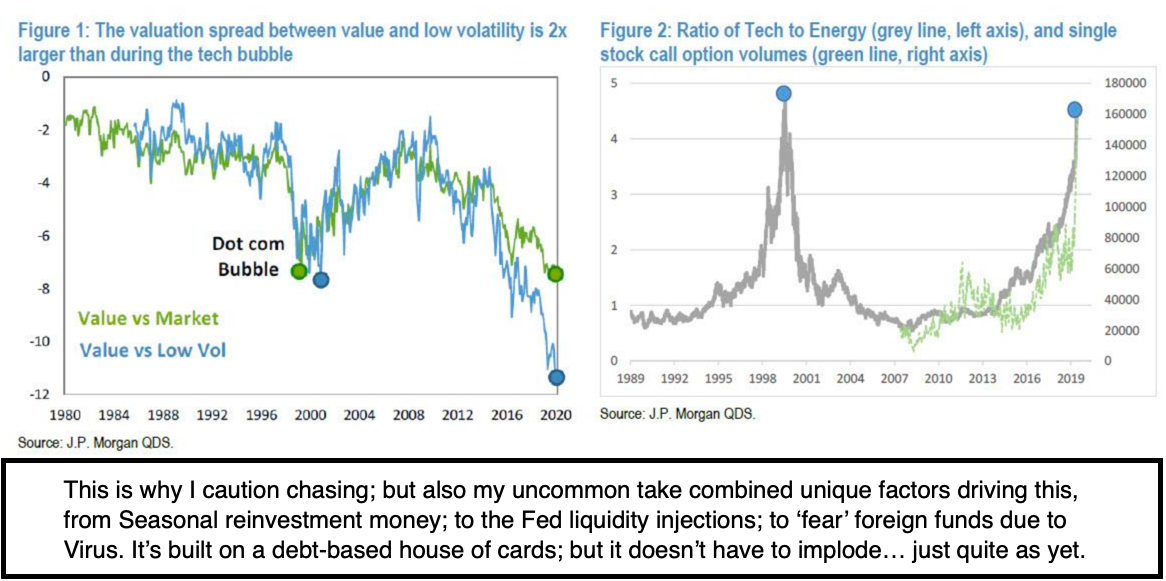
It's likely to be a gradual process that becomes irreversible or stokes the U.S. economy to the degree production can move here. The problem with this scenario is it leaves China less ability to recover. It can only recover or thrive with business, but lots of businesses have already partially left or are wishing they have opportunities for leaving China (Vietnam and Thailand of course took what they could absorb). China has to continue to build and spend, even as some major companies expand. It is our problem given it is the 2nd largest economy in the world and they don't plunge without impact here. It is a world with too much debt, they can't default or get rid of it, so they're going to expand debt and try to grow out of it. It will be a tricky path.
Comments
Log in or sign up to join the conversation.