

The magnitude of tectonic shifts increasingly are toned-down in the United States, as far as calming the misguided or disappointed masses of voters, who used linear thinking; didn't grasp a necessity to shift from what truly was obnoxious campaign rhetoric, to orderly governing; and only now are starting to realize that while the outgoing leadership sure did some things (several favorable; several not) it was time to embrace an attempt to recover America's leading business (not just consumption) roles; while enhancing greater (shared) global security not isolationism.
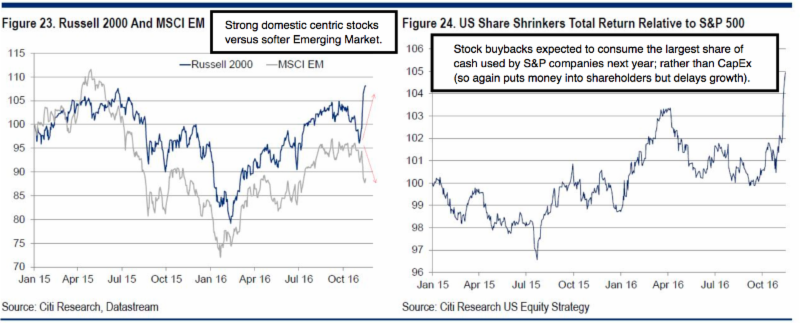
Abroad the implications are also superficially being calmed; with most of the globalists increasingly resigned to 'carving-out' a place for them. For sure they're still disruptive, but for the first time in four decades they are on the defensive. And the majority of people think this is due to Trump. I know it is not; that rather it's an evolution of a realization that predates it by years, but was suppressed by the Establishment approach I simply called 'pouring gasoline on the (debt) fire' for far too many years.
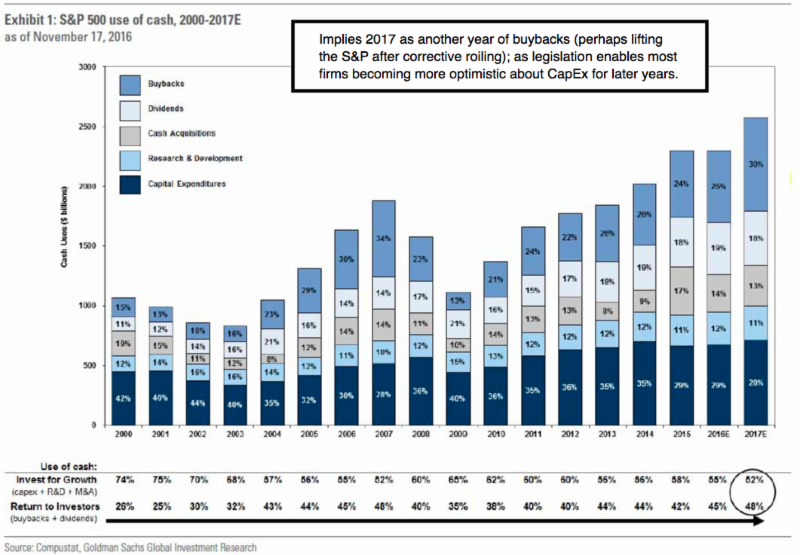
At last the general public became aware of the political one-world order thinking behind a deconstruction of much of the West's industrial base; and for that we thank primarily folks like Ron Paul (yes early-on despite his politics otherwise being too controversial at times); Nigel Farage in the U.K., and even the new government of Greece. It did not start in the USA; but it is the USA's embrace of 'new sensibilities' that changes the world going forward; in ways that not only recaptures common sense it seems; but also provides a better world for the very people protesting.
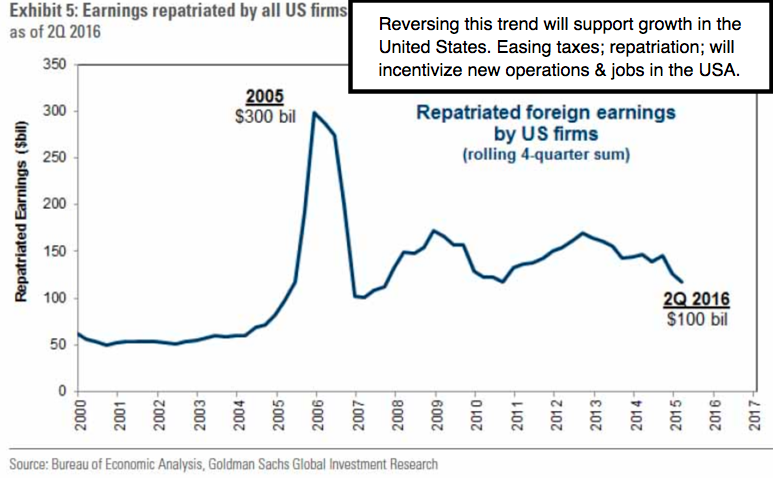
Globally, you have Japan applauding the new leadership (to the chagrin of a nervous State Department not asked to prepare advance papers); you have Great Britain on the same page (and should presume that the intention to move Winston Churchill's bust back into the Oval Office has meaningful symbolism of the importance of the Atlantic Alliance's most key Allie to the United States); and you have either center-right or right movements gaining following ahead of the French Elections (yes there is uproar over the socialist Holland regime; even as they and my cousin in the Foreign Ministry have done a great job in some realms against a country overrun by labor unions and a large Muslim population that's unwilling to assimilate.
This all matters to credit and equity markets because the United States, in my view all along, must be the shining North Star to focus the future on; and not China (saddled by an increasingly insulated government as they suppress their citizens and act increasingly aggressively externally) as we go forward. China is a big player; and hope with us not against us and that's where a fair but firm US economic leadership totally matters.
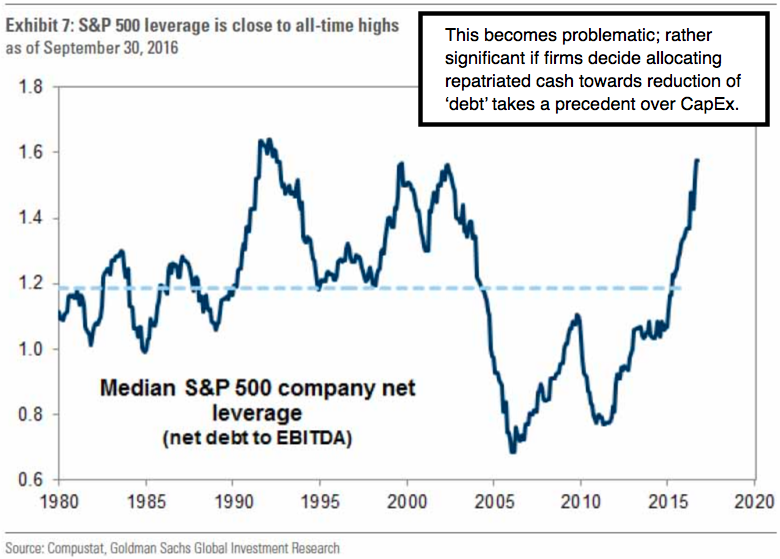
In Europe there are temblors that remain to be settled. Most significantly we need Chancellor Merkel to get Finance Minister Schauble to temper his bellicose threats to compel Great Britain to pay the EU until 2030. If he pipes down, they might actually get modernized proposals from the UK. In a sense the EU has tried to embrace ideological master plans to create superstates from disparate nations; and both Brexit and pressure on Irish tax policies were examples this year of common-sense wins (as with the Presidency here, I suspected pragmatism would win out).
The risks to markets depends on what domestic leaders actually will do. That includes technology firms singled-out in the past by the new Attorney General as depressing domestic wages by hiring lower-wage migrants; in a way that made it harder for native-born citizens to gain better jobs. Such companies may see their shares work lower if their costs increase since I suspect they'll come in line to avoid other entanglements (many could exist; restraint of trade; anti-trust monopoly; collusion; etc.); thus we expect most companies, led by Ford and Apple, to be very pro-USA.
So; should a tough-line from Berlin prevail; that's a market conundrum if Britain's unable to strike a compromise (on tax incentives and so on). In such an event the Euro will weaken and the Dollar strength even more. That puts upward pressure on Oil and the U.S. stock market short-term but it also raises the specter of a sharp ensuing decline as rates rise as international trade conceivably is threatened. That's why it's preferable to see a compromise proposal that can be ratified by Berlin and London.
Conclusion
We are experiencing a major 'sea-change' in politics; in the foreign policy arena; and in credit markets. Most importantly, favorable 'capital-based' cycles in American history have started roughly with hard impacts that brought-out discord initially. That included Lincoln and by the way Reagan too; and to a lesser extent Kennedy. What's happening is indeed a Nationalist shift away from globalism, but towards a bilateral trade expansion, perhaps keeping more of the existing or pending deals 'cores' than is generally contemplated.
This can be very bullish for American business; with citizen success that in-time offsets the nervousness of the moment. With one proviso: these new alignments and focus must be done with balance and with humility to a degree; and definitely emphasizing the spirit on governing for 'all' of the American people.
Daily action expects Trump will take his swings carefully, so as not to get into trouble or new Middle East 'sand-traps', while expanding global business for everyone; even adversaries who will benefit with a robust revived USA for the next several years. This is long-term bullish.
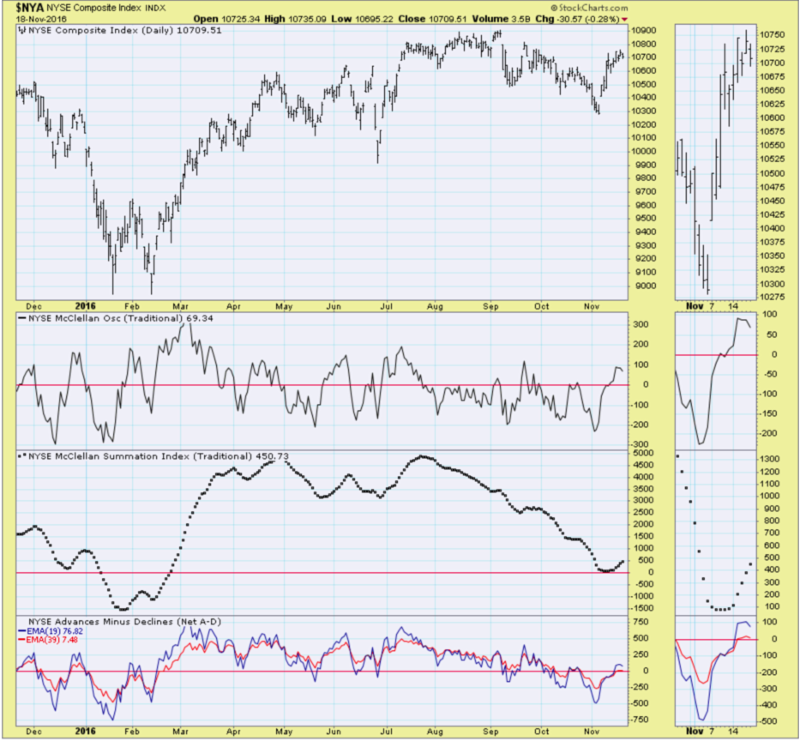
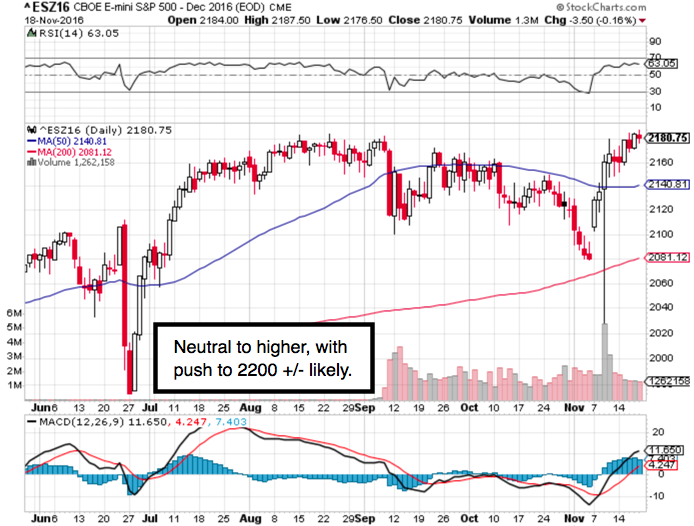
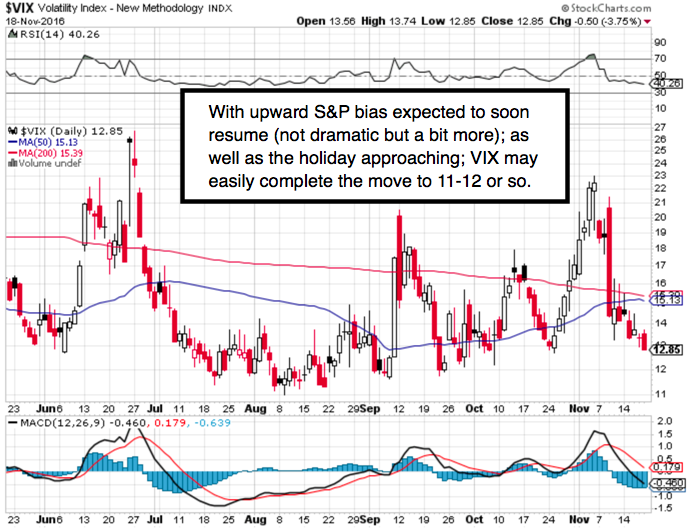
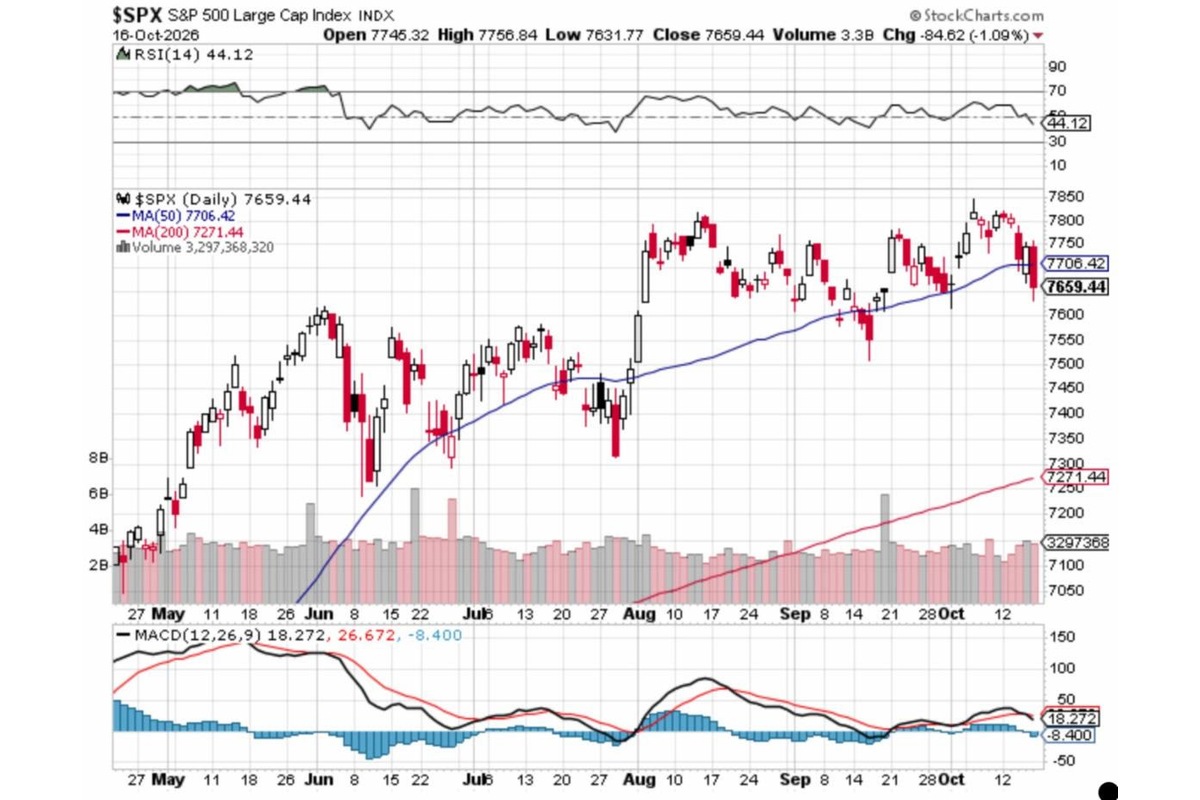
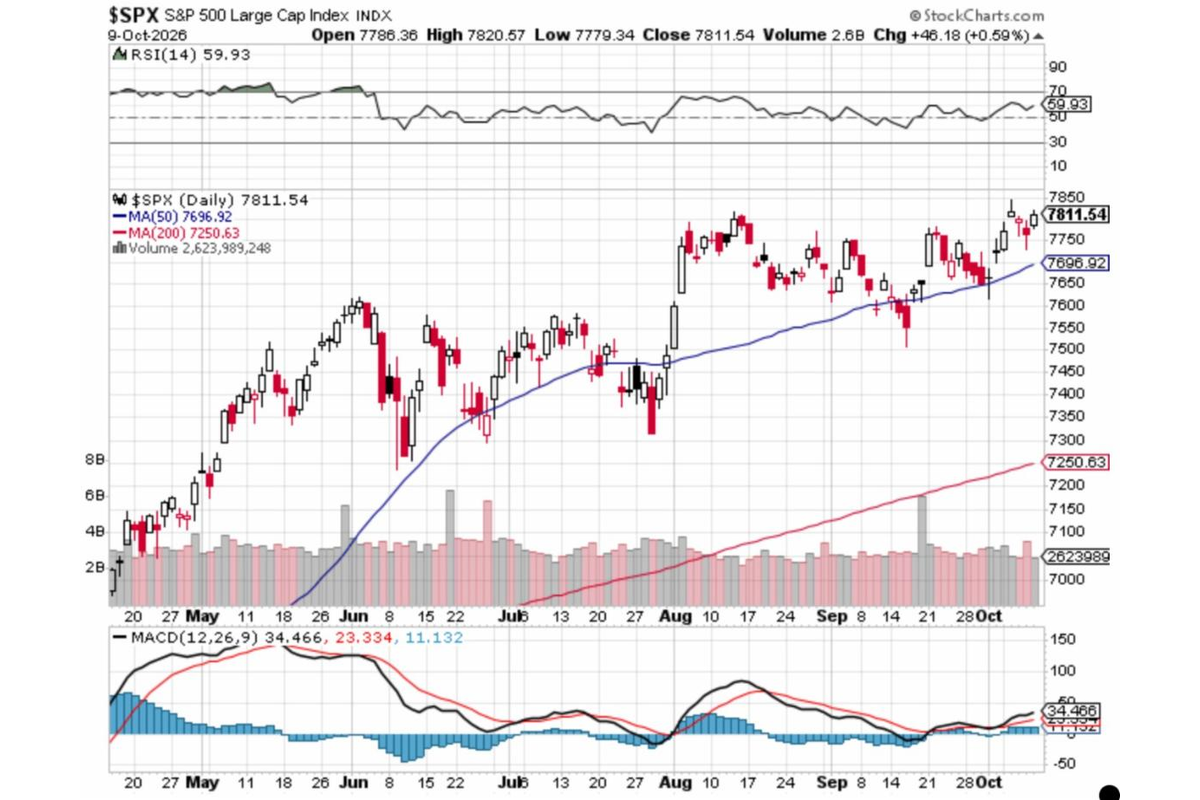
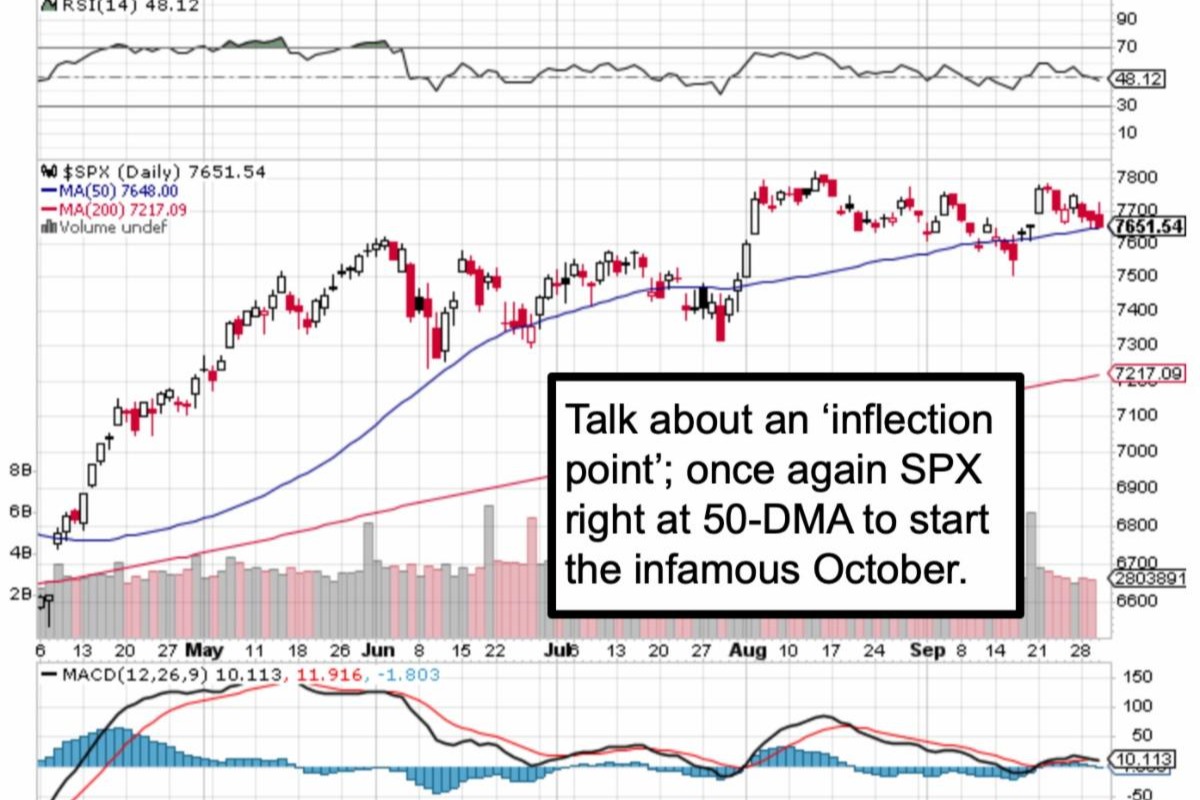
Technically, US markets are short-term extended with a sigh-of-relief we suspect it should run out-of-steam; although ahead of Thanksgiving it may be more neutral than anything, as it claws to approach S&P 2200 of course. Much higher than that I'm not anticipating at the present time.
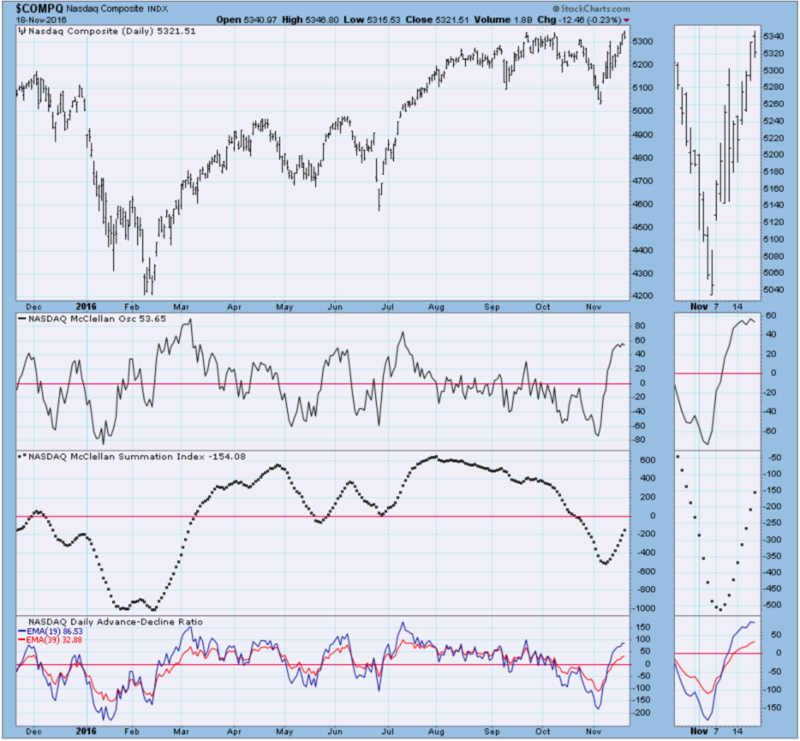
We're flat S&P trading and continue looking for a limited push higher; as the 2200 area of December S&P is likely probed. We'll be focusing on a new front-month contract, the March of 2017 S&P futures, next week.
Weekend (final) MarketCast
2 o'clock (intraday) MarketCast
Comments
Log in or sign up to join the conversation.