

'My way or the highway' is what the financial media focuses on; as we're now analyzing past the prior contentious healthcare debate, clearly looking forward to the overall primary equity trend's most pertinent political stimulant or impediment (at least from a market and business perspective).
That now takes us to the next looming legislative battle: tax reform. It is not inconceivable that President Trump's late-day appeal for cooperation from Democrats might at some point actually surface (for infrastructure, since many Republicans will oppose spending on that); but he's unlikely to get it with the tax reform fight. My early-take of the response of partisans, not the media) suggests they view this as a bigger defeat for Trump than I see it as and remain uncooperative with the idea of 'coming together' on anything.
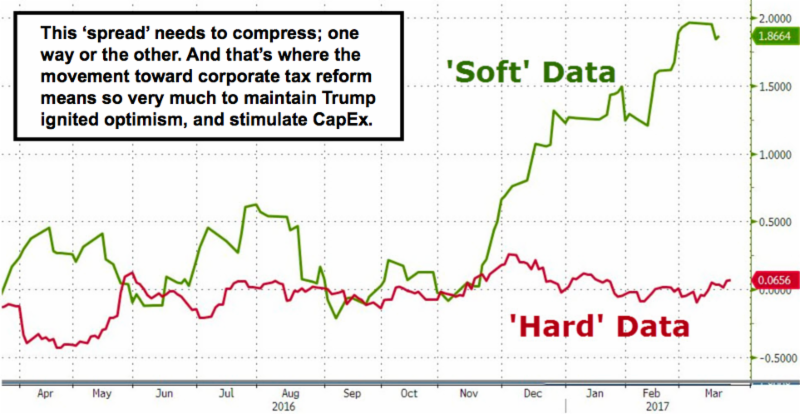
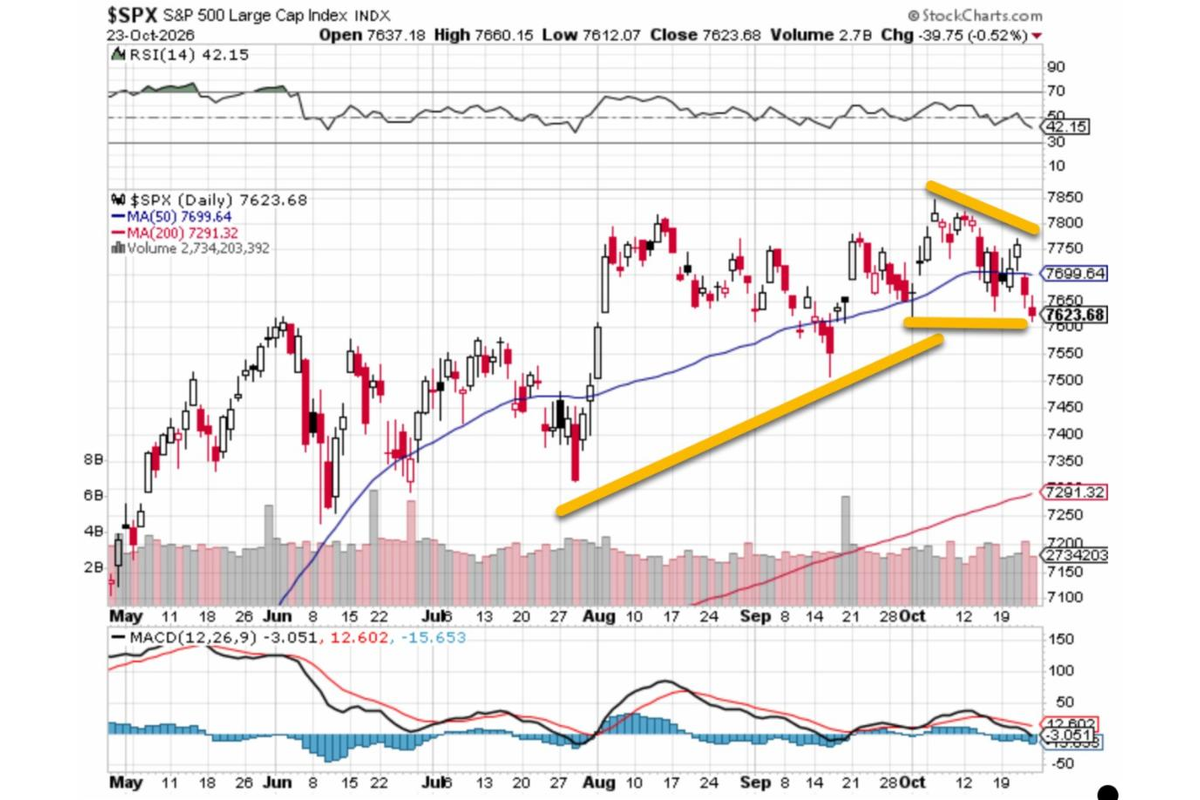
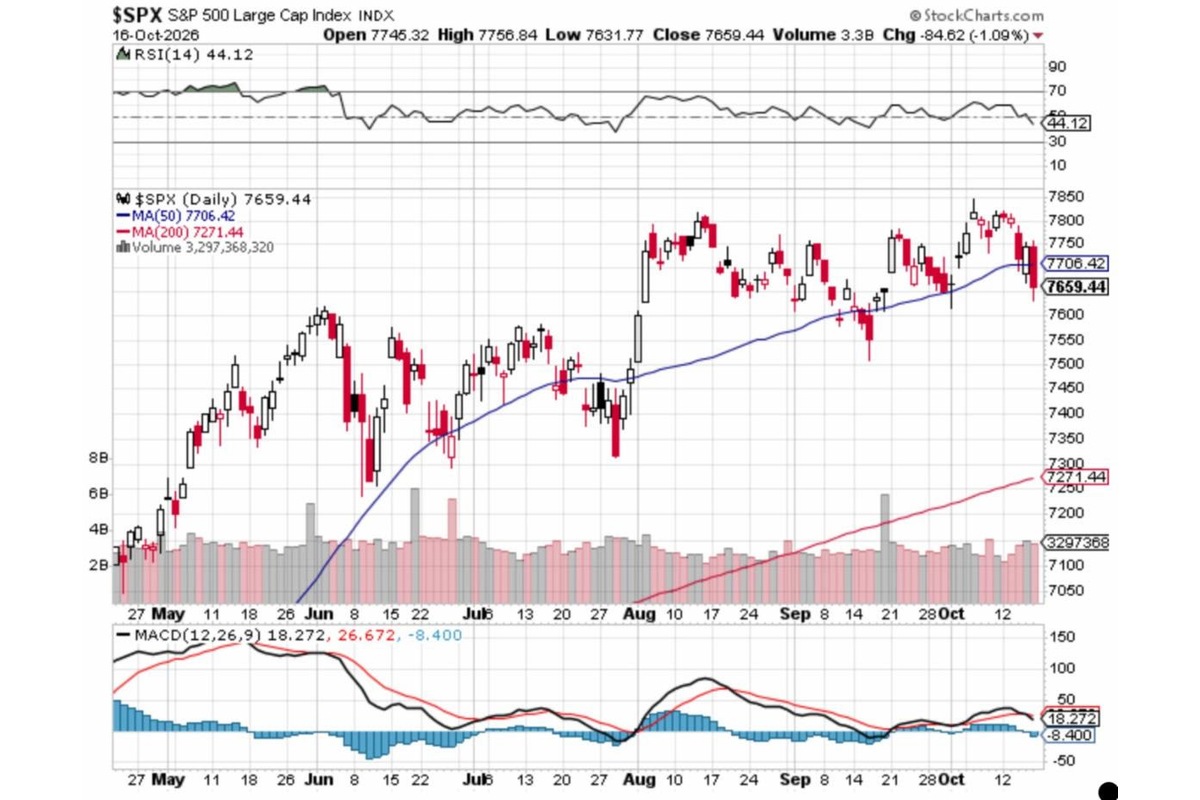
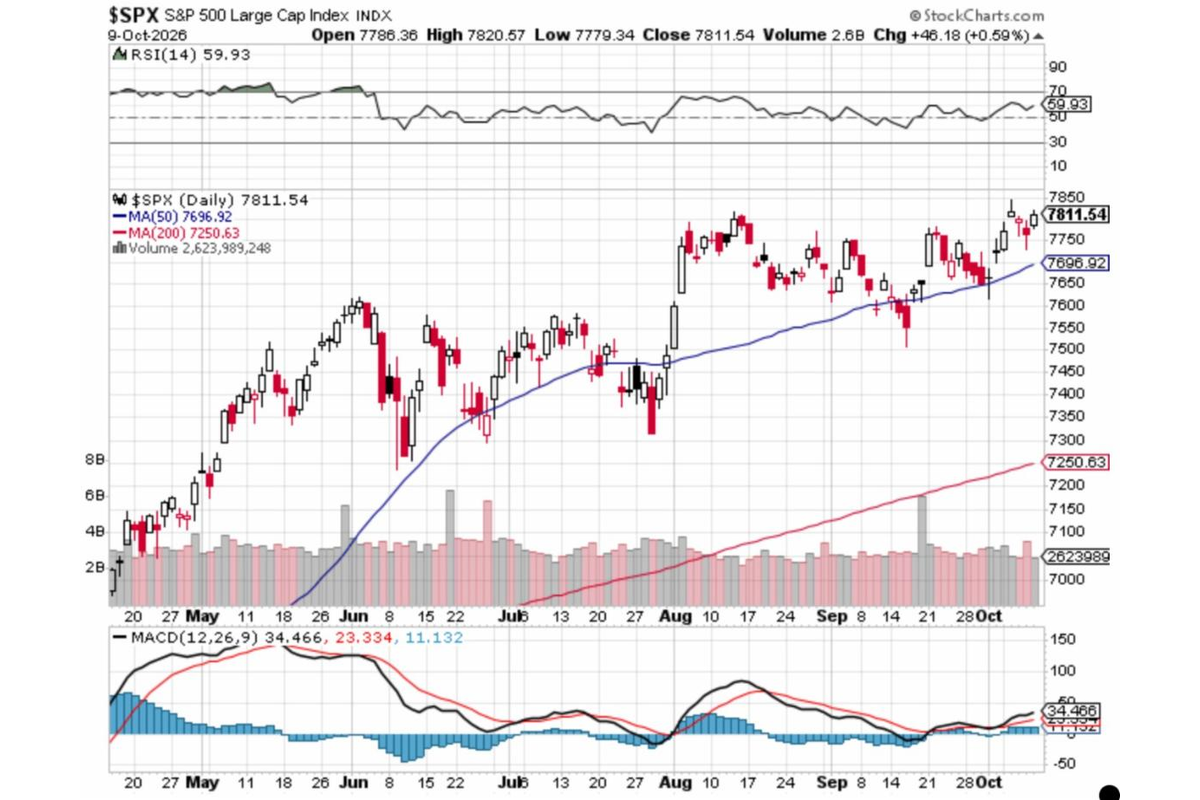
In market terms we need the administration to deliver the goods on taxes as well as 'capital repatriation'; otherwise there's no justification for the S&P at these still extraordinarily high levels. There is liquidity awash in the world for sure; but at some point it takes more than that to prevent a big correction. It is commendable that President Trump got 'into the trenches' to fight for the Ryan plan; which really was more involved than seen in recent presidencies and hearkens back to the Lyndon Johnson era. But it was a flawed plan all along I thought, which is why I preferred it on the back-burner for the start of his Administration. Now we have to contend with infighting and for sure we'll get an argument (hopefully valid) that with healthcare off the table for now; a full-court press can be made to expedite tax reform. It too, won't be easy.
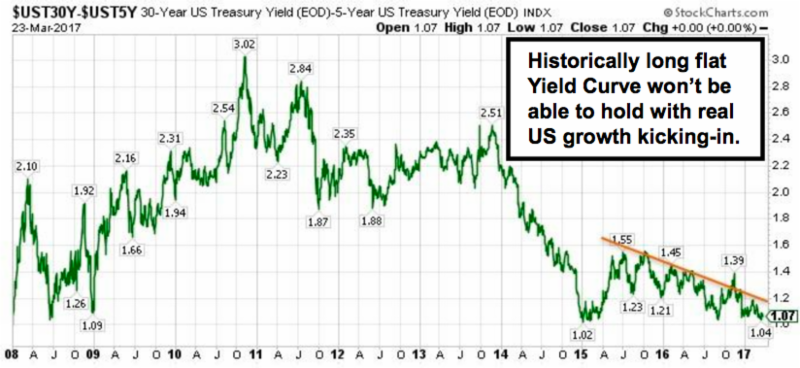
This weekend we want to look a bit at the 'credit arena'; because despite a 'flat yield curve' (historical duration of that incidentally, or at least since that 'Great Depression' of the 1930s), almost all key rates are near breaking out from the intact long term downtrends that prevailed for so many years now.
Certainly; without 'solid growth' (often almost recessionary economic metrics since roughly July of last year), stock investors have been buying mostly for one reason I embraced even before the elections (on a presumed Trump win), that was banking on the fact that ultimately pro-growth fiscal policies were going to point the U.S. economy toward a strong and sustainable economic growth trajectory accompanied by higher inflation.
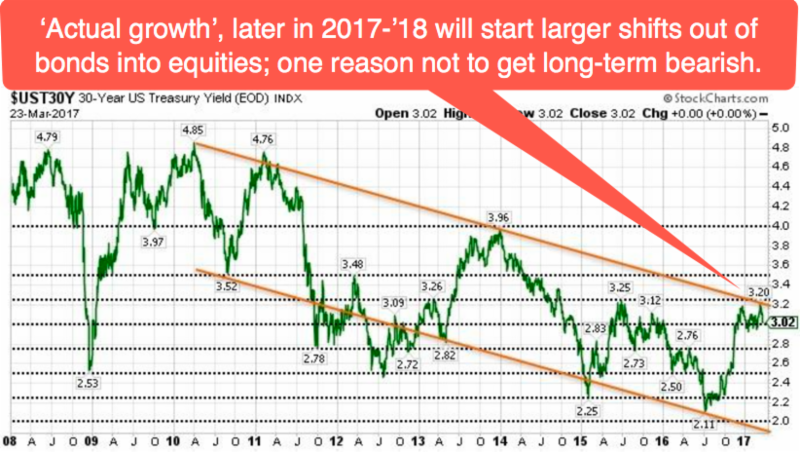
The latter can be restrained by virtue of America's new (and essential, which is why so many political globalists opposed it, not merely 'climate' issues) as well as politically strengthening energy independence; in both oil and gas. I think it's a bigger piece of this puzzle than many acknowledge, and will very much help us growth without any sort of hyper-inflationary fears some bears constantly drone-on about.While this growth may very well come to pass, the Treasury yield curve has been telling a vastly different story. My view is that is part of why the Fed has moved rates up 'in anticipation' of what we've forecast for a bullish future for America; not because they're trying to deflect sustained economic growth from really kicking in, as antagonists suggest.
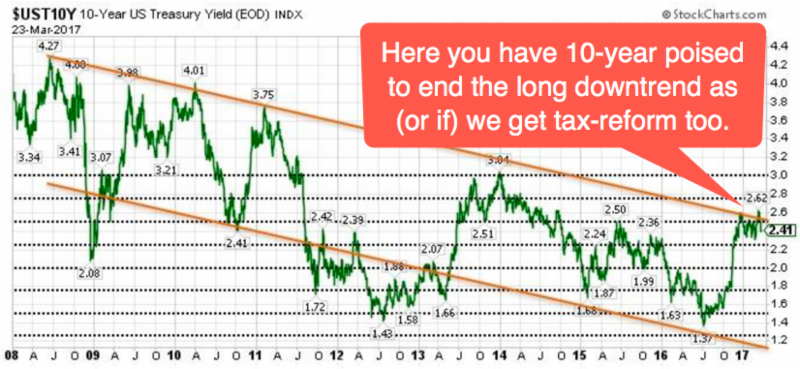
Now,certainly, markets effectively soared high enough on our forecast rise, that they've priced-in more than perfection on the fiscal policy front through the way stocks went flying higher in the weeks and months since November. The legislative process is painstaking, and may not emerge remotely close to Trump's proposals (a perfection the market has been assuming); and for sure that's why we're open to a meaningful correction, but not catastrophe. I think that requires however, that a good segment of the fiscal policy that the stock market assumed forthcoming, actually happens.
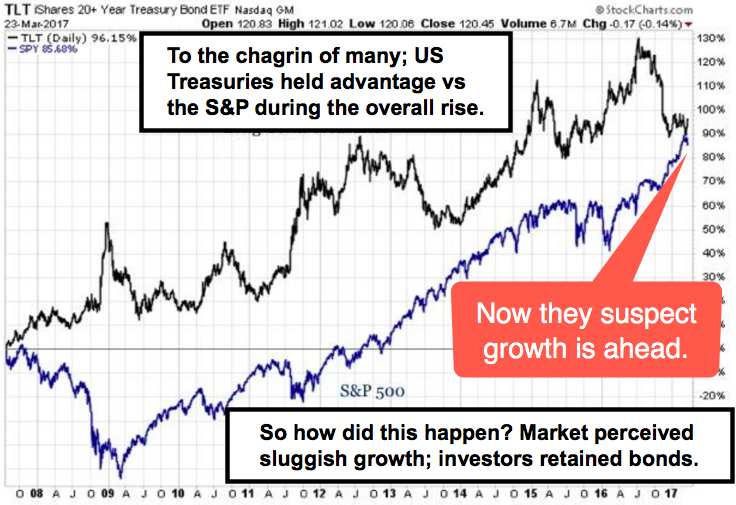
In sum, the 'real' economic metrics since the middle of last year, gave us a lot of reasons for not being very bearish on the bond market like some; but at the same time anticipating higher stocks 'anticipating' actual US revival.
We project (obviously requiring a decent tax package emerging) underlying conditions to change late this year and next. While the bond market offered acceptable risk-reward profile, that sector will become less appealing. And if nothing else, bonds on the defensive will eventually help equities because it will be some time before rates are high enough to really knock off stocks for more than intervening corrective action (such as a first real bond trend shift) that remains probable during the course of the months just ahead (partially as markets will be holding their 'breadth' pending tax reform legislation).
Bottom line
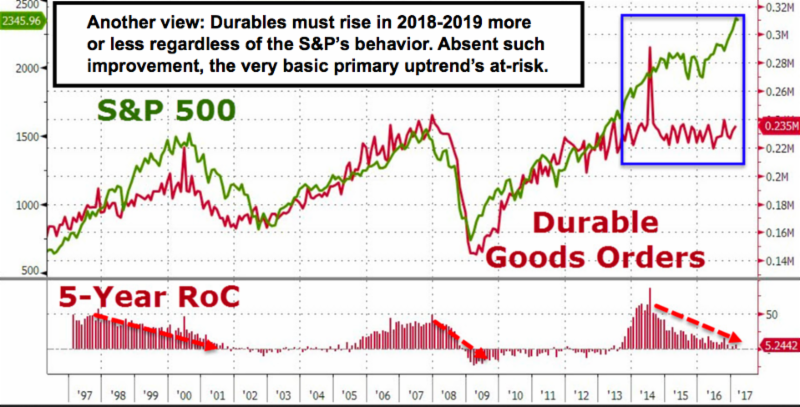
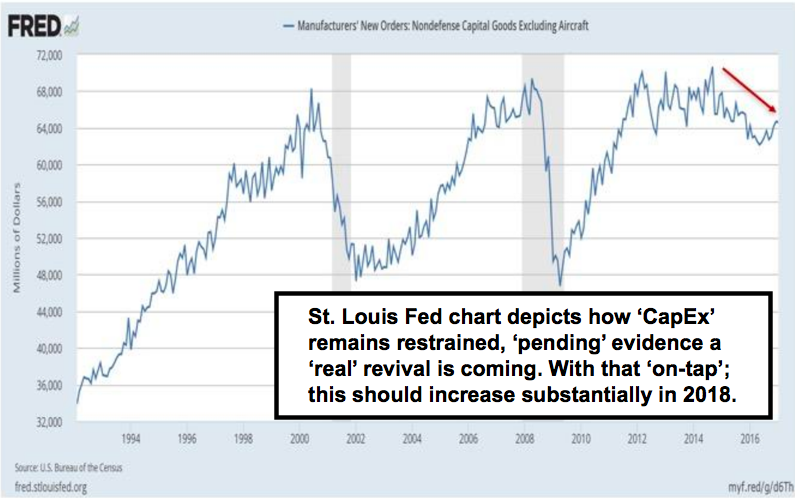
Capital expenditures effectively stalled as stock prices soared to all-time highs. This anticipates political climate changes allowing the long overdue pick-up in capital spending, as we have forecast not only arriving, but required to extend (or after correction, 'renew') the upside to equities. If business investment were to contract (say the President's proposals being defeated by an anti-US growth globalist agenda), it would wreak havoc to a beautiful advance we've projected throughout nearly the past half-year.
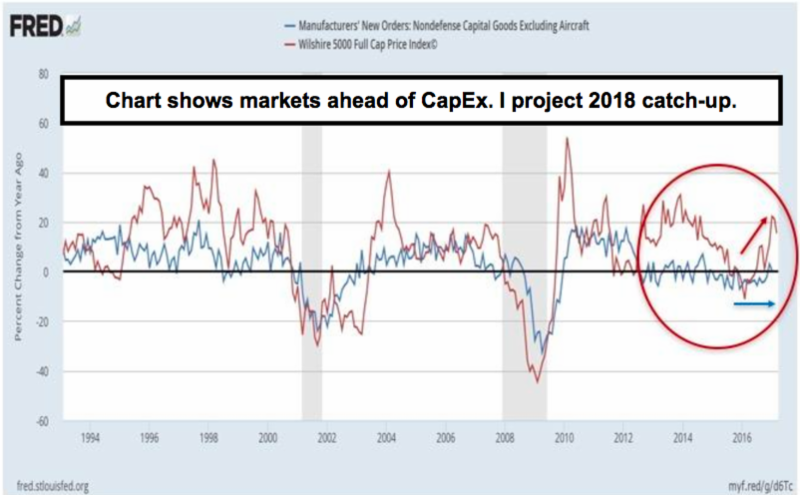
We expect US expansion not contraction; so the interim call is correction not disaster. That's why we absolutely allow and anticipate periodic retracement moves, but barring exogenous events or political defeat, not catastrophe.
We are far removed from euphoria and have a market now ready to focus a bit on the Obamacare taxes being removed as a partial offset to decreased future corporate taxes. Accomplish that and you might get this or a variance approved by more members of the House, again, by prioritizing tax reform;,an opinion I've held throughout.
Comments
Log in or sign up to join the conversation.