

Cheerleading the economy or stocks at extraordinarily high levels this time this year has been characteristic of assessments, whether from White House officials, the President, or stock market analysts. Generally what is not heard is that a faster American economy supports the backdrop of Fed monetary policy, that continues to point toward 'snugging-up' and QT.

Besides that, you have too much optimism about the trade scenario. Good news from the EU discussions, although Jean Claude didn't really have an authority to mind the member countries as the media 'assumed'. Germany may view the non-inclusion of autos in industrial tariff suspension more so than the French perspective, for example. Certainly I'm optimistic that we'll get deals made and this sets-the-stage; just observing it's not done yet.

At the same time you've got the Chinese Yuan decline continuing rapidly; along with Chinese and most (submerging) Emerging market stocks. This serves Beijing both with respect to offsetting tariffs somewhat; and may be viewed either as 'manipulation' or capital flight. Either way it's pressure on China to make a deal, which everyone should hope occurs; regardless of a degree of toughness that (like with the EU) requires toning-down arrogant approaches to negotiations.

Meanwhile, whether it's Twitter or Intel; or more dramatically Facebook or even Google and Amazon; there's a darker cloud (and should be) over the so-called FANG stocks, and their fellow-travelers. For instance, we still hear FB explained by discussions of Cambridge Analytica; rather than the potentially more egregious privacy issue: the linkage now terminated with Hexagon in Massachusetts. Of course FB omitted their 'better performing' subsidiaries; perhaps as they try to show how they're not too prosperous (it was a pricey way of doing it; and maybe to avoid oversight investigation of their insider selling practices of recent months that I shared last night).

At the margin the Fed matters here; and this GDP number pretty much will remove any inferred pressures (you heard that about Trump's jawboning of the Fed the other day) on the Fed; hence look for higher rate continuity.
Capital investment has to transition to productivity; and should over time. I believe the debt concerns are there; and the tariff battles delay CapEx by a lot of companies; hence the markets are increasingly nervous about it.

So yes I think economic growth is sufficiently sustainable to work through the choppy markets we anticipate over the weeks and months just ahead; which is why I called for turbulence, not catastrophe. Also the 'Black Swan' risk list is slightly tempered; but not reduced in the Middle East (hence Oil shock concerns still persist); while it is improved with respect to Russia; of course North Korea; and even China while they try to evolve new policy.

Retaliatory tariffs won't work for China; and they inherently know it's really a trade fight they started and we responded to without backbone for years. So a lot of business overseas isn't going to change dramatically; cash that comes back from overseas, however, tends to go into coffers or buybacks, rather than CapEx business spending; because of vague concerns.
On the other hand they know they have a tax advantage of 'spending now'; so that they get more write-offs for this tax year in the last couple Quarters. Sure it will depend on the companies; but domestic-centric ones surely will spend. So I suspect there's hesitation in business; but not a total reversal of the optimism they have had. It's a process and this is a time for pause.

In sum: there is no change in my general concern for market volatility hits in August and September; basically a continuation of the mid-July forward expectation for fake-out breakouts and sector rotation that falters, even as a few sectors consolidated all year by rotation; while FANG stocks masked it all. We have assessed this since calling the parabolic January blow-off.
The 'supply-chain' issue will increase in the next few weeks; not just S&P or FANG market issues; but things like higher costs for 2019 inventory for all kinds of product lines. Not the least of which is Apple's next generation iPhone(s); which typically are announced in late September, but already are in-production in China (comprised largely of US, Taiwan, S. Korean as well as Japanese parts; while entirely assembled in China). If we get any big delays this year; don't be stunned if they blame it on 'tariff' concerns or supply-chain disruptions. Hard to tell; but regardless volatility increases.

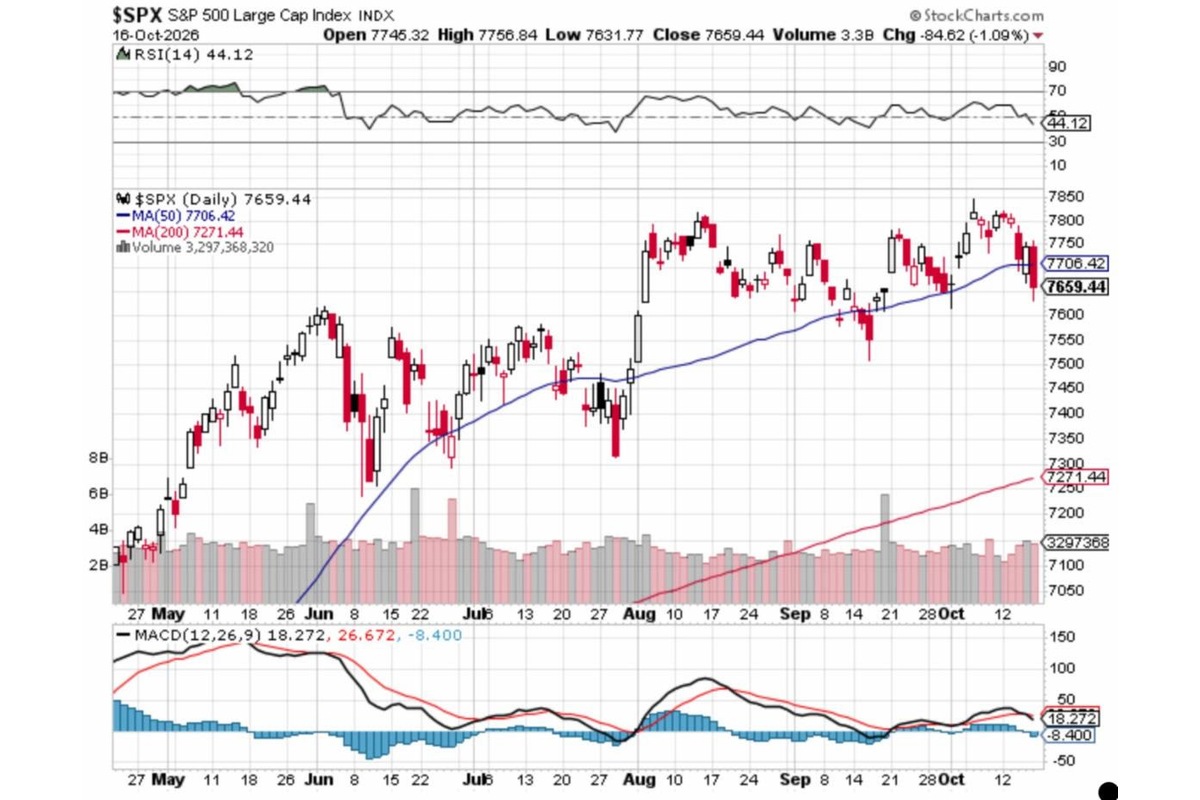
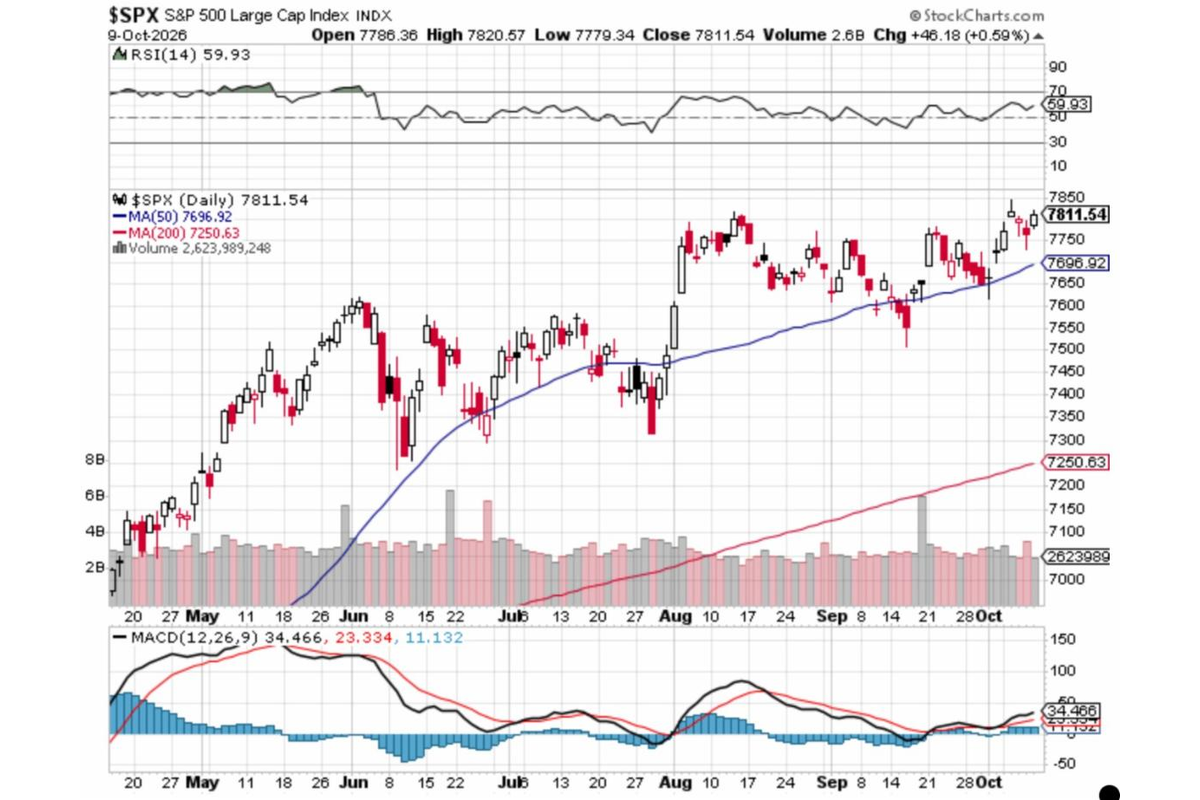
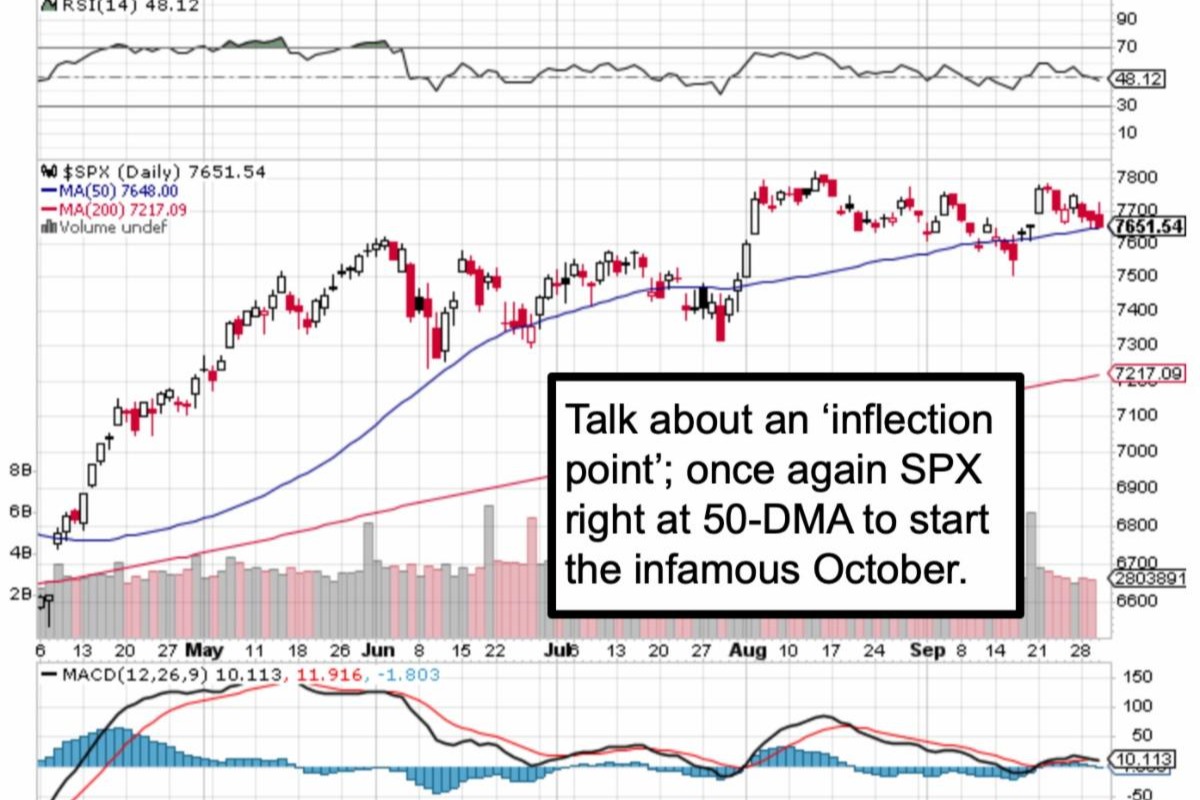
The new week should start defensively and attempt a rebound. Barring a surprise trade breakthrough, it should fail and the S&P work lower.
Comments
Log in or sign up to join the conversation.