

'On the cusp of great growth' is basically the term you'll hear, now that a solid tax bill has been detailed, and which presumably will pass muster with a vote next week. Unless too many 'more' Congressmen or Senators quickly resign before a flood of additional 'sexual harassment' allegations sweep across the media. (Nobody approves, but how far is this going to go and I suppose the answer is as far as it must.) Most objections have been compromised and everyone is seen to be on board (I'm referring to the tax bill; not a retroactive moral crusade that seemingly has no ).
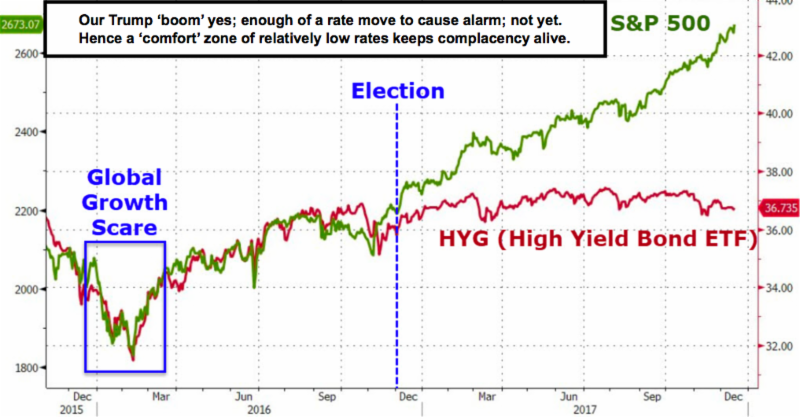
With FIFO 'not' in the final version (as already suspected) there's no doubt the majority of investors will be nursing their positions into a new tax year as we have also postulated as likely barring some surprise event (like this not passing for-instance, or were FIFO in the bill with final text released in the late afternoon Friday). However that doesn't mean an prolonged safe extension of the 'Trump-is-Goldilocks' era can be presumed for 2018.
|
So now everyone's enthusiastic, and our renewed optimism for the game to still be 'on'; occurred when it became evident some days back that the rotation may have reflected low liquidity in a sense (and use of leverage). It was primarily was a shifting out of the biggest gainers (mostly FANG or similar stocks) when they were fearful about FIFO. So we took the stance that 'if' there was no FIFO provision; markets would hold up temporarily.
The bottom line for this weekend report, is that most everyone seems to be celebrating, when in reality the move is rewarding for those agreeing with us over a year ago about what was forthcoming. That may mean that a good chunk of what can be achieved on the upside from 'this' trend phase is accomplished. If so, implementation and growth now are watchwords. That's also the watchword for the Federal Reserve, which resists hawkishly moving strongly but clearly this increasingly inhibits conventional analysis of equity prospects beyond the second quarter of 2018 and perhaps a bit earlier.
In sum, we can envision a blow-off daily and consolidation (by the rumor and now perhaps sell the news; but they'll bring it back up afterwards I'm suspecting). And we still believe (with no FIFO) that it's good enough to be able to shepherd stocks into the new tax year; which commences with Dec. 28 and 29 being the first days trades would settle in 2018. Those sessions may slightly tip off whether an early 2018 shakeout is very likely; and then we'll go beyond. You know we suspect (barring calamity) a further upward effort later, related to flows of seasonal investment funds.
My main point is that the tax bill generally was anticipated as the hallmark of the Trump administration; and there wasn't much maneuvering room as such a high proportion of government spending is 'locked' into entitlement or similar costs, and with heavy military spending there's little flexibility. In a sense this hobbled a 'better' bill coming out of this Congress. Now we depend on dramatic growth (and not just share buybacks) to get a nation further kicking in gear as presumably a high-growth period indeed not only looms, but in some areas is pretty clear (AR, AI, autonomous and semi-autonomous controls and sensors; incredibly efficient airliners, and in a perfect world, a grand infrastructure plan that invites the private sector in too since there's no way governments can afford what we really need).
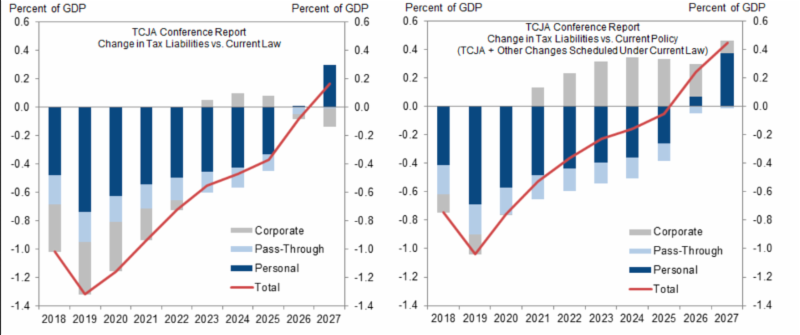
The tax plan provides for a 'gradual' phase-out of full expensing and we have argued all along that this is about corporate America (and should be) with most of the individual massaging providing cover for doing all that. Corporate taxes are not that huge a contributor to Federal tax coffers. And lots of companies (Apple, of course, comes to mind) have utilized the bond market to bring cash into corporate expansion needs in an indirect way. It may be that overt capital repatriation will hobble the need to fund that way.
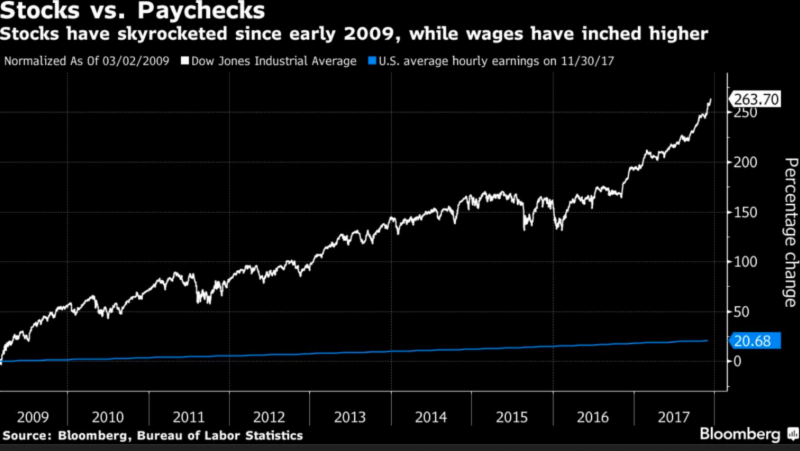
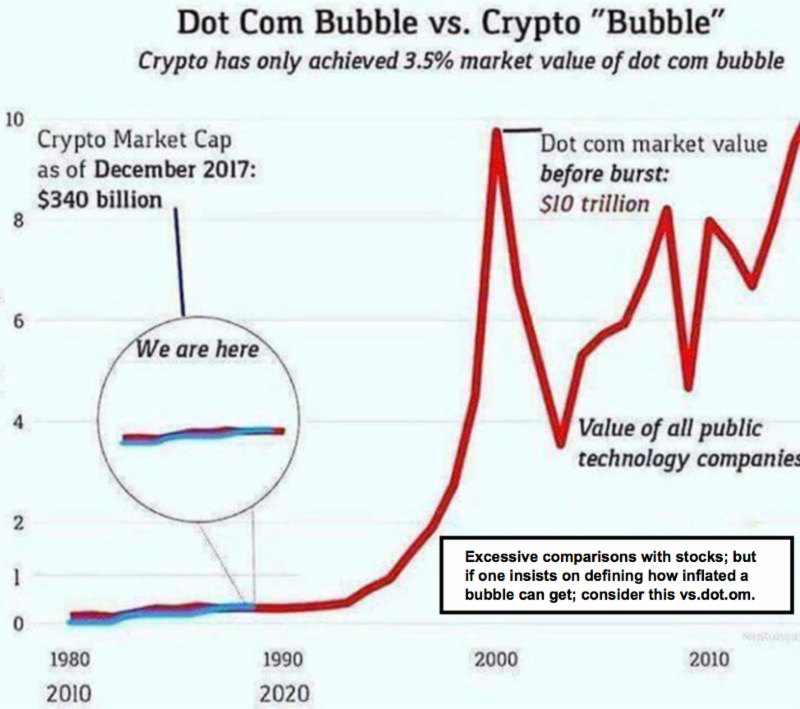
The total market cap of financials are well above relative prior peaks, and in a sense may be telling as far as how euphoria occurs 'after' the move. If adjusted for risk there's not that much potential, does that apply elsewhere too? Sure; interest rates have been stuck, rates may move modestly up for now and that's a problem for financials that won't see huge loan demand, or much higher income from those loans. So the taxes and environment of course are good for the banks, but the impact on shares may be benign. That's just an example. So in essence we are not sanguine like so many; at the same time we were enthusiasts about Trump's victory. It's just that the move has been made; those in the market might be sort of like Bitcoin holders over the past year. I think this makes my point: they may hold onto their positions, but why in the heck would they put fresh capital in after the move that was so rewarding; and why would they chase joining those who just figured out things are looking better. (Human nature is fascinating.) |
Comments
Log in or sign up to join the conversation.