


'A bridge too far' - is the general view skeptics retain about the S&P run, while we believed it would likely sustain the move off 'The Inger Bottom' to Easter ideally; with some push higher. Thereafter, unless we get a miracle drug announcement, those that chase the rally short-term may well have a bit of 'egg' on their face; as they try decorating portfolios after the run-up.
And you have the huge Fed measures (they're not really denying failures; at the same time it's as close as possible). Finally you got a late reprieve (initially selling then a late squaring) as the market wasn't very pleased to hear that OPEC+ confirms (late night in the East) a 10 mm/bbl/day cut for 6 months, but then it drops to only 8 mm/bbl/day and then 6 million later.
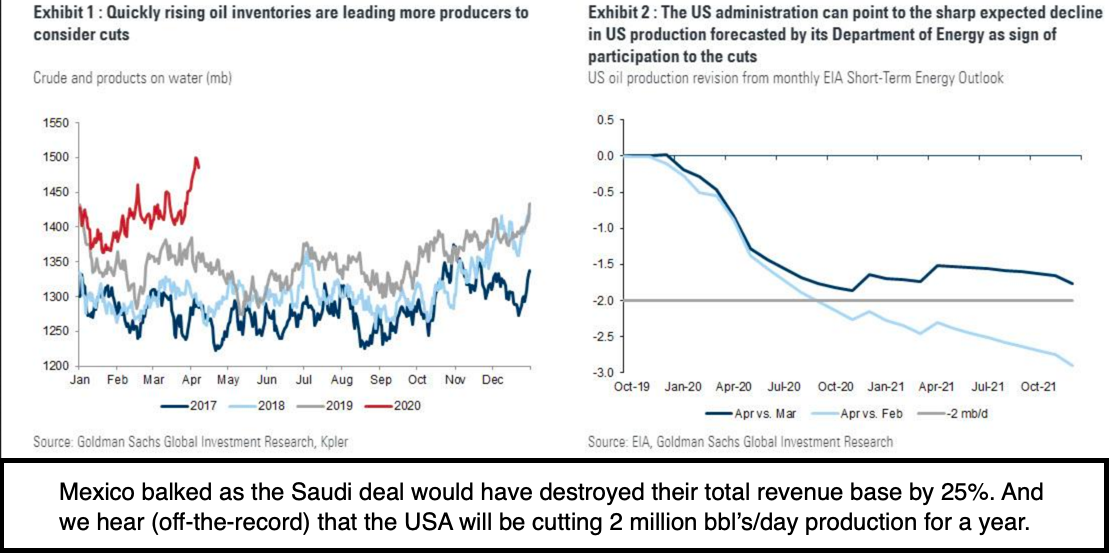
It was not at all as significant as desired, and certainly not a proportional or percentage-equivalence deal with the United States or EU producers. It may also be a broken-deal; since Mexico walked-out (virtually of course, as it's negotiated online I presume), with actual outcome still unknown.
We do have a Texas Railway Commission meeting Tuesday (the 14th); so we shall see if we get something like mandated 20% reduction covering the Permian Basin and all Texas. Louisiana, Oklahoma and Kansas may go along with any such ruling; and if so it's likely been discussed by now.
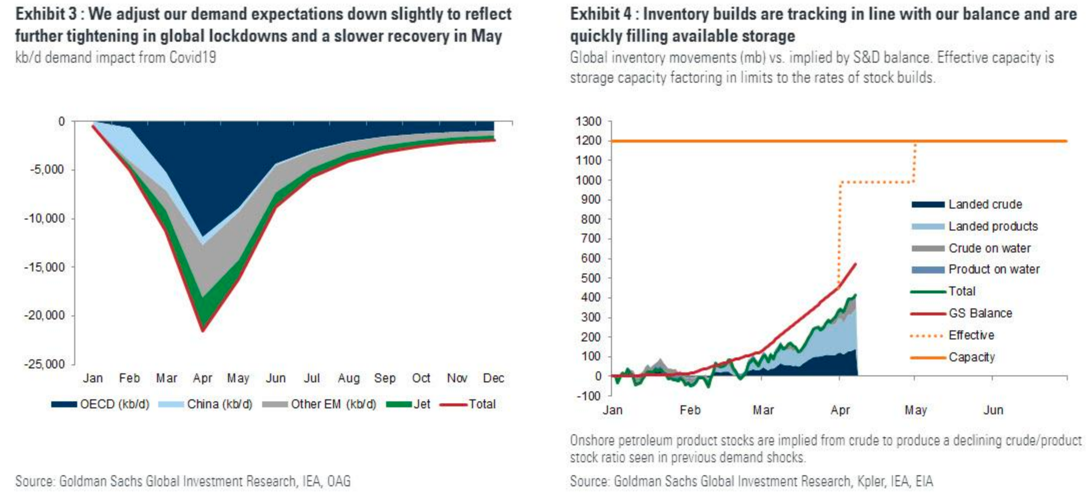
We're not going to emphasize these in great detail, but will denote what I'd called upon during the entirety of this 3-month long (slightly obsessively at times, but that's been helpful I've heard) warning of what was looming, as well as nailing the bottom of the market, as a 'process' beginning literally at the lows among 'peak-fear' at the time.
The consequences of this entire pandemic crisis are horrific for victims as well as families and friends, while also being an opportunity for Americans to sell ahead of the carnage (late January / early February as outlined, to be patriotic believing that the projected 'crash' would not endure for long, to then invest in the midst of despair (there literally was and is essentially the blood in the streets moniker for investing); and to have faith that we'd move as a nation to stabilize the financial backdrop while aggressively go beyond 'mitigation' strategies toward medical resolution of the challenge.
There are some debates that continue to emphasize disproportionate and targeted bailouts of some financial institutions (or companies) versus tiny help (relatively) to 'small business', and sure, we sense that 'dynamic' to a degree. And some of it will be sorted-out (hopefully, because politicians in a sense will object to a focus that helps speculators more than just getting stability, while focusing primarily on companies that offer jobs, not money managers who are worried about liquidation waves or chasing rallies).

Speaking of that . . there has been such a tremendous welcomed move (in the circumstances) by the Fed, that you might start hearing protests more about 'where' the funds are being channeled, perhaps in a week or so. It's one reason we don't see chasing the move being warranted, but it's also a very risky proposition (as mentioned regularly) to fight recovery, or to stay in a negative mindset, even amidst the near-term continuing toll.
In-sum: the consequences of this horrific attack on humanity, certainly are not underestimated,; as we've forewarned for months. Also the results of a modern-day research version of a 'medical Manhattan Project'; also must not be underestimated, while virologists work hard to find approaches (and there are several already) that will both address Covid-19 therapeutically in the short-run, and relegate to a tragic memory in the longer-run (due to vaccines, of which several variations are in or about to enter 'Trials').
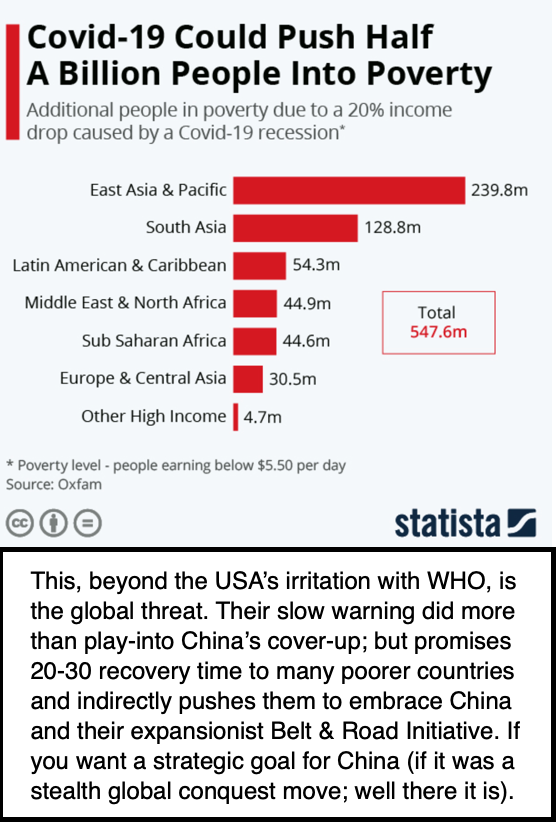
We have not focused on the minutiae of the 'financial rescue packages' as that is something the financial press has not only delineated, but sets-up a long term Debt picture, which has eventual implications we've mentioned, but is almost pointless to dig into, because that depends on growth in the 'out years' ahead, rather than the efforts to stabilize everything for now.
Again, the monetary and fiscal stimulus efforts are tremendous, but alone do not resolve the underlying causal issue, the coronavirus itself, hence a necessary focus on medical progress (or lack), and hotspots (or salvation by good controls, like we've seen in Seattle where the 'field hospital' now has been dismantled without treating a single patient.
That is barely noted by media, and should be, because it not only reflects effective epidemiology work (and recovery of patients like the sick ER doc who got the HIV drug rather than hydroxy--), all of which points towards a possibly 'earlier-than-consensus-thinks' reopening of our economy.
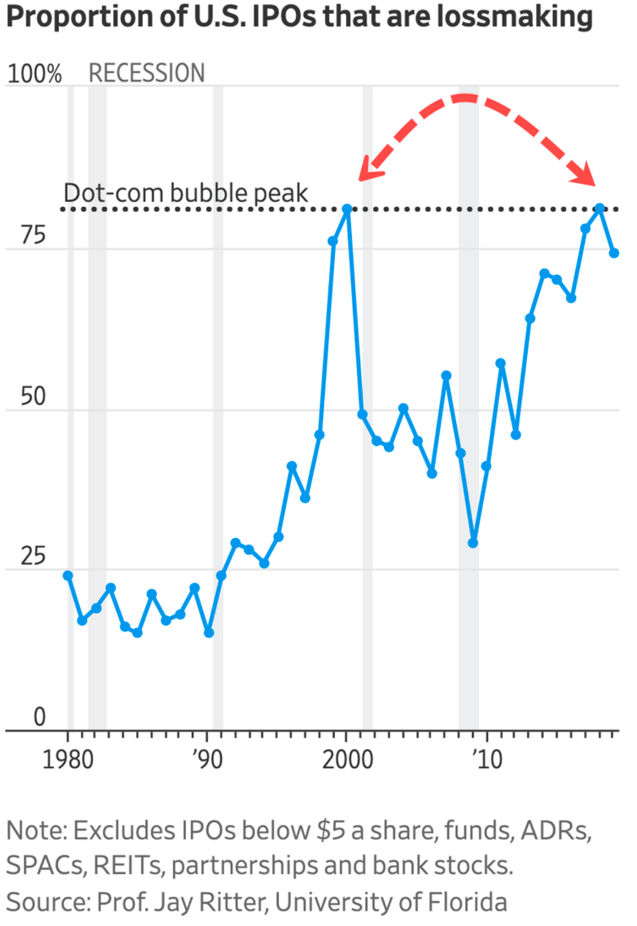
Bottom-line: as Fed Chairman Powell outlined: the great fiscal power of the Fed is primarily to protect the American people. And they have gone to lengths no central bank has gone in the past. This is not merely as some say 'going Japanese', because our pent-up spirit (not just demand) has a surplus of capacity and the moxy to aggressively work to resolution.
The Fed's bold moves basically 'buy time' for most (not all) Americans, of course under duress and shared-suffering, to get through this until medical resolutions progress sufficiently (for what otherwise is a heavy-hand with regard to Government interventions); then the stimulus should be eased.
The future of how they implement and execute all that isn't entirely clear, I am not even sure Chairman Powell knows the specifics or wherewithal to do it all. But it supports morale, helps 'many' get through this, lets markets digest all this without truly entering an economic Depression, 'even if' the couple Quarters will show jobless, growth and business numbers overall in of course collapsing modes.
We probably take-out some excess consumer outlets; but we shouldn't be betting against the consumers themselves, as all of this likely enhances a move toward greater technological advances, and puts lots of companies in a situation where semi-permanent capital assistance is touch-and-go as not all companies are going to pull-through. So yes it will be mixed, things will be different to varying extents, even if American try going back to how it was before.
Comments
Log in or sign up to join the conversation.