

Understanding the Differences Between Manual and Electronic Edge Finding Systems
Introduction
Precision is one of the most important aspects of modern machining. Whether working on CNC milling machines, manual mills, or precision engineering projects, accurate workpiece alignment directly impacts machining quality and productivity. Even the smallest positioning error can lead to dimensional inaccuracies, wasted material, tool damage, and increased production costs.
To solve this challenge, machinists use an edge finder to accurately locate the edges of a workpiece before machining begins. Edge finders help establish reference points, improve setup accuracy, and ensure precise tool positioning during machining operations.
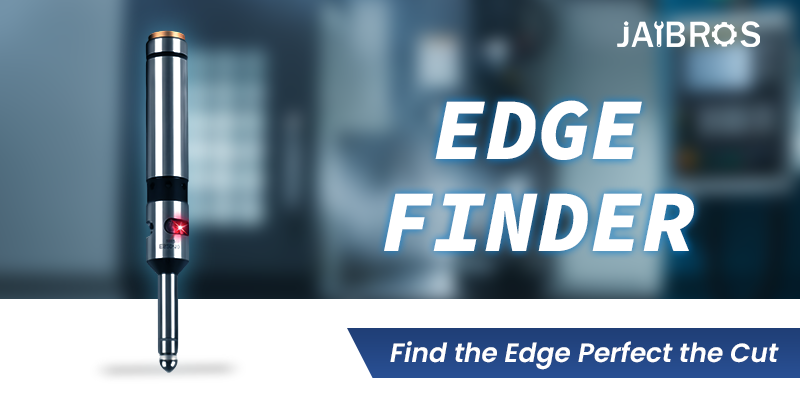
Over the years, edge-finding technology has evolved from traditional manual devices to advanced electronic systems. Today, manufacturers and machinists often compare manual and electronic edge finders to determine which option is better for their specific machining needs.
This guide explains the differences between manual and electronic edge finders, their advantages, limitations, applications, and how to choose the best option for your workshop.
What Is an Edge Finder?
An edge finder is a precision measuring tool used to determine the exact position of a workpiece edge on milling machines and CNC equipment. Once the edge is located, machinists can establish accurate coordinates for drilling, milling, boring, and other machining operations.
An edge finder helps improve:
Setup accuracy
Machining precision
Repeatability
Production efficiency
Tool alignment
These tools are widely used in tool rooms, machine shops, manufacturing industries, and CNC machining centers.
Why Accurate Edge Finding Matters
Accurate workpiece positioning is critical in machining operations.
Improper alignment can result in:
Dimensional errors
Poor surface finishes
Increased scrap rates
Reduced productivity
Tool breakage
Using a reliable edge finder helps machinists reduce setup errors and maintain consistent machining quality.
Types of Edge Finders
Edge finders are generally divided into two major categories:
Manual edge finders
Electronic edge finders
Each type offers unique advantages depending on the machining application.
What Is a Manual Edge Finder?
A manual edge finder is a mechanical device that rotates in the machine spindle and physically contacts the workpiece edge to determine positioning.
These tools are commonly known as:
Mechanical edge finders
Dial edge finders
Spring-loaded edge finders
A mechanical edge finder typically consists of two cylinders connected by a spring mechanism. As the spindle rotates and the tool touches the workpiece edge, the lower section suddenly shifts, indicating the exact edge location.
How Manual Edge Finders Work
Manual edge finders operate through physical contact.
The process usually involves:
Mounting the tool in the spindle
Rotating the spindle at low speed
Slowly moving the tool toward the workpiece
Observing the movement of the contact tip
Identifying the precise edge position
A dial edge finder may include an indicator dial for improved visual accuracy and easier positioning.
Advantages of Manual Edge Finders
Cost-Effective Solution
Manual edge finders are generally affordable, making them suitable for small workshops and beginner machinists.
Durable Construction
Mechanical edge finders contain fewer electronic components, making them highly durable and reliable in harsh machining environments.
Easy Maintenance
Since these tools have simple mechanical designs, maintenance requirements are minimal.
Suitable for Manual Milling Machines
Traditional machine shops frequently use manual edge finders for conventional milling operations.
No Battery Requirement
Unlike electronic systems, manual tools do not require batteries or power sources.
Limitations of Manual Edge Finders
Despite their advantages, manual systems also have limitations.
Requires Operator Skill
Accuracy depends heavily on the machinist’s experience and observation skills.
Slower Setup Time
Manual edge finding can take longer compared to electronic systems.
Limited Precision
Although highly accurate, manual edge finders may not achieve the same repeatability as advanced electronic systems.
Difficult in Poor Lighting Conditions
Visual detection can become challenging in low-light workshop environments.
What Is an Electronic Edge Finder?
An electronic edge finder uses electrical conductivity to detect contact between the tool and the workpiece.
Instead of relying on visual movement, the device signals edge contact through:
LED lights
Audible sounds
Digital indicators
Electronic systems are commonly used in modern CNC machining environments where precision and speed are critical.
How Electronic Edge Finders Work
Electronic edge finders operate using conductive circuits.
When the tool touches the workpiece:
The electrical circuit closes
The device activates a signal
The machinist identifies the exact edge position
This process improves positioning speed and reduces human error.
Advantages of Electronic Edge Finders
Higher Accuracy
Electronic systems often provide superior repeatability and precision.
Faster Setup
Operators can identify workpiece edges more quickly, reducing machine downtime.
Reduced Operator Error
Electronic signals eliminate much of the guesswork associated with manual systems.
Better for CNC Applications
Modern CNC environments demand fast and highly accurate setups.
An edge finder with electronic sensing capabilities supports these requirements effectively.
Improved Productivity
Faster setup times contribute to higher machining efficiency and increased production output.
Limitations of Electronic Edge Finders
Higher Cost
Electronic systems are generally more expensive than manual alternatives.
Battery Dependence
Some models require batteries or electrical power sources.
Sensitive Components
Electronic devices may be more vulnerable to coolant exposure, contamination, or accidental damage.
Requires Proper Conductivity
Electronic edge finders may not function properly with non-conductive materials.
Manual vs Electronic Edge Finder: Key Differences
Accuracy
Electronic systems usually offer greater precision and repeatability.
Ease of Use
Electronic models are easier for beginners because they provide instant feedback.
Cost
Manual edge finders are more affordable and economical for smaller workshops.
Durability
Mechanical systems often handle harsh industrial environments better.
Setup Speed
Electronic edge finders significantly reduce setup time.
Best Application
Manual systems work well for traditional machining
Electronic systems are ideal for CNC operations
Which Edge Finder Is Better for CNC Machining?
Modern CNC machining focuses heavily on:
Accuracy
Repeatability
Productivity
Automation
As a result, many machinists prefer electronic systems for CNC setups.
An electronic edge finder allows operators to establish accurate reference points quickly and consistently, making it ideal for high-production machining environments.
However, experienced machinists may still prefer manual systems for specific applications due to their simplicity and reliability.
Choosing the Right Edge Finder
Several factors should influence your purchasing decision.
Machine Type
Determine whether the tool will be used on:
CNC milling machines
Manual milling machines
Tool room equipment
Accuracy Requirements
High-precision work often benefits from electronic systems.
Workshop Environment
Harsh industrial conditions may favor durable mechanical systems.
Budget
Consider the overall edge finder price along with long-term productivity benefits.
Operator Experience
Beginners may find electronic systems easier to use.
The Role of Edge Finders in Modern CNC Tools
Edge finders work alongside various advanced cnc tool systems used in precision machining.
Common CNC tooling setups may include:
End mills
Drills
Chamfer tools
Thread mills
Boring tools
Edge finders
Together, these tools help manufacturers achieve accurate and repeatable machining results.
Best Practices for Using an Edge Finder
To achieve maximum accuracy:
Keep the tool clean
Use proper spindle speeds
Minimize machine vibration
Ensure correct spindle alignment
Regularly inspect for wear or damage
Follow manufacturer recommendations
Proper usage improves both precision and tool life.
Conclusion
Choosing between a manual and electronic edge finder depends largely on machining requirements, production goals, budget, and operator preferences. Manual edge finders remain reliable, affordable, and durable solutions for traditional machining operations, while electronic edge finders offer greater speed, precision, and efficiency for modern CNC applications.
For businesses seeking high-quality machining solutions and precision tooling products, Jaibros offers a wide range of industrial cutting tools and CNC accessories designed for modern manufacturing needs. With a strong focus on quality, performance, and machining efficiency, Jaibros supports industries with dependable tooling solutions for precision engineering applications.
FAQs
1. What is the main purpose of an edge finder?
An edge finder is used to accurately locate the edges of a workpiece before machining operations begin.
2. What is the difference between manual and electronic edge finders?
Manual edge finders rely on physical movement and operator observation, while electronic edge finders use electrical signals to detect edge contact.
3. Which edge finder is more accurate?
Electronic edge finders generally provide greater accuracy and repeatability compared to manual systems.
4. Are manual edge finders still used in machine shops?
Yes, many machinists continue using manual edge finders because of their durability, simplicity, and affordability.
5. How do I choose the right edge finder?
You should consider machine type, accuracy requirements, operator experience, workshop conditions, and overall edge finder price before selecting a tool.
Comments
Log in or sign up to join the conversation.