
The demolition industry has long carried a reputation for being inherently wasteful—a necessary evil that sends countless tons of debris to already overflowing landfills. However, in a city like Toronto, where sustainability has become a guiding principle for development, this old paradigm is no longer acceptable. Mammoth demolition company Toronto has emerged as a trailblazer in changing this narrative, proving that a teardown can be as much about renewal as it is about removal. By embedding eco-friendly strategies into the very core of their operations, they have demonstrated that it is possible to clear a site for new development while simultaneously honoring the city's environmental goals and reducing the carbon footprint of construction.
The Philosophy of Deconstruction Over Demolition
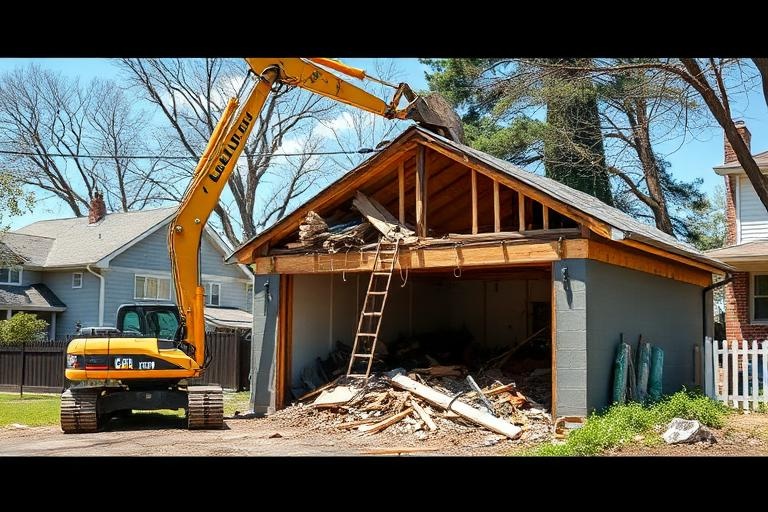
The most significant shift in Mammoth's approach to green demolition lies in their philosophy of prioritizing deconstruction over brute-force demolition. Rather than viewing a building as a pile of rubble waiting to happen, they see it as a repository of valuable materials. This mindset transforms the project from a destructive act into a methodical process of disassembly. Walls are taken down carefully to preserve the dimensional lumber within. Fixtures, cabinetry, and architectural details are removed by hand for potential reuse. This philosophy requires more time and labor, but for Mammoth, it is a worthwhile investment. It honors the embodied energy of the original construction—the energy that was used to harvest, manufacture, and transport those materials in the first place—by giving them a second life instead of consigning them to a landfill.
High-Volume Recycling and Material Diversion
Once the philosophy of deconstruction is in place, the practical work of recycling begins, and this is where Mammoth Demolition truly shines. Their eco-friendly strategies are built around achieving industry-leading diversion rates, routinely recycling the vast majority of the debris generated on a job site. Concrete and masonry, which make up the bulk of any demolition, are crushed on-site or hauled to processing facilities where they are transformed into granular aggregate for use as road base or backfill. Ferrous and non-ferrous metals are separated and sold to scrap yards, where they are melted down and remanufactured. Even asphalt roofing materials are often collected and recycled into new pavement. This meticulous sorting process ensures that what leaves a Mammoth site is not "waste" in the traditional sense, but a stream of raw materials destined for productive reuse.
The Art and Business of Material Reclamation
Beyond the standard recycling of concrete and metal lies the more nuanced world of material reclamation. Mammoth Demolition has cultivated relationships with architectural salvage companies, vintage building supply stores, and even local artists who seek out unique materials. During the pre-demolition phase, their team conducts a thorough walkthrough to identify items of particular value. This might include century-old hand-hewn timber beams that can be repurposed for custom furniture, ornate tin ceiling tiles, solid wood doors with period hardware, or even vintage brick with a unique patina that cannot be replicated by modern manufacturing. By carefully removing and setting aside these items, Mammoth ensures that pieces of Toronto's architectural history are preserved and can find new homes, adding character to renovation projects while reducing manufacturing demand for new materials.
Innovative Dust and Emissions Control Measures
Eco-friendly demolition is not solely about what happens to the materials after they leave the site; it is also about protecting the local environment during the active phase of the project. Mammoth Demolition employs a suite of innovative technologies designed to minimize the immediate ecological impact of their work. Advanced misting systems, often referred to as "dust bosses," create a fine spray that captures airborne particulates before they can drift off-site and settle on neighboring homes or cars. Furthermore, the company is increasingly incorporating electric and hybrid equipment into their fleet for specific tasks, reducing diesel emissions and lowering the carbon footprint of the operation. Noise pollution, too, is treated as an environmental concern, with sound barriers and acoustic blankets used to dampen the impact on the surrounding neighborhood.
Responsible Hazardous Material Management
A truly eco-friendly teardown cannot ignore the toxic legacy that lurks within many older Toronto buildings. Materials like asbestos, lead-based paint, and PCBs were commonly used in construction for much of the 20th century, and if not handled properly, they pose a significant threat to both human health and the environment. Mammoth's green strategies include a rigorous protocol for the identification, containment, and disposal of these hazardous substances. By working with licensed abatement specialists, they ensure that these materials are carefully removed and sealed before any structural demolition begins. This prevents them from being mixed with clean debris, which would contaminate entire loads of recyclable material and turn them into hazardous waste. In this way, responsible hazardous material management is not just a legal requirement but a cornerstone of effective environmental stewardship.
Minimizing the Project's Overall Carbon Footprint
Mammoth Demolition takes a holistic view of their environmental impact, looking beyond the job site to consider the entire lifecycle of a project. This includes a focus on logistics and transportation, which can be a major source of greenhouse gas emissions. By carefully planning trucking routes to avoid congestion and minimize travel distances to recycling facilities and landfills, they reduce fuel consumption. They also prioritize working with local recycling partners whenever possible, further cutting down on hauling distances. Additionally, by maximizing on-site crushing of concrete, they can often eliminate the need for trucks to bring in virgin gravel for backfill, creating a closed-loop system that reduces both the export of material and the import of new resources. Every decision, from the equipment they choose to the routes their trucks drive, is made with an eye toward shrinking the overall carbon footprint of the teardown.
Setting a New Standard for Green Development
As Toronto continues to grow and densify, the demand for sustainable practices in every phase of construction will only increase. Mammoth Demolition is not just responding to this demand; they are helping to define what it looks like. By proving that eco-friendly teardown strategies are both feasible and economically viable, they are setting a new standard for the industry. Developers and architects who prioritize green building can now partner with a demolition contractor who shares their values from the very first step of the process. The result is a more holistic approach to urban development, one where the end of a building's life is not seen as a wasteful conclusion, but as the beginning of a new, more sustainable chapter for the city. Mammoth Demolition is leading the way, showing that in Toronto, even a teardown can be a green endeavor.
Comments
Log in or sign up to join the conversation.