

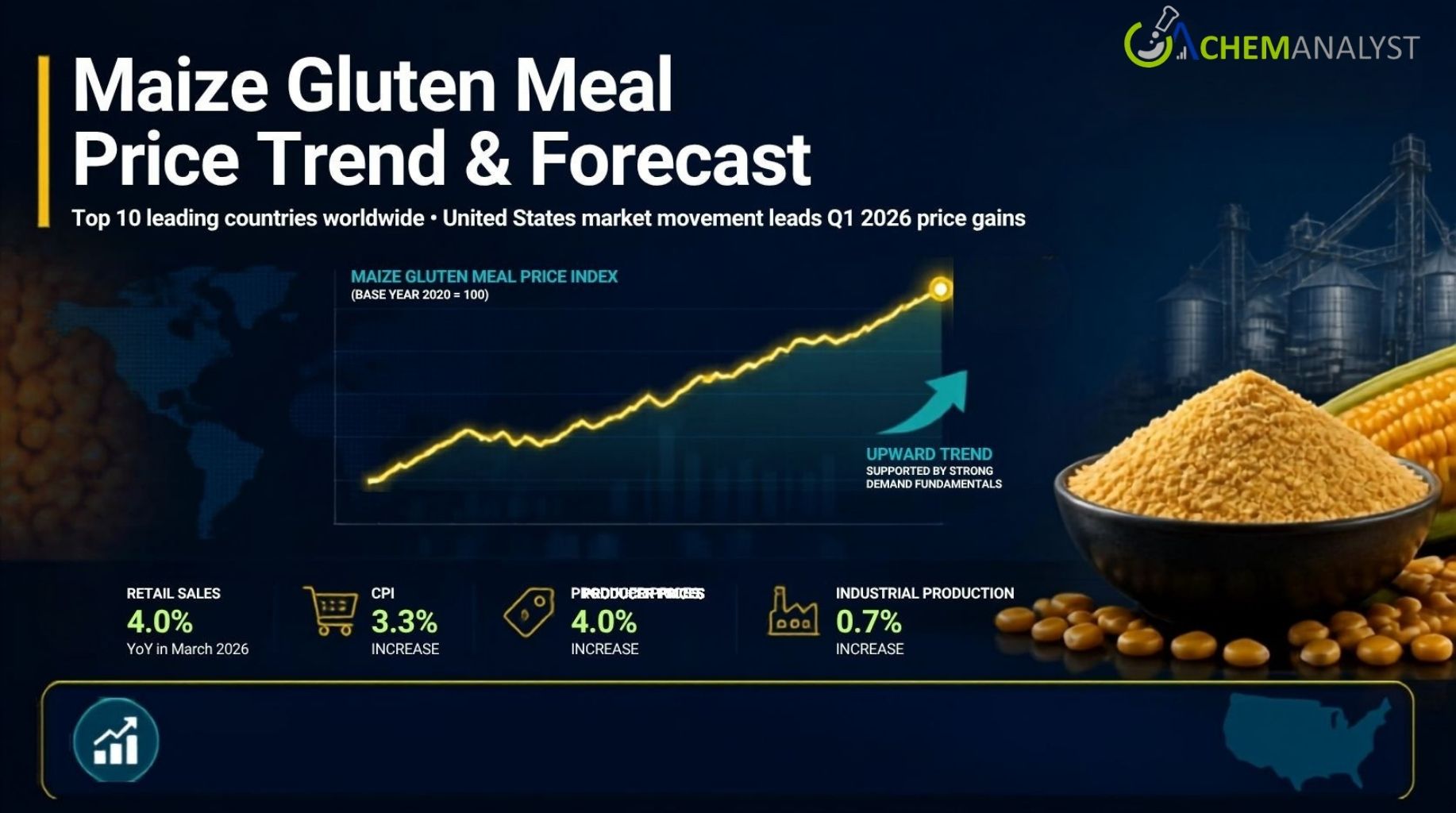
The Maize Gluten Meal Price witnessed an upward trajectory across major global markets during the first quarter of 2026. Rising feed demand, increasing production costs, inflationary pressures, and higher energy expenses collectively shaped pricing dynamics in North America, Asia-Pacific, and Europe.
According to ChemAnalyst Maize Gluten Meal Price: - https://www.chemanalyst.com/Pricing-data/maize-gluten-meal-2320
Maize gluten meal (MGM), a high-protein by-product of corn wet milling, remains an essential ingredient in poultry, aquaculture, pet food, and livestock feed industries. As global demand for protein-rich animal feed continues to expand, manufacturers and procurement professionals closely monitor Maize Gluten Meal Price Trends, production costs, and supply chain developments.
Global Maize Gluten Meal Price Overview
During Q1 2026, the global Maize Gluten Meal Price increased across all major producing and consuming regions. Although every market experienced price growth, the underlying factors differed by geography.
The principal drivers included:
Strong poultry and livestock feed demand
Rising corn procurement costs
Higher processing and manufacturing expenses
Increasing transportation costs
Inflation-driven production cost increases
Rising energy prices in Europe
Higher Producer Price Index (PPI) in Asia
These combined factors tightened market conditions and pushed the Maize Gluten Meal Price Index higher globally.
North America Maize Gluten Meal Price Trends
United States Market Overview
The United States Maize Gluten Meal Price Index registered a quarter-over-quarter increase during Q1 2026. The primary catalyst behind this upward movement was strong demand from the poultry feed industry.
The U.S. remains one of the world's largest producers of maize gluten meal due to its extensive corn processing industry. As poultry production continued expanding, feed manufacturers increased procurement volumes, resulting in stronger market fundamentals.
Key Market Drivers
Several economic indicators supported the positive pricing environment:
Retail sales increased 4.0% year-over-year in March 2026
Consumer Price Index (CPI) reached 3.3%
Stable livestock production
Healthy poultry consumption
Consistent feed manufacturing activity
Higher consumer spending translated into sustained meat demand, encouraging poultry producers to expand operations. This directly increased maize gluten meal consumption.
Supply Chain Conditions
Supply chains remained relatively stable during Q1, although transportation and logistics expenses stayed elevated compared to historical averages. Corn availability remained adequate, preventing excessive supply shortages while still allowing gradual price appreciation.
Asia-Pacific Maize Gluten Meal Price Trends
China Market Analysis
China experienced a quarter-over-quarter increase in the Maize Gluten Meal Price Index during the first quarter of 2026.
Unlike North America, China's pricing gains were largely cost-driven rather than demand-driven.
Rising Production Costs
The country's Producer Price Index (PPI) increased by 0.5% in March 2026, raising manufacturing expenses throughout the agricultural processing sector.
Several production inputs became more expensive:
Corn feedstock
Industrial chemicals
Electricity
Steam generation
Packaging materials
Industrial labor
These higher production costs pushed manufacturers to increase selling prices.
Feedstock Inflation
Corn remains the largest raw material cost in maize gluten meal manufacturing.
As domestic corn prices strengthened during Q1, processors faced narrowing profit margins. Most manufacturers passed these higher costs through the supply chain.
Export Activity
China continues serving regional feed manufacturers across Asia. Stable export demand helped support domestic prices despite competitive market conditions.
Europe Maize Gluten Meal Price Trends
Germany Market Analysis
Germany recorded a quarter-over-quarter increase in the Maize Gluten Meal Price Index throughout Q1 2026.
The primary reason differed considerably from other regions.
Rising Energy Costs
European food processing industries continued experiencing elevated electricity and natural gas prices.
Since maize gluten meal production requires intensive milling, drying, and processing operations, energy remains one of the largest operating expenses.
Higher utility costs significantly increased production expenses.
Read the LinkedIn Article :- https://www.linkedin.com/pulse/maize-gluten-meal-price-2026-index-chart-procurement-kishan-singh-dgzsc/
Inflationary Environment
Germany's inflation reached 2.7% in March 2026, contributing to higher:
Manufacturing costs
Packaging expenses
Transportation costs
Labor expenses
Industrial services
As inflation persisted, producers adjusted selling prices upward.
Industrial Demand
Demand from European livestock and poultry sectors remained relatively healthy, allowing manufacturers to transfer increased production costs to buyers without significant demand destruction.
Major Factors Affecting Maize Gluten Meal Price
Several interconnected variables determine global Maize Gluten Meal Price movements.
Corn Prices
Corn represents the primary raw material for maize gluten meal production.
Changes in:
Crop yields
Weather conditions
Harvest quality
Export restrictions
Biofuel demand
can directly influence production costs.
Poultry Feed Demand
Approximately a significant share of maize gluten meal consumption comes from poultry nutrition.
Growing poultry production increases demand for:
High-protein feed ingredients
Corn processing by-products
Nutritional feed additives
As poultry farming expands worldwide, maize gluten meal prices generally strengthen.
Energy Costs
Processing facilities consume considerable energy during:
Wet milling
Drying
Separation
Packaging
Higher electricity or natural gas prices immediately increase manufacturing costs.
Inflation
Inflation affects nearly every stage of production.
Higher inflation raises:
Labor wages
Equipment maintenance
Packaging
Transportation
Financing costs
These increases eventually translate into higher product prices.
Transportation Costs
International maize gluten meal trade depends on efficient logistics.
Ocean freight rates, trucking expenses, fuel prices, and port congestion all influence final market prices.
Demand Outlook
The global Maize Gluten Meal Demand Outlook remains positive for the remainder of 2026.
Several long-term trends continue supporting consumption.
Growing Poultry Industry
Global poultry production continues expanding due to:
Affordable protein consumption
Urbanization
Population growth
Higher disposable income
This directly supports maize gluten meal demand.
Expanding Aquaculture
Aquaculture producers increasingly incorporate maize gluten meal into fish feed formulations because of its:
High protein content
Good digestibility
Cost effectiveness
This creates another source of stable demand.
Pet Food Industry
Premium pet food manufacturers continue incorporating high-quality plant proteins into formulations.
Growing pet ownership worldwide further strengthens demand.
Global Supply Outlook
Supply conditions remained relatively balanced throughout Q1 2026.
Major producing countries maintained stable manufacturing operations despite higher costs.
However, several risks remain:
Weather-related corn production uncertainty
Geopolitical trade disruptions
Energy price volatility
Transportation bottlenecks
Inflation persistence
Any combination of these factors could tighten supply later in 2026.
Market Outlook for Q2 and Beyond
Looking ahead, the Maize Gluten Meal Price is expected to remain firm.
Several indicators support continued price strength.
Positive Factors
Strong poultry feed demand
Stable livestock production
Healthy global protein consumption
Rising production costs
Inflationary pressures
Downside Risks
Potential price declines may occur if:
Corn harvests exceed expectations
Energy prices normalize
Freight costs decrease
Feed demand weakens
Overall, market participants anticipate relatively stable-to-firm pricing throughout the coming quarters.
Procurement Strategies for Buyers
Feed manufacturers and procurement professionals can reduce purchasing risks by adopting proactive sourcing strategies.
Recommended approaches include:
Monitoring regional corn prices
Tracking inflation and Producer Price Index (PPI)
Securing long-term supply contracts
Diversifying supplier portfolios
Maintaining strategic inventory levels
Monitoring freight market developments
These practices help reduce exposure to unexpected market volatility.
Conclusion
The Maize Gluten Meal Price demonstrated broad-based strength across North America, Asia-Pacific, and Europe during Q1 2026. Although regional drivers varied—from poultry feed demand in the United States to rising feedstock costs in China and elevated energy expenses in Germany—the overall trend pointed toward a tightening cost environment for producers.
Looking ahead, sustained demand from poultry, aquaculture, and pet food sectors is expected to support market stability, while inflation, energy prices, and raw material costs will continue to influence pricing decisions. Businesses involved in feed manufacturing, commodity trading, and agricultural procurement should closely monitor the Maize Gluten Meal Price Index, production cost trends, and macroeconomic indicators to make informed sourcing and inventory decisions. As global protein consumption continues to grow, maize gluten meal is likely to remain a strategically important feed ingredient with resilient demand and a generally firm pricing outlook throughout 2026.
Frequently Asked Questions (FAQs)
What is driving the Maize Gluten Meal Price increase in 2026?
The primary factors include stronger poultry feed demand, rising corn prices, higher production costs, increasing inflation, elevated energy prices, and transportation expenses.
Why did Maize Gluten Meal Price rise in the United States?
The U.S. market experienced stronger poultry feed demand supported by 4.0% year-over-year retail sales growth and a CPI of 3.3%, strengthening overall demand.
Why did prices increase in China?
China's prices rose mainly because feedstock costs increased, while the Producer Price Index grew by 0.5%, raising manufacturing expenses.
Why are German prices increasing?
Germany experienced higher maize gluten meal prices due to rising energy costs and inflation reaching 2.7%, increasing industrial production expenses.
Will Maize Gluten Meal Price continue rising?
Current market fundamentals suggest prices may remain firm during the coming quarters if production costs stay elevated and feed demand remains strong.
Contact -
Address:
420 Lexington Avenue, Suite 300
New York, NY 10170
United States
Phone: +1 332 258 6602
Website: www.chemanalyst.com
LinkedIn: https://www.linkedin.com/company/chemanalyst/
X (Twitter): https://x.com/chemanalysts
Facebook: https://www.facebook.com/ChemAnalysts/
Comments
Log in or sign up to join the conversation.