

The Magnificent 7 staged a broad recovery this week, with six of seven names posting gains as the market absorbed tariff noise and refocused on AI infrastructure spending. Tesla (TSLA) led the group after sitting out most of the year's rally. Nvidia (NVDA) extended a winning streak that has become one of the more remarkable runs in a stock this size. The story of the week, though, is how different the seven narratives have become. TSLA and MSFT are fighting credibility battles. NVDA and AMZN are printing new momentum. META and GOOGL are tracking the index. AAPL is quietly waiting for its next act.
For investors watching the group as a basket, the divergence matters. Year-to-date, Nvidia is up 7% and Amazon is up 7.9% while Microsoft is still down roughly 16% and Tesla is down 13.6%. That 20-plus point spread within the same supposed peer group tells you this is not a sector story. It is six or seven individual company stories happening to occupy the same analyst shortlist.
The Scoreboard
Stock | YTD | Past Week | Key Catalyst |
|---|---|---|---|
NVDA | +7.0% | +8.1% | 10-day winning streak; $4.6T market cap |
AMZN | +7.9% | +7.0% | 7-day win streak; SpaceX stake worth $100B |
GOOGL | +6.4% | +1.2% | $334 close; SpaceX/xAI merger upside |
META | +0.5% | +2.1% | Muse Spark AI model; $115-135B CapEx plan |
AAPL | -4.8% | +1.5% | $262 range; iPhone 17 / Siri 2.0 in focus |
MSFT | -16.0% | +4.2% | Norway data center; 30,000 Vera Rubin chips |
TSLA | -13.6% | +4.8% | UBS (UBS) upgrade; AI5 tapeout; Cybercab production |
Tesla Finally Gets a Catalyst Week
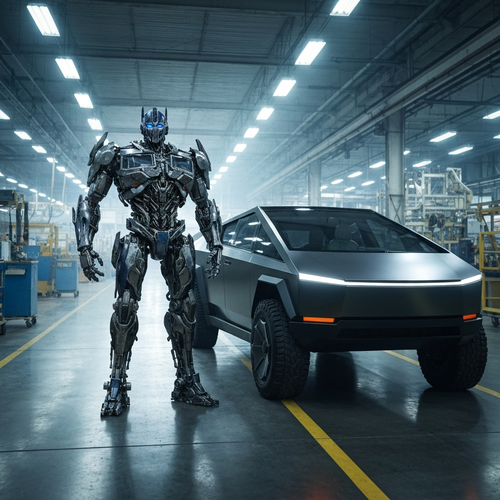
Tesla had its best single day in nine months on April 15, gaining 4.82% on a session that saw intraday moves as high as 8%. The immediate catalyst was a UBS upgrade from Sell to Neutral, which kept the $352 price target unchanged but acknowledged that the recent selloff had reduced the stock's downside risk. UBS still sees near-term demand challenges but called the risk/reward "more balanced" after Tesla had traded down to multi-month lows.
The upgrade alone would not have moved the stock that much. What helped was a concurrent announcement: CEO Elon Musk confirmed the AI5 self-driving chip has completed its tapeout, meaning it is ready for manufacturing. The AI5 is designed to power real-time inference in both Tesla vehicles and Optimus robots, and Musk suggested it could become one of the most widely produced AI chips in the world. Mass production of the Cybercab also began in April at Gigafactory Texas, with the steering-wheel-less robotaxi priced under $30,000. Optimus Gen 3 is in testing at Gigafactory Nevada for logistics tasks, with external sales targeted by late 2027.
The bear case is not hard to find. Tesla reports Q1 2026 earnings on April 22, and the delivery shortfall that quarter was significant. Automotive gross margins are compressed. Musk's time and attention remain split across multiple ventures. The stock is still down 13.6% year-to-date, and a Neutral rating from UBS is not exactly a ringing endorsement. But the AI5 tapeout and Cybercab production start give Tesla something it lacked entering this week: evidence that the physical AI pivot is actually happening on schedule.
Nvidia's 10-Day Streak and Microsoft's Recovery
Nvidia closed April 15 with its tenth consecutive day of gains, rising 3.8% on the session for a cumulative 19% move over the streak. The company's market capitalization is hovering around $4.6 trillion. No single catalyst drove the streak. It is a function of institutional money rotating back into AI infrastructure as tariff fears recede and earnings season approaches. Nvidia reports in May, and the consensus view is that the Q1 FY2027 print will be strong. The risk: if the bar is too high and cloud capital expenditure guidance from the hyperscalers disappoints, the recent run will face a test.
Microsoft gained between 3.6% and 5.1% on April 15 after news that the company has secured 30,000 Nvidia Vera Rubin chips through a data center capacity deal in Norway. Azure revenue grew 39% year-over-year in Q2 FY2026, crossing the $50 billion threshold for the first time. Microsoft is still down roughly 16% year-to-date, which reflects how hard the first quarter hit the stock. But the Norway deal and the Azure growth number give it a credible recovery story heading into earnings later this month.
Brief Takes: AMZN, GOOGL, META, AAPL
Amazon posted its seventh consecutive day of gains and is up 7.9% year-to-date, the second-best performer in the group behind Nvidia. The quiet driver this week was a report that Alphabet's $900 million investment in SpaceX could be worth approximately $100 billion following a merger with xAI. Amazon holds its own SpaceX position. Both names got a lift from the headline, with Alphabet closing at $334.25 and now up 6.4% year-to-date.
Meta opened at $662.36 and gained 1.8% to 4.4% on the session. The company's new Muse Spark AI model, launched earlier this month, is designed to reduce content generation costs at scale. The concern is not the model itself but the $115 billion to $135 billion capital expenditure plan for 2026, which is putting pressure on free cash flow expectations. Meta is essentially flat year-to-date at plus 0.5%, which tells you the market is waiting for proof that the CapEx converts to revenue. Apple traded in the $260-265 range and is down 4.8% year-to-date. Siri 2.0 and the iPhone 17 cycle remain the thesis. Neither has moved the stock.
Bottom Line
The Mag 7 is recovering, but the recovery is uneven. Nvidia and Amazon are running. Tesla got a credibility boost from hardware milestones, though Q1 earnings on April 22 will determine whether that momentum holds. Microsoft is climbing out of a steep year-to-date hole with legitimate Azure growth backing it up. Meta, Alphabet, and Apple are coasting. The group is not moving together, which means the index-level thesis that "AI spending wins" is being replaced by a stock-picker's environment where execution quality, not sector membership, is the differentiator. Watch Tesla earnings April 22 and Google earnings April 23.
Comments
Log in or sign up to join the conversation.