
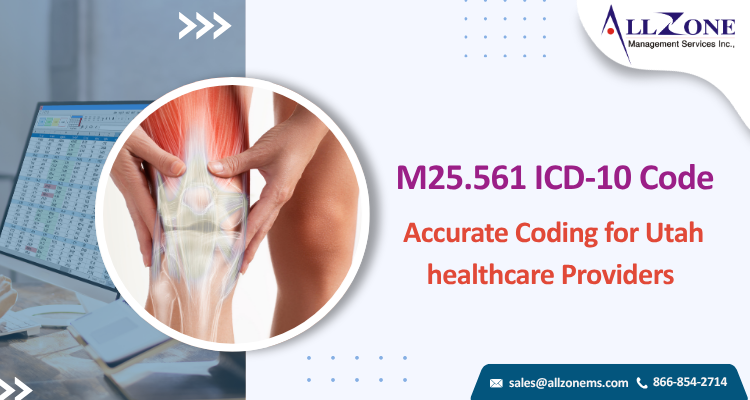
Accurate diagnosis coding is essential for healthcare providers seeking clean claims, appropriate reimbursement, and compliant billing. ICD-10-CM codes communicate a patient's documented condition to payers and provide an important connection between clinical documentation and the services reported on a claim. Even a small coding error can create unnecessary delays, claim rework, or reimbursement challenges.
For healthcare organizations in Utah, maintaining accurate ICD-10-CM coding can become increasingly demanding as documentation volumes grow and coding requirements continue to evolve. Professional coding support can help organizations review diagnoses carefully, select appropriate codes, and identify potential errors before claims are submitted.
Allzone Management Services provides Medical Billing Services in Utah supported by professional ICD-10 Coding Services, ICD-10-CM Code expertise, and specialized coding support. Our experienced professionals help healthcare organizations improve diagnosis coding accuracy, reduce avoidable coding-related claim issues, and strengthen their overall billing workflows.
Why ICD-10 Coding Accuracy Matters
ICD-10-CM coding is an important part of the healthcare reimbursement process. The diagnosis codes reported on a claim should accurately reflect the conditions documented in the patient's medical record.
Accurate coding helps support:
Clean claim submission
Medical necessity
Appropriate reimbursement
Consistent documentation
Reduced claim denials
Compliance-focused billing
When diagnosis codes are selected incorrectly, the resulting claim may not accurately communicate the patient's condition to the payer.
This makes professional ICD-10 Coding Services valuable for organizations that want stronger quality controls across their billing operations.
Understanding the M25.561 ICD-10 Code
The M25.561 ICD-10 code is used for pain in the right knee. The code belongs to the M25 category covering other joint disorders and is more specific than using a broad or unspecified joint-pain code.
Accurate use of M25.561 depends on the provider's documentation supporting right-knee pain.
Coders should carefully review the medical record to determine:
The documented diagnosis
The affected anatomical site
Laterality
Associated conditions
Clinical findings
Whether a more specific diagnosis is documented
Laterality is particularly important because ICD-10-CM frequently distinguishes between right, left, and unspecified anatomical locations.
Using an incorrect laterality code can lead to claim inconsistencies and may require correction before appropriate reimbursement is received.
Related Blog |
Knee pain coding often requires careful attention to laterality and documentation. Allzone's detailed resource provides additional information about ICD-10 codes used for bilateral knee pain and explains why accurate diagnosis selection matters for medical billing. |
ICD-10-CM Code Selection Requires Documentation
An ICD-10-CM Code should never be selected based solely on a symptom or assumption when the medical record provides a more specific diagnosis.
Professional coders review the available documentation and apply applicable coding guidelines to determine the most appropriate code.
For knee-related encounters, the documentation may include pain, injury, osteoarthritis, inflammation, or another underlying condition. The correct diagnosis code depends on what the provider actually documents.
This is why coders should avoid automatically assigning M25.561 simply because a patient reports knee discomfort. If the provider documents a more definitive diagnosis that is supported by the coding guidelines, the more appropriate code may be required.
I10 ICD-10 Coding Errors
Another important area for coding quality is I10 ICD-10 coding errors.
I10 is the ICD-10-CM code used for essential (primary) hypertension. Errors involving I10 may occur when documentation is misunderstood, when hypertension is incorrectly linked to another condition, or when coders fail to recognize documentation that supports a more specific coding situation.
Common coding quality concerns can include:
Incorrect diagnosis selection
Missing supporting documentation
Incorrect code sequencing
Inappropriate combination coding
Failure to follow applicable guidelines
Inconsistent diagnosis reporting
Regular coding audits can help healthcare organizations identify these patterns and provide targeted education to coding teams.
How ICD-10 Coding Services Improve Billing Workflows
Professional ICD-10 Coding Services can provide healthcare organizations with additional expertise for reviewing and assigning diagnosis codes.
A structured coding workflow may include medical record review, diagnosis identification, code assignment, quality checks, and documentation validation.
This can help providers:
Reduce coding-related denials
Improve claim accuracy
Minimize billing corrections
Support medical necessity
Improve coding consistency
Reduce administrative rework
Outsourcing coding responsibilities can also provide additional capacity when internal teams face increasing workloads.
The Importance of Laterality in ICD-10-CM
Laterality is one of the details that can significantly influence ICD-10-CM code selection.
For conditions affecting paired anatomical structures, coders may need to distinguish between right, left, bilateral, or unspecified sites.
The distinction between right and left knee pain is a straightforward example. M25.561 identifies right-knee pain, while documentation involving the opposite knee may require a different code.
Careful documentation review therefore plays an important role in avoiding incorrect code selection.
Coding Audits Can Identify Recurring Errors
Healthcare organizations can use coding audits to evaluate whether reported diagnosis codes are accurately supported by medical records.
An audit can examine:
Diagnosis-code accuracy
Laterality
Documentation support
Code specificity
Sequencing
Coding consistency
When recurring errors are identified, organizations can use audit findings to improve coder education and strengthen internal processes.
This proactive approach can reduce the likelihood of the same coding issue appearing repeatedly across claims.
Why Utah Providers Choose Allzone
Healthcare providers in Utah need dependable coding processes that support both operational efficiency and accurate reimbursement.
Allzone Management Services provides Medical Billing Services in Utah with specialized ICD-10 Coding Services and professional support for ICD-10-CM Code selection.
Our coding specialists review healthcare documentation and apply structured processes designed to improve coding accuracy and reduce avoidable billing issues. From diagnosis coding to quality review, our approach helps healthcare organizations strengthen the connection between clinical documentation and claims processing.
Building a More Accurate Coding Environment
Accurate ICD-10-CM coding begins with complete documentation and careful code selection. Whether reviewing an M25.561 ICD-10 code for right-knee pain or evaluating potential I10 coding errors, healthcare organizations need processes that emphasize specificity, documentation, and coding accuracy.
For Utah healthcare providers, professional ICD-10 Coding Services can help reduce administrative rework, improve claim quality, and support more efficient reimbursement workflows.
Allzone Management Services helps healthcare organizations strengthen their coding operations through comprehensive Medical Billing Services in Utah, experienced ICD-10 specialists, and structured coding solutions designed to support accuracy, compliance, and sustainable revenue cycle performance.
For more insights and detailed information on how optimized billing processes can improve healthcare revenue cycle performance, you can explore our Blogs here:
Industry blog:
https://www.allzonems.com/blogs/
Ulcerative Colitis and ICD-10: A Complete Guide for Clinicians and Coders
For more information about our specialized Medical Billing Services in Utah, visit Allzonems.com. You can also contact our team at +1 866-854-2714 or reach us at [email protected]. Address: 450 N. Brand Blvd., Suite 613, Glendale, CA 91203.
Comments
Log in or sign up to join the conversation.