
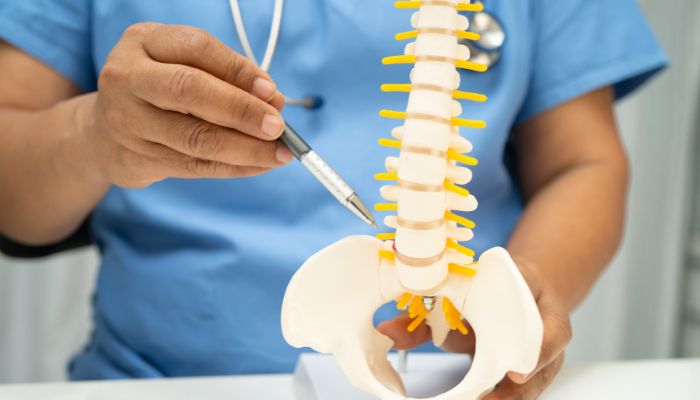
Many people use the terms sciatica and lumbar radiculopathy as though they mean the same thing. They often appear together in online searches, clinic conversations and even everyday discussions. While they're closely related, they aren't identical. Knowing the difference can help you understand your symptoms and avoid unnecessary worry.
A simple way to think about it is this: sciatica describes pain that travels along the sciatic nerve, usually from the lower back into the buttocks and down one leg. Lumbar radiculopathy is the medical diagnosis for irritation or compression of one or more nerve roots in the lower spine. In many cases, lumbar radiculopathy causes sciatica, but sciatica can also have other causes.
What's Actually Happening in the Spine
Radiculopathy means a nerve root is being pinched or inflamed where it exits the spinal column. In the lower back, this usually happens because of a bulging or herniated disc pressing against the nerve, though narrowing of the spinal canal (spinal stenosis) can cause the same thing in older patients. The leg pain people describe as sciatic pain is really the nerve signalling that it's under pressure somewhere up in the lumbar spine.
That distinction matters for treatment. Two people with identical symptoms, burning pain down the thigh, tingling in the foot, can end up needing different approaches depending on what's pinching the nerve.
Why the Difference Matters
General back pain treatment, the kind aimed at muscular strain or stiffness, focuses on movement, stretching, and sometimes manual therapy. It works well when the problem is muscular. But when a nerve root is genuinely compressed, that approach alone often falls short, because stretching a tight muscle doesn't reduce pressure on a nerve.
A proper lumbar radiculopathy treatment plan usually starts with anti-inflammatory medication and targeted physiotherapy exercises designed to shift the disc material away from the nerve, sometimes combined with an epidural steroid injection if pain is severe. Most cases improve within six to twelve weeks without surgery. Surgical options like a microdiscectomy are reserved for patients who don't respond, or who develop worsening weakness or loss of bladder control, which is a genuine emergency.
Choosing the Right Treatment
The best lumbar radiculopathy treatment depends on what's causing the nerve compression. Many people improve with conservative care that combines physiotherapy, guided exercises and pain management. Surgery is generally reserved for persistent symptoms or significant neurological deficits that don't respond to non-surgical care.
If you're experiencing sciatica, don't assume every shooting pain down the leg has the same cause. An accurate diagnosis helps shape the most effective sciatica and back pain treatment, giving you the best chance of relieving symptoms while reducing the risk of future flare-ups.
Comments
Log in or sign up to join the conversation.