

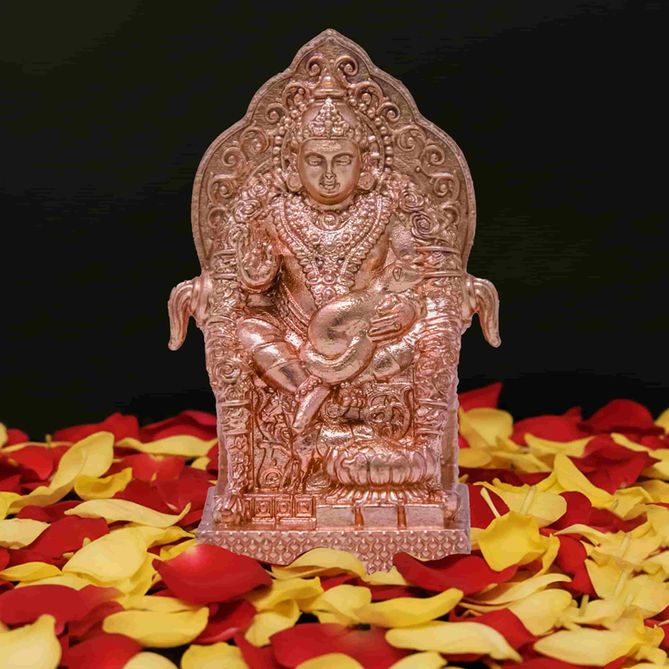
Kubera, the treasurer of the gods, whose handcrafted bronze and brass idols remain among the most requested pieces at Gold Plating Art Studio.
Worshipped for centuries as the keeper of the world's hidden wealth, Kubera occupies a curious place in Hindu mythology — neither a supreme deity like Vishnu or Shiva, nor a lesser spirit, but something in between: a former king turned divine custodian of abundance. His story is one of ambition, loss and quiet stewardship, and it continues to shape how devotees invite prosperity into their homes today.
Who Is Kubera?
Kubera, also called Kuvera or Vaishravana, is the son of the sage Vishrava and his wife Ilavida. He is best known as the god-king of the Yakshas, a class of semi-divine nature spirits, and as one of the Ashta Dikpalakas — the eight guardians who preside over the cardinal and intermediate directions. Kubera's domain is the north, making him the protector of that quarter of the cosmos.
A Complicated Family Tree
Kubera shares his father, Vishrava, with three half-brothers born of a different mother — Ravana, Kumbhakarna and Vibhishana. This connection becomes central to his story, since it is Ravana who eventually displaces him from his own kingdom.
The Symbolism Behind Kubera's Form
Kubera is traditionally depicted with a rounded, prosperous body adorned with jewels, holding a mace (gada) for protection and a money-pot or nidhi-kalasha overflowing with coins. Some depictions show him missing an eye or a limb, a detail tied to various legends of his austerities and battles.
The Nine Treasures
Central to Kubera's role is his guardianship of the Nava Nidhis, the nine legendary treasures of the earth — precious stones, metals, grains and other forms of wealth. This is why he is invoked not simply as a symbol of riches, but as the one who protects and distributes wealth responsibly, rather than hoarding it selfishly.
The Story of Kubera
Austerities and a Divine Boon
According to tradition, Kubera performed intense penance, pleasing Brahma, who granted him immortality, the treasurership of the gods, and the city of Lanka as his kingdom, along with the magnificent flying chariot Pushpaka Vimana.
Losing Lanka to Ravana
Kubera's peaceful rule did not last. His half-brother Ravana, driven by ambition, waged war against him, drove him out of Lanka, and seized both his kingdom and his prized Pushpaka Vimana. Rather than contest the loss through further conflict, Kubera withdrew.
Settling in Alaka
Kubera relocated to the city of Alaka in the Himalayas, near Mount Kailash, where he continued his role as the treasurer of the gods under the patronage of Shiva, with whom he shares a close and respectful bond in several Puranic accounts.
The Temple Connection
One of the most notable shrines linked to Kubera is the Kuberalingeswarar Temple at Alangudi in Tamil Nadu, part of the revered Navagraha temple circuit. Tradition holds that Kubera himself consecrated the Shiva lingam here, and the presiding deity is worshipped to this day under the name Kuberalingeswarar in recognition of that act of devotion.
Devotees visiting this temple, along with several other Kubera shrines across South India, seek his blessings for financial stability, protection from debt, and steady prosperity.
Spiritual Significance of Kubera
Wealth as stewardship — Kubera represents wealth that is guarded and used wisely, not hoarded without purpose.
Protection of what is earned — worship of Kubera is closely tied to safeguarding existing prosperity rather than only seeking new riches.
Humility after loss — his quiet withdrawal from Lanka reflects grace in the face of setback rather than prolonged conflict.
Balance with Lakshmi — Kubera is frequently invoked alongside Goddess Lakshmi, pairing the arrival of wealth with its careful protection.
Why Is Kubera Different from Other Wealth Deities
Where Lakshmi is worshipped as the source and flow of abundance itself, Kubera's role is closer to that of a guardian and administrator — the one who ensures wealth, once gained, is not lost to misfortune or mismanagement. This distinction is why the two are so often worshipped together, as a pair representing both the arrival and the safekeeping of prosperity.
Conclusion
Kubera's story is a reminder that wealth, in Hindu tradition, is never just about accumulation — it is about stewardship, protection and quiet dignity even in the face of loss. From his penance and rise as treasurer of the gods to his enduring shrine at Alangudi, Kubera continues to be worshipped not as a god of excess, but as a guardian of what is rightfully gained and carefully kept.
Comments
Log in or sign up to join the conversation.