
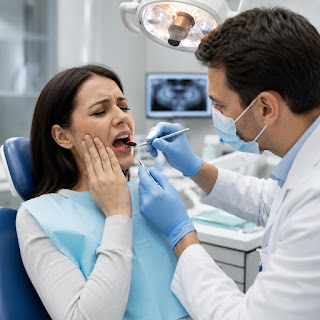
What Counts as Oral Trauma
Oral trauma encompasses injuries to teeth, gums, jaw & soft tissues inside the mouth. These injuries occur from falls, sports impacts, accidents or direct blows to the face. Unlike invisible infections, traumatic injuries show obvious signs. Immediate recognition determines whether treatment preserves natural teeth or requires extraction. Understanding what qualifies as trauma helps patients seek timely care.
Visible Signs You Can't Miss
Cracked or chipped teeth are the most apparent indicators of injury. A broken tooth may expose the inner dentin, causing sensitivity to temperature & touch. Loose teeth indicate ligament damage around the tooth root. Bleeding gums as well as loose soft tissue require evaluation within hours, not days.
Teeth that appear darker than others may have internal bleeding within the pulp chamber. Modern diagnostic techniques, including transillumination & digital imaging, now detect these internal injuries earlier. Color changes indicate that the tooth needs assessment, even without pain. Quick, convenient dental appointments—find a dentist near me in Victor Harbor!
Symptoms Beyond Visible Damage
Pain when biting down signals potential fractures extending below the gum line. Some injuries affect only the root without visible crown damage. Swelling in the face or jaw area suggests deeper tissue involvement. Difficulty opening the mouth fully may indicate jaw fractures or muscle strain.
Persistent discomfort after initial impact matters. Some patients experience delayed symptoms as inflammation develops over hours or days. This delayed response complicates diagnosis, making professional evaluation essential even when pain seems minor initially.
Why Timing Matters in Oral Trauma Care
Quick response to oral trauma significantly improves outcomes. Studies show that teeth knocked completely out have the highest success rate when repositioned within 30 minutes. Modern protocols now emphasize storing displaced teeth in milk or saliva solution during transport.
Contemporary dentistry uses advanced bonding techniques to repair broken teeth that previous generations would have extracted. Composite resins & resin-ionomer materials achieve both function & aesthetics. This shift reflects improved materials science as well as refined treatment approaches.
Getting the Right Assessment
Professional examination identifies injuries that patients overlook. Practitioners use percussion testing, mobility assessment & imaging to detect hidden fractures. What appears as simple chipping may involve damage to the pulp or periodontal structures.
Patients experiencing oral trauma should document the injury details: when it occurred, what caused it as well as whether the tooth was displaced. This information helps practitioners develop appropriate treatment plans.
Prevention Through Awareness
While recognizing symptoms matters, prevention proves more effective. Protective mouthguards reduce trauma rates significantly in contact sports. Understanding common injury mechanisms helps people avoid high-risk situations.
Recognizing oral trauma symptoms immediately can prevent tooth loss. Swift professional evaluation determines whether treatment preserves the natural tooth or requires alternative solutions, making knowledge of these warning signs crucial for every person's dental health journey.
Author Bio: –
Ansley has 12 years of experience in the dental world. You can find his thoughts at childrens dentistry blog.
Comments
Log in or sign up to join the conversation.