

Kali Amman captures one of the most powerful and misunderstood forms of the Divine Mother in Hindu worship. Fierce in appearance yet deeply protective in nature, Kali Amman represents the destruction of evil, ego and ignorance - clearing the way for renewal and liberation.
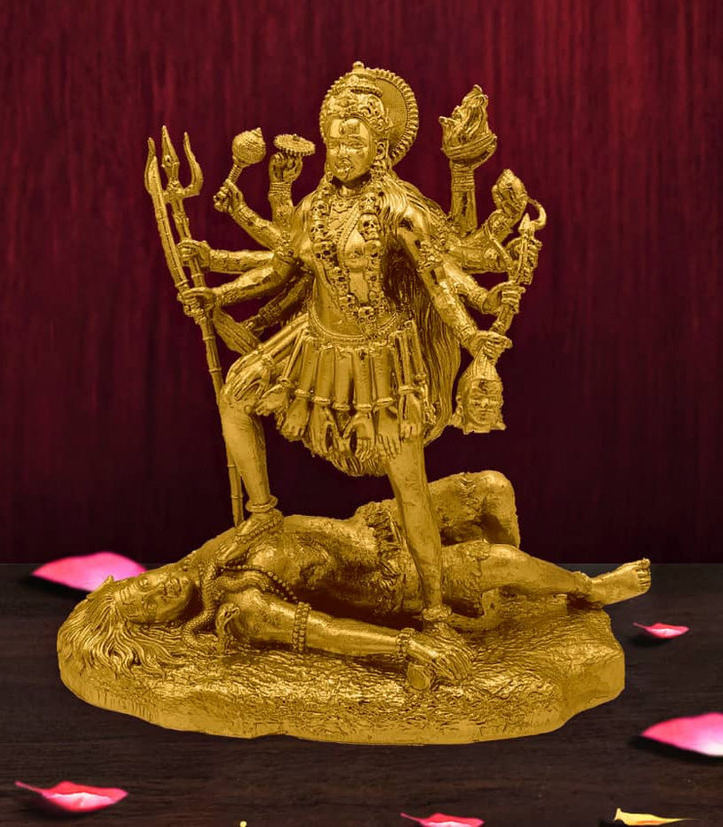
Worshipped across India in temples ranging from the great Kalighat shrine in Kolkata to countless village Amman temples of Tamil Nadu, Kali continues to be revered as a mother who shields her devotees even as she terrifies their enemies. For those drawn to her protective energy, Idol Brass offers a finely detailed brass Kali Amman idol crafted for home worship and traditional pooja spaces.
Who Is Kali Amman?
Kali's name comes from the Sanskrit "kala," meaning both time and black - reflecting her role as the goddess who governs time itself, including its end. She is one of the fiercest manifestations of Adi Shakti, the primordial cosmic energy, and is counted among the ten Mahavidyas, the great wisdom goddesses of Tantric tradition.
Kali as a Fierce Form of the Divine Mother
Unlike gentler goddess forms such as Lakshmi or Saraswati, Kali embodies the untamed, world-devouring aspect of the feminine divine. She is depicted with dark or blue-black skin, a lolling tongue, a garland of skulls, and multiple arms carrying weapons and severed heads - imagery meant not to frighten devotees away but to represent the destruction of ego, illusion and negative forces that block spiritual growth.
Kali Amman in South Indian Village Worship
In Tamil Nadu and much of South India, Kali is worshipped as "Kali Amman" - Amman meaning "mother" - and is deeply woven into village and household religious life. As a guardian deity, she is invoked for protection from evil spirits, disease and misfortune, often standing at the boundaries of villages as a fierce protector who keeps harm from crossing into sacred community space.
The Symbolism of Kali's Fearsome Form
Every element of Kali's iconography carries layered meaning, transforming what looks like terror into a profound teaching on impermanence and liberation.
The Garland of Skulls and the Dance of Time
Kali's garland of skulls is traditionally said to represent the fifty letters of the Sanskrit alphabet, symbolizing the totality of sound and creation, while also marking the endless cycle of birth and death that she governs as the goddess of time. Her wild, untied hair and her dance upon the battlefield represent the dissolution of form back into formless cosmic energy.
Standing Upon Shiva
One of the most recognizable images of Kali shows her standing or dancing upon the prone body of Lord Shiva. According to tradition, Kali's fury during battle grew so intense that it threatened to destroy the universe itself; Shiva lay down in her path so that, upon stepping on him, she would recognize her own consort and be calmed. This moment is read as a symbol of the balance between Shakti (dynamic energy) and Shiva (still consciousness) - destruction can only be complete, and safe, when it is grounded in awareness.
The Legend of Kali's Emergence
Kali's most celebrated appearance is told across several chapters of the Devi Mahatmya, unfolding in stages as the goddess Durga's rage takes ever more powerful form to confront rising evil.
Born from Chandika's Fury — Chanda and Munda
When the demon generals Chanda and Munda advanced upon the goddess Chandika (Durga) during her war against the asura brothers Shumbha and Nishumbha, her face is said to have darkened with anger until Kali burst forth from her forehead - emaciated, black as ink, and armed for battle. Kali swiftly beheaded both generals, earning the name Chamunda in their defeat.
The Battle with Raktabija
Kali's most famous trial came against the demon Raktabija, who possessed the power to multiply into a new demon from every drop of his blood that touched the ground. Kali overcame this seemingly unstoppable threat by drinking his blood before it could fall, ultimately consuming the demon entirely and ending his reign of destruction.
Calming Kali's Rage
Having tasted victory in battle, Kali is said to have continued her destructive dance uncontrolled, endangering the created world itself, until Shiva intervened by lying in her path - the episode that gives rise to her most iconic image described above.
Kali Amman Temples and Worship
Among Kali's most famous shrines is the Kalighat Temple in Kolkata, one of the Shakti Peethas believed to mark the site where a part of the goddess Sati fell to earth, making it one of the most sacred centers of Devi worship in India. Across Tamil Nadu, countless Kali Amman temples - often modest village shrines rather than grand complexes - serve as focal points of local devotion, where she is worshipped through daily rituals, animal-free offerings in many traditions, and festivals marked by fire-walking and possession rites that reflect her intense, immediate presence in community life.
Spiritual Significance of Kali Amman
For devotees, Kali Amman offers far more than fearsome imagery. Her worship is associated with:
Destruction of ego and ignorance - Kali is invoked to burn away false identity and illusion, clearing the path to self-realization.
Fierce protection - as a mother who fights without hesitation for her children, she is called upon in times of danger, illness or hardship.
Liberation (moksha) - in Tantric and Shakta traditions, Kali is seen as a direct route to spiritual freedom for devotees who approach her without fear.
Time and transformation - as the goddess who governs time itself, she reminds devotees of the impermanence of all things, encouraging detachment from ego and material concerns.
Why Is Kali Amman Different from Other Goddess Forms
While most goddess forms such as Lakshmi, Saraswati or Meenakshi are worshipped through images of grace, abundance or beauty, Kali is worshipped through an image of raw, unfiltered power. She does not soften death and destruction into abstraction - she embodies them directly, asking devotees to confront rather than avoid life's harder truths. This directness is precisely why she is so deeply trusted as a protector: a goddess who does not flinch from destruction is also one who will not flinch from protecting her devotees.
Conclusion
Kali Amman stands among the most profound and powerful expressions of the divine feminine in Hindu tradition - a goddess whose terrifying form conceals a mother's fierce, unwavering protection. From the ancient verses of the Devi Mahatmya to the village Amman shrines of Tamil Nadu, her worship continues to remind devotees that true strength lies in confronting darkness directly, rather than turning away from it.
Comments
Log in or sign up to join the conversation.