

Greek Gamble
Greece has recently been in the headlines again, and you can immediately guess why when looking at its stock and bond markets:

Greece’s stock market has reversed course this year, and recently it has had a few bad hair days that looked especially gut-wrenching
We outlined the basic problem in a post in September entitled “Greece Wants to Escape from Bailout”. As we noted on this occasion, the Greek government remains essentially bankrupt, but is eager to get the bailout (and the associated “troika” prescriptions and monitoring) out of its hair. So when Mr. Samaras started talking about wanting to rely solely on market funding, the markets balked. However, there is a potentially even bigger problem now.
In a nutshell, a presidential election is looming. While the post of president is largely ceremonial, the government needs to push through its candidate – if it fails to do so, a new parliamentary election must be held.
The problem is that recent opinion polls look as follows (this one is from late October):

A recent Greek poll on voting intentions. As you might guess, the guys with the biggest bar are not led by someone named “Samaras”. Instead they are led by Alexis Tsipras.
Antonis Samaras has now decided on what looks like a desperate (but probably calculated) gamble: he has pulled the presidential election forward, in the hope of scaring enough opposition parliamentarians into voting for his guy (when he announced the change in the election date, he didn’t even have a candidate yet. In the meantime it has turned out it will be Stavros Dimas, a 73 year old former European environment commissioner).
Greek government bond yields look like this lately:

Greece’s 10-year government bond yield, daily. Going the wrong way too.
In order to keep the acolyte of Karl Marx depicted further below at bay, Mr. Dimas will need to get 180 votes of out of 300 in the final round of voting (the parliament votes for the president). In short, about 25 votes from opposition MPs are required, as the coalition controls 155 seats directly. That could prove to be a tall order, considering the people who are in opposition. No SYRIZA MP is likely to vote for Mr. Samaras’ candidate. We somehow doubt the Stalinists will vote for him, and surely the neo-fascist Golden Dawn MPs won’t either. There are 24 independents who have left the ND (Samaras’ party) and its coalition partner PASOK in protest in recent years. Of these Smaras is said to be able to rely on 12. In other words, it is definitely possible for Murphy’s law to strike.
What to do?

SYRIZA leader Alexis Tsipras. The color of the background is no coincidence.
Photo credit: Wassilis Aswestopoulos / imago
Enter JC Juncker – “Avoid the Wrong Election Outcome”
The EU centralizers have over time evolved a perfect recipe for getting whatever election outcomes they want. If for some reason an electorate somewhere says “no” to something they want, they simply repeat the election until the desired outcome is achieved.
In this case this is however not a viable option, since there would immediately be some serious financial upheaval if the election outcome is not the desired one – they couldn’t afford to just wait for a year and try again.
Mind, we believe it would be foolish if the Greeks actually voted for Mr. Tsipras and his hoary socialist ideology, but we can understand why many of them hate the old political establishment – and he unfortunately represents the only alternative at the moment (believe it or not, most of the other opposition alternatives on offer are even worse. If one doesn’t want the ND/PASOK coalition, one can basically pick between various “normal” Marxists, avowed Stalinists and Nazis).
So Mr. Samaras is relying on the idea that financial market upheaval at the prospect of a SYRIZA win will scare enough parliamentarians into voting his way. However, just to be safe, JC Juncker has just seen fit to chime in – clearly this was directed at Greek MPs who might be uncertain of which way to jump:
“Juncker was participating in a debate with EUobserver and other Brussels-based journalists for Austrian public television. Commenting on the upcoming Greek presidential elections and the possibility of general elections, the commission head said that he would prefer “known faces” in the Greek government.
“I think that the Greeks — who have a very difficult life — know very well what a wrong election result would mean for Greece and the eurozone,” Juncker said.
“I wouldn’t like extreme forces to come to power,” he further stated. When asked if by “extreme forces” he meant leftist opposition SYRIZA, he replied: “I would like Greece to be ruled by people who have an eye and a heart for the many little people in Greece and who also understand the necessity of European processes.”
SYRIZA leads consistently in opinion polls and chief Alexis Tsipras and MPs have started stating with certainty that they will be in power in early 2015. The leftist party wants a big part of the sovereign debt erased and the lift of all austerity measures implemented so far. Also, several of its members express their disaffection with the EU.
After the announcement of the presidential election, the Athens Stock Exchange plunged by almost 13 points on Monday and drops ever day since. On Thursday, it dropped 7.35 percent. International markets are jittery and Greek ten-year bond yields went up.
Juncker commented on the choice of Stavros Dimas — former commissioner for the environment — for president of the Hellenic republic by saying diplomatically, “I would prefer if known faces show up.”
(emphasis added)
We have a feeling the “European processes” are more important to JC than the “little people”, and this kind of comment could well result in an unexpected backlash.

CDS spreads on double-plus-new Greek government debt. The markets are getting nervous
Joining the Ruling Class
Then again, Mr. Tsipras has recently been holding conciliatory meetings with Mario Draghi and other EU bigwigs. Here is a press report on these meetings from early November that we haven’t seen much comment on yet. A few excerpts:
“Alexis Tsipras, leader of Greece’s far-left Syriza party, recently traveled to Frankfurt and Rome to meet European leaders. He is softening his confrontational tone with Greece’s international lenders. Tsipras has a drafted an agenda for the first 100 days of a future government. The 40-year-old former student Communist is acting like a prime minister in waiting.
The party still rails against austerity measures and a bailout-driven “humanitarian crisis”. It wants to reverse minimum wage cuts, freeze state layoffs and halt state asset sales.
But Syriza no longer threatens to tear up the bailout agreement or default on debt. Instead, officials say it supports the euro and wants to renegotiate the bailout by using the same pro-growth arguments of partners France and Italy.
“The climate in 2014 is very different from that in 2012. More and more people realise that Syriza is a leftist European political force fighting for change in Greece and in Europe and does not want the euro zone to collapse,” Dimitris Papadimoulis, a senior Syriza official and a vice president of the European Parliament, told Reuters. “The illusion that Syriza wants a return to the drachma has gone.”
Talk of nationalising banks, for example, is notably absent. Instead, a senior party official says the party believes in exerting influence through the state bank bailout fund that controls three out of four major Greek banks.
Tackling Greece’s mountainous debt remains at the top of the party’s agenda. But talk of a debt “default” is gone, replaced with “renegotiation”. Syriza wants Europe to write off a big chunk of Greece’s 318 billion euros of debt – worth 175 percent of GDP – on a recognition that Greece’s problem is Europe’s problem too.
(emphasis added)
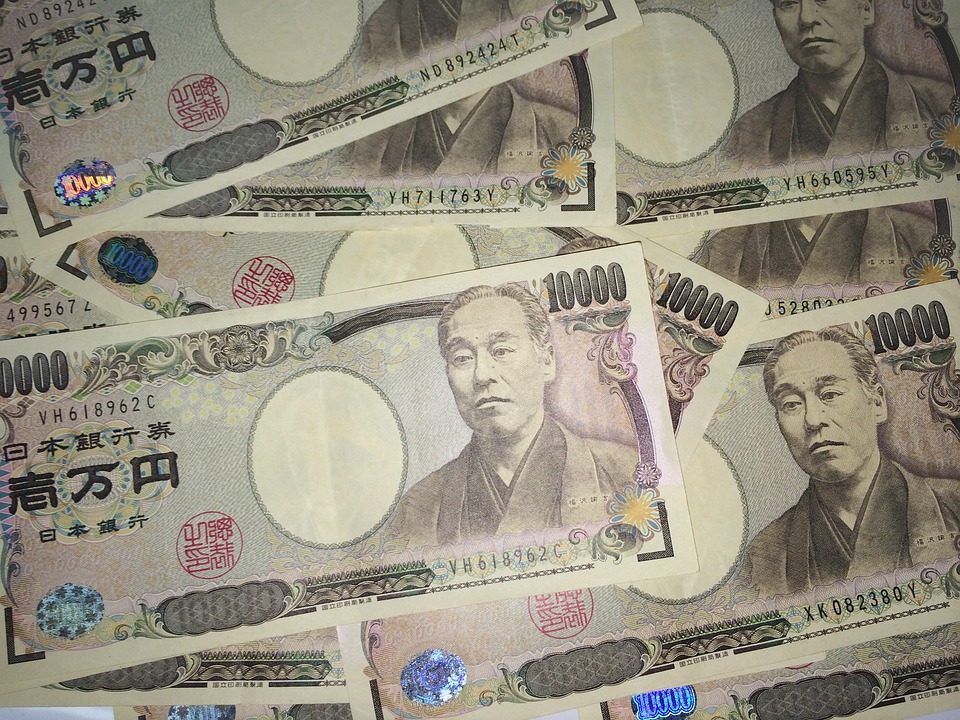
As a matter of fact most Greeks probably don’t know if they should laugh or cry when looking at a euro banknote, given that the plural of “euro” is actually the Greek word for “urine” (no kidding). One might say that when Greece joined the euro, it received a golden shower that looked a lot better at first than it actually turned out to be.
Nevertheless, poll after poll has found that crisis or no crisis, Greece’s citizens actually want to keep the euro. This may be one of the reasons why Syriza is no longer contemplating a return to the drachma. Note here that is clear that if people are asked to choose between two types of money, most of them will always choose the money they regard as more sound. The euro is not a sound currency (no fiat money is), but it is clearly a better currency than the drachma ever was.
Besides, the SYRIZA boys are busy refurbishing their office and taking other actions that suggest that they are going “pro”. Even while their speeches remain garnished with Marxist rhetoric, they are about to join the neo-feudal ruling class:
“Syriza’s transformation mirrors the political progression of other anti-establishment fringe parties, such as the Northern League in Italy, that changed tactics after gaining parliamentary power and became more mainstream political forces.
It also reflects how Greece has turned a page on the dark days of the eurozone crisis four years ago, when Athens’ profligate spending risked bringing down the entire euro project. Then, a Tsipras victory at the polls was widely seen as a trigger for a bank run and Greece’s exit from the euro.
Recently, however, Tsipras has held talks with European Central Bank chief Mario Draghi in Frankfurt and Austrian President Heinz Fischer. Syriza’s threadbare headquarters, where a portrait of Che Guevara once hung on the wall, is undergoing a makeover to include new desks and an expanded press room.”
This is quite funny in a way. We can only hope for the Greeks and ourselves, that Mr. Tsipras will retain some of his undoubtedly considerable entertainment value, although of course no-one will ever be able hold a candle to the much lamented “cavaliere” in that department.
Conclusion:
There’s nothing to worry about, dear readers. Eventually, Greece’s debt will probably be transformed into a kind of Greek Consol, with a 3.5% yield and a maturity of five centuries. The show must go on – and it will.

One (e)uro

10 urines.


Comments
Log in or sign up to join the conversation.